(English) Dinosaurs in Madagascar (Part one)
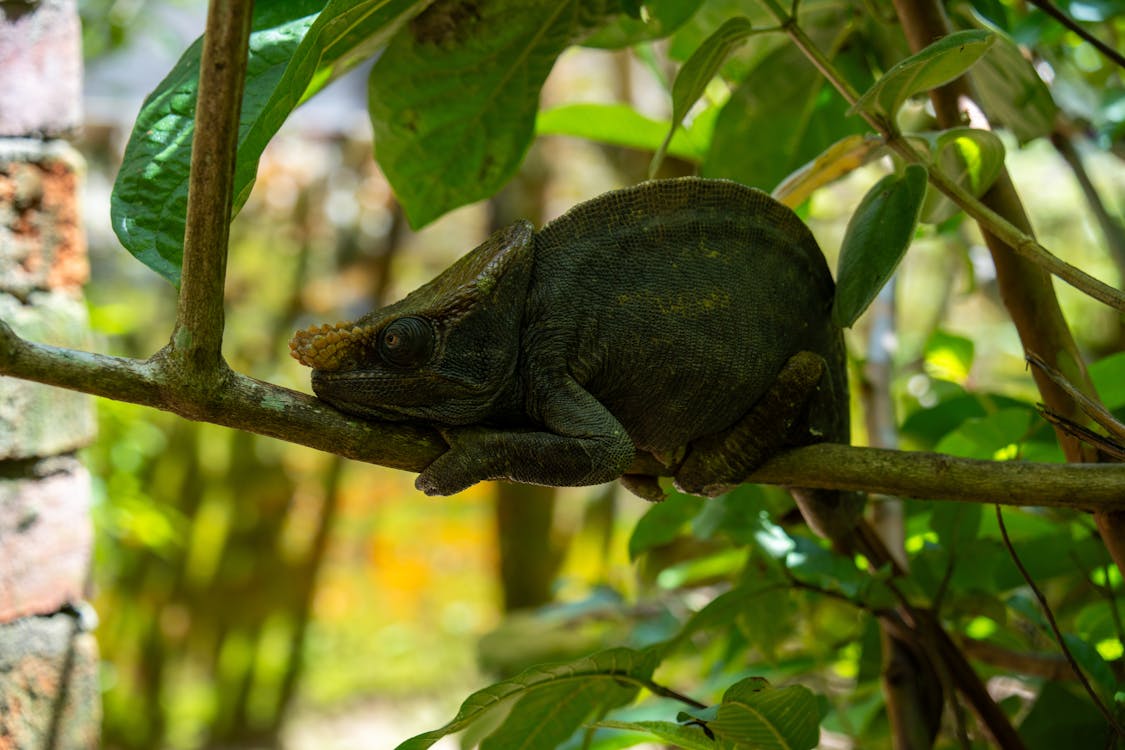
Yes you read that right… Or not?
Really depends on how you see…
So the only possible misconception to correct is that… They do not currently live there but…
They used to live there…
Apart from the beauty and serenity that lies within Madagascar, this Island was home to some of the most interesting participants of prehistoric times… So either which way you see it… Madagascar has always been (and still is) a place of interest.
A lot of dino activity in Madagascar spans about 70 million – 270 million years ago in an era that is described as the Mesozoic era. At this point, Malagasy and Indian land masses were joined together, this was noted due to the similarities in the fossils of the dinosaurs found in both countries.
The Berivotra area in Mahajanga, Northern Madagascar is where most of the fossils of dinosaurs have been found and where serious excavation for fossils continue till today:
Many of the dinosaur discoveries are from the Late Cretaceous period and Malagasy weather patterns haven’t changed much from that period. That’s one of the reasons why many of the fossils that have been discovered have been quite properly preserved. Some of the discoveries are also linked to the middle of the Jurassic era.
In this post we’ll look into 3 of the dinosaur discoveries that have taken place in Madagascar:
The Majungasaurus:
This specie has encoded into it’s a name it’s location of discovery: Mahajanga, which is also the most popular spot for fossil excavation within Madagascar.
It is a member of the theropod group (signifying hollow bones and three-toed limbs) from the late cretaceous period.
It’s skull was distinctively wide and it was a carnivore. It doubled as both a carnivore and a cannibal feeding on fellow dinosaurs from the Sauropod family.
It had an estimated maximum length of 9 meters and a maximum weight of 1500 kg (1.5 tons).
The initial discovery of this dinosaur was made in Charles Deperet in 1895. More discoveries were made by Rene Lavocat in 1955.
The Beelzebufo Ampinga
Frog from hell or Devil frog (whichever you choose) is pretty much the exact transliteration of this species name. It is pretty much a giant frog. It’s current closest relatives are the Ceratophyrines which are situated in South America.
By comparison and estimation from their only living known relatives, the Ceratophyrines, they were quite an aggressive breed. They gulp and grab anything that passes their way, possibly in the same manner their small relatives camouflage and grab at unsuspecting passers-by.
The discovery of this frog commenced in 1993 by Paleontologist David Krause and his team from Stone Brook University in New York and his colleagues. The finalization and completion of what exactly this species was made up of was completed in 2008.
It is also one of the members of the Late Cretaceous period.
It was an estimated 16 inches (0.4 meters) long with the length of the legs exluded and 10 pounds (4.5 kg) in weight.
Dahalokely
This one sounds like a modern day rap star for sure. The name though means – Small Thief of Small Bandit. It is one of the most recent fossil discoveries made in Madagascar (2013). It is also an answer to a 165 million to 70 million year old gap in fossil excavation from Madagascar as no fossils were found dating to this time prior to this period.
It’s maximum length is 4 meters and Maximum weight is at 200 kg
It was discovered in the Antsiranana part of Madagascar and is also one of the members of the Late Cretaceous period.
Click here to read Dinosaurs in Madagascar (Part Two)
Credits:Thanks to (MadagascanDirect, Madagascar Ankizy Fund, DinoChecker)
Planning a trip to Madagascar?
- Browse Madagascar tours on GetYourGuide — guided experiences across the island
- Madagascar tours on Viator — read verified traveler reviews
- SafetyWing travel insurance — flexible travel insurance for remote destinations
- Bradt Madagascar Travel Guide — the most comprehensive guide to the island
Why Madagascar’s Fossils Matter to Global Science
Madagascar’s position as an ancient landmass that drifted in isolation for tens of millions of years makes its fossil record uniquely valuable to scientists around the world.
A Living Laboratory of Independent Evolution
When Madagascar separated from the Indian subcontinent approximately 88 million years ago, its fauna followed an entirely independent evolutionary path. Species that survived here did so without competition from the large predators that dominated the African mainland. This isolation produced body plans and behaviors seen nowhere else in the fossil record, giving paleontologists a window into what evolution looks like when it operates unconstrained by the pressures of a continental ecosystem.
The Rate of Discovery Since the 1990s
Systematic fieldwork in the Mahajanga Basin beginning in the 1990s produced dozens of new species descriptions within two decades. Among the most significant are Majungasaurus crenatissimus, a large abelisaurid theropod that shows compelling evidence of cannibalistic behavior through distinctive tooth marks on bones of the same species, and Rapetosaurus krausei, a long-necked titanosaur whose complete juvenile skeleton has given scientists unprecedented insight into sauropod growth rates and the challenges facing young dinosaurs in this ancient ecosystem.
What Remains to Be Found
Scientists believe that a significant portion of Madagascar’s Cretaceous fauna has yet to be described. Remote sedimentary outcrops in the interior and along lesser-explored river valleys likely preserve undiscovered species. Each new field season brings the genuine possibility of something entirely new to science, a prospect that continues to draw international research teams to the island every year.