Three Things You May Not Know About Madagascar — Surprising Facts for Travelers

Disclosure: This post contains affiliate links. If you book or buy through these links, we earn a small commission at no extra cost to you.
Madagascar is one of the world’s most profoundly misunderstood destinations. Ask a random sample of people in any country what they know about Madagascar and you will typically get: animated film, lemurs, large island off Africa. These three associations, while not wrong, capture almost nothing about what makes Madagascar genuinely remarkable. The real Madagascar — its geological history, its human settlement story, its biological uniqueness, its cultural complexity, its extraordinary agricultural significance — is a story that most people have never encountered in any form. These three facts will change how you think about one of the most remarkable places on Earth.
This is not a collection of trivial curiosities. Each of these three facts has profound implications for how the island came to be the way it is, why its biology is so extraordinary, why its culture is so distinctive, and why a visit to Madagascar is a categorically different experience from traveling anywhere else on the planet. Understanding them before you arrive will transform what you see from exotic backdrop into meaningful context.
1. Madagascar Is One of the World’s Oldest Isolated Islands — and Its Biology Proves It
Madagascar broke away from the African continent approximately 165 million years ago. This is not a recent geological event — 165 million years ago places the separation in the Jurassic period, when dinosaurs were the dominant vertebrates on land. Madagascar then separated from what would become India approximately 88 million years ago and has been a solitary island in the Indian Ocean ever since. This extraordinary duration of geographical isolation — longer than most islands have existed at all — gave Madagascar’s biology time to develop along its own evolutionary trajectory, almost completely separate from the rest of the world.
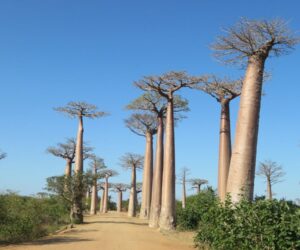
The result is a figure that is almost incomprehensible when you first encounter it: approximately 90% of Madagascar’s wildlife species are found nowhere else on Earth. This is not 90% of a small number — Madagascar has over 100 species of lemurs (all endemic, all found only in Madagascar), over 300 species of birds with more than 100 endemic, over 11,000 plant species with roughly 80% endemic, more than 300 species of reptiles with about 90% endemic, and endemic fish, amphibians, and invertebrates in extraordinary numbers. The chameleons — Madagascar has more chameleon species than the rest of the world combined. The baobab trees — Madagascar has six of the world’s eight baobab species. Every major taxonomic group has this pattern: Malagasy species that are endemic, strange, and old.
What Evolutionary Isolation Actually Looks Like
The lemurs are the most accessible illustration of what Malagasy evolutionary isolation means in practice. Lemurs are primates — the same order as monkeys and apes — but they are not monkeys. They represent an earlier evolutionary branch of the primate order, one that became extinct everywhere else in the world when more competitive primate groups evolved. In Madagascar, isolated from these competitors, lemurs survived and diversified into over 100 species occupying every ecological niche that other primates occupy elsewhere: fruit-eating arboreal species, ground-dwelling species, nocturnal insectivores, large-bodied grazers, and specialists of every conceivable kind. The diversity of forms within the single order of lemurs — from the tiny mouse lemur (one of the world’s smallest primates) to the indri (which communicates with haunting calls audible kilometers away) — is the visible result of 65 million years of isolated evolution on a single island.
This evolutionary distinctiveness means that every natural environment you visit in Madagascar is genuinely unlike anything you have experienced elsewhere. The lemurs watching you from the trees are not exotic versions of familiar primates; they are representatives of an evolutionary lineage that has no equivalent in the world outside Madagascar. The chameleons, the baobabs, the endemic plants and insects and birds — all of them belong to branches of the tree of life that diverged from their global relatives millions of years ago and went their own direction in isolation. Visiting Madagascar is, in a literal biological sense, visiting a different version of Earth.
2. Madagascar Was Uninhabited Until Surprisingly Recently — and Its First Settlers Came from the Wrong Direction
Given Madagascar’s size (the world’s fourth-largest island, at 587,000 km² — larger than France), its position just 400 km off the coast of East Africa, and its geological age of hundreds of millions of years, the intuitive expectation is that the island would have been settled by humans for tens of thousands of years. The actual settlement history is one of the most surprising facts in all of biogeography and human history: Madagascar was first permanently settled approximately 1,500 years ago — only in the 5th to 7th centuries CE.
This means that when the Roman Empire was at its height, Madagascar was uninhabited. When the Vikings were raiding the coasts of Europe, Madagascar had barely been settled for a few centuries. When Columbus reached the Americas in 1492, Madagascar’s human population had been there for less than 1,000 years. For context, Australia — another large island with similar isolation challenges — has been continuously inhabited by Aboriginal peoples for at least 65,000 years. Madagascar sat empty, separated from Africa by just 400 km of ocean, for the entire span of modern human existence until remarkably recently.
The Austronesian Origin: A 7,000 km Ocean Crossing
Even more remarkable than the late settlement date is the origin of Madagascar’s first permanent settlers. Current genetic and linguistic evidence overwhelmingly points to the conclusion that the primary founding population of Madagascar did not come from Africa — the continent visible on the horizon on a clear day — but from Southeast Asia, specifically from the island of Borneo, approximately 7,000 km away across the open Indian Ocean.
This conclusion is supported by multiple lines of evidence. The Malagasy language belongs to the Austronesian language family — the same family as Indonesian, Malay, Tagalog, and the languages of Polynesia — and its closest living relative is Ma’anyan, a language spoken in the interior of Borneo today. Genetic studies of Malagasy people consistently show significant Austronesian ancestry from Island Southeast Asia, alongside later contributions from East Africa, Arabia, India, and Europe. The cultigens brought by these first settlers — rice, bananas, taro, yams — are Southeast Asian crops, not African ones. The outrigger canoe, the musical instrument known as the valiha (a bamboo tube zither), the practice of building wooden houses on stilts — all are Southeast Asian cultural elements with no African equivalent.
The voyage these first settlers made — 7,000 km of open ocean, in sailing outrigger canoes, against prevailing winds in the Indian Ocean — is considered one of the most extraordinary feats of ancient navigation in human history. No other colonization event in human prehistory involved a comparable distance of open ocean crossing by a founding population. The fact that this voyage happened, and happened successfully enough to establish the founding population of an island that today has a population of over 28 million, is genuinely extraordinary.
The Cultural Result: A Unique Synthesis
The Austronesian founding population of Madagascar was subsequently joined by waves of East African, Arab, Indian, and eventually European immigrants and traders, each contributing to the extraordinary cultural and genetic diversity of contemporary Malagasy society. The 18 recognized ethnic groups of modern Madagascar each reflect different proportions and patterns of this multi-source ancestry. The result is a cultural synthesis that has no parallel anywhere else in the world: a society that is genetically and linguistically Austronesian, that practices African ancestor veneration with Southeast Asian elements, that cultivates Asian crops in an African landscape, and that has developed its own distinctive civilization entirely within the context of this island that evolutionary biology had already made unique.
3. Madagascar Produces Many of the World’s Finest Spices — and Has for Centuries
Most people know, if they think about it, that Madagascar is involved in vanilla production. The full picture is considerably more remarkable. Madagascar is not merely a vanilla producer — it is the world’s dominant vanilla producer, typically accounting for 60–80% of global supply in any given year. This means that the vanilla in your ice cream, your perfume, your baked goods, and the vast majority of the world’s vanilla-flavored products comes, overwhelmingly, from one island in the Indian Ocean. The specific variety — Madagascar Bourbon vanilla — is the global flavor benchmark, the standard against which all other vanilla is measured.
But vanilla is only the beginning. Madagascar is a significant producer of cloves — one of the top sources globally, primarily from the east coast. It produces genuine cinnamon (Cinnamomum verum, true cinnamon, as opposed to the cassia that dominates most supermarket “cinnamon”). It produces Voatsiperifery, the wild forest pepper of the east coast that has become one of the most sought-after specialty spices in high-end international restaurants over the past decade, prized for its woody, fruity, floral complexity that has no equivalent elsewhere. It produces ylang-ylang from the northwest, a fragrance crop that provides essential oil to some of the world’s most famous perfume houses. It produces ginger, turmeric, cardamom, and numerous other spice crops, most at modest scale but often at high quality.
The Vanilla Economy and Its Fragility
Madagascar’s dominance of global vanilla supply has created an economy that is both enormously valuable and extremely vulnerable. The vanilla market is notoriously volatile — driven by tropical cyclones (which can destroy the SAVA region’s crop in a single storm), speculative trading behavior, and the peculiarities of vanilla agriculture (vanilla flowers must be hand-pollinated, the curing process takes months, and the plants take years to reach productive maturity). Vanilla prices on the global market have ranged from under $20 per kilogram wholesale to over $600 per kilogram within the span of a decade, creating both boom periods that temporarily enrich farming communities and bust periods that leave farmers unable to cover production costs.
This volatility is one of the structural challenges facing Madagascar’s agricultural economy. A country that produces 60–80% of a global commodity is theoretically in a position of substantial market power — but in practice, Madagascar’s farmers are price takers rather than price setters, because the global vanilla market is controlled by large international commodity traders and flavor companies rather than by the farmers who actually grow the crop. Development organizations and fair-trade initiatives have worked to create more stable, premium market access for Malagasy vanilla farmers — but the structural dependency on a single volatile commodity remains a genuine economic vulnerability.
The SAVA Region: Madagascar’s Spice Heartland
The SAVA region — an acronym for the four districts of Sambava, Antalaha, Vohémar, and Andapa in northeastern Madagascar — is the vanilla heartland of the world. It is also where cloves, pepper, and other spices are produced. The region is not on the standard tourist circuit — reaching it requires a domestic flight to Sambava or a long overland journey from the northern coast — but for travelers interested in the agricultural foundations of what they eat, a visit to the SAVA region during the vanilla flowering and pollination season (typically October–December) is a genuinely extraordinary experience. Seeing vanilla orchids being hand-pollinated by farmers with small sticks, walking through the vanilla plantations, and understanding the months-long curing process that transforms a green vanilla pod into the complex, fragrant product sold worldwide provides a foundation of understanding that no amount of reading can fully replace.
Resources — Plan Your Madagascar Visit
- → Madagascar tours and experiences on GetYourGuide
- → Madagascar wildlife and nature tours on Viator
- → SafetyWing travel insurance — travel insurance for Madagascar
- → Car rental in Madagascar — for independent exploration of the island
FAQ — Surprising Madagascar Facts
How long should I spend in Madagascar to see the best of it?
Minimum 10–14 days for a meaningful experience; 3–4 weeks to do the country genuine justice. Madagascar is large (587,000 km² — larger than France) and infrastructure is challenging — travel between regions is slow, and distances that look manageable on a map can take a full day to cover on Madagascar’s roads. Each major region requires its own time: the central highlands (Antananarivo, Antsirabe, Fianarantsoa), the south (Isalo, Tuléar, the spiny desert), the east coast (Île Sainte-Marie, Tamatave, the rainforests), the north (Antsiranana, Nosy Be, Masoala), and the west (Morondava, Belo-sur-Tsiribihina, the baobab alleys) each have distinct ecosystems and cultural characters worth experiencing. A single trip cannot do all of Madagascar — plan multiple visits, or choose a region and go deep rather than trying to cover everything.
Is Madagascar related to the animated film?
The DreamWorks animated film borrowed the island’s name and a few species names (lemurs are real, as are the fossa — Madagascar’s apex predator — and several other species featured in the film) but bears essentially no relationship to the real Madagascar. The film is set in a version of Africa that happens to have lemurs; the real Madagascar is a genuinely different civilization, biological environment, and cultural world that the film does not attempt to represent. Visiting Madagascar is nothing like the film — it is vastly more interesting, more biodiverse, more culturally complex, and more genuinely challenging than any animated entertainment could capture. The film is harmless but completely uninformative.
Why is Madagascar so poor despite its extraordinary natural wealth?
Madagascar’s poverty is the result of a complex accumulation of historical and structural factors, none of which have simple solutions. French colonization (which ended with independence in 1960) disrupted traditional economic and governance structures while failing to build adequate replacement institutions. Post-independence political instability — including multiple coups, periods of economic isolation, and governance crises — has repeatedly interrupted development progress. Geographic challenges including poor road infrastructure, cyclone exposure on the east coast, and the extreme distances between regions make economic integration difficult. The country’s natural wealth — vanilla, gemstones, cacao, fisheries — has not consistently translated into broad development because commodity market volatility, export concentration, and governance challenges have prevented sustained value capture by the Malagasy population rather than by international intermediaries. None of these factors are unique to Madagascar, but their combination has been particularly persistent.
What is the best time of year to visit Madagascar?
Madagascar’s climate varies significantly by region, and the “best” time depends on where you are going. The dry season (April–October) is generally optimal for most regions: roads are more passable, wildlife is easier to spot in less dense vegetation, and rainfall does not disrupt travel plans. June–September is the classic dry season in the highlands and south. The wet season (November–March) brings cyclone risk to the east coast and northeast, and some roads become impassable — but it also brings lush green landscapes, flowering plants, and baby lemurs, and some regions (the west and southwest) are actually better accessed during the shoulder wet season when they are less dusty and hot. January and February are generally the worst months for travel due to cyclone risk and road conditions in most regions.
What wildlife can I realistically expect to see in Madagascar?
Lemurs are the signature wildlife and can be seen in any of Madagascar’s national parks and reserves — some parks, like Andasibe-Mantadia in the east and Ranomafana in the south, are particularly reliable for multiple lemur species including the iconic indri (whose calls are unforgettable). Chameleons are widespread and can often be found with the help of a guide in any forested area. Geckos, including the spectacular satanic leaf-tailed gecko, are common in forest environments. Birds are extraordinary throughout the country — endemic families including vangas, couas, and ground-rollers are found nowhere else. Fossas (Madagascar’s large endemic carnivore, superficially cat-like but more closely related to mongooses) are rarer and require specific habitats and sometimes luck. The key to seeing Madagascar’s wildlife well is spending several days in forested reserves with knowledgeable local guides — rushing through is unlikely to produce sightings of the more elusive endemic species.