Malagasy Proverbs and Their Meaning: Part Two — Nature, Work, and the Cycle of Life
Disclosure: This post contains affiliate links. If you book or buy through these links, we earn a small commission at no extra cost to you.
The Malagasy people’s relationship with their natural environment is not the relationship of inhabitants to backdrop. It is the relationship of people to the source and context of their identity, their food, their medicine, their spiritual life, and their understanding of time and mortality. Madagascar’s extraordinary biodiversity — over 90% of its wildlife species found nowhere else on Earth — is not simply an ecological fact; it is the physical context within which an entire civilization developed its worldview. This relationship between people and island is woven throughout the ohabolana, the Malagasy proverb tradition, in ways that are at once practical, philosophical, and deeply beautiful.
This second collection focuses on proverbs about the natural world, work, perseverance, and the philosophical understanding of life’s stages. These proverbs reveal how deeply agricultural and ecological thinking is embedded in Malagasy culture — and they also reveal how a culture that has lived within an extraordinarily fragile biological environment has developed wisdom about the human relationship to nature that has direct contemporary relevance.
Proverbs on Nature and the Environment
Madagascar has lost over 80% of its original forest cover since human settlement began approximately 1,500 years ago. This is one of the most severe deforestation records in the world, and it is widely understood by Malagasy people as a genuine tragedy. Traditional culture — through fady (taboos), ancestral prohibitions on certain activities, and proverbs that encode ecological values — developed mechanisms for nature conservation long before the concept was articulated in Western environmental thought.
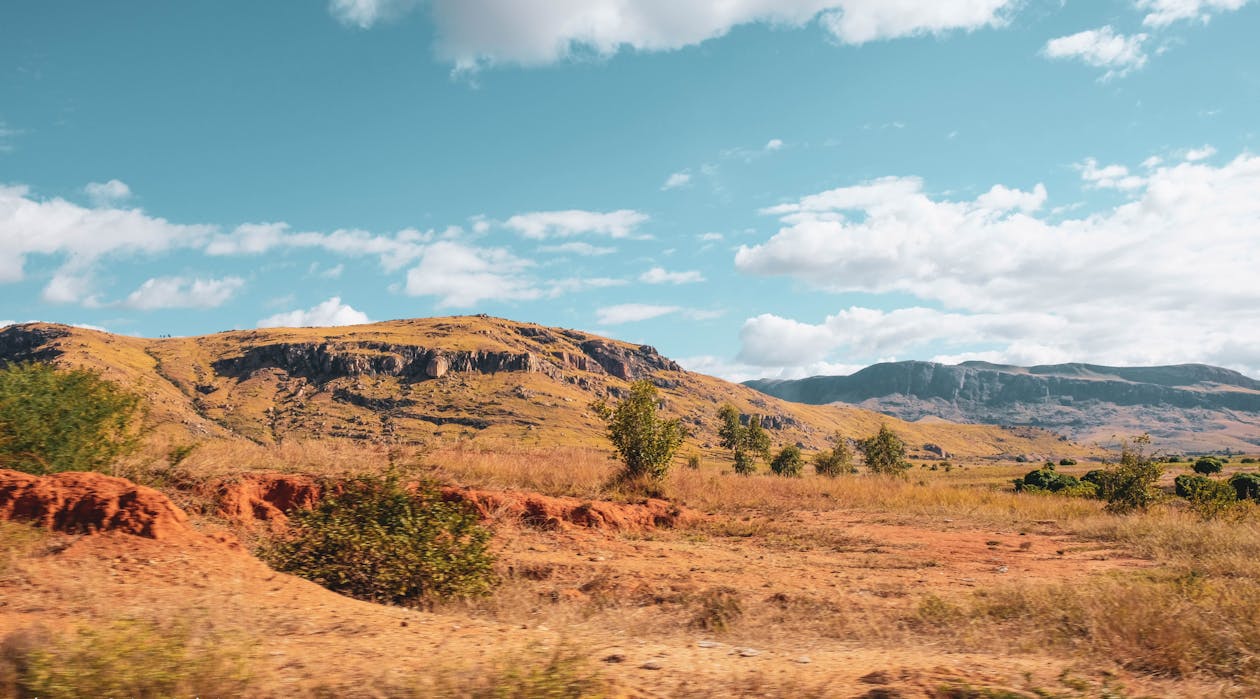
“Miala tsiny ny tany tsy misy hazo.”
Translation: “A land without trees asks for forgiveness.”
Meaning: Deforestation is morally wrong — not merely economically damaging but spiritually and ethically transgressive. The land itself is understood as asking forgiveness from whoever witnesses its degradation. This proverb is one of the most ecologically significant in the Malagasy tradition, encoding a relationship to forests that treats them as morally significant presences rather than mere resources. The proverb carries contemporary weight in Madagascar, where reforestation programs invoke traditional values as motivation alongside scientific arguments.
“Ny rano mipoapoaka no mafy.”
Translation: “The water that splashes is the turbulent one.”
Meaning: Surface agitation or loud display signals disturbance beneath — appearances and reality are often different, and the most superficially dramatic thing may be the most troubled. This proverb is used to counsel skepticism about surface presentations and to encourage looking beneath appearances before forming judgments. Water imagery is common in Malagasy proverbs because water — rivers, rain, ocean — is central to Malagasy life and the source of both sustenance and danger.
“Toy ny voatavo manta izay mirina: ary toy ny voatavo masaka izay mandry.”
Translation: “An unripe squash stands straight; a ripe squash lies down.”
Meaning: True maturity — of fruit, of people, of wisdom — shows in a kind of resting fullness rather than upright striving. The image is agricultural: unripe fruit is hard and rigid, ripe fruit droops with its own weight of fullness. Applied to human life, it suggests that genuine maturity and wisdom involve a certain relaxation of the urgent self-assertion of youth. A rich and deeply Malagasy image.
“Ny hazo no mafy, fa ny vy no maharitra.”
Translation: “Wood is hard, but iron lasts longer.”
Meaning: Natural strength (raw talent, inherited advantage) has limits; worked, refined, and disciplined capacity has greater endurance. The contrast is between the natural hardness of wood — present from the beginning — and the manufactured durability of iron, which must be worked by skill and heat into its final form. This proverb is used to encourage effort and refinement over complacency about natural gifts.
Proverbs on Work, Patience, and Perseverance
Agricultural societies — and Madagascar is fundamentally an agricultural civilization, built around rice cultivation that has shaped the landscape, the calendar, and the cultural identity of the highlands — typically encode deep wisdom about work, patience, and the relationship between effort and result. Malagasy proverbs on work reflect both the realities of agricultural labor and a broader philosophical understanding of how careful, sustained effort produces results that shortcuts cannot replicate.
“Ny vary ahin-drano no tsara indrindra.”
Translation: “Rice cooked with water is the best.”
Meaning: Simple things done properly, with the right materials and the right method, are superior to elaborate things done carelessly. This is not a celebration of mediocrity — it is a celebration of fundamentals. In a rice culture, where rice is not merely food but the center of civilization, the proverb encodes a profound respect for doing basic things excellently. It is cited when someone proposes a complicated solution when a simple one is available and adequate.
“Ny asa no mahasoa, fa ny sitrana no manankery.”
Translation: “Work brings benefit, but health gives strength.”
Meaning: Both labor and physical well-being are necessary for a good life — neither alone is sufficient. This proverb is a gentle corrective against workaholism as much as against laziness: it acknowledges the value of work while insisting that health is the foundation without which work cannot be sustained. The balance it describes is particularly relevant in a society where physical agricultural labor has historically been the primary economic activity.
“Tsy misy lalantsara raha tsy hita miha-bevata.”
Translation: “There is no good path that doesn’t show wear from frequent use.”
Meaning: The best way forward is usually the one already tested by many people’s experience. This proverb counsels following proven methods, respecting accumulated wisdom, and being skeptical of shortcuts or novel paths that have not been tested. It encodes a conservative epistemology: trust what has been proven by repeated successful use rather than what merely seems clever in theory.
Rice in Malagasy Culture and Proverbs
Rice (vary) occupies such a central place in Malagasy life that it appears in a remarkable proportion of the ohabolana. To say “we have eaten rice together” is to say “we are friends, we have shared our life.” The rice agricultural calendar shapes the Malagasy year; the flooded rice paddies (tanimbary) shape the highland landscape; and the varieties, qualities, and conditions of rice are a rich metaphorical vocabulary for describing human states and relationships. No understanding of Malagasy culture is complete without understanding the centrality of rice — and the proverbs make this centrality visible in the language itself.
The Environmental Wisdom of Fady
Beyond proverbs, Madagascar’s traditional culture developed a system of fady — taboos and prohibitions — that often functioned as practical nature conservation. Prohibitions on cutting certain trees in certain places, restrictions on hunting certain animals at certain times of year, and cultural rules against activities that damaged the landscape were embedded in the social fabric through ancestral authority rather than through legal enforcement. These fady varied enormously by region and community, but their cumulative effect was to create distributed conservation zones and seasonal protections that mitigated the environmental impact of human settlement.
The modern conservation challenge in Madagascar — where rapid population growth, poverty, and weak formal governance have combined to produce some of the world’s most severe deforestation — is in part a challenge of maintaining the social authority of these traditional protections in the face of economic pressure. Conservation organizations working in Madagascar have learned that engaging traditional fady and community leadership is more effective than imposing external rules — the traditional framework already contains the values needed; the challenge is supporting their continued authority.
Resources — Experience Madagascar’s Natural World
- → Madagascar wildlife and nature tours on GetYourGuide
- → Madagascar nature experiences on Viator
- → SafetyWing travel insurance — travel insurance for Madagascar adventures
- → Car rental for Madagascar — for reaching national parks and nature reserves
FAQ — Madagascar Culture and Environment
What is fady and why does it matter for travelers?
Fady are Malagasy taboos — social, cultural, or spiritual prohibitions that vary by community, region, and clan. They may relate to food (certain animals cannot be eaten on certain days or by certain people), behavior (not pointing at a tomb, not entering certain places at certain times), or activities (not cutting certain trees, not making certain sounds near sacred sites). For travelers, fady matters because violating local taboos — even unknowingly — can cause genuine offense and damage your relationship with the community. Before exploring a new area, ask your guide about local fady. This question is appreciated and answered readily — Malagasy people expect and want visitors to respect their prohibitions.
How important is rice in Malagasy proverbs?
Enormously important — rice appears in a significant proportion of Malagasy proverbs as the central metaphor for life, sustenance, civilization, and right conduct. Madagascar’s identity as a rice culture is not merely agricultural; it is cultural and linguistic. The word for cooked rice (vary) is also used to mean “food” generically, and the phrase for sharing a meal (“eating rice together”) is one of the primary expressions for friendship and solidarity. The language of rice pervades the ohabolana because it pervades Malagasy life.
Can I learn more about Malagasy oral tradition?
Yes — several academic and popular resources exist. The most authoritative academic works on Malagasy oral literature are written primarily in French and Malagasy, reflecting Madagascar’s linguistic history as a French colony. Ethnographic works by Malagasy scholars document the ohabolana tradition in detail. For accessible introductions, several online platforms compile Malagasy proverbs with French and English translations and contextual explanations. The best learning, however, comes from time spent in Madagascar in genuine conversation with Malagasy people — the proverbs come alive only in real social use.
Is Madagascar’s deforestation as bad as reported?
The figures are consistent across multiple independent sources: Madagascar has lost a very high proportion of its original forest cover since human settlement. The deforestation rate has been particularly severe in the 20th and 21st centuries, driven by slash-and-burn agriculture (tavy), charcoal production, and illegal logging. The ecological consequences are severe — habitat loss for endemic species, soil erosion, and watershed degradation. This is a widely recognized crisis, and both international conservation organizations and Malagasy civil society are working on solutions. The proverb “a land without trees asks forgiveness” resonates with particular force in this context.
How do Malagasy people balance traditional beliefs with environmental conservation?
The relationship between traditional belief and environmental conservation in Madagascar is more synergistic than it might appear. Many fady prohibitions have ecological functions — protecting certain tree species, restricting hunting in certain areas or seasons, limiting certain damaging activities. Conservation organizations that engage community leaders and frame conservation in terms of ancestral obligation rather than foreign environmental ideology have found significantly more success than those that impose external frameworks. The challenge is that economic pressure — poverty driving charcoal production and slash-and-burn farming — can override both traditional fady and modern conservation law when survival is at stake.