Villages and Rural Life in Madagascar: An Authentic Travel Experience

Disclosure: This post contains affiliate links. If you book or buy through our links, we may earn a small commission at no extra cost to you. Thank you for supporting Voyagiste Madagascar!
More than 80% of Madagascar’s population lives in rural areas, and the villages that dot the highland terraces, coastal plains, southern deserts, and eastern rainforest edges are where most of the country’s cultural life — its ceremonies, its agricultural rhythms, its oral traditions, its everyday negotiations between ancestral custom and contemporary necessity — actually happens. For travelers who spend time only in cities and national parks, Madagascar remains a spectacular backdrop; for those who find ways to engage with village life, it becomes something more — a civilization with specific beauty, specific intelligence, and specific ways of being in the world that are genuinely unlike anywhere else. This guide is not about “poverty tourism” or voyeurism — it is about how to engage respectfully with rural Madagascar in ways that are meaningful for both visitors and the communities they encounter.
Highland Village Life
The Rice-Centered Social World
The central highlands of Madagascar are organized around rice in a way that goes well beyond agriculture. Rice (vary) is simultaneously the primary food, the measure of wealth, the substance of ceremony, and the organizing principle of the agricultural calendar that structures village time. The paddies carved into every available slope of the red laterite hills represent centuries of accumulated labor investment, passed down through family lineages that maintain specific fields across generations. The planting cycle (roughly October–December in most highland areas) and harvest cycle (March–May) are communal events — neighbors assist each other, and the work is accompanied by specific songs, rhythms, and social protocols that make rice farming a cultural practice as much as an economic one. Spending time in a highland village during planting or harvest — even as an observer — provides an understanding of the relationship between people and land in Madagascar that no museum, book, or cultural performance can replicate. Several community-based tourism operators around Antsirabe and Ambositra offer homestay programs that place visitors in rice-farming families for short stays, providing both cross-cultural exchange and direct economic benefit to host families.
Market Day — The Social Nexus
The weekly market (tsena) is the most important recurring event in highland Malagasy village life — not merely economic exchange but social ritual, information exchange, and community performance. Each village and town has its market day, and the surrounding populations converge from multiple hours’ walking distance on that specific day. In highland areas, this convergence is visible from hillsides above the road: streams of people on foot, by bicycle, and by taxi-brousse converging on a central point from every direction, carrying zebu cattle, rice sacks, handmade baskets, and vegetables in quantities that transform ordinarily quiet crossroads into temporary cities. The most famous highland market day experience is the zebu cattle market — watching buyers and sellers negotiate the price of zebu cattle through the elaborate ritual of Malagasy livestock trading is genuinely fascinating, even without understanding the specific verbal exchange. Arriving at market day in a highland town before the rush (before 7am) and staying through the active morning (until noon, when activity disperses) provides the most concentrated, unmediated encounter with everyday Malagasy economic and social life available to visitors.
Architecture and Material Culture
Highland Malagasy village architecture is instantly distinctive — two or three-story red-brick houses with very steep pitched roofs (adapted to the rainfall regime and the aesthetic of the original wooden post-and-beam tradition), narrow high windows, carved wooden balconies (particularly in the Betsileo region south of Fianarantsoa), and exterior staircases that reflect the original elevated-floor design of houses built to protect against both flooding and the cold highland nights. Walking through the residential streets of any highland town or village reveals an extraordinary consistency of architectural tradition that has persisted across centuries despite — or perhaps because of — economic marginalization. The material culture extends to the craft traditions associated with specific regions: the wood carvers of Ambositra, the silk weavers of the highland plateau, the basket weavers of Anjozorobe, the embroidery traditions of Betsileo communities. Visiting craft workshops in the towns associated with these traditions — purchasing directly from makers rather than from resale shops — provides both a higher-quality product and a more meaningful cultural encounter.
Coastal and Southern Village Cultures
Fishing Communities of the Coast
Madagascar’s coastal villages are organized around the sea in ways that parallel the highlands’ organization around rice. Fishing communities along the western and eastern coasts maintain deep knowledge of tidal patterns, seasonal fish movements, weather indicators, and the spiritual protocols associated with the ocean and its resources. The traditional outrigger pirogue — a dugout canoe with a lateral stabilizing float, propelled by sail or paddle — is one of the most practical and beautiful small watercraft designs in the world, evolved over centuries specifically for the conditions of Madagascar’s coastal waters. Watching a pirogue fleet launch into the morning sea, watching it return in the afternoon heavy with fish, and watching the beach-level negotiation between fishermen and fish traders that follows — this is Madagascar’s coastal village life at its most essentially itself. Many coastal towns permit visitors to join fishing pirogue trips, often arranged through guesthouses or directly with fishermen; the experience of a pre-dawn launch into the lagoon, trawling net or line, and returning with the morning catch is one of the most genuinely participatory cultural experiences available in Madagascar.
Southern Pastoralist Villages
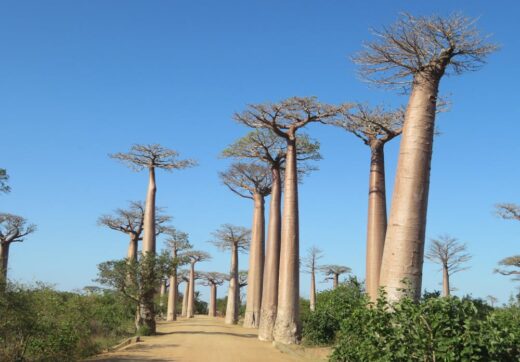
In the south — particularly in the Bara, Mahafaly, and Antandroy regions — village life is organized not around rice or fish but around zebu cattle, which function simultaneously as economic capital, social currency, spiritual power, and the primary measure of a man’s worth and community standing. Southern villages look markedly different from highland communities: lower, more dispersed, built from wood and cactus-fiber thatch rather than brick and tile, arranged in patterns that reflect the need to protect cattle at night in central corrals. The relationship between people and cattle in these communities goes beyond economic utility — specific cattle are sacred, cattle are sacrificed at ceremonies that define social identity, and cattle raiding (hatrona) was historically a rite of passage for young men. The landscape context amplifies the cultural specificity: the semi-arid spiny forest, the baobab-studded plains, the vast blue sky over flat terrain — this is a world organized around different priorities from the densely populated highlands, with a different aesthetic, different ceremonies, and a different tempo that rewards patient presence.
Responsible Community Tourism
Engaging with Madagascar’s rural communities responsibly requires several commitments that go beyond standard tourist etiquette. Economic directness: where possible, pay for goods and services directly to community members rather than through intermediaries who capture most of the value. This means choosing community-managed lodges and guesthouses over externally-owned properties, buying crafts from makers rather than resort gift shops, and participating in community-fee activities like guided village walks that direct tourism revenue to the local level. Consent and photography: photographing people in their daily lives without explicit consent is exploitative regardless of artistic merit — ask, accept refusal, and photograph people as subjects rather than objects. Language effort: learning ten words of Malagasy (salama, misaotra, tsara, vary, aiza) transforms every village interaction — the effort is received as profound respect regardless of execution quality. Time investment: rushed village visits that sweep through in 30 minutes and move on treat communities as sights rather than places; genuine engagement requires spending enough time to sit, be still, watch, and eventually be approached rather than approaching.
Travel Resources
Tours & Activities: Browse Madagascar tours on GetYourGuide — day trips, cultural experiences, and guided excursions.
Experiences: Explore Madagascar experiences on Viator — top-rated local tours and adventures.
Travel Insurance: SafetyWing Nomad Insurance — affordable health and travel coverage for long-term travelers.
Car Rental: Compare car rentals in Madagascar on Carla — find the best deals from top rental companies.
FAQ — Villages and Rural Life in Madagascar
How can I arrange a homestay in a Malagasy village?
Community-based tourism (CBT) organizations in several highland regions facilitate homestays and village experiences for international visitors. The most established CBT programs are found around Antsirabe, Ambositra (particularly for craft-focused visits), and in the Ranomafana area on the eastern edge of the highlands. These programs place visitors with vetted host families, provide language assistance or guide accompaniment, and ensure that host families receive fair payment for accommodation and meals. Booking through a Malagasy CBT operator (rather than an international tour company) maximizes the direct economic benefit to communities. For more spontaneous village engagement, traveling by taxi-brousse (shared transport) rather than private vehicle places you in authentic Malagasy transit situations where conversations, invitations, and unexpected encounters are more likely. Several guesthouses in rural areas are family-run establishments that function as informal homestay experiences — ask your guesthouse host about daily life, seasonal activities, and upcoming community events for the most authentic engagement.
What should I bring as a gift when visiting a Malagasy village?
The question of gifts in rural community tourism contexts is genuinely complex. Bringing candy or small gifts for children is widely criticized because it creates begging behavior and conditions children to expect material rewards from foreign visitors — this is strongly discouraged. More meaningful gifts for adult community members or host families: high-quality notebooks and pens (always useful), good-quality lighters or matches (practical in rural households), quality coffee or tea, or — most appropriately for formal visits — rum (toaka gasy) for male hosts and a length of fabric for female hosts. The best “gift” for communities you visit is choosing to buy locally (rather than bringing everything from the city), eating at locally-owned food stalls, and participating in fee-based community activities. For school visits specifically, coordinating with a local NGO or community organization about current needs (school supplies, sporting equipment, specific books) and contributing those targeted items is more effective than individual tourist gift-giving.
Is it safe to travel in rural Madagascar?
Rural Madagascar is overwhelmingly safe for travelers who use common sense and local knowledge. The primary security risks in rural areas are theft (particularly of valuables left unattended), road safety (long-distance travel on unpaved roads involves significant accident risk from vehicle condition and road quality), and health (access to medical care in rural areas is extremely limited — travel insurance with evacuation coverage is essential). Bandits (malaso) occasionally operate in specific remote regions of southern Madagascar, particularly along certain RN roads in the south — current security conditions on specific routes should always be verified with local transport operators before travel. Most rural communities are exceptionally welcoming to foreign visitors, who remain unusual enough to attract genuine curiosity and hospitality rather than the sometimes-jaded attitudes common in heavily touristed areas. Traveling with a local guide in unfamiliar rural territory is strongly advisable for first-time Madagascar visitors — beyond safety, a guide provides the linguistic and cultural interpretation that transforms encounters from superficial to genuinely meaningful.
What is the best way to photograph village life respectfully?
Respectful photography in Madagascar’s villages requires the same fundamental approach as in any community tourism context: ask before photographing individuals, accept refusal without argument, and treat subjects as people with agency over their own image rather than as picturesque elements of the landscape. The Malagasy cultural context adds some specific considerations: pointing a camera at people without warning can cause alarm (the association between photographs and spiritual capture exists in some traditional belief contexts); photographing elderly people, babies, or sacred objects may be specifically unwelcome even when general photography is accepted; and photographing poverty or difficult living conditions without explicit consent and a clear ethical purpose risks producing images that exploit rather than illuminate. The most effective approach for village portraiture is extended time — spending a full day in a community, becoming a familiar presence, learning names, participating in activities, and allowing photographs to emerge from genuine relationship rather than rushing through seeking “authentic moments” that the camera’s presence itself prevents. Sharing your photographs with subjects on your camera screen (and offering to send digital copies if contact is possible) is a reciprocal gesture that is uniformly appreciated.
What ceremonies or events might I encounter in a highland village stay?
The ceremonies you might encounter during a highland village stay depend heavily on the time of year and the specific community’s schedule. The most significant ceremonial calendar events are: circumcision ceremonies (fanafihana), which typically occur in the cold dry months of June–August and involve multi-day celebrations with music, feasting, and community gathering; famadihana (Turning of the Bones ceremonies), which occur in July–September and represent the most spiritually significant ancestral ceremony in highland culture; weddings, which can occur at any time but concentrate in the post-harvest dry season (June–September) when families have both the resources and the time to celebrate; and rice-related ceremonies that mark planting and harvest. Community-based tourism operators can often identify upcoming ceremonies in villages where they have established relationships, allowing visitors to plan their stays to coincide with significant events. The key requirement for participation — in any ceremony — is a personal invitation from the hosting family or community, arranged through your guide or CBT operator, accompanied by the appropriate gifts and cultural orientation described in our cultural etiquette guide.