Where to See Lemurs in Madagascar: Complete Species and Park Guide
Disclosure: This post contains affiliate links. If you book or buy through these links, we earn a small commission at no extra cost to you.
Madagascar is the only place on Earth where lemurs exist in the wild. With over 100 known species — ranging from the 30-gram mouse lemur to the 9-kg indri — the island is the world’s most important primate conservation zone. For wildlife travelers, seeing lemurs in their natural habitat is the defining Madagascar experience.
This guide covers the main lemur species, the best parks to see them, and how to maximise your chances of a good sighting.
The Main Lemur Species to Know
Indri (Indri indri)
The largest living lemur — roughly the size of a large cat, with a stumpy tail and striking black-and-white markings. The indri is famous for its call: a wailing, song-like vocalization that carries for kilometers through the rainforest. Groups call in the morning, making early walks the best time for sightings.
Where to see it: Andasibe-Mantadia National Park (the most reliable site in the world for indri sightings).
Status: Critically endangered. Found nowhere outside Madagascar’s eastern rainforest.
Ring-Tailed Lemur (Lemur catta)
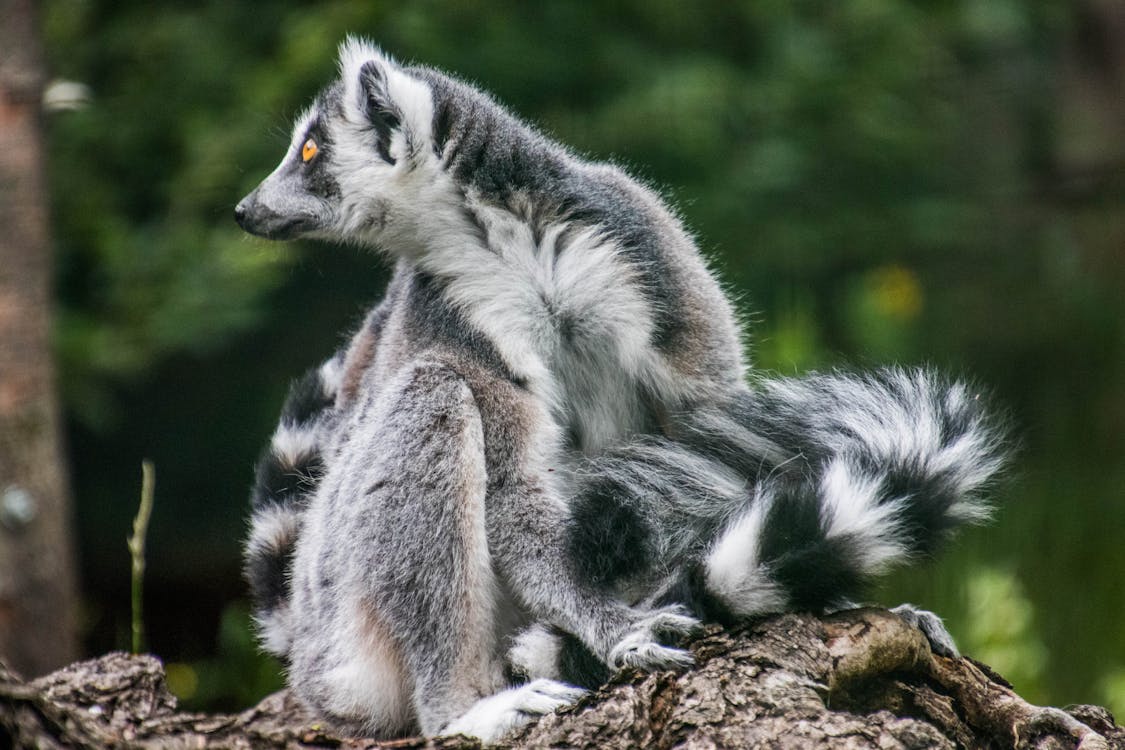
The most recognizable lemur — long black-and-white striped tail, bright orange eyes. Ring-tailed lemurs are highly social, living in groups of 15–25. They are semi-terrestrial, spending significant time on the ground, which makes them easier to observe and photograph than most other species.
Where to see it: Isalo National Park (semi-habituated groups walk alongside hikers), Anja Community Reserve (accessible, affordable, excellent for families), Berenty Private Reserve.
Sifaka
Several sifaka species exist across Madagascar. The Verreaux’s sifaka (southern and western regions) is famous for its “dancing” — it moves on the ground by hopping sideways on its hind legs with arms raised. The Coquerel’s sifaka (northwest) has orange-and-white colouring. Milne-Edwards’ sifaka lives in Ranomafana’s rainforest.
Where to see them: Kirindy Forest (Verreaux’s), Ankarafantsika National Park (Coquerel’s), Ranomafana National Park (Milne-Edwards’).
Black Lemur (Eulemur macaco)
Distinctive sexual dimorphism: males are jet black, females are russet-brown with white ear tufts. Black lemurs are found in the northwest and on Nosy Be and neighboring islands.
Where to see them: Nosy Komba island (semi-wild, highly accessible, near Nosy Be), Lokobe Reserve on Nosy Be itself.
Aye-Aye (Daubentonia madagascariensis)
One of the world’s strangest mammals — large bat-like ears, continuously growing rodent-like teeth, and an elongated middle finger used to extract insect larvae from wood. Nocturnal and solitary; very hard to find without a specialist guide.
Where to see it: Ranomafana National Park (night walks, specialist guides required), Palmarium Reserve near Andasibe (private reserve with semi-habituated individuals).
Mouse Lemur
The world’s smallest primates. Over 20 species have been described, many found in only a few square kilometers. Mouse lemurs are nocturnal and tiny — 30–70 grams — and look like a small wide-eyed mouse. Spotting them requires a red-light torch and a slow, patient night walk.
Where to see them: Kirindy Forest, Andasibe (night walks), Ranomafana (night walks).
Golden Bamboo Lemur (Hapalemur aureus)
Found only in Ranomafana National Park. Discovered in 1987, it feeds almost exclusively on giant bamboo — a diet that would be fatally toxic to most mammals due to cyanide content. One of the rarest mammals on Earth.
Where to see it: Ranomafana National Park — this is the only reliable site.
Best Parks for Lemur Watching
1. Andasibe-Mantadia — Best Overall
Three hours east of Antananarivo, Andasibe is the single best place in the world to hear and see the indri. The park is well-organized, guides are excellent, and sightings in the morning hours are nearly guaranteed. Night walks yield mouse lemurs, chameleons, and tree frogs.
Book Andasibe guided tours on GetYourGuide | Andasibe on Viator
2. Ranomafana — Rainforest Specialists
UNESCO World Heritage rainforest. The only place to reliably see the golden bamboo lemur. Also excellent for Milne-Edwards’ sifaka, red-bellied lemur, and aye-aye (night walks). The terrain is hilly and walks require some fitness.
Book Ranomafana tours | Ranomafana on Viator
3. Isalo — Ring-Tailed Lemurs in Canyon Country
Isalo’s ring-tailed lemurs are the most accessible in Madagascar — semi-habituated groups walk alongside hikers in the canyon floor and gather at picnic areas. Combine with the dramatic sandstone landscape for the best photography.
Book Isalo day tours | Isalo on Viator
4. Kirindy Forest — Fossa and Rare Species
A dry deciduous forest near Morondava (the Baobabs region). Famous for the fossa (Madagascar’s largest predator), Verreaux’s sifaka dancing, and the giant jumping rat. Night walks here can be spectacular — this is one of the best nocturnal wildlife sites on the island.
5. Nosy Komba — Easiest Lemur Encounter
A small island near Nosy Be inhabited by semi-wild black lemurs. Day trip boats depart from Hell-Ville. The lemurs are habituated to humans and will climb on visitors (let them come to you). Best combined with a Nosy Iranja snorkeling day trip.
Book Nosy Komba day trip | Nosy Komba on Viator
6. Anja Community Reserve — Budget-Friendly Ring-Tails
A small community-run reserve near Ambalavao on the RN7. Home to several hundred ring-tailed lemurs that are accustomed to visitors. Entry fees are low and go directly to the local community. Easy half-day stop if driving the southern circuit.
- Browse Madagascar wildlife tours on GetYourGuide
- Madagascar wildlife on Viator
- SafetyWing travel insurance — essential for remote park visits
- Bradt Madagascar Travel Guide — best park-by-park reference
Tips for Lemur Watching
- Go with a guide. Guides are legally required in national parks and are genuinely essential — they know where the groups are, move quietly, and position you correctly for observation.
- Morning walks first. Most diurnal lemurs are most active in the first 2–3 hours after sunrise. Indri calls are exclusively morning events.
- Night walks for nocturnal species. Mouse lemurs, aye-ayes, and chameleons require night walks with red-filtered lights. Book these in addition to daytime walks at the same park.
- Don’t feed or touch. Habituated lemurs may approach you — that’s normal. Do not initiate contact. Feeding causes behavioral problems and human disease transfer.
- Move slowly and quietly. Sudden movements and loud voices cause lemurs to flee into the canopy. Follow your guide’s pace.
FAQ — Where to See Lemurs in Madagascar
Where is the best place to see Indri lemurs?
Andasibe-Mantadia National Park, 140 km east of Antananarivo, is the best place to see Indri — the world’s largest living lemur. Morning walks with a guide give the best chance of hearing their extraordinary calls.
Can I see lemurs outside of national parks?
Yes — several private reserves (like Lemur Island near Andasibe and the Lemurs’ Park near Tana) have semi-wild lemur populations that are more habituated to humans. These are easier for families or visitors short on time.
What is the best time of year to see lemurs?
Lemurs are active year-round, but October to December is exceptional — baby lemurs are visible clinging to their mothers and there is intense activity across all species.
Do all Madagascar national parks have lemurs?
Most parks have some lemur species, but the diversity and density varies significantly. Ranomafana is exceptional for rare species (golden bamboo lemur, greater bamboo lemur). Isalo has ring-tailed and Verreaux’s sifaka lemurs in striking canyon landscapes.