Ranomafana National Park: Wildlife, Trails and Best Time to Visit
This post contains affiliate links. We may earn a small commission at no extra cost to you.
At a Glance
- Location: 65 km east of Fianarantsoa, southeastern highlands
- Altitude: 800–1,300 metres above sea level
- Key species: golden bamboo lemur, red-bellied lemur, milne-edwards’ sifaka
- Entry fee: 45,000 Ar adults, 25,000 Ar children (per day)
- Best time: April–November (dry season, good trail conditions)
Ranomafana National Park is one of Madagascar’s most biologically significant protected areas, covering 41,601 hectares of mid-altitude rainforest in the southeastern highlands. It was formally established in 1991 following the discovery of the golden bamboo lemur (Hapalemur aureus), a species previously unknown to science. Today the park is a UNESCO World Heritage Site and home to 12 lemur species, more than 100 bird species, and dozens of reptile and amphibian endemics. The park sits along the Namorona River valley and receives significant rainfall year-round, but access and wildlife activity are best between April and November when rain is lower and trails are passable.
Recommended Gear for Your Madagascar Wildlife Trip
You’re Flying 10,000km to See Lemurs, Chameleons, and Fossa — Don’t Document It With a Phone Camera
Indri lemurs calling across the canopy of Andasibe. Panther chameleons in electric blue and orange. The fossa spotted on a night walk in Kirindy. A smartphone sensor in low rainforest light produces grainy, blurred images. The Sony a6400 with Real-Time Eye Autofocus locks onto animal eyes instantly — even through undergrowth and low light. APS-C sensor, 4K video, flip-up touchscreen.
Check current price and availability on Amazon →
Madagascar Has Over 100 Species of Lemur and 280 Species of Bird — You’ll Miss Most of Them Without Binoculars
Sifaka lemurs leap between canopy trees 30 metres up. The Madagascar fish eagle perches on a branch 200 metres across a lake. Without binoculars, you’re looking at distant shapes and taking your guide’s word for it. The Vortex Diamondback HD 10×42 delivers HD optical clarity with edge-to-edge sharpness. Waterproof, fog-proof, backed by Vortex’s unconditional lifetime warranty.
Check current price and availability on Amazon →
Madagascar Goes Completely Dark After Sunset — Don’t Navigate It Blind
Outside of Antananarivo’s main streets, Madagascar has virtually no street lighting. Wildlife walks in Ankarana, night lemur spotting in Ranomafana, the path to your bungalow — all navigated in total darkness. The Black Diamond Spot 400-R delivers 400 lumens with a 100-metre beam, USB-C rechargeable, IPX8 waterproof, with red night-vision mode for wildlife observation without disturbing animals.
Check current price and availability on Amazon →
Madagascar Has Some of the Highest Malaria Risk in the World
The rainforests of Andasibe, the wetlands of Morondava, the rice paddies outside every village — mosquitoes are relentless and bite at dusk and dawn. DEET burns skin and destroys gear. Natrapel 20% Picaridin is the CDC-recommended alternative that repels mosquitoes, ticks, and sandflies for up to 12 hours without damaging your equipment.
Check current price and availability on Amazon →
No Grid, No Problem — Charge Your Devices From the Sun in Madagascar’s Remote Parks
Marojejy. Andringitra. Tsingy de Bemaraha. Madagascar’s most spectacular parks are its most isolated — no power outlets, no phone signal. A 3-day wilderness circuit means running on whatever charge you left camp with. The BLAVOR Solar Power Bank pairs 10,000mAh with a fold-out solar panel that recharges itself from sunlight as you trek.
Check current price and availability on Amazon →
Madagascar’s Power Cuts Will Kill Your Phone — Here’s 4 Full Charges of Insurance
Délestage — Madagascar’s rolling blackouts — can last 8 to 14 hours a day. Your navigation app, offline maps, and boarding pass for tomorrow’s Tsaradia flight will all be dead. The Anker PowerCore 20,000mAh gives 4 full phone charges with fast USB-C delivery. Charge it during the hotel’s morning power window and you’re covered all day.
Check current price and availability on Amazon →
Madagascar Uses European Plugs Only — Your North American Charger Won’t Work Without This
Madagascar runs on Type C and E/F European plugs, 220V. North American plugs don’t fit. The TESSAN European adapter accepts North American plugs and adds 2 USB ports, so you can charge your phone and power bank simultaneously from a single outlet. Compact, grounded — one of those items that’s obvious in hindsight and impossible to find when you need it.
Check current price and availability on Amazon →
One Adapter for Every Country on Your Madagascar Journey — Including Stopovers in Paris or Réunion
Many travellers reach Madagascar via Paris CDG or Réunion — and face a different outlet at each stop. The GaN Universal Adapter covers all outlet types worldwide with USB-C PD fast charging — one device, 4 ports, every country. GaN technology runs cooler and charges faster than standard adapters.
Check current price and availability on Amazon →
Plan your Madagascar trip:
- Browse Madagascar tours and experiences (GetYourGuide)
- Get travel insurance for Madagascar (SafetyWing)
- World Nomads — covers adventure activities: trekking, diving, motorbikes. Compare both.
Getting to Ranomafana — Transport Options from Fianarantsoa and Tana
Ranomafana is 65 kilometres east of Fianarantsoa along the RN25, a route that takes around 1.5 to 2 hours by private vehicle depending on road conditions. From Antananarivo, the standard approach is to take a taxi-brousse or private car to Fianarantsoa (7–9 hours), spend a night there, and continue to Ranomafana the following morning. Several lodges near the park entrance can arrange transfers from Fianarantsoa for around 80,000–120,000 Ariary per vehicle. The nearest town to the park gate is Ranomafana itself, a thermal spa village on the river, where budget guesthouses charge 30,000–60,000 Ariary per night. Upmarket options include Centrest Hotel and the Vohiparara guesthouses, which offer proximity to the forest. Entrance tickets and guide permits are purchased at the Madagascar National Parks office at the main park gate, 3 kilometres east of the village.
Wildlife: Lemurs, Reptiles and Birds to Look For
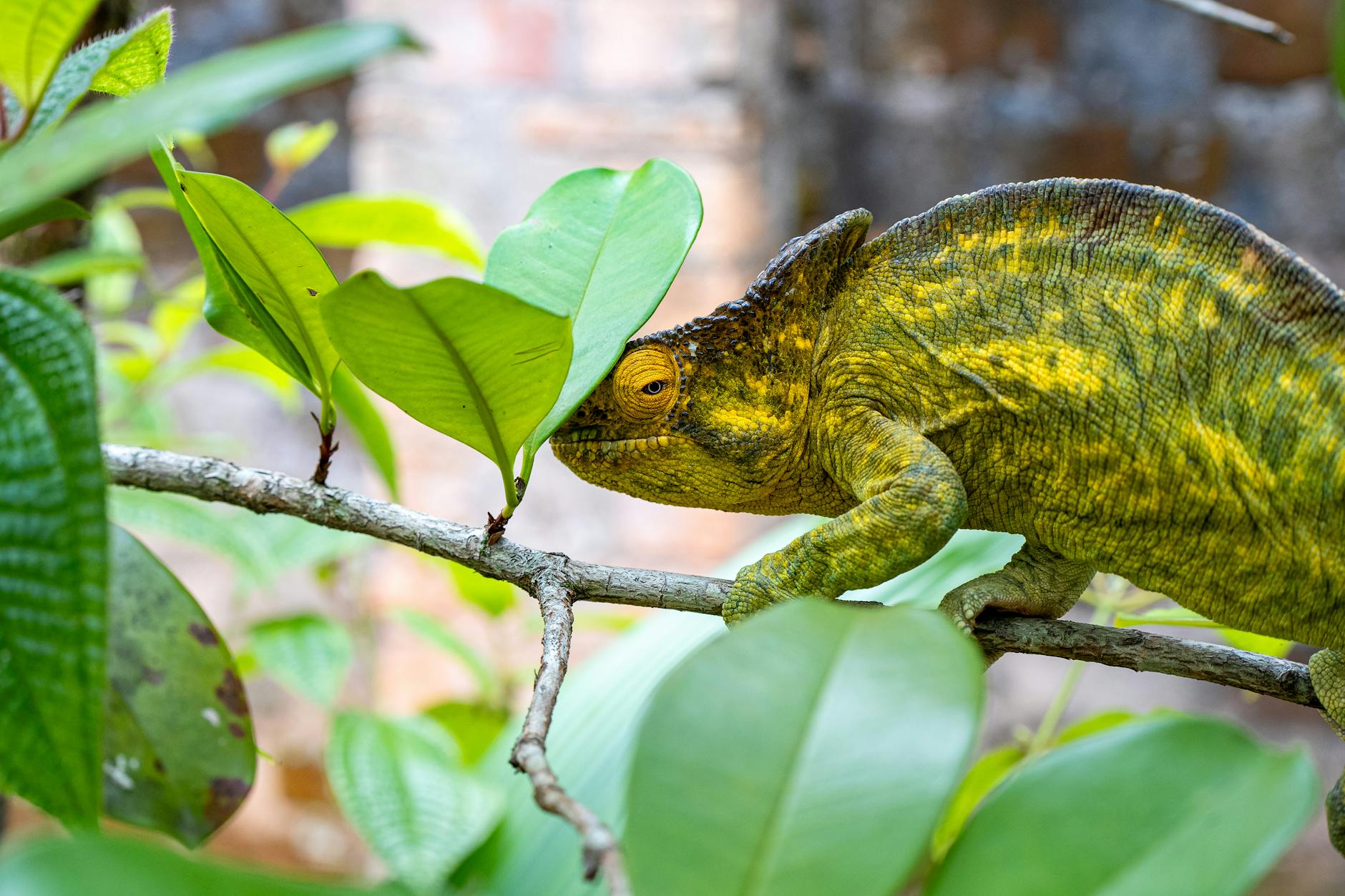
Ranomafana is the best place in Madagascar to see the golden bamboo lemur, which feeds almost exclusively on giant bamboo shoots containing toxic levels of cyanide. Groups of three to eight individuals are regularly tracked by guides in the Talatakely circuit, particularly between June and October. The greater bamboo lemur (Prolemur simus), critically endangered, is also resident in the park. The milne-edwards’ sifaka (Propithecus edwardsi) is another Ranomafana signature species, seen most easily at dawn when groups descend to lower branches to warm in sunlight. In the reptile department, look for the panther chameleon at forest edges and the Madagascar ground boa near the river banks. The park holds over 115 bird species including the endemic pitta-like ground roller and rufous-headed ground roller, both most active after heavy rain.
Read also:
Book activities in Madagascar:
Main Trails — Talatakely, Vohiparara and Night Walks
The Talatakely circuit is the most popular trail, starting from the main park gate and covering around 4 kilometres of relatively accessible rainforest. This trail offers the highest probability of golden bamboo lemur encounters and is suitable for most fitness levels, though paths can be slippery after rain. The Vohiparara circuit begins further into the park and adds around 8 kilometres of more challenging terrain, including river crossings and steep ascents. This route is recommended for serious wildlife watchers seeking rarer species including the greater bamboo lemur. Night walks in Ranomafana depart from the park gate and last two to three hours. The standard night walk costs 25,000 Ariary guide fee on top of the 45,000 Ariary day entry. At least one night walk is strongly recommended — this is when mouse lemurs, chameleons, frogs and tenrecs are active and visible along the lower trail edges.
Best Time to Visit and What to Pack
April through June is the optimal window for visiting Ranomafana. Rainfall is lower, fruiting trees attract lemur groups into more accessible areas, and trail conditions are at their best after the wet season vegetation flush. July through September is reliably dry but cool, with temperatures at altitude dropping to 10–12 degrees Celsius at night — bring a fleece. October and November see warming temperatures and increasing wildlife activity ahead of the rainy season, and golden bamboo lemur sightings peak in October. Avoid January through March: the park receives up to 3,500 millimetres of rain annually, with December–March being the peak wet months when trails are often impassable without guides. Essential packing includes waterproof hiking boots, light rain jacket, long-sleeved shirts for insect protection, head torch for night walks, and binoculars for canopy bird watching.
Ready to book your Madagascar trip?
Frequently Asked Questions
How long should I spend at Ranomafana National Park?
A minimum of two days and one night gives you time for the Talatakely day circuit and one night walk. Three days is ideal to add the Vohiparara circuit and a second night walk in a different zone. Four or more days is recommended for birdwatchers targeting all endemic species.
Do I need a guide for Ranomafana?
Yes — guides are mandatory in all Madagascar national parks and the park cannot be entered without one. Guides are assigned at the park gate and cost 25,000–40,000 Ariary per half-day depending on circuit. Choose a certified Madagascar National Parks guide rather than a private operator guide for in-park trails.
What is the best accommodation near Ranomafana?
Centrest Hotel is the most popular mid-range option, located inside the park boundary with easy trail access. Domaine Nature is a comfortable guesthouse 2 kilometres from the gate. For budget stays, several guesthouses in Ranomafana village charge under 40,000 Ariary per night. Book well ahead for June–October peak season.
Ranomafana National Park earns its reputation as one of the finest wildlife experiences in Madagascar. The combination of accessible lemur encounters on the Talatakely trail, the specialist appeal of the greater bamboo lemur, and the exceptional night walk fauna makes it a compelling stop on any central or southern Madagascar itinerary. Plan for at least two nights, arrive at the park gate by 7:00 for the morning walk when lemurs are most active, and let your guide set the pace — rushing through Ranomafana means missing the details that make it special.
Start planning your Madagascar adventure today
Browse Madagascar experiences on GetYourGuide
Affiliate link – commission earned at no extra cost to you.
Plan Your Trip to Madagascar
- Read the full Madagascar Travel Guide
- Explore itineraries by style and duration
- Where to See Lemurs in Madagascar
Where to Stay
Lodge space near the park is limited — book ahead to secure your accommodation.