Sakalava Kingdom: History, Tombs and Where to See Their Heritage
This post contains affiliate links. We may earn a small commission at no extra cost to you.
At a Glance
- Who: western Madagascar’s dominant ethnic group, founders of Madagascar’s first major unified kingdom
- Territory: entire west coast from Mahajanga (Boina kingdom) south to Morondava (Menabe kingdom)
- Historic peak: 17th–18th century — Sakalava Kingdom controlled roughly half of Madagascar
- Sacred sites: doany royal ancestral shrines maintained by spirit mediums (saha)
- Strict fady: royal sites require a local guide, no red clothing, no shoes, no unauthorised photography
- Base hotel: Find hotels in Mahajanga on Agoda
- 4WD essential: Compare 4WD rentals on Carla
- Travel insurance: SafetyWing
📖 Read Up on Madagascar
Guidebooks and background to get more from your trip:
- Bradt Madagascar guide — the most thorough Madagascar guidebook. See on Amazon →
- Lonely Planet Madagascar — great for planning and background. See on Amazon →
- French/Malagasy phrasebook — break the ice and bargain like a local. See on Amazon →
- Madagascar wildlife field guide — identify lemurs, chameleons and birds. See on Amazon →
As an Amazon Associate we earn from qualifying purchases.
The Sakalava built Madagascar’s first major centralised state long before European colonisation — and the cultural infrastructure they created, particularly the doany system of royal ancestral shrines, remains spiritually active today. Visiting Sakalava heritage sites is an exercise in understanding how Malagasy political power and ancestor veneration have always been the same thing.
Sakalava History: The First Great Kingdom
The Sakalava Kingdom emerged in the late 16th and early 17th century in western Madagascar, predating the better-known Merina Kingdom by nearly two centuries. Under King Andriandahifotsy and his successors, the Sakalava unified disparate western clans into a centralised state with a standing army, an organised tribute system, and active trade relations with Arab, Swahili, and European merchants on the coast. At their peak in the 17th and 18th centuries, the Sakalava controlled approximately half of Madagascar — the entire west coast from Diego Suarez south to the Mahafaly territory.
The kingdom eventually divided into two main branches: the Boina kingdom in the north, centred near modern Mahajanga, and the Menabe kingdom in the south, centred near modern Morondava. Both remained independent until the 19th-century Merina conquest under King Radama I and his successors. French colonisation in 1896 ended both kingdoms as political entities, but the spiritual and ancestral institutions — particularly the doany shrines — survived intact. Today Sakalava-speaking communities are concentrated along the entire west coast, with the strongest cultural continuity in Mahajanga, Morondava, and the rural areas inland from both.
Doany — Active Royal Ancestral Shrines
A doany is a sacred royal compound where the relics and spirits of past Sakalava kings are maintained, consulted, and honoured. Unlike a Western historical monument, a doany is a living spiritual institution — daily ceremonies are held, spirit mediums (saha) regularly enter trance states to communicate the will of royal ancestors, and major life decisions for Sakalava families across the region are presented at the doany for ancestral guidance. The most important doany are located in the hills above Mahajanga and at several sites in Menabe between Morondava and Belo-sur-Tsiribihina.
For travellers, doany access is heavily constrained by fady. Entry without a local guide who has the appropriate relationships is inappropriate and generally refused. Once inside, several rules apply: remove shoes, do not wear red (the royal colour reserved for the ancestors), do not touch the relics or any tomb, and never photograph the saha or any ritual element without explicit verbal permission. If the saha enters a trance during your visit, do not interrupt, do not speak loudly, and follow your guide’s lead on whether to remain or withdraw. Our guide to fady explains the broader ancestral logic at work here.
Sakalava Tombs, Material Culture and Zebu
Sakalava tomb architecture differs significantly from the Merina and Mahafaly styles described in our other guides. Royal tombs (particularly in Menabe) are surrounded by carved wooden posts — and in some traditional contexts, these include carved erotic figurines (sataro) representing fertility and the life-force of the deceased. These figurines are not titillating folk art; they encode a serious spiritual concept that the deceased’s vitality continues to generate life energy for the family lineage. Many of the most refined examples have been removed from rural sites over the past century — some to museums, others to private collections through illicit trade.
Sakalava material culture also includes some of Madagascar’s most refined silver jewellery (perles d’argent) and a distinct musical tradition centred on the valiha bamboo zither and the marovany rectangular box zither. Zebu culture among the Sakalava resembles the Bara and Antandroy traditions in centrality but differs in ritual form — see our guide to zebu culture for context on how cattle function in west-coast ceremonial life and the dahalo raiding patterns that still affect rural Menabe and Boina.
Visiting Sakalava Heritage Sites
Mahajanga (Majunga) is the most accessible entry point for Boina Sakalava heritage. Air Madagascar and Tsaradia operate regular flights from Antananarivo (approximately 1 hour); the alternative is the RN4 road journey of 11–12 hours. The old quarter of Mahajanga reflects the city’s history as a regional capital with Arab, Indian, and Sakalava cultural layers visible in its architecture — covered carved doorways, balcony houses, and the famous baobab on the seafront. Search Mahajanga hotels on Agoda.
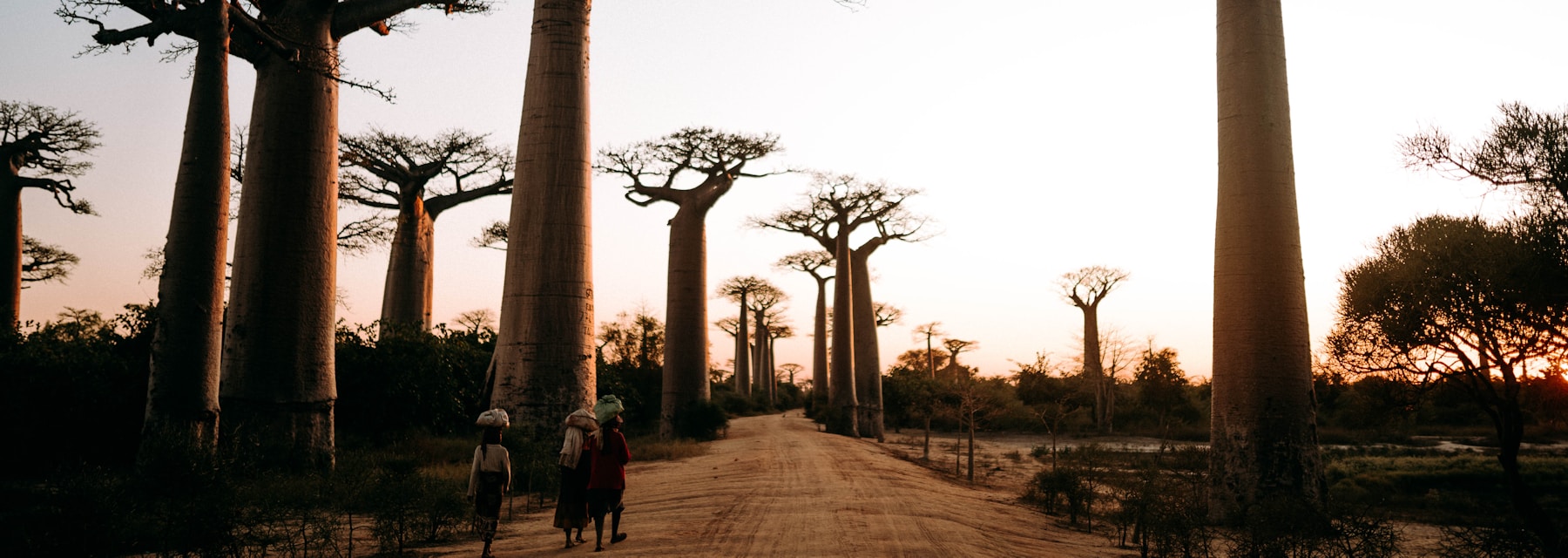
For Menabe heritage, fly to Morondava (1.5 hours from Tana) and use the town as a base for the Baobab Avenue, Kirindy Forest, and the surrounding Sakalava tombs. The road from Morondava to Belo-sur-Tsiribihina is unpaved and requires a 4WD — particularly in the wet season (December–March) when the route is sometimes impassable. Rent a 4WD on Carla for the Menabe circuit. Continuing south puts you in Vezo country — the maritime cousins of the Sakalava who occupy the southwestern reef coast.
Flight delayed or cancelled? Domestic and international routes to western Madagascar are frequently affected by weather and operational issues. Check your compensation claim free on AirAdvisor — eligible passengers can receive up to €600.
Frequently Asked Questions
Can tourists visit a Sakalava doany?
Yes, with a knowledgeable local guide who maintains relationships with the doany custodians. Walking up to a doany without a guide is inappropriate and generally not permitted. Once inside, follow the rules strictly: no red clothing, no shoes, no touching of relics, no photography without explicit permission. A small offering of cash or rum is appropriate.
Where is the most important Sakalava site to visit?
The doany above Mahajanga is the most important Boina Sakalava site and the most accessible to travellers. For Menabe Sakalava heritage, the area around Morondava and Belo-sur-Tsiribihina contains numerous royal tombs and shrines, but requires a 4WD and a local guide to access respectfully.
When did the Sakalava Kingdom end?
The Sakalava Kingdom lost political independence in the mid-19th century when the Merina Kingdom under Radama I and his successors conquered most of the west coast. French colonisation in 1896 formally ended all Malagasy kingdoms as political entities. However, Sakalava spiritual and ancestral institutions — particularly the doany shrines and the saha mediums — have remained continuously active to the present day.
The Sakalava cultural world is the most historically significant and least visited of Madagascar’s major ethnic regions. Engage a local guide before any doany visit, allow extra time for the unpaved roads of the Menabe, and treat every royal site as the active spiritual institution it is. Mahajanga is the easiest entry point; Morondava unlocks Menabe heritage plus the Baobab Avenue. Before any travel to remote western Madagascar, secure insurance covering medical evacuation — costs reach $80,000. Check SafetyWing’s plans for Madagascar.
Travel Insurance for Madagascar
Medical evacuation from Madagascar costs $30,000–$80,000. Don’t travel without cover.
- SafetyWing — monthly-subscription travel medical cover; you can check their plans.
- World Nomads — single-trip travel insurance with adventure-activity options.
Plan Your Trip to Madagascar
- Read the full Madagascar Travel Guide
- Explore itineraries by style and duration
- Explore the full destination guide
Where to Stay