How to Choose the Right Madagascar Tour 2026: Match the Trip to What You Want
Affiliate disclosure: This article contains sponsored links to hotels, tour operators, insurance providers, and other travel services. We earn a small commission if you book through our links, at no extra cost to you.
Choosing the Right Madagascar Tour 2026 — At a Glance
- Start here: pick the tour around your real priorities — wildlife, beaches, adventure, photography or family — not the brochure
- Then match: your time, the season, and your fitness and travel style
- Best fit for most: a tailor-made trip that matches the tour to you, not you to a fixed package
- Get a tailor-made trip: contact Carla
- Book day tours & activities: on GetYourGuide
- Arrange a car & driver: on Carla
- Flight protection: EU261 up to €600 per passenger
- Travel insurance: SafetyWing Nomad Insurance
🎒 Madagascar Trip Essentials
A few inexpensive items make the biggest difference on the ground in Madagascar:
- Picaridin insect repellent — DEET-free protection against malaria mosquitoes. See on Amazon →
- Permethrin clothing spray — treat clothes; kills mosquitoes on contact for weeks. See on Amazon →
- Pop-up mosquito net — budget lodges rarely provide one; packs down tiny. See on Amazon →
- Water filter bottle — tap water isn’t safe to drink in Madagascar. See on Amazon →
- Universal travel adapter (USB-C) — Madagascar uses European-style plugs. See on Amazon →
- 8×42 binoculars — essential for spotting lemurs and chameleons in the canopy. See on Amazon →
As an Amazon Associate we earn from qualifying purchases.
Once you have settled the question of who to book with, you face the question that actually shapes your holiday: which tour. Madagascar is not one trip. It is a dozen very different trips wearing the same name, and the gap between them is enormous. A wildlife circuit through the eastern rainforest and a beach-and-island escape off the northwest coast share almost nothing except the airport you arrive at. The most common — and most expensive — mistake travellers make is choosing the tour that looked good in a brochure rather than the one that matches what they truly want, how long they have, when they are travelling, and what their body can comfortably handle.
This guide is built to stop that mistake. It walks you through matching a tour to your real priorities, your time, the season, and your travel style, so you book the trip you will love rather than the one that photographs well. If you have not yet settled on a company, start with our pillar guide to the best Madagascar tour operators in 2026; this article picks up where that one leaves off and is the natural companion to our look at group versus private tours and the practical how to book a Madagascar tour walkthrough.
Start With What You Want, Not the Brochure
The brochure is designed to sell you a route. It is not designed to ask what you actually want from your two or three weeks. That is your job, and it is worth doing before you read a single itinerary. The travellers who come home happiest are almost always the ones who decided their priorities first and then went looking for a trip to fit, rather than the ones who fell for a glossy spread and tried to bend their expectations around it afterwards.
Spend a quiet hour deciding what you genuinely care about. Are you here for lemurs and the chance to see animals that exist nowhere else on Earth? For empty white-sand beaches and turquoise water? For trekking through dramatic landscapes? To photograph baobabs at sunset? To give your children a once-in-a-lifetime introduction to wild nature? Or to do the famous overland drive that takes in a little of everything? Most people want a blend, and that is fine — but rank them. When the blend has to be compressed into a finite number of days, the ranking tells you what to protect and what to drop.
Be honest, too, about the things that are easy to skip in the planning stage and hard to live with on the road: how much driving you can tolerate, how rustic you are willing to go on accommodation, whether you sleep badly without comfort, and how you feel about long days. A trip that ignores these turns into an endurance test. A trip that respects them feels like the holiday you were promised. The rest of this guide takes each of these dimensions in turn.
Match the Tour to Your Main Interest
The single biggest fork in the road is what you came for. Madagascar rewards a clear theme far more than a scattergun “see everything” approach, because the island is large, the roads are slow, and the highlights are spread across regions that take days to travel between. Pick the interest that matters most and build the trip around it; let the others be bonuses rather than obligations.
Wildlife and lemurs
This is the reason most people come, and rightly so — Madagascar’s wildlife is genuinely unlike anywhere else, with lemurs, chameleons, leaf-tailed geckos and a cast of creatures found on no other landmass. If this is your priority, your tour should be built around national parks and reserves with experienced naturalist guides, generous time in each park rather than a rushed drive-through, and at least one early-morning and one night walk, when the forest is most active. The eastern rainforest corridor around Andasibe is the easiest introduction; Ranomafana and the parks along the RN7 reward more time; the dry western and southern forests offer different species again. A trip that allots a single afternoon per park will leave you frustrated. For the full picture of what to expect and where, read our guide to the best Madagascar safari and the species-by-species complete guide to the lemurs of Madagascar. Wildlife-led trips suit patient travellers who would rather sit quietly and watch than tick off a long list of places.
Beaches and islands
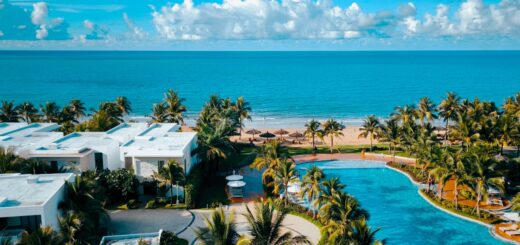
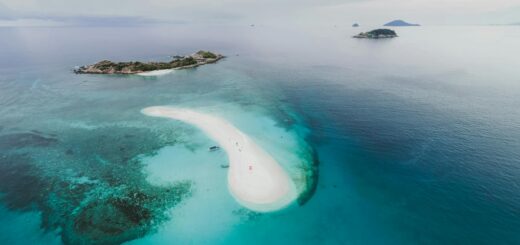
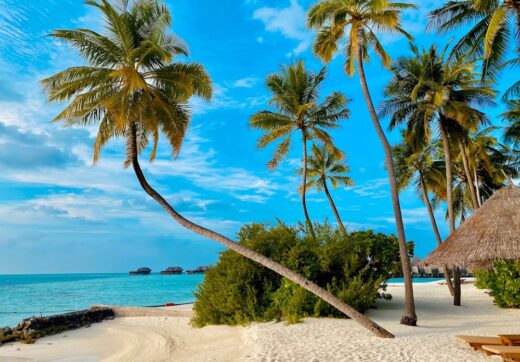
Madagascar’s coast and offshore islands — Nosy Be and its archipelago in the northwest, Île Sainte-Marie in the east, the far south and southwest — offer the kind of slow, warm-water beach time that pairs beautifully with a few days of wildlife inland. This suits travellers who want their holiday to end on a hammock rather than a forest trail, honeymooners, and anyone who finds long driving days draining and wants a fixed base for part of the trip. The trade-off is that beaches are far from the main wildlife parks, so a beach-heavy trip usually means choosing a region and committing to it rather than crossing the whole island. Internal flights help here, and a good itinerary will use them rather than pretend the distances are drivable.
Adventure and trekking
If you measure a trip by what you walked, climbed or paddled, Madagascar delivers terrain you will not find elsewhere: the granite massif of Andringitra and its high walkable peak, the canyons of Isalo, the tsingy limestone pinnacles of the west, river descents, and genuinely remote expedition routes. This suits fit, self-reliant travellers who are comfortable with multi-day walks, basic camps and physical effort, and who see rough roads as part of the adventure rather than a hardship. It is the wrong choice for anyone hoping for an easy, low-effort holiday. Our guide to adventure travel in Madagascar sets out the routes, the fitness they ask for, and how to pair the effort with the wildlife you pass along the way.
Photography
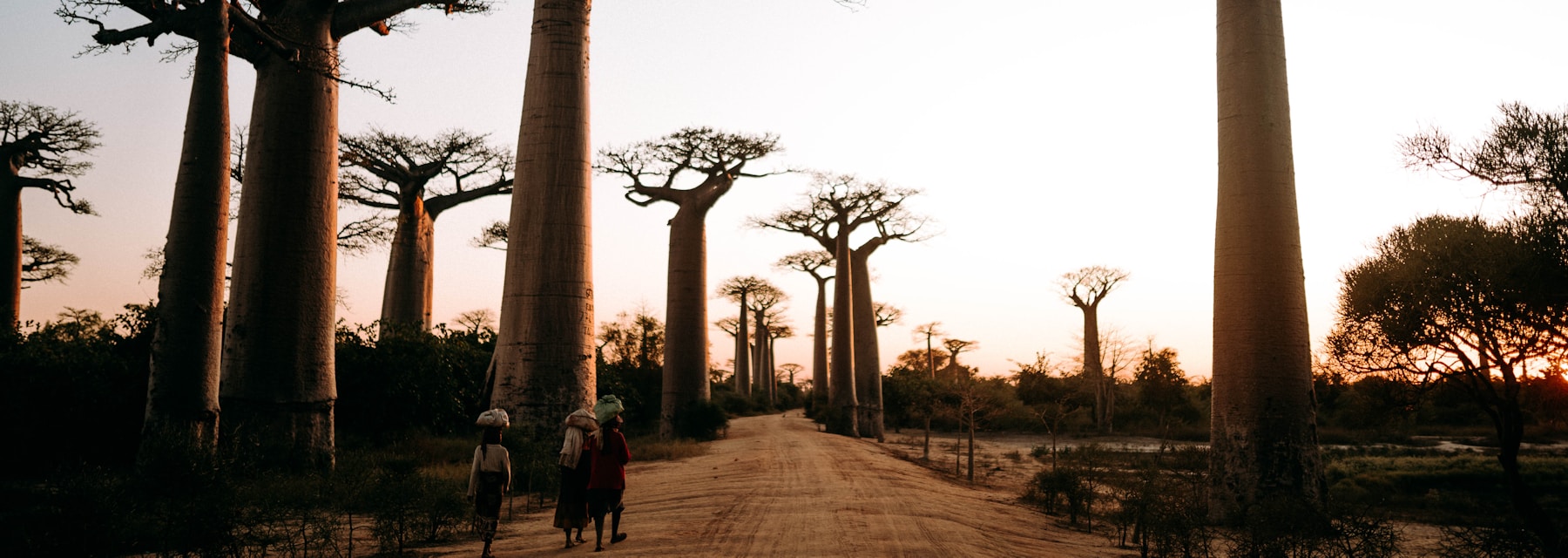
A photography-led trip is a different animal from a general tour, even when it visits the same places. It is organised around light and timing rather than ground covered: dawn and dusk in the parks, the Avenue of the Baobabs at sunset near Morondava, slow time waiting for a subject rather than hurrying to the next stop, and a guide who understands why you want to stay put when everyone else is ready to move on. Photographers should plan fewer locations, more time at each, and accept that a single great morning is worth more than three hurried ones. If photography is your reason for coming, say so loudly when you plan, because a standard sightseeing pace will quietly sabotage your best shots.
Family
A family trip is built around a different question: keeping children engaged, safe and not exhausted. Lemurs are the great gift here — few wildlife encounters land as well with children as a troop of lemurs at close range — but the route has to be gentler, the driving days shorter, the accommodation more comfortable, and the pace built around attention spans rather than mileage. School-age children generally cope far better than toddlers with the distances and the malaria precautions. A good family tour mixes wildlife the children will remember with downtime they need, and avoids the punishing cross-island marathons that suit no one under twelve.
The classic RN7 overland
The Route Nationale 7 from Antananarivo south to Tuléar is the country’s signature overland trip, and for good reason: it strings together highland scenery, the rainforest of Ranomafana, the wine country around Ambalavao, the canyons of Isalo and a finish near the coast, all on a single (long) road. It suits travellers who want a bit of everything, who enjoy the journey itself, and who do not mind a fair amount of driving. It is the closest Madagascar has to a “greatest hits” route. The risk is treating it as a checklist and spending more time in the vehicle than in the places — which the duration and pace sections below are designed to prevent. Our best Madagascar itinerary guide shows how the RN7 and its alternatives are typically structured.
Match the Tour to Your Time
Time is the single hardest constraint in Madagascar, because the island is big and the roads are slow. Distances that look modest on a map can swallow a full day of travel. Matching the tour to the days you actually have — rather than the days you wish you had — is the difference between a relaxed trip and a forced march. Our dedicated one week versus two week versus three week itinerary guide goes deep on this; here is the short version.
One week. A week is enough for one region done well, not the whole island. The honest, satisfying one-week trips pick a single theme — the eastern rainforest and a beach finish, or a short loop south of the capital — and resist the urge to add more. Trying to cross Madagascar in seven days means spending most of it in transit and seeing the country through a windscreen. If a week is all you have, narrow the ambition and you will enjoy it far more.
Ten days. Ten to twelve days is the sweet spot for many first-time visitors. It is enough to combine two regions — a wildlife stretch and a beach or a section of the RN7 — without the trip feeling rushed, especially if you use an internal flight to skip one long drive. This is the duration where a well-built itinerary really starts to breathe.
Two to three weeks. With two to three weeks you can do the country justice: the full RN7 with time to linger, a wildlife-and-beach combination across regions, or a serious adventure or photography itinerary. This is where Madagascar opens up and where the long flight to get here pays off properly. Even so, more days is not a licence to add more places — it is permission to slow down at the ones you choose.
Match the Tour to the Season
Season changes which tours make sense, and a trip that is brilliant in one month can be miserable in another. Madagascar has a broadly dry season from roughly April or May to October or November, and a hotter, wetter season either side of the new year, with regional variation. Our best time to visit Madagascar guide has the full month-by-month breakdown; the planning logic is this.
The dry season is the safe default for almost every tour type. Roads are more reliable, parks are easier to walk, and the cooler months bring out the wildlife on comfortable trails. The wildlife-viewing peak runs through the dry months into the early part of the year, when many lemur species have young and the forests are active — a real consideration if wildlife is your priority. The wet season brings lush, green, photogenic landscapes and fewer visitors, but also rain, heat, occasional cyclones on the east coast, and roads that can become impassable, which can derail an ambitious overland route. Some regions and parks effectively close or become hard to reach.
The practical upshot: if you are coming in the wet season, choose a tour built for it — coastal and island bases, regions less affected by rain, a more flexible route — rather than a long, road-dependent overland circuit that the weather can break. If you are chasing peak wildlife, line your dates up with the season rather than the other way round. A tour that ignores the calendar is a tour built to disappoint.
Match the Tour to Your Fitness and Travel Style
This is the dimension travellers most often underestimate, and the one that most often turns a dream trip into a slog. Three things matter most: how much walking you are happy to do, how you feel about rough roads and long transfers, and the level of comfort you need to stay happy.
Walking. Wildlife viewing in Madagascar means walking — often on uneven forest trails, sometimes for hours, occasionally up steep ground. Adventure trips ask far more again. Be realistic about what your group can manage, especially the least mobile member, and choose parks and routes accordingly. There are gentler reserves with boardwalks and short loops, and there are demanding treks; matching the two to your real fitness is essential, not optional.
Roads and transfers. Madagascar’s roads are slow and often rough, and overland travel is a defining feature of most tours. Some people enjoy watching the country roll by; others find a sixth straight hour on a bumpy road genuinely miserable. If you are in the second camp, build a trip that uses internal flights to cut the longest legs, limits driving days, and bases you in one place for stretches rather than moving every night.
Comfort. Accommodation in Madagascar ranges from simple, rustic lodges to genuinely high-end places, and they are not evenly distributed — the remoter and wilder the location, the more basic the bed tends to be. Decide honestly how much comfort you need. There is no shame in wanting a hot shower and a good mattress, but it does narrow where you can go, and it is far better to plan around that than to discover it at nine at night in the middle of nowhere.
Fixed Package vs Tailor-Made
Here is where everything above comes together. A fixed package is built for an imagined average traveller. It has a set route, set dates, a set pace and a set group, and your job is to fit yourself into it. That works if the package happens to align with your priorities, your time, the season you can travel and your fitness — but the more specific your wants, the less likely a fixed package is to match all four at once. You end up trading away the thing you cared about most because it did not fit the template.
A tailor-made trip inverts the relationship. Instead of matching you to the tour, it matches the tour to you. You tell a planner your priorities, the days you have, when you can travel and how you like to move, and they build a route around those answers — more time in the parks if wildlife is your reason for coming, a beach finish if that is what you are dreaming of, fewer driving days if rough roads are not for you, an internal flight where it saves a punishing leg. For a country as varied and logistically demanding as Madagascar, this is usually the better fit, and it is why a tailor-made trip with a resident specialist is the recommendation that runs through this whole guide.
The honest counterpoint is cost and group size, and that is a real decision worth making deliberately rather than by default. Whether you travel privately or join a small group changes both the price and the feel of the trip; we set out the full trade-off in our companion guide to group versus private tours in Madagascar, which is the natural next read once you have decided what kind of trip you want.
Questions to Ask Before You Commit
Before you put money down on any tour — fixed or tailor-made — a handful of questions will tell you whether it really matches what you decided you wanted. The answers, and how readily they are given, are also a good test of the operator.
- What exactly is included, and what is not? Park entry fees, mandatory local guide fees at each reserve, internal flights, meals, drinks and tips add up. Ask for a clear line on what the price covers so you are comparing like with like.
- What is the real daily pace? Ask how many hours of driving on the longest days, how much time is actually spent in each park, and how many one-night stops there are. A route that reads beautifully can hide a punishing rhythm.
- How big is the group, and who is in it? Group size changes everything from how close you get to wildlife to how often you wait for stragglers. If it is a private trip, confirm it stays private.
- Who is the driver-guide, and what do they know? On most Madagascar trips your driver-guide is the single biggest factor in how good the experience is. Ask about their experience, their English (or French), and how naturalist guiding is handled inside the parks.
- How much flexibility is there? Can you add a night somewhere, swap a park, or build in a slower day? The answer reveals how much the trip can be matched to you.
Common Mistakes When Choosing a Tour
Most disappointing Madagascar trips fail in one of a few predictable ways, and all of them are avoidable once you know to look for them.
Over-packing the route. The most common error by far is trying to see too much in too few days. Madagascar’s distances punish ambition, and a route with too many stops becomes a tour of car interiors and arrival fatigue. Fewer places, more time at each, is almost always the better trip — and the one people remember fondly.
Travelling in the wrong season. Booking a long overland circuit in the heart of the wet season, or arriving outside the wildlife peak when seeing animals was the whole point, are both avoidable mistakes. Match the dates to the trip, or the trip to the dates — but match them.
Choosing the wrong pace. A tour built for energetic, road-hardened travellers will exhaust a family or an older couple, and a gentle, comfort-led trip will frustrate a serious trekker. Pace is not a detail; it is the lived experience of the holiday. Be honest about which kind of traveller you are.
Ignoring fitness and comfort. Booking demanding walks the least mobile member of the group cannot manage, or remote camps when you needed a real bed, sours a trip fast. These are easy to plan around and miserable to discover on the road.
How Cost Varies by Tour Type
Tour type drives cost as much as length does, and understanding why helps you choose without nasty surprises. Trips that lean on internal flights to cover the distances cost more than those that stay overland. Remote adventure and expedition routes carry their logistics in the price. Beach and island finishes can range from modest to very high depending on where you stay, because coastal accommodation spans the full spectrum. Wildlife circuits sit in the middle for most travellers, with park fees and naturalist guiding as fixed components. Private travel costs more per head than a shared small group, though it buys flexibility and pace.
The biggest fixed cost on almost any Madagascar tour is the vehicle, driver-guide and fuel, which is broadly the same whether two people travel or four — so sharing it is the single largest lever on price. For a full breakdown of what shapes the number and how to read a quote, see our companion Madagascar tour operator cost guide. Treat any figures you see as relative rather than fixed: the right way to budget is to decide the trip first and then price it, not the reverse.
Getting There and Travelling Well
Most international visitors reach Madagascar through Antananarivo, often via a hub such as Paris, Nairobi, Addis Ababa or one of the Indian Ocean islands. Long-haul routings with a tight connection are vulnerable to delays, and if any leg of your journey is a flight departing the EU or operated by an EU carrier, you may have rights to compensation of up to €600 per passenger under EU261 when a flight is heavily delayed or cancelled. It costs nothing to have that protection in your back pocket on a journey this long.
Travel insurance is not optional on a trip like this. Madagascar’s medical facilities are limited, especially away from the capital, and the activities that make the trip special — forest walks, remote parks, the occasional rough road — are exactly the situations where good cover matters. SafetyWing Nomad Insurance is a straightforward, well-priced option that suits the kind of independent and small-group travel most Madagascar trips involve, with cover that follows you across regions and activities. Sort your SafetyWing cover before you fly so that a delayed bag, a stomach bug or a twisted ankle in the forest is an inconvenience rather than a crisis. For day tours and activities you want to lock in ahead of time, you can book on GetYourGuide, and if you need a night in the capital at either end of your trip you can find Antananarivo hotels on Agoda.
Let Carla Match the Tour to You
Reading guides will get you to a clear idea of the trip you want; turning that idea into a real, well-timed, well-paced route is where a resident specialist earns their keep. Carla lives in Madagascar, plans trips for a living, and can take the priorities, dates, fitness and style you have just thought through and build a tour around them — choosing the parks that match your interest, the season that suits your dates, the pace that fits your group, and the regions worth your limited time. If you want a car and driver-guide arranged on the ground, that can be organised through Carla too. The difference between a tour you fit into and a tour built around you is, very often, a single conversation. Reach out to Carla and tell her what you actually want.
Frequently Asked Questions
What is the most common mistake when choosing a Madagascar tour?
Over-packing the route — trying to see too much of the island in too few days. Madagascar’s distances are slow and punishing, so a trip with too many stops turns into a tour of the inside of a vehicle. Fewer places with more time at each is almost always the better, more memorable trip.
Should I choose a fixed package or a tailor-made trip?
A fixed package works if its route, dates, pace and group happen to match your priorities. The more specific your wants, the more a tailor-made trip pays off, because it matches the tour to you rather than you to the tour. For a country as varied and logistically demanding as Madagascar, tailor-made is usually the better fit. Our group versus private guide covers the cost trade-off.
How much time do I need for a Madagascar tour?
A week suits one region done well; ten to twelve days lets you combine two regions comfortably; two to three weeks lets you do the country justice. The longer you have, the more you should slow down rather than add stops. Our duration guide breaks each option down in detail.
When is the best season for a wildlife tour?
The dry season, roughly April or May to October or November, is the safe default — better roads, easier walking, active wildlife on comfortable trails — and the wildlife-viewing peak runs through these months. The wet season is greener and quieter but brings rain, heat and roads that can become impassable. See our best time to visit guide.
How fit do I need to be?
It depends entirely on the tour. Wildlife viewing means walking on uneven forest trails, sometimes for hours; adventure and trekking trips ask far more; gentler reserves with boardwalks exist for those who want them. Match the route to the least mobile member of your group and you will all enjoy it more.
🧭 Get a Tour Matched to What You Want — Ask Carla
Tell a Madagascar-resident specialist your priorities, time and travel style, and get a trip built to fit. Reach out to Carla.
Plan Your Trip to Madagascar
- Read the full Madagascar Travel Guide
- Explore itineraries by style and duration
- Explore the full destination guide
Where to Stay