Tsingy de Bemaraha 2026: The Complete Guide to Madagascar’s UNESCO Stone Forest
Affiliate disclosure: This article contains sponsored links to hotels, tour operators, insurance providers, and other travel services. We earn a small commission if you book through our links, at no extra cost to you.
Tsingy de Bemaraha 2026 — At a Glance
- What & where: A vast UNESCO-listed national park of razor-sharp limestone pinnacles in western Madagascar’s Melaky region, reached overland from Morondava via the gateway village of Bekopaka.
- Best time to visit: Dry season only — roughly April/May to November. The wet season makes the access road impassable and the park closes.
- Signature highlight: Climbing the Grand Tsingy on fixed cables and harnesses — a genuine via ferrata — over ladders, footbridges and a famous suspension bridge strung high above the stone “forest”.
- Tours: Browse Tsingy & western Madagascar tours on GetYourGuide.
- Plan with a local: contact Carla to build a Tsingy + baobabs western loop around your dates.
- Getting around: The roads are rough — arrange a reliable car & driver via Carla with a 4×4 built for the track.
- Flight delays: If a connection into Madagascar is delayed or cancelled, you may be owed compensation — check your claim with AirAdvisor.
- Travel insurance: Remote terrain and via ferrata mean cover matters — SafetyWing Nomad Insurance.
- Where to stay: Bekopaka has a handful of lodges — see Madagascar stays on Agoda.
🐿 Wildlife-Watching Gear for Madagascar
The right kit turns a good wildlife trip into a great one:
- 8×42 binoculars — essential for spotting lemurs and chameleons in the canopy. See on Amazon →
- Rechargeable headlamp — essential for night walks; red mode won’t disturb wildlife. See on Amazon →
- Trekking poles — ultralight support for long park hikes. See on Amazon →
- Hiking daypack — comfortable pack for water, camera and layers. See on Amazon →
- Picaridin insect repellent — DEET-free protection against malaria mosquitoes. See on Amazon →
As an Amazon Associate we earn from qualifying purchases.
There are landscapes in Madagascar that look invented — and the Tsingy de Bemaraha is the strangest of them all. Picture an entire forest turned to stone: thousands upon thousands of grey limestone needles, some taller than a house, packed so tightly and honed so sharp that walking among them barefoot would be impossible. That image is built into the very name. In Malagasy, tsingy evokes a place “where one cannot walk barefoot”, and once you stand on the edge of the Grand Tsingy, clipped into a steel cable with the pinnacles dropping away beneath your boots, you understand exactly why. This is one of the most extraordinary natural sites in all of Africa, and it sits at the wild western edge of Madagascar where few travellers ever reach.
Getting here is a small adventure in itself — a long, dusty 4×4 journey from the coast that filters out all but the most determined visitors. But that remoteness is the whole point. The Tsingy de Bemaraha rewards the effort with something almost nobody else on your trip will have seen: a labyrinth of stone you explore on cables, ladders and swaying footbridges, threaded through with caves, a deep river gorge, and lemurs that leap across the pinnacles as if gravity were optional. This guide walks you through everything — what the tsingy actually is, how you explore it, the wildlife, the famously rough access, when to go, where to stay, what it costs, and how to fold it neatly into a western Madagascar loop alongside the Avenue of the Baobabs and Kirindy Forest.
What & Where Is Tsingy de Bemaraha?
The Tsingy de Bemaraha lies in western Madagascar, in the Melaky region, well inland from the coastal town of Morondava. It is protected on two overlapping levels: the Tsingy de Bemaraha Strict Nature Reserve, a tightly guarded scientific zone, and the surrounding Tsingy de Bemaraha National Park, which is the part open to visitors. Together they cover one of the largest protected areas in the country — on the order of 1,500-plus square kilometres of pinnacles, dry deciduous forest, gorges and rivers.
This is also a place of firsts. In 1990 the Tsingy de Bemaraha became Madagascar’s very first natural site to be inscribed on the UNESCO World Heritage List, recognised for its geological drama and the extraordinary, isolated ecosystems that have evolved within the stone maze. The national park is managed by Madagascar National Parks (MNP), and every visit is made with a compulsory local guide. If you want to understand where it fits among the country’s other great reserves, our guide to Madagascar’s national parks sets out the full picture.
Geographically, the park sits on a high limestone plateau that rises abruptly from the surrounding lowlands, and that elevation is part of why it feels so cut off. Roads barely penetrate this corner of the country, settlements are few and far between, and the landscape shifts from baobab-studded plains near the coast to dense dry forest and finally to the bristling grey ramparts of the tsingy itself. The combination of difficult terrain and strict protection has kept the area astonishingly intact — large swathes of the strict reserve have never been thoroughly explored, and scientists still describe new species from within the maze. For the traveller, that means a sense of standing at a genuine frontier, somewhere the modern world simply hasn’t reached.
What Exactly Is “Tsingy”?
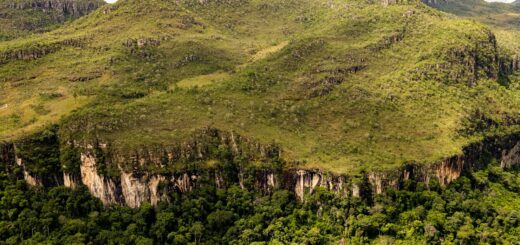
Tsingy is a karst formation — limestone that has been sculpted over millions of years by rainfall and groundwater into blades, towers and pinnacles. Slightly acidic water seeped into a thick bed of ancient marine limestone, dissolving it along vertical cracks. Over millennia those cracks widened into deep crevices and the rock between them was carved into ridges and spires that grow steadily narrower and sharper toward the top. The result is a “stone forest”: a chaos of grey needles, often razor-edged, separated by slots and canyons so deep and tight that a person can vanish between two pinnacles.
The name says it all. Tsingy is usually translated as “where one cannot walk barefoot” — a perfectly literal description of terrain that would shred ordinary shoes, let alone bare feet. What makes it a wonder rather than just a hazard is what lives inside it: the slots hold pockets of soil, shade and trapped moisture, creating dozens of micro-habitats that have nurtured plants and animals found nowhere else on Earth. To stand inside a sun-bleached corridor of stone, looking up at lemurs sunbathing on a spire, is one of travel’s genuinely surreal experiences.
The Grand Tsingy & Petit Tsingy
Visitors explore the park through two main areas. The Petit Tsingy (“small tsingy”) is closer to Bekopaka and gentler — a good introduction with shorter circuits, lower pinnacles, lookout points and a feel for the formation without the full vertical commitment. It is the better first taste and is well suited to families or anyone easing into the terrain.
The Grand Tsingy (“great tsingy”) is the headline act, set further inside the park on a rougher track. Here the pinnacles rise into a true labyrinth, and exploring it means moving through and over the stone rather than just looking at it. This is where the famous via ferrata circuits come in — fixed steel cables you clip into with a harness, plus iron rungs, ladders bolted to the rock, and narrow footbridges spanning the gaps. The signature moment is a suspension bridge strung high above two ranks of pinnacles, swaying gently as you cross with the stone forest plunging away on either side. It is exhilarating rather than terrifying, but it is a real scramble with genuine exposure.
Exploring on the Via Ferrata
The via ferrata is what sets Bemaraha apart from almost anywhere else you can visit on foot. “Via ferrata” — Italian for “iron path” — describes a protected climbing route where a continuous safety cable runs alongside the trail. You wear a harness with two lanyards and stay clipped to the cable at all times, so even on exposed sections you are secured. Guides fit you with the gear, brief you on technique, and lead at a pace that suits the group.
You don’t need to be a climber, but you do need a reasonable level of fitness and a head that copes with heights and tight squeezes. Expect to haul yourself up rungs, edge along ledges, duck through slots barely wider than your shoulders, and cross those airy bridges. The reward is the inside of the stone forest — sculpted corridors, hidden caverns, and viewpoints out across an endless sea of pinnacles that almost nobody on a standard Madagascar itinerary ever sees. If you’d rather go deeper and link several days on foot, our multi-day Tsingy trekking guide covers the longer routes.
A typical Grand Tsingy circuit takes several hours and alternates between three quite different worlds. First you walk through shaded dry forest at the base of the formation, where lemurs feed and the air is still. Then you descend into the slots — cool, narrow canyons between the pinnacles where you scramble over boulders and squeeze through gaps, sometimes by torchlight. Finally you climb up onto the pinnacle tops themselves, emerging into blinding sun and wind on a network of cables and bridges, with the entire stone forest spread out below like a frozen grey ocean. That contrast — from quiet forest floor to dim canyon to airy summit, all within a single circuit — is what makes the experience so memorable, and why guides plan the route to build toward the high crossings as the climax.
The Manambolo River Gorge
Not all of Bemaraha is vertical. The Manambolo River has carved a deep, dramatic gorge through the limestone near Bekopaka, and a half-day pirogue or canoe trip along it is one of the most peaceful counterpoints to the cable-and-harness adrenaline of the Grand Tsingy. You glide between sheer rock walls hundreds of metres high, stained ochre and grey, with raptors circling overhead and the water mirror-still in the morning.
Along the gorge your guide can point out caves in the cliff faces and ancestral Vazimba tombs tucked into ledges and crevices — burial sites of great cultural significance to local communities, to be viewed with respect and never disturbed. Many travellers find the gorge trip the perfect bookend: an easy, restful, beautiful contrast to the strenuous tsingy circuits, and a window into the human history layered onto this remote landscape.
The pirogue itself is a dugout canoe poled and paddled by local boatmen who know every bend, eddy and shaded landing. Mornings are best, when the light is soft, the heat hasn’t built and the cliffs glow. It’s a chance to slow right down, trail a hand in the water, and absorb the sheer scale of the limestone walls that the river has been cutting for millions of years. Some itineraries combine the boat trip with a short walk to a cave or a viewpoint, and your guide will explain the local taboos and stories attached to particular sites — a reminder that for the people who live here, this is not just scenery but a living, sacred landscape.
Wildlife of Tsingy de Bemaraha
The stone forest is a refuge for species adapted to live in and around the pinnacles. The most charismatic resident is Decken’s sifaka, a striking white lemur that bounds improbably across the sharp rock, and you’ll also likely spot the red-fronted brown lemur in the surrounding dry forest. After dark, night walks may reveal nocturnal sportive lemurs and mouse lemurs blinking in torchlight, along with chameleons, geckos and frogs.
Birdlife is rich too — the park and its forests host on the order of a hundred-plus bird species, including endemics that draw dedicated birders all the way out here. Add reptiles, invertebrates and the highly specialised endemic plants that cling to the tsingy and thrive in the dry deciduous forest, and you have an ecosystem of real scientific importance. For a broader sense of where Bemaraha sits among Madagascar’s wildlife hotspots, see our western Madagascar regional guide.
What makes the wildlife here so special is how the stone shapes it. The pinnacles act as natural barriers, isolating pockets of forest and creating tiny, walled-off worlds where evolution has gone its own way. Plants you’ll see clinging to the rock — succulents, miniature drought-adapted trees and the famous Pachypodiums with their swollen trunks — survive on almost nothing, drawing moisture from morning mist and the shade of the slots. The animals are equally adapted: lemurs that can leap between razor edges without injury, geckos camouflaged against grey limestone, and chameleons that change colour against the lichen. A patient guide and an early start dramatically improve your chances of seeing them, so resist the urge to rush; the best wildlife moments at Bemaraha tend to come to those who pause and watch.
Access: The Famously Remote Journey
There is no sugar-coating it — reaching the Tsingy de Bemaraha is hard, and that is part of its mystique. The usual route runs from Morondava on the west coast, north and inland along a long, rough unsealed track to the gateway village of Bekopaka, the base for visiting the park. Along the way you cross rivers by simple vehicle ferries (bacs), and the going is slow: the full journey takes many hours and is firmly the domain of a sturdy 4×4 with an experienced driver.
Crucially, the road is only passable in the dry season, roughly April/May to November. During the rains the track turns to mud, the river crossings swell, and the route becomes impassable — at which point the park effectively closes to visitors. This single fact dictates the entire trip: there is no point planning a Bemaraha visit outside the dry months. Because the driving is the hardest part of the whole experience, it pays to get it right; arranging a vetted car & driver via Carla takes the guesswork out of the track and the ferries.
It’s worth setting expectations honestly: this is not a smooth highway transfer. The track is corrugated, dusty and slow, with stretches that crawl along at walking pace and bridges replaced by simple ferries that operate on their own unhurried schedule. Breakdowns and delays are part of the rhythm out here, which is exactly why an experienced local driver who knows the route, the ferry crews and the river levels is worth far more than a cheap car. Travel light, keep snacks and water within reach, and treat the drive itself as part of the adventure rather than dead time — the changing landscape, the villages, the baobabs and the first distant glimpse of the tsingy plateau all unfold along the way. By the time you reach Bekopaka, you’ll have earned the stone forest.
How It Pairs With the Western Loop
Almost nobody visits the Tsingy de Bemaraha on its own — and you shouldn’t either, because the route to it passes some of Madagascar’s most famous sights. The classic western loop bases you in Morondava and strings together three icons in one trip. On the drive in and out you pass the Avenue of the Baobabs, the country’s most photographed avenue of giant trees, best caught at sunrise or sunset. Nearby, Kirindy Forest is your best chance to see the fossa, Madagascar’s elusive top predator, along with nocturnal lemurs.
Threading all three together — baobabs, Kirindy and the tsingy — turns a single long drive into one of the most rewarding self-contained circuits in the country. Our complete western Madagascar guide shows how the whole loop fits together and how many days to allow.
When to Visit
The visiting season is dictated entirely by the road. Plan for the dry season, roughly April/May through November; outside those months the access track is typically impassable and the park is closed. Within the dry season, the cooler shoulder months tend to be the most comfortable for the strenuous via ferrata, while the later, hotter months can be tough going on the exposed stone — carry plenty of water and start early. Early and mid dry season also tends to bring slightly easier road conditions, since the track has had time to dry out but hasn’t yet been churned to powder by months of traffic. The very start and very end of the season carry a small risk of the road being affected by late or early rains, so if your dates are tight, aim for the heart of the dry months and build in a buffer day in case a ferry crossing or a delay slows you down. For a season-by-season overview of the whole island and how it lines up with a western trip, see our best time to visit Madagascar guide.
Fitness & Who It Suits
Bemaraha is one of Madagascar’s more physical highlights. The Petit Tsingy is manageable for most reasonably active travellers, with shorter, gentler circuits. The Grand Tsingy via ferrata is a different matter: it involves real scrambling, climbing rungs and ladders, squeezing through narrow slots, and crossing high footbridges and a suspension bridge — all with genuine exposure. You don’t need technical climbing skill, but you do need decent fitness, mobility and a head for heights.
If exposure or tight spaces worry you, you can still have a wonderful visit by focusing on the Petit Tsingy and the Manambolo gorge. Tell your guide and operator your comfort level in advance so they can tailor the circuits — there is plenty to enjoy at every level, and no shame in choosing the gentler routes. For a full breakdown of the activities and circuits available, see our things to do at Tsingy de Bemaraha guide.
Children can visit, but the Grand Tsingy via ferrata has practical limits on age, height and reach, so families with young kids usually concentrate on the Petit Tsingy and the river. Older travellers in good health manage the via ferrata regularly — it’s stamina, balance and nerve that matter more than raw strength. The single biggest factor people underestimate is the heat: the exposed stone radiates warmth, there’s little shade on the upper circuits, and dehydration creeps up fast. Pace yourself, start at first light, and don’t be too proud to turn back at the Petit Tsingy if the day is going against you. The mountain will still be there, and the gorge alone justifies the trip.
Where to Stay
Almost all visitors base themselves in or around Bekopaka, the gateway village at the edge of the park. It is small and remote, with a handful of lodges and bungalow-style accommodations ranging from simple to surprisingly comfortable given how far out you are. Demand outstrips supply in the high season, so booking ahead is wise. Many travellers spend one or two nights here to allow a full Grand Tsingy day plus the Petit Tsingy and the river without rushing.
For a full rundown of the options and how to choose, see our dedicated where to stay at Tsingy de Bemaraha guide, and you can compare and book current availability through Madagascar stays on Agoda.
Fees & Practicalities
Visiting the park involves a few standard costs: an MNP entry/permit fee, a compulsory local guide (non-negotiable and genuinely worth it — they handle safety, route-finding and wildlife spotting), and via ferrata gear rental for the Grand Tsingy circuits. Fees change from year to year, so always check the current MNP rates rather than relying on an old figure, and budget separately for the 4×4 and driver, which is the largest cost of a Bemaraha trip.
Bring sturdy closed shoes with grip, gloves for the cables, sun protection and far more water than you think you’ll need. Cash is essential out here — assume no card payments and limited connectivity. For a full cost breakdown including transport, guide, gear and lodging, see our Tsingy de Bemaraha trip cost guide and our tour packages guide.
Not to Be Confused With Ankarana
Madagascar actually has more than one famous tsingy, and it’s worth knowing the difference. The Tsingy de Bemaraha described here is the big western tsingy — the vast, remote, UNESCO-listed pinnacle wilderness reached from Morondava, with the full Grand Tsingy via ferrata experience. In the far north, the Ankarana reserve has its own spectacular but smaller and more accessible tsingy formations, easier to combine with a northern Madagascar trip around Diego Suarez.
Neither is “better” — they suit different itineraries. If you’re travelling in the north, Ankarana gives you a taste of tsingy without the epic western drive; if you want the full, immersive stone-forest adventure, Bemaraha is the one. Our Ankarana National Park guide covers the northern alternative in detail.
Getting There & Travelling Well
Most travellers reach the west via a domestic flight or long overland drive to Morondava, then continue by 4×4 to Bekopaka. International connections into Madagascar can be unpredictable, so if your inbound flight is delayed or cancelled, you may be entitled to compensation — it’s worth checking your claim with AirAdvisor, which handles the paperwork for eligible flights.
Given the remoteness, the rough roads and the genuine exposure of the via ferrata, comprehensive travel insurance is not optional here — it’s essential. SafetyWing Nomad Insurance is built for long, adventurous trips and covers medical emergencies far from major hospitals, which matters a great deal when you’re many hours from the nearest town. Sort your cover before you set off; you can arrange SafetyWing Nomad Insurance online in a few minutes, and you’ll travel the rough western track with a lot more peace of mind.
Suggested Tsingy de Bemaraha Visit Plan
Here is a practical 2-3 day plan built around Morondava and combined with the baobabs:
- Day 1 — Drive in: Leave Morondava early, pausing at the Avenue of the Baobabs for morning light. Continue north on the rough 4×4 track, crossing the river ferries, and reach Bekopaka by late afternoon. Settle into your lodge and rest.
- Day 2 — Petit Tsingy + Manambolo: Start with a gentle Petit Tsingy circuit to find your feet on the stone, then take a relaxed pirogue trip through the Manambolo gorge to see the caves and ancestral tombs. An easier day that also acclimatises you to the heat.
- Day 3 — Grand Tsingy: Set out early for the headline day — the full Grand Tsingy via ferrata, with cables, ladders, footbridges and the suspension bridge over the pinnacles. Allow most of the day. Then begin the drive back toward Morondava, timing it to catch the baobabs at sunset.
With more time, add a night to slow the driving and slot in Kirindy Forest for fossa and nocturnal lemurs on the way out.
Is Tsingy de Bemaraha Worth the Journey?
Honestly? Yes — but go in with clear eyes. This is not a quick, easy add-on. The drive is long and rough, the days are physical, the heat can be punishing, and you’ll spend real money on the 4×4 and driver. If your trip is short or you want comfort and ease, Bemaraha may not be the right fit.
But if you have the time, the legs and the appetite for something genuinely wild, there is nothing else like it. Clipping into a cable and climbing through a forest of stone, crossing a swaying bridge above the pinnacles, drifting through a silent gorge past ancestral tombs — these are the memories that define a Madagascar trip. Paired with the baobabs and Kirindy, the western loop becomes a bucket-list highlight that few travellers ever experience. For most adventurous visitors, the effort is exactly what makes it unforgettable.
The travellers who come away disappointed are almost always the ones who underestimated the logistics — too few days, the wrong season, or a vehicle and driver not up to the track. Get those right and Bemaraha consistently ranks as the standout of a Madagascar trip. The trick is to plan generously: allow more time than you think you need, accept that the drive is slow, and let the place set the pace. Do that, and you’ll return with the rarest kind of travel story — the one almost no one else can tell.
Plan Your Tsingy Trip With Carla
The western loop has a lot of moving parts — flights, a reliable 4×4, river ferries, lodge bookings in tiny Bekopaka and the right number of days. The easiest way to get it right is to let a local handle the logistics. Contact Carla to design a Tsingy de Bemaraha itinerary around your dates, and arrange a trusted car & driver via Carla built for the rough track so you can focus on the stone forest, not the road.
Frequently Asked Questions
How long does it take to get to Tsingy de Bemaraha?
From Morondava it’s a long day’s drive on a rough 4×4 track to Bekopaka, including river ferry crossings — many hours each way, dictated by road conditions. Most travellers allow at least two to three days for the whole excursion rather than rushing it in and out.
When is the park open?
The Tsingy de Bemaraha is realistically only visitable in the dry season, roughly April/May to November. During the rains the access road becomes impassable and the park effectively closes, so plan firmly within the dry months.
Do I need to be fit to visit?
For the Grand Tsingy via ferrata, yes — it involves climbing rungs and ladders, squeezing through slots and crossing high bridges with real exposure. You don’t need climbing experience, but you need decent fitness and a head for heights. The Petit Tsingy and Manambolo gorge are far gentler alternatives.
Is Tsingy de Bemaraha the same as Ankarana?
No. Bemaraha is the large, remote western tsingy reached from Morondava, with the full via ferrata experience. Ankarana, in the far north, has its own smaller, more accessible tsingy that’s easier to combine with a northern trip. See our Ankarana guide for the difference.
How much does a Tsingy trip cost?
The biggest cost is the 4×4 and driver, on top of the MNP entry fee, compulsory guide, via ferrata gear and lodging in Bekopaka. Fees change yearly, so check current MNP rates. Our trip cost guide breaks down a realistic budget.
Ready to explore the stone forest?
Tsingy de Bemaraha is best done with a local handling the rough logistics. Contact Carla to plan your western loop, and book a dependable car & driver via Carla for the journey in. Sort cover with SafetyWing Nomad Insurance before you go.
Plan Your Trip to Madagascar
- Read the full Madagascar Travel Guide
- Explore itineraries by style and duration
- Best Tours and Guided Experiences
Where to Stay