Day Safari vs Multi-Day Safari in Madagascar: Real Cost Comparison
This post contains affiliate links. We may earn a small commission at no extra cost to you.
At a Glance
- Where to stay: Check hotel availability on Agoda — Madagascar
- Book tours: Browse Madagascar tours on GetYourGuide
💰 Carry Your Cash Safely in Madagascar
Madagascar runs largely on cash. Keep your money secure:
- Hidden money belt — keeps cash and passport out of a pickpocket’s reach. See on Amazon →
- RFID-blocking wallet — organises cards and blocks electronic skimming. See on Amazon →
- Neck wallet / passport pouch — discreet document holder for transit days. See on Amazon →
As an Amazon Associate we earn from qualifying purchases.
Madagascar’s national parks can be visited on a single day or as multi-day expeditions — and the cost, wildlife encounter quality, and depth of experience differ substantially between these two approaches. This comparison breaks down the real costs, wildlife access differences, and practical trade-offs to help you decide which format fits your trip without spending more than you need to.
Plan your Madagascar trip:
- Browse Madagascar tours and experiences (GetYourGuide)
- Get travel insurance for Madagascar (SafetyWing)
- World Nomads — covers adventure activities: trekking, diving, motorbikes. Compare both.
Day Safari Costs and What You Get
A day safari at Andasibe National Park from Antananarivo costs approximately $80–120 USD per person all-inclusive via an organised tour operator. This typically covers transport in a shared vehicle (140km each way), park entry fee (25,000 Ariary), and a morning guided walk of 2–3 hours. Indri are reliably encountered and additional species such as chameleons, tree frogs, and various diurnal lemurs are frequently seen. At Isalo, day excursions from Ranohira cost $15–30 USD per person excluding transport, for a 4–6 hour guided walk into the gorges and natural swimming pools. For budget travelers, the day format eliminates accommodation costs entirely. The core limitation is depth — day visitors see habituated trail sections only, miss nocturnal walks, and have insufficient time for interior zones requiring 3–4 hours of approach trekking. Kirindy fossa sightings almost never occur on day visits because animals are typically active in early morning and after dark, not during midday hours.
Multi-Day Safari Costs at Madagascar’s Top Parks
A three-night guided circuit at Ranomafana National Park costs approximately $180–280 USD per person in lodge accommodation, including all park fees, guide fees, and meals. This access level enables nocturnal walks, which are consistently where greater bamboo lemur, aye-aye, and mouse lemur sightings occur. At Andasibe, two nights at park-adjacent mid-range accommodation costs $120–180 USD per person in a twin room, enabling a dawn walk for indri singing, a daytime forest walk, and an evening night walk — the minimum combination for seeing the park properly. Kirindy requires two nights minimum to have a realistic chance at fossa sightings: the $50–80 USD lodge rate plus $30 guide fees per day adds up to $160–220 USD for two nights. Marojejy’s three-camp trekking circuit costs $350–500 USD for a three-to-four day expedition, covering guide, porter, camping, and park fees — significantly more expensive than any day option but accessing silky sifaka habitat no day visit reaches.
Read also:
Book activities in Madagascar:
Wildlife Encounter Quality: Day vs Multi-Day
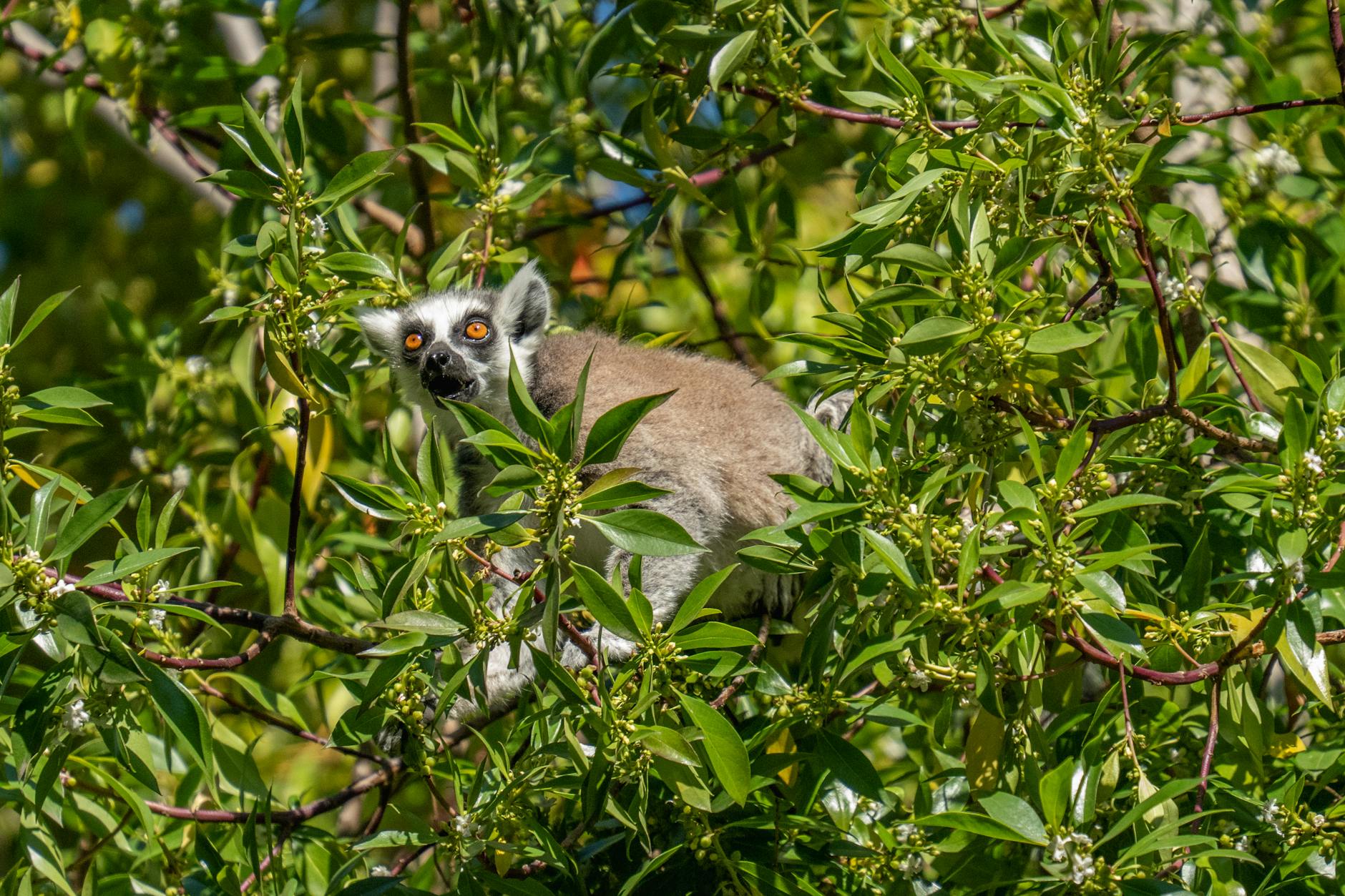
The quality difference is most pronounced for nocturnal species. A single night walk at any Madagascar national park produces species never seen during daytime — mouse lemurs, aye-ayes in parks where they occur, sportive lemurs, chameleons sleeping on branches at eye level, and frogs including the iconic tomato frog near Maroantsetra. Dawn encounters with lemur troops are consistently more rewarding than midday visits because animals are more active, vocalising, and feeding. Multi-day visitors encounter animals at the park’s interior rather than at habituated trail edges, producing behavioural observations — territorial calling, foraging, infant carrying — that rushed day visitors miss entirely. For bird species, the difference is dramatic: nocturnal species, the dawn chorus, and interior forest birds are all absent from a standard 9am–1pm day walk. For the most iconic species — indri, fossa, aye-aye, greater bamboo lemur — multi-day access improves encounter probability by 60–80% compared to a single day visit.
Which Format Offers More Value Per Dollar?
Day safaris offer better value per dollar when the primary objective is a confirmed indri or ring-tailed lemur sighting at a high-habituation park, or when budget or schedule constraints make overnight stays impractical. Multi-day format delivers better value for any park where target species are nocturnal or interior-zone only — Kirindy for fossa, Ranomafana for greater bamboo lemur, Marojejy for silky sifaka. A useful middle ground is the one-night option: arrive by early afternoon, take a 3-hour afternoon walk, complete a 2-hour night walk, take an early morning walk at 6am, then depart after breakfast. This adds one accommodation night ($30–80 USD) but triples the species list and encounter quality versus a pure day visit at every park. Most Madagascar tour operators will build this format on request — it is rarely marketed as a standard package but represents the best value compromise for travelers with limited time.
Ready to book your Madagascar trip?
Frequently Asked Questions
Is a day trip to Andasibe worth it?
Yes, if your only goal is seeing indri in the wild. A day trip from Antananarivo almost guarantees indri sightings. Add one night to also experience dawn singing and a night walk for dramatically better value.
What is the typical cost for a multi-day safari in Madagascar?
Budget $150–300 USD per person for a 2–3 night guided wildlife stay at parks like Ranomafana or Andasibe, including accommodation, guides, and park fees. Remote parks like Marojejy cost $350–500 USD for the trekking circuit.
Which Madagascar parks are worth visiting for just one day?
Andasibe, Berenty Reserve, and Isalo offer meaningful day visit experiences at habituated sites. Kirindy, Marojejy, and Masoala do not — minimum stays of 2–4 nights are needed to access their signature wildlife.
For most travelers, the choice between day safari and multi-day comes down to one simple question: are your target species nocturnal or in park interior zones? If yes, stay overnight — the cost increase is modest and the encounter quality improvement is dramatic. If your primary goal is a ring-tailed lemur or indri sighting at a habituated park, a day visit delivers solid value without the overnight expense. The one-night middle-ground format remains the best-kept secret in Madagascar wildlife travel.
Start planning your Madagascar adventure today
Browse Madagascar experiences on GetYourGuide
Affiliate link – commission earned at no extra cost to you.
Plan Your Trip to Madagascar
- Read the full Madagascar Travel Guide
- Explore itineraries by style and duration
- Explore the full destination guide
Where to Stay
Hotels, lodges, and tours fill fast for July–September — compare availability now.