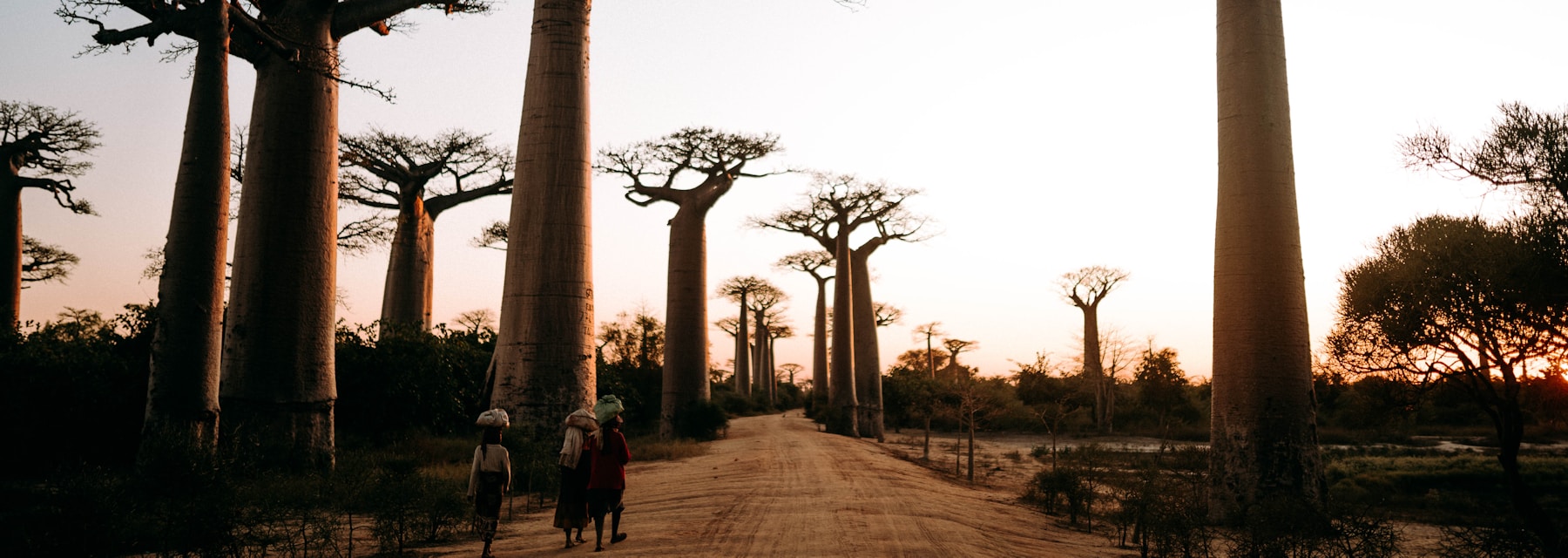
Madagascar’s coastline extends over 4,828 km and the total land area is 587,040 km², roughly a third the size of Quebec. The island’s designation has shifted from “the green island” to “the red island” following the widespread destruction of its vegetation, which has exposed the red laterite soil that typically characterises its plateaus. Madagascar’s geological structure encompasses every period of Earth’s history, and it preserves vestiges of the ancient supercontinent Gondwana from 600 million years ago.
The relief is characterised by a narrow coastal strip to the east, high plateaus in the centre, and an area of lower plateaus and plains to the west. As for climate, since Madagascar is crossed by the Tropic of Capricorn near the town of Toliary (Tuléar), the climate is predominantly tropical, with several varieties of microclimates depending on the region.