Lemur Social Behavior: What You’ll Actually Observe in the Wild 2026
This post contains affiliate links. We may earn a small commission at no extra cost to you.
At a Glance
- Where to stay: Check hotel availability on Agoda — Madagascar
- Book tours: Browse Madagascar tours on GetYourGuide
Madagascar’s lemurs are among the world’s most studied primates, yet most visitors arrive with expectations shaped by documentaries rather than field reality. Understanding what social behaviors are actually visible during a standard guided park visit helps set appropriate expectations and makes genuine encounters more rewarding. This guide covers group structure, feeding behavior, vocalizations, and the ethical observation practices that protect the animals you came to see.
Recommended Gear for Your Madagascar Wildlife Trip
You’re Flying 10,000km to See Lemurs, Chameleons, and Fossa — Don’t Document It With a Phone Camera
Indri lemurs calling across the canopy of Andasibe. Panther chameleons in electric blue and orange. The fossa spotted on a night walk in Kirindy. A smartphone sensor in low rainforest light produces grainy, blurred images. The Sony a6400 with Real-Time Eye Autofocus locks onto animal eyes instantly — even through undergrowth and low light. APS-C sensor, 4K video, flip-up touchscreen.
Check current price and availability on Amazon →
Madagascar Has Over 100 Species of Lemur and 280 Species of Bird — You’ll Miss Most of Them Without Binoculars
Sifaka lemurs leap between canopy trees 30 metres up. The Madagascar fish eagle perches on a branch 200 metres across a lake. Without binoculars, you’re looking at distant shapes and taking your guide’s word for it. The Vortex Diamondback HD 10×42 delivers HD optical clarity with edge-to-edge sharpness. Waterproof, fog-proof, backed by Vortex’s unconditional lifetime warranty.
Check current price and availability on Amazon →
Madagascar Goes Completely Dark After Sunset — Don’t Navigate It Blind
Outside of Antananarivo’s main streets, Madagascar has virtually no street lighting. Wildlife walks in Ankarana, night lemur spotting in Ranomafana, the path to your bungalow — all navigated in total darkness. The Black Diamond Spot 400-R delivers 400 lumens with a 100-metre beam, USB-C rechargeable, IPX8 waterproof, with red night-vision mode for wildlife observation without disturbing animals.
Check current price and availability on Amazon →
Madagascar Has Some of the Highest Malaria Risk in the World
The rainforests of Andasibe, the wetlands of Morondava, the rice paddies outside every village — mosquitoes are relentless and bite at dusk and dawn. DEET burns skin and destroys gear. Natrapel 20% Picaridin is the CDC-recommended alternative that repels mosquitoes, ticks, and sandflies for up to 12 hours without damaging your equipment.
Check current price and availability on Amazon →
No Grid, No Problem — Charge Your Devices From the Sun in Madagascar’s Remote Parks
Marojejy. Andringitra. Tsingy de Bemaraha. Madagascar’s most spectacular parks are its most isolated — no power outlets, no phone signal. A 3-day wilderness circuit means running on whatever charge you left camp with. The BLAVOR Solar Power Bank pairs 10,000mAh with a fold-out solar panel that recharges itself from sunlight as you trek.
Check current price and availability on Amazon →
Plan your Madagascar trip:
Lemur Group Structure and Social Hierarchies
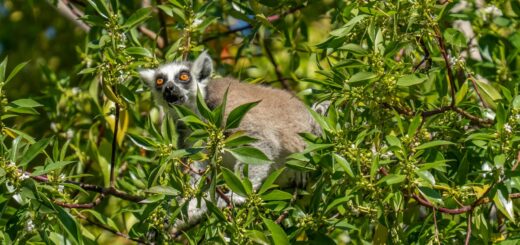
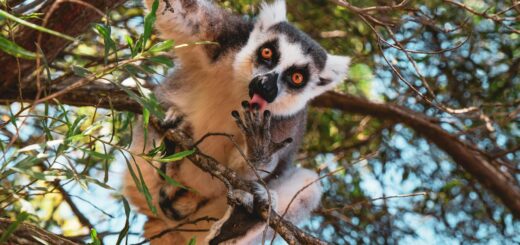
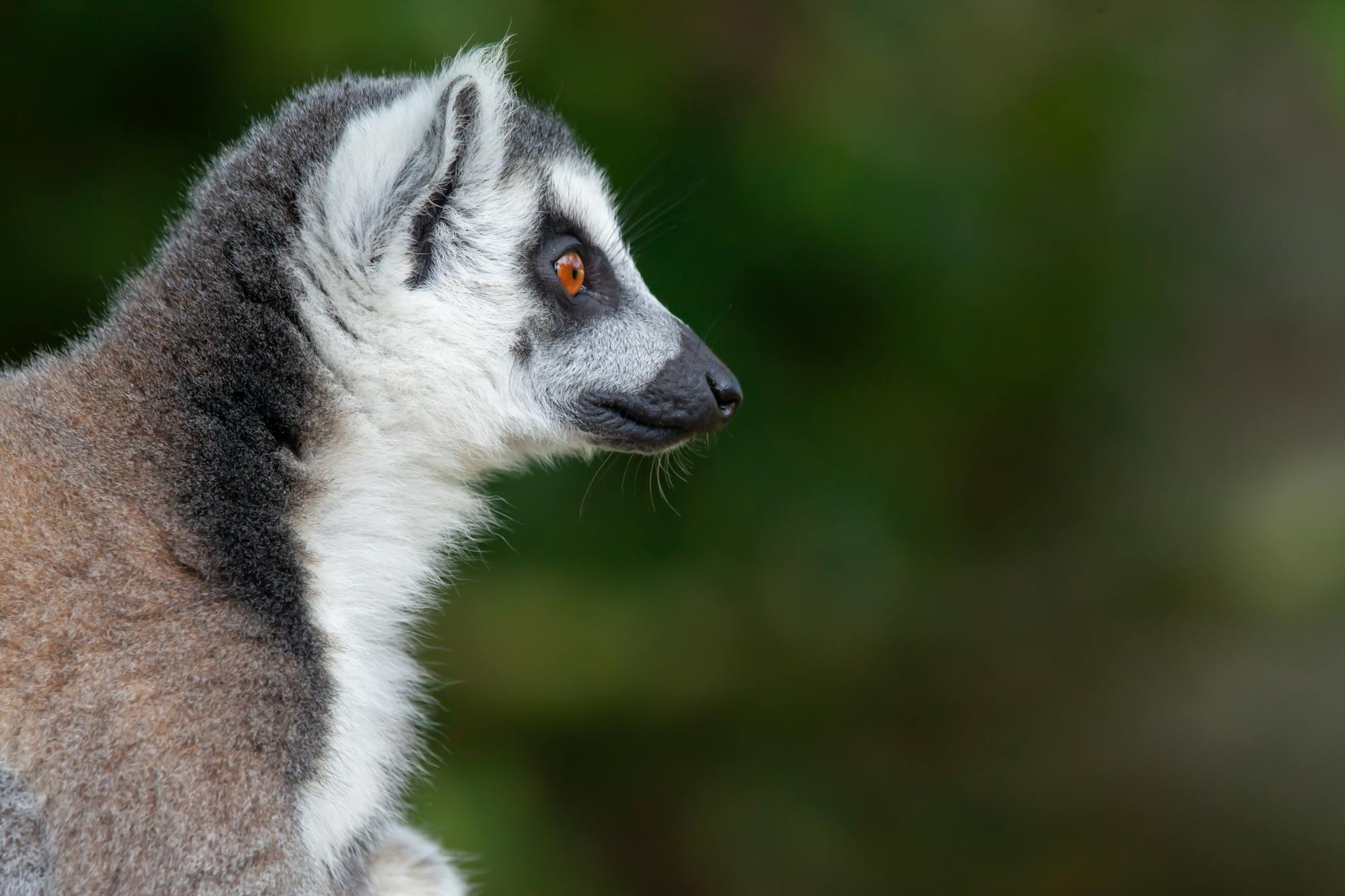
Most lemur species are female-dominant — a rarity among primates. In ring-tailed lemur troops, the dominant female controls access to food, sleeping sites, and mating preferences. Troops typically number 6–30 individuals depending on habitat quality and resource availability. At Berenty Reserve in the south, habituation is extremely high and troop hierarchies are directly observable within minutes of entering the forest. Sifaka groups at Andasibe National Park operate in smaller family units of 2–8 individuals and maintain territories through olfactory marking and alarm calls. Indri pairs are monogamous and territorial, with unmistakable song-based boundary communication heard across kilometres of forest. Red ruffed lemurs at Masoala operate in larger, loose-knit communities during fruiting season and break into mated pairs during lean periods. Observing social interactions requires patience — groups can be stationary for thirty minutes or more before moving.
Feeding Behavior and Diet Observations
Most visitors observe lemurs most readily during feeding bouts — periods of intense activity often lasting 20–40 minutes in which individuals move rapidly through fruiting trees. Ring-tailed lemurs are predominantly frugivores in wet season but become highly opportunistic in dry season, consuming leaves, bark, and even soil minerals to compensate for nutritional shortfalls. At Kirindy Forest, Verreaux’s sifaka subsist almost entirely on leaves during the winter dry season, and their digestive adaptations allow processing of highly toxic plant species unavailable to most other animals. Indri at Andasibe feed heavily on young leaves and fruit of selected canopy species, with guides tracking feeding locations from the previous day. Nocturnal species — mouse lemurs, sportive lemurs, and aye-ayes — feed primarily on insects, nectar, and fruit, and are best observed with a red-filtered headtorch to avoid disruption during guided night walks.
Read also:
Save money on your Madagascar trip:
Vocalizations and Communication You Will Hear
The indri produces Madagascar’s most iconic sound — a haunting, whale-like song that carries over three kilometres through primary forest. Morning singing typically begins between 7 and 9 am and is triggered by territorial encounters with neighbouring groups. At Andasibe, this is reliably heard most mornings between April and November. Ring-tailed lemurs use a complex repertoire including alarm calls that specify predator type — aerial threats from raptors produce a different call pattern from ground predators such as fossa. Sifaka produce a distinctive explosive bark-hiss sound when alarmed, followed immediately by group movement away from the perceived threat. Brown lemurs contact-call constantly through vegetation, using soft chattering sounds to maintain group cohesion. Most visible alarm behaviour at Ranomafana is triggered by Madagascar harrier-hawk flyovers, which produce instant freezing across all lemur species simultaneously — a striking and observable safety response in any season.
Ethical Observation Practices for Lemur Watching
Habituated lemur groups in national parks represent decades of careful conditioning by park guides. Maintaining that habituation requires visitors to follow specific protocols. Minimum distance regulations vary by park — typically 5 metres at Berenty to 10 metres at Ranomafana — and must be enforced even when animals approach voluntarily. Never feed lemurs under any circumstances. Banana feeding, which occurs illegally at some private reserves, causes lemurs to associate humans with food, making groups aggressive and dependent and corrupting their natural foraging behavior. Flash photography is prohibited in most parks and disrupts night-adapted lemur vision. Limit visit duration to maximum 1–2 hours per troop to avoid habituation stress. Choose ANGAP-licensed guides only — unlicensed guides often use animal calls or physical herding to produce close encounters, which disrupts group behaviour and compromises long-term habituation quality.
Ready to book your Madagascar trip?
Frequently Asked Questions
Which park gives the best lemur observation experience?
Andasibe-Mantadia is widely considered the best combination of species diversity, reliable sightings, and guide quality. Berenty offers the highest habituation. Ranomafana provides the richest behavioural variety for experienced wildlife watchers.
Can you see lemur social behavior on a day trip?
Yes, but a half-day minimum is needed. Group feeding bouts, alarm calls, and territorial interactions are observable in a focused 3–4 hour guided walk at habituated parks like Andasibe or Berenty.
Is it safe to approach lemurs in Madagascar?
Wild lemurs in national parks do not generally pose a safety risk. Observe the 5–10 metre minimum distance regulations, never attempt to touch animals, and avoid parks where banana feeding is practised, as hand-fed lemurs can bite.
Lemur social behavior is not a performance — it is a complex, ongoing ecological process that visitors observe from the margins. The reward for patient, respectful watching is genuinely intimate access to primate social life found nowhere else on earth. Go with a licensed guide, arrive early, give the animals space, and you will see behaviors that have evolved over 60 million years of isolation on Madagascar’s extraordinary island stage.
Plan Your Trip to Madagascar
- Read the full Madagascar Travel Guide
- Explore itineraries by style and duration
- Explore the full destination guide
Where to Stay
Hotels, lodges, and tours fill fast for July–September — compare availability now.