Photography Etiquette in Madagascar: When Asking Permission Matters
This post contains affiliate links. We may earn a small commission at no extra cost to you.
At a Glance
- Always ask: portraits, sacred tombs, famadihana ceremonies, market vendors, military or police
- Usually fine without asking: wide landscapes, public buildings, food, lemurs (no flash)
- Strict no-photo zones: some Sakalava royal tombs, the Rova reconstruction interior, presidential buildings, airport security
- Small payment expected: portraits in markets (2,000–5,000 Ar per subject), Antemoro paper makers, some artisans
- Drones: require CAA authorisation — fly only with explicit park or community permission
- Camera-equipped base: Find hotels in Antananarivo on Agoda
- Insurance for gear in transit: SafetyWing
📖 Read Up on Madagascar
Guidebooks and background to get more from your trip:
- Bradt Madagascar guide — the most thorough Madagascar guidebook. See on Amazon →
- Lonely Planet Madagascar — great for planning and background. See on Amazon →
- French/Malagasy phrasebook — break the ice and bargain like a local. See on Amazon →
- Madagascar wildlife field guide — identify lemurs, chameleons and birds. See on Amazon →
As an Amazon Associate we earn from qualifying purchases.
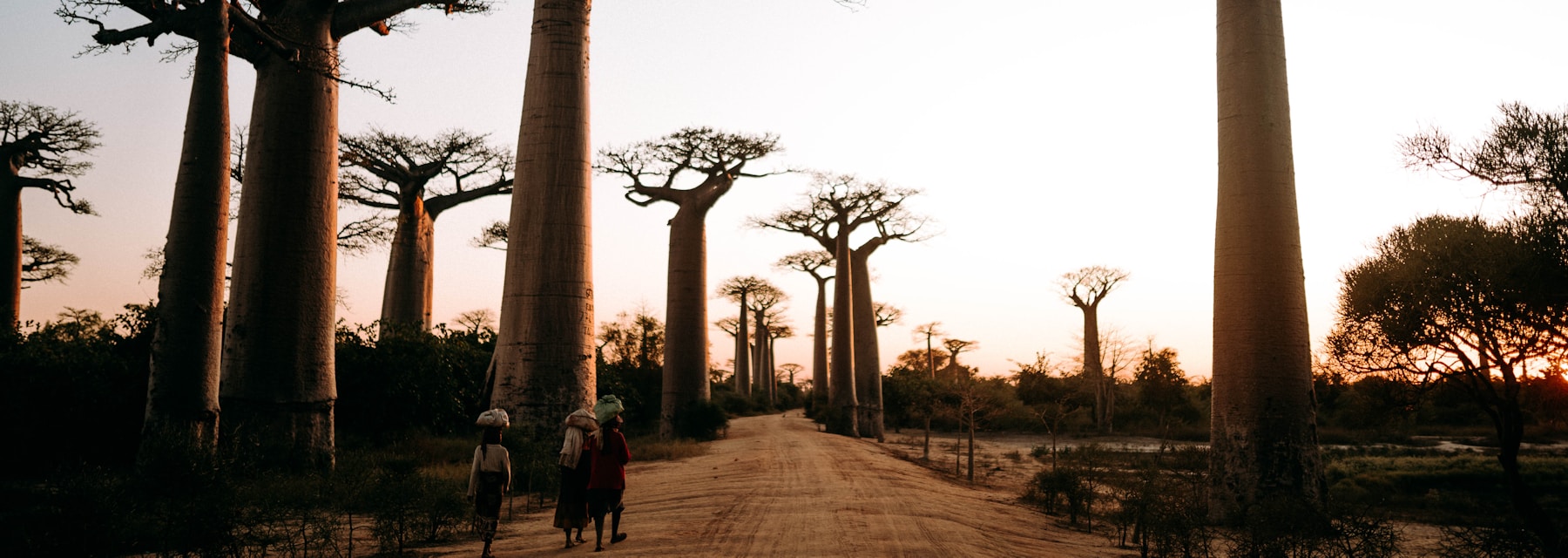
Madagascar is one of the most photogenic countries on earth — baobabs at sunset, lemurs in golden light, hand-built clay villages climbing the highland hills. It is also a country where photography missteps can cause real offence. This guide explains what you can shoot freely, what requires permission, and what is genuinely off-limits.
Portraits and People: The Permission Rule
Always ask before photographing any identifiable person, no matter how candid the moment looks. The Malagasy approach to portraits is polite but firm: a smile, a raised camera, and a questioning look is enough — wait for the nod or verbal azo (“yes”) before pressing the shutter. People photographed in markets, around fishing boats, or at village water points often expect a small payment of 2,000–5,000 Ar; this is fair compensation, not begging. Pay before taking the photo, not after — paying after invites a higher demand once they see the result on your screen.
Children photographed without parental consent is a hard line — do not do it. If parents are present and consent, fine; if you are walking through a village without a guide and children gather around, take wide-angle group shots that don’t isolate faces. Show your subject the result on your screen — it is a small courtesy that takes ten seconds and prevents almost all complaints. Background reading from our guide to Merina culture and the highland communities explains the social context of portraiture in these regions.
Sacred Sites, Tombs and Ceremonies
Madagascar’s ancestor tombs (fasana) are sacred and many cannot be photographed at all. The painted Sakalava royal tombs of the northwest, the Mahafaly aloalo (carved memorial posts) of the southwest, and the Merina family tombs of the central highlands all have different rules. Some are photogenic from a distance and visiting tourists may shoot wide landscape views without entering the tomb perimeter. Others — especially active royal sites — forbid any photograph at all. Always ask your guide before raising the camera, even for what looks like an empty landscape.
The famadihana ceremony (turning of the bones) is a celebration to which respectful visitors may sometimes be invited. Photography is occasionally permitted but never without the family’s express consent and ideally a small contribution to the feast. Never photograph the actual shroud or the bones; the dancing with the wrapped ancestor is sometimes okay if explicitly cleared. The fady system varies by region and clan — your guide is the only reliable arbiter. For deeper context, see our famadihana ceremony guide before any encounter.
Wildlife Photography Rules in National Parks
For lemurs, chameleons, and birds, the rules are simpler but still firm. No flash on nocturnal lemurs — Andasibe’s aye-aye and sportive lemurs are extremely light-sensitive and a single flash can disorient them for hours. Use a high-ISO body (Sony A7 IV, Canon R6, similar) and a fast lens (f/2.8 or wider) instead. Maintain at least 5 metres distance from lemur groups; closer approaches stress mothers with infants and may be enforced by your guide. The diademed sifaka at Andasibe-Mantadia is shy of long lens hoods — patience and stillness produce better photographs than chasing.
Tripods are allowed in all national parks but check before your visit. Drones are prohibited inside park boundaries without explicit Madagascar National Parks (MNP) written authorisation — penalties include confiscation and fines. For wildlife photographers planning a serious trip, budget a long-zoom lens (100–400mm minimum) and a teleconverter; Madagascar’s lemurs hold position long enough for sharp portraits but rarely allow close approaches. Our guide to the best time to visit Madagascar covers seasonal light and wildlife activity windows to plan your shoot.
Drones, Press Equipment and Customs Issues
Drones are tightly regulated. Madagascar’s Civil Aviation Authority (CAA) requires pre-flight authorisation for any drone above 250g; below that you can typically fly without permit but never over crowds, military installations, or national parks. Carry the printed CAA authorisation when flying — local officials check. Spectacular drone shots of the Avenue of the Baobabs and Tsingy de Bemaraha require both CAA clearance and explicit park or community permission; the latter is often easier to obtain through a tour operator than independently.
If you arrive with multiple bodies, large telephoto lenses and a clear professional rig, expect customs interest at Ivato airport. A handful of photographers have had gear temporarily impounded pending a press visa check. Carry a single business card showing you as a hobbyist or freelance contributor (not staff press), keep gear quantities reasonable, and have receipts proving personal ownership. If your flight is delayed and your gear is in checked luggage:
Flight delayed or cancelled? Flights to Antananarivo often connect through Paris, Nairobi or Addis Ababa. Check your compensation claim free on AirAdvisor — passengers may be entitled to up to €600 plus delay reimbursement for equipment in delayed luggage.
Frequently Asked Questions
Can I photograph a famadihana ceremony if I happen to come across one?
Not without explicit invitation and family consent. Famadihana is a private family ritual, not a tourist attraction. If a guide invites you respectfully and the family agrees, a small contribution to the feast is expected. Always ask before any image of the shroud or the wrapped ancestor.
Do I need a special visa to photograph in Madagascar professionally?
If you are working on assignment for a publication or commercial client, yes — a press visa or work permit is required and customs may check. Hobbyists, freelancers and stock photographers travelling on a tourist visa are generally fine but should not flaunt obvious professional rigs.
Is flash photography allowed in markets and on the street?
On the street, yes if you ask first. Inside markets, prefer available light — flash is intrusive and triggers complaints. For night photography in Tana or Hell-Ville, use a fast prime lens (35mm f/1.4 or similar) rather than flash.
Photography in Madagascar rewards patience, courtesy and the simple discipline of asking before shooting. Respect the fady, follow your guide’s lead at sacred sites, and offer fair compensation to your subjects. Protect your camera kit before you fly: Get SafetyWing before you fly —. Standard policies have limits on electronics, so check whether you need an additional valuables rider for a $3,000+ camera rig.
Travel Insurance for Madagascar
Medical evacuation from Madagascar costs $30,000–$80,000. Don’t travel without cover.
- SafetyWing — monthly-subscription travel medical cover; you can check their plans.
- World Nomads — single-trip travel insurance with adventure-activity options.
Plan Your Trip to Madagascar
- Read the full Madagascar Travel Guide
- Explore itineraries by style and duration
- Explore the full destination guide
Where to Stay