Madagascar Wildlife Tours 2026: What You’ll See and How They Work
Affiliate disclosure: This article contains sponsored links to hotels, tour operators, insurance providers, and other travel services. We earn a small commission if you book through our links, at no extra cost to you.
Madagascar Wildlife Tours 2026 — At a Glance
- What it is: guided walks — by day and after dark — to find lemurs, chameleons, geckos and endemic birds
- How it works: a mandatory local guide leads you on park trails; night walks are essential
- Where: Andasibe, Ranomafana, Isalo, the north and the west
- Book wildlife tours & guides: on GetYourGuide
- Getting between parks: car-and-driver on Carla
- Plan it with a local: contact Carla
- Flight protection: EU261 up to €600 per passenger
- Travel insurance: SafetyWing Nomad Insurance
- Where to stay: Antananarivo stays on Agoda
🎒 Madagascar Trip Essentials — Order Before You Fly
Madagascar is remote and malarial, and a few inexpensive items make the biggest difference on the ground:
- Picaridin insect repellent — DEET-free, protects against malaria-carrying mosquitoes. See options on Amazon →
- Permethrin clothing spray — treat clothes before you fly; kills mosquitoes on contact. See options on Amazon →
- Pop-up mosquito net — budget lodges rarely provide one. See options on Amazon →
- Water filter bottle — tap water isn't safe to drink. See options on Amazon →
- Universal travel adapter (USB-C) — Madagascar uses European-style plugs. See options on Amazon →
- 8×42 binoculars — essential for spotting lemurs and chameleons in the canopy. See options on Amazon →
As an Amazon Associate we earn from qualifying purchases, at no extra cost to you.
The word “tour” conjures a vehicle, a road, and a landscape sliding past the window. A Madagascar wildlife tour is almost the opposite. It is a pair of walking shoes, a head-torch, a guide who knows the forest the way you know your own street, and the patience to stand still while something extraordinary reveals itself a few metres away. You do not watch Madagascar’s wildlife from a seat. You go in on foot and find it.
This is the deep dive that sits beneath our best Madagascar safari guide — the pillar that explains why the island works so differently from mainland Africa. Here we get specific: what a wildlife tour actually involves, what you will realistically see, why the night walks matter as much as the day ones, and how to extract the most from every hour you spend in the forest.
What a Madagascar Wildlife Tour Actually Involves
Forget the savanna game drive. There is no open-sided 4×4 idling beside a pride of lions, no sundowner on the bonnet, no checklist of big mammals ticked off through binoculars from the comfort of a vehicle. Madagascar’s wildlife lives in dense forest, in the canopy, in leaf litter, and on tree trunks — and the only honest way to meet it is to walk in after it.
A typical wildlife tour day is built around two outings on foot. In the morning, after an early breakfast, you set off into a national park or private reserve with a local guide and walk the trails for two to four hours, stopping constantly while your guide scans the trees. In the afternoon you might rest through the hottest part of the day, then head out again — and crucially, you go out once more after dark, when a completely different cast of animals wakes up. Distances are modest. This is not trekking; it is slow, attentive walking with frequent pauses. The effort is in the standing still, the looking up, and the willingness to wait.
Three things define the experience and set it apart from anything you may have done on an African safari. First, it is on foot — every sighting is earned by walking and watching, not by driving up to it. Second, it spans day and night, because so much of Madagascar’s wildlife is nocturnal. Third, a local guide is mandatory in the national parks, and far from being a formality, that guide is the single thing that turns a quiet walk in the woods into a procession of remarkable encounters.
The reward for all this effort is intimacy. You are not observing animals across a plain; you are standing beneath a family of lemurs as they feed, watching a chameleon swivel one eye toward you, crouching to photograph a frog the size of a thumbnail. Around 90% of what you see exists nowhere else on Earth. The island split from the African mainland and from India tens of millions of years ago, and its wildlife evolved in isolation into forms found in no other country. A Madagascar wildlife tour is, in the most literal sense, a walk through a living museum of evolution.
What You’ll See
No two walks deliver the same list, and no guide will promise you a specific animal — wildlife does not run to a timetable. But across a well-planned circuit through several parks, the breadth of what you can encounter is genuinely staggering. Here is what to hope for, grouped by the creatures that define the island.
Lemurs
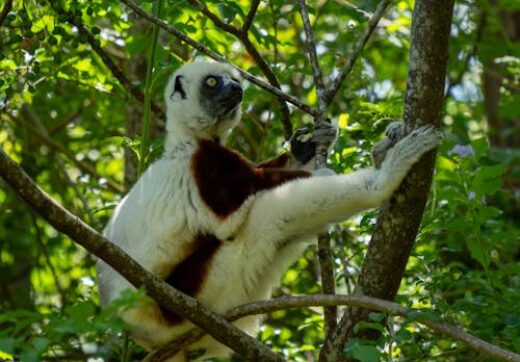
Lemurs are the headline act, and rightly so — they exist only in Madagascar, and the island is home to more than a hundred species, from primates the size of a small dog to others that could sit in a teaspoon. The one most people come hoping to hear before they see is the indri, the largest living lemur, whose haunting, whale-like song carries for more than a kilometre through the eastern rainforest at Andasibe. Standing in the forest as a family of indri calls overhead is, for many travellers, the single most moving moment of the entire trip.
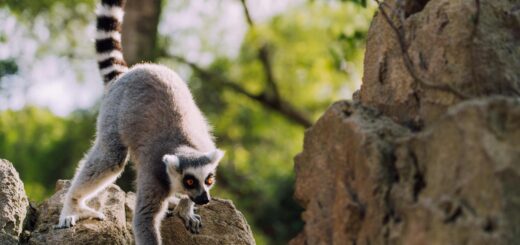
You will likely also meet sifaka, the elegant, upright lemurs that cross open ground in a comical sideways bounce known as “dancing”; the famous black-and-white ring-tailed lemur, most reliably seen in the south and around Isalo; and, on night walks, the tiny nocturnal mouse lemurs — among the smallest primates in the world — their eyes flashing back at your torch from the undergrowth. Brown lemurs, bamboo lemurs, ruffed lemurs and others fill out the cast depending on the parks you visit. For the full picture of which species live where, see our complete guide to the lemurs of Madagascar.
Chameleons & Reptiles
Madagascar is the global capital of chameleons — roughly half the world’s species live here, from Parson’s chameleon, one of the largest in the world, to Brookesia pygmy chameleons barely longer than a fingernail that you would never spot without a guide pointing them out among the leaf litter. Watching a chameleon’s eyes rotate independently, its tongue fire out faster than the eye can follow, and its skin shift colour is one of the quiet thrills of every walk.
Beyond chameleons, the reptile life is extraordinary. The leaf-tailed geckos of the eastern rainforests are perhaps the most astonishing camouflage artists on the planet — flattened against a tree trunk with frilled edges and a tail shaped exactly like a dead leaf, they are effectively invisible until your guide rests a finger beside one. Day geckos in electric green, boas, harmless snakes and an array of skinks round out a reptile fauna that is overwhelmingly endemic. Our complete chameleons of Madagascar guide goes deep on the most charismatic group.
Birds
Birders treat Madagascar as a pilgrimage, and even casual visitors are quickly won over. The island has a long list of endemic birds and several entire families found nowhere else. The couas — large, ground-loving relatives of the cuckoo — stalk the forest floor; the vangas have radiated into a dazzling variety of beak shapes that biologists compare to Darwin’s finches; and the ground-rollers, secretive and jewel-coloured, are among the most sought-after birds on Earth for visiting birdwatchers. Add fody, drongos, sunbird-asities and the bizarre, dawn-singing forest birds, and even a non-birder finds the soundtrack unforgettable. If birds are your particular passion, our Madagascar photography guide covers how to capture them, and a specialist birding-focused circuit can be arranged on request.
Frogs & Invertebrates
The smaller things reward the traveller who looks closely. Madagascar’s frogs are almost entirely endemic and gloriously varied, from the tomato frog’s startling red to the jewel-bright mantellas the size of a coin. Night walks are when the forest’s amphibians come alive, their calls layering into a wall of sound. The invertebrate life is just as remarkable — giraffe-necked weevils, comet moths with sweeping tails, golden orb-web spiders strung between branches, and the famous hissing cockroaches. None of this is the reason most people come, but it is often what they remember most fondly: the sheer density of strange, beautiful, small life pressing in on every side.
The Elusive Fossa
The fossa is Madagascar’s largest carnivore — a long-bodied, cat-like predator, the island’s answer to a big cat, and the chief hunter of lemurs. It is genuinely elusive, and most travellers never see one, so no honest guide will promise it. Your best chance is in the dry deciduous forest of the west, around Kirindy, where individuals have become accustomed to research camps. To glimpse a fossa padding across a trail is one of the rarest prizes a Madagascar wildlife tour can offer — treat it as a thrilling possibility, never an expectation.
Flora & Baobabs
A wildlife tour is also a botanical one, whether you intend it or not. Madagascar’s plant life is as endemic as its animals: orchids in the eastern rainforest, the spiny forest of the south where almost every plant is found only here, and above all the baobabs — those vast, ancient, bottle-trunked giants that have become the island’s visual signature. Several species grow only in Madagascar, and the famous avenue near Morondava is one of the great sights of the natural world. Your guide will read the forest as a whole, pointing out the medicinal plant a village uses, the tree a particular lemur depends on, the orchid that flowers for a single week. The wildlife makes sense only against this backdrop.
Day Walks vs Night Walks
If you take one thing from this guide, let it be this: the night walk is not an optional extra. It is half the wildlife tour, and skipping it means missing a large fraction of what makes Madagascar special.
The day walk is the one most people picture — sunlight filtering through the canopy, the indri calling, sifaka leaping between trunks, chameleons basking, birds working the mid-storey. It is the easier, more sociable outing, and it delivers many of the trip’s iconic sightings. Diurnal lemurs, most birds, basking reptiles and the great sweep of forest and flora belong to the day.
But a great deal of Madagascar’s wildlife is nocturnal, and it simply does not appear until the sun goes down. The night walk — usually a shorter outing of an hour or two along a forest edge or park boundary, torches in hand — is where you meet the mouse lemurs and other nocturnal lemurs whose eyes shine back at you, the sleeping chameleons that turn pale and conspicuous at night and are far easier to find, the hunting frogs, the geckos, the chorus of unseen callers, and, with great luck, a nocturnal hunter on the move. The forest after dark is a different world, denser and stranger, and the head-torch beam picking out a pair of glowing eyes is something you do not forget. When you plan your circuit, make sure every wildlife stop includes at least one night walk — and book lodges positioned to make those walks easy.
The Role of the Local Guide
In Madagascar’s national parks, hiring a local guide is mandatory — you cannot simply wander the trails alone. This is not bureaucracy for its own sake. The guide system protects fragile habitats, channels tourist income directly to the communities living beside the parks, and, frankly, makes the difference between a pleasant but quiet walk and an unforgettable one.
A good Madagascar guide is part naturalist, part tracker, and part interpreter of a world you cannot read on your own. They know which tree the indri family slept in last night, the precise leaf where a leaf-tailed gecko has rested for a week, the call that means a sifaka is moving your way. They spot a thumbnail chameleon at ten paces that you would walk straight past. Many also coordinate with one another by phone or radio across a park, so that when one group finds something remarkable, the others are quietly steered toward it.
Practically, your guide is usually arranged at the park entrance or, more smoothly, organised in advance as part of a booked tour. Fees are typically paid per group rather than per person, and rates rise with the length and difficulty of the circuit and whether it is a day or night walk. Tipping is customary and warmly appreciated — a guide who has worked hard to find you a fossa or coaxed an indri family into view has materially made your trip, and a tip on top of the agreed fee is the right way to acknowledge it. If you would rather not navigate guide arrangements yourself, you can book wildlife tours and guides on GetYourGuide, or have Carla arrange the right specialist guide for the species you most want to see.
Where Wildlife Tours Run
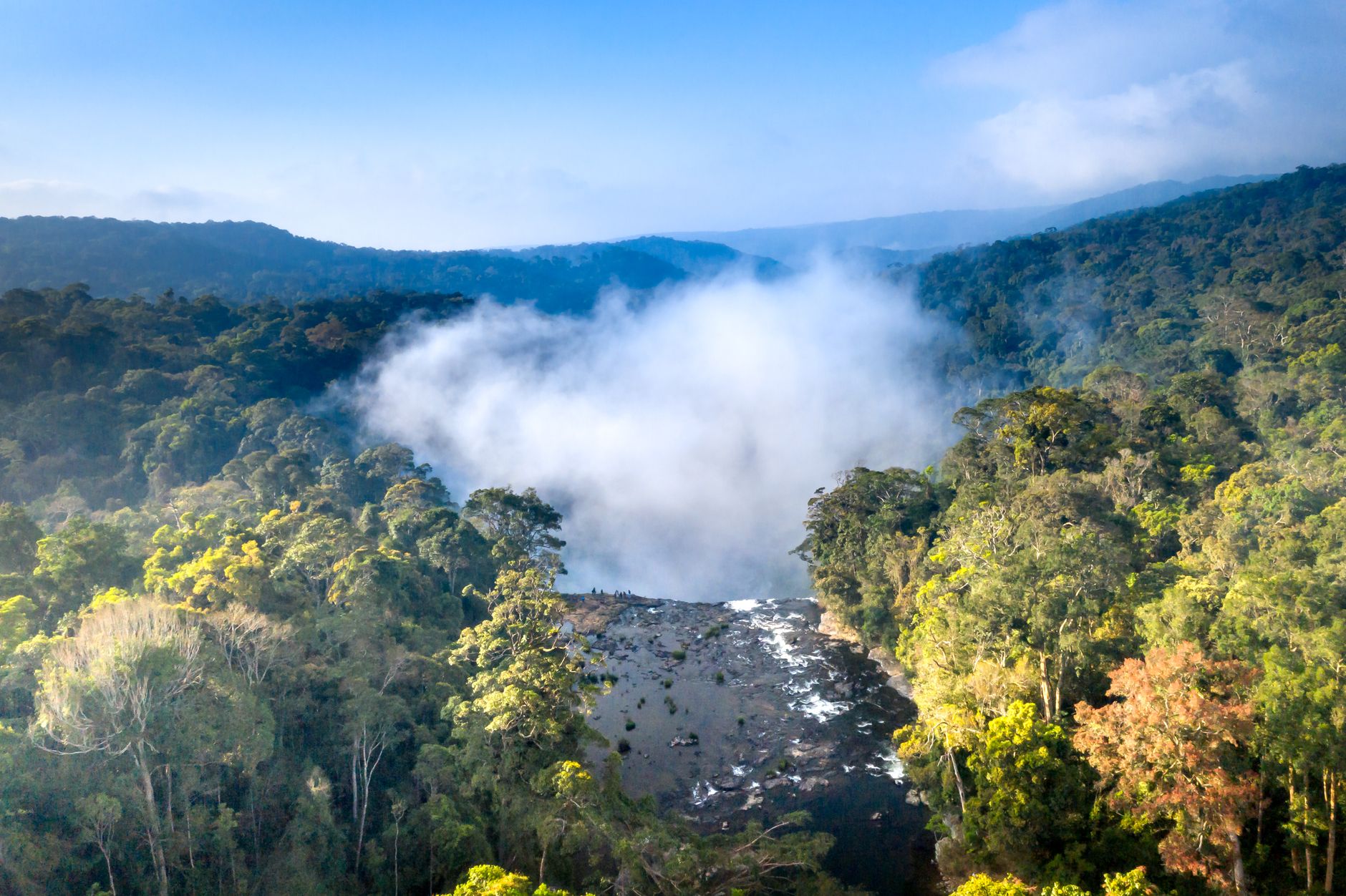
Madagascar’s wildlife is spread across a network of national parks and private reserves, each with its own habitats and signature species. You will rarely see everything in one place — the joy of a well-built circuit is that each park adds something new. For the full rundown, see our guide to the best Madagascar national parks and reserves; here are the cornerstones of a wildlife tour.
Andasibe (Andasibe-Mantadia), in the eastern rainforest, is the most popular and accessible wildlife destination, reachable in a half-day’s drive from the capital. It is the home of the indri, and its easy trails and excellent night walks make it the perfect introduction. Our eastern Madagascar and Andasibe guide covers the region in detail.
Ranomafana, further south in the eastern rainforest belt, is wetter, hillier and richer — superb for lemurs, including bamboo lemurs, and for night walks alive with frogs and chameleons. Isalo, in the dry south, trades rainforest for dramatic sandstone canyons, natural pools and ring-tailed lemurs, and is often paired with the road south. The north — around Diego and the Amber Mountain — and the west, with Kirindy’s fossa and the tsingy limestone formations, round out the great wildlife regions. Each pulls in a different direction, which is exactly why circuits are built the way they are.
How Wildlife Tours Fit Together
Because the parks are scattered and each offers something distinct, a serious wildlife tour is almost always a multi-park circuit. A classic eastern loop strings together Andasibe and Ranomafana for rainforest species; a southern run down the legendary RN7 road links Ranomafana, the highlands and Isalo; a western trip reaches Kirindy and the baobabs. The art of planning is sequencing these so that the drives are bearable and each park builds on the last.
That driving is the practical backbone of the whole trip. Madagascar’s roads are slow, the distances deceptive, and a self-drive is rarely the right call for a wildlife circuit — you want your attention on the forest, not the potholes. The standard and far better arrangement is a private car and driver who moves you between parks while you rest, watch the country roll by, and arrive fresh for each walk. You can arrange a car and driver through Carla, and our guide to getting around Madagascar explains the options in full. For a circuit visiting three or four parks, a driver who knows the route is worth every ariary.
Guided Group Tours vs Tailor-Made
Broadly, you have two ways to take a wildlife tour. A guided group tour follows a fixed itinerary with set departure dates and a small group of fellow travellers — it is simpler to book, often better value, and well suited to a first visit. A tailor-made private trip builds the circuit, pace and lodges entirely around you, which suits travellers with specific species in mind, photographers, families, or anyone wanting full control of the timing of those crucial night walks.
Both are excellent; the right choice depends on your budget, your group, and how particular you are about what you see. We compare the packaged options in detail in our Madagascar safari tour packages guide, and weigh Madagascar against the mainland alternative in Madagascar safari vs Africa.
When to Take a Wildlife Tour
Timing matters more for a wildlife tour than for almost any other kind of Madagascar trip. The broad answer is the dry season, roughly April to November, when the trails are passable, the eastern rainforests are not flooding, and the wildlife is active and findable. The wet season brings cyclone risk, washed-out roads and tougher walking, though it has its own rewards for the dedicated — it is when many reptiles and amphibians breed and are most visible.
Within the dry season, the late-dry peak from roughly September to November is often the sweet spot for wildlife. Many lemurs are carrying or nursing young, the weather is warming, reptile activity climbs, and the forests are alive. It is worth planning your circuit around this window if your dates are flexible. Our full breakdown lives in the best time to visit Madagascar guide — read it before you lock in dates, because the difference between a well-timed and a poorly-timed wildlife tour is significant.
What It Costs
A wildlife tour is not the cheapest way to travel Madagascar, but it delivers extraordinary value for what you experience. The cost is driven by the things that make it work: a private car and driver across long distances, mandatory park entry and guide fees at each reserve, lodges positioned beside the parks, and the time the whole circuit takes. Group tours spread the fixed costs and come in lower; tailor-made private trips cost more but buy you control and flexibility.
Rather than quote figures that shift constantly, we keep a dedicated, up-to-date breakdown. See our Madagascar safari cost guide for what to budget, where the money actually goes, and how to get the most wildlife per ariary spent.
Photography on a Wildlife Tour
Madagascar is a photographer’s dream and a photographer’s challenge in equal measure. The subjects are unique and endlessly photogenic, but the conditions are demanding: low light under a dense rainforest canopy, fast-moving lemurs high in the trees, tiny chameleons that need a macro lens, and the chaos of a night walk lit only by torches. A fast telephoto for the lemurs and birds, a macro setup for the small things, and a high-ISO-capable body all earn their place.
Above all, a photo-aware guide is worth as much as any lens — someone who will hold the group while you wait for the light, position you for a clear line to a chameleon, and know where the indri will sit at dawn. Our dedicated Madagascar photography guide covers gear, technique and the iconic shots in full. If photography is a priority, say so when you plan — it genuinely changes how the circuit should be built.
How to Get the Most from Your Tour
A few simple habits separate a good wildlife tour from a great one, and none of them cost money.
Bring patience. The best sightings come to those who wait quietly while the guide reads the forest. Resist the urge to rush on; the family of lemurs is worth twenty unhurried minutes. Start early. The forest is most active in the cool of dawn, and the indri call hardest in the first hours of light — an early start consistently outperforms a lie-in. Keep expectations realistic. No guide can guarantee a fossa, or even a specific lemur; the joy is in the totality of the forest, not a checklist. Travellers who come hoping to “tick off” species are often the ones who go home disappointed, while those who come to immerse themselves leave overwhelmed.
Pack good binoculars. This is the single most underrated piece of kit. A decent pair transforms a distant shape into a sifaka’s face, a smudge in the canopy into a vanga at work. Even casual visitors find that binoculars double the richness of every walk. Wear quiet, neutral clothing, sturdy shoes, and bring a reliable head-torch for the night walks. And trust your guide — they have walked these trails thousands of times and they want, genuinely, for you to see everything the forest can offer.
Getting There and Travelling Well
Reaching Madagascar means an international flight, almost always with a connection, and the island’s air links can be fragile. If your journey routes through Europe, you are protected under EU261, which can entitle you to compensation of up to €600 per passenger for long delays and cancellations on qualifying European-routed international flights — well worth understanding before you fly.
And given that a wildlife tour means days deep in remote forest, far from major hospitals, comprehensive travel insurance is not optional. SafetyWing Nomad Insurance is built for exactly this kind of trip, covering medical care and the unexpected while you are off the beaten track. Whether you are walking the trails of Ranomafana or waiting out a fossa near Kirindy, knowing you are covered by SafetyWing lets you focus on the forest. For somewhere to base yourself before and after the circuit, browse Antananarivo stays on Agoda. It is the small, sensible preparations — insurance, flight protection, the right base — that let the wildlife itself be the only thing you have to think about, and we would always rather you sorted your SafetyWing cover before you go than wished you had.
🦎 Let Carla Plan Your Wildlife Tour
The single best way to build a wildlife tour that actually delivers the species you care about is to plan it with someone who lives in Madagascar and walks these forests. Carla can match the right parks, the right guides, and the right timing — including those essential night walks — to exactly what you want to see, and arrange the car and driver that ties the circuit together. Reach out to Carla to start, and pair it with SafetyWing cover so the whole trip is handled.
Frequently Asked Questions
Do I really need a guide for a Madagascar wildlife tour?
Yes. A local guide is mandatory in Madagascar’s national parks, and beyond the rules, the guide is what makes the tour work — they find the animals you would never spot alone, interpret the forest, and turn a quiet walk into a procession of sightings. You can arrange one at the park gate, book through GetYourGuide, or have Carla organise a specialist in advance.
What animals will I actually see?
On a well-planned circuit you can reasonably expect several lemur species (very likely including the singing indri at Andasibe), numerous chameleons and geckos, endemic birds, frogs and a wealth of invertebrates — around 90% of it found nowhere else. The fossa is genuinely rare and never guaranteed. See our lemur guide and chameleon guide for the full picture.
Are night walks safe and worth it?
Both, emphatically. Night walks are short, guided, and run along park edges with torches; they are entirely safe with your guide and they reveal the nocturnal lemurs, geckos, frogs and chameleons you cannot see by day. Skipping them means missing roughly half the wildlife — always make sure your itinerary includes them.
When is the best time for a wildlife tour?
The dry season, broadly April to November, with a late-dry peak around September to November when wildlife is especially active. Read the best time to visit guide before booking, as timing strongly affects what you will see.
How do I get between the parks?
With a private car and driver — the standard and far better arrangement than self-driving on Madagascar’s slow roads. Arrange a car and driver through Carla, and see our getting around Madagascar guide for the details.
🦎 Build a Wildlife Tour Around What You Want to See — Ask Carla
A Madagascar-resident specialist can match parks, guides, and timing to the species you care about most. Reach out to Carla.
Plan Your Trip to Madagascar
- Read the full Madagascar Travel Guide
- Explore itineraries by style and duration
- Explore the full destination guide
Where to Stay