Vezo Fishermen of Madagascar: Sea Nomad Culture on the South Coast
This post contains affiliate links. We may earn a small commission at no extra cost to you.
At a Glance
- Who: sea nomad fishing communities along Madagascar’s southwest coast — ~200,000–300,000 people
- Defining trait: Vezo identity is defined by lifestyle, not ancestry — anyone who fishes the Vezo way becomes Vezo
- Territory: Toliara (Tuléar) north through Ifaty, Salary, Andavadoaka, and Morombe
- Vessel: the lakana — narrow dugout outrigger pirogue, sailed without motor
- Conservation: Locally Managed Marine Areas (LMMA) — Vezo community-controlled reef zones
- Base hotel: Find hotels in Toliara on Agoda
- 4WD for remote villages: Compare 4WD rentals on Carla
- Travel insurance: SafetyWing
🎒 Madagascar Trip Essentials
A few inexpensive items make the biggest difference on the ground in Madagascar:
- Picaridin insect repellent — DEET-free protection against malaria mosquitoes. See on Amazon →
- Permethrin clothing spray — treat clothes; kills mosquitoes on contact for weeks. See on Amazon →
- Pop-up mosquito net — budget lodges rarely provide one; packs down tiny. See on Amazon →
- Water filter bottle — tap water isn’t safe to drink in Madagascar. See on Amazon →
- Universal travel adapter (USB-C) — Madagascar uses European-style plugs. See on Amazon →
- 8×42 binoculars — essential for spotting lemurs and chameleons in the canopy. See on Amazon →
As an Amazon Associate we earn from qualifying purchases.
The Vezo are unique among Malagasy ethnic groups in that you are not born Vezo — you become Vezo by fishing. This single fact reshapes how the southwest coast operates: communities are defined by what people do, not who their grandparents were. The result is one of the most distinctive maritime cultures in the Indian Ocean.
What Makes the Vezo Different from Other Malagasy Groups
Among Madagascar’s 18 ethnic groups, the Vezo are the only one whose identity is fundamentally defined by lifestyle rather than ancestry. The word Vezo roughly translates as those who fish — and the cultural rule is straightforward: anyone who fishes from a pirogue, lives along the southwest coast, and follows the seasonal patterns of fish migration becomes Vezo, regardless of their birth ethnicity. A Bara cattle herder who marries into a fishing village and adopts the boat-based life is Vezo. A Merina urbanite who moves to Andavadoaka and learns to fish from a pirogue can become Vezo over time.
This is philosophically opposite to most ethnic identities in Madagascar and globally. The Vezo position themselves explicitly in opposition to the Masikoro (inland cattle-herding peoples in the same southwest region) — the contrast between sea-life and land-life is one of the fundamental organising principles of southwestern culture. Total Vezo population is estimated at 200,000–300,000 across the southwest coast from Toliara north to Cap Saint André. As traditional cattle culture comes under pressure from climate and economy, our guide to zebu culture shows the cousin Masikoro lifestyle from the land side.
The Lakana — Pirogue Engineering and Vezo Seamanship
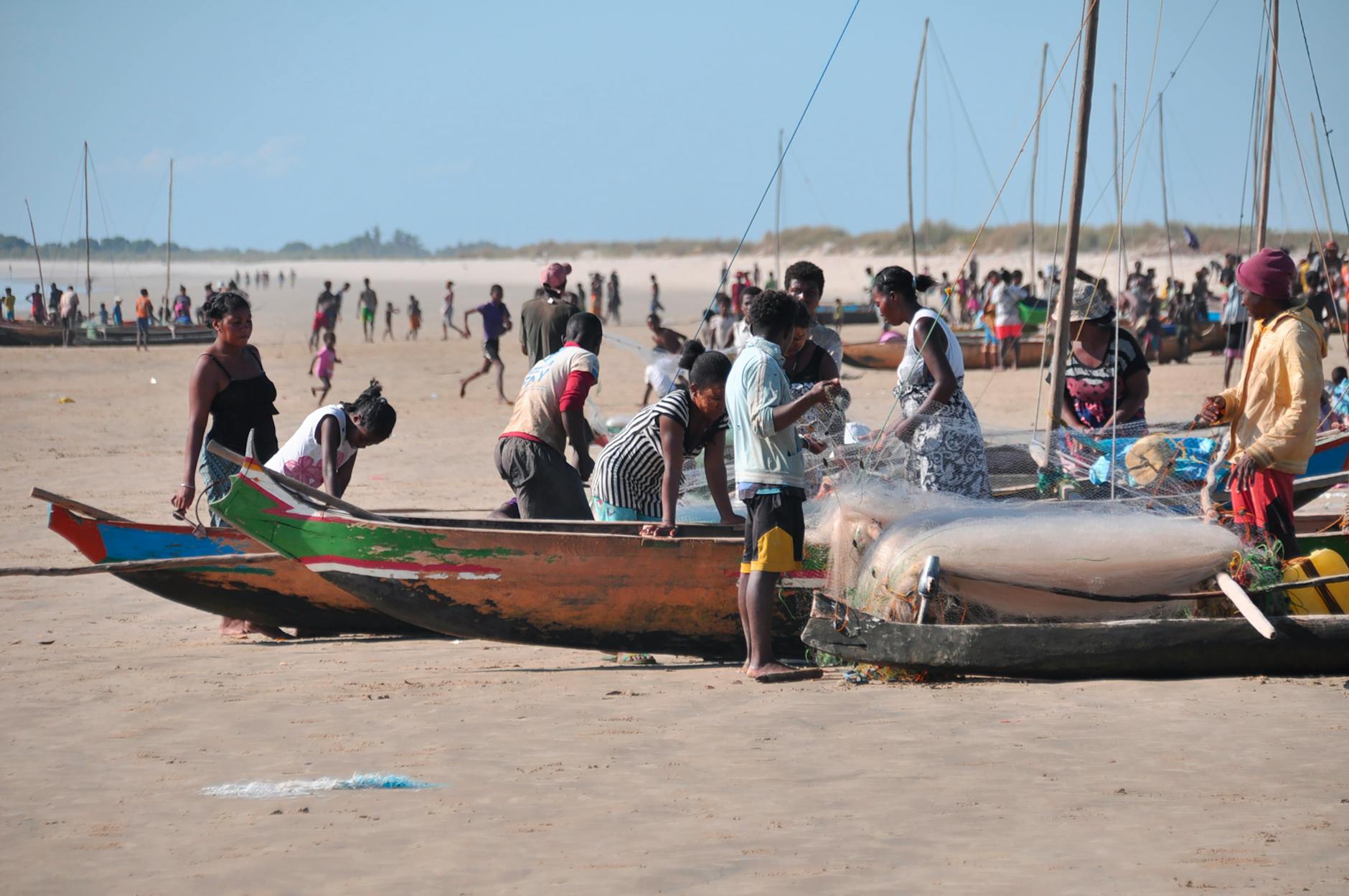
The Vezo outrigger pirogue, called the lakana, is a technological masterpiece refined over centuries. A typical lakana is a narrow dugout hull six to ten metres long, hollowed from a single tree, with a balance outrigger float extending two to three metres to one side via curved wooden booms. A triangular sail of cotton or recycled rice-sack fabric provides propulsion. The design is light enough to carry on land, narrow enough to be paddled silently for reef fishing, and balanced enough to handle 1–2 metre Indian Ocean swells without a motor.
Vezo navigators read wind, current, sky colour, and seabird behaviour to find fish and judge weather. Children learn to paddle and sail from age five to seven. Fishing techniques include hand-line, surface net, throw spear, and trap — selected by season, target species, and reef conditions. The lakana’s most important advantage over motorised vessels is its ability to be beached safely through breaking surf onto reef-lined beaches where no rigid-hull motorboat could approach. This is why the design has persisted: nothing built with western technology works as well in this specific environment.
LMMA Conservation and Vezo Reef Management
The southwest coast contains some of the best-preserved coral reefs in the western Indian Ocean — in part because of Vezo sustainable fishing practices, in part because of formal community management structures that have emerged over the past two decades. Locally Managed Marine Areas (LMMA) are zones where the Vezo communities themselves enforce temporary closures, gear restrictions, and species-specific protection. The largest, the Velondriake LMMA centred on Andavadoaka, covers approximately 800 square kilometres and includes more than 25 villages.
Blue Ventures, a UK conservation NGO, has worked with Vezo communities since 2003 to formalise LMMA governance, train community fisheries monitors, and support alternative livelihoods (seaweed and sea cucumber farming) that reduce pressure on reef fish. The model has succeeded enough to be replicated in other parts of Madagascar and across the western Indian Ocean. For travellers: when you snorkel or dive on the southwest coast, you are accessing a community-managed marine resource. Engage local guides, respect closure zones if your guide indicates them, and treat fees as legitimate contributions to a working conservation system rather than informal extraction. The neighbouring Sakalava heritage covers the inland west coast culture that sits beside Vezo territory.
Visiting Vezo Country: Toliara, Ifaty, Andavadoaka
Toliara (Tuléar) is the main gateway city. Domestic flights from Antananarivo run daily (approximately 1.5 hours); the road journey is approximately 24 hours and not recommended for first-time visitors. Search Toliara hotels on Agoda for your base. Ifaty and Mangily, 25 kilometres north of Toliara on a paved road, are the most accessible Vezo coast destinations — diving, snorkelling, and pirogue trips with local fishing crews are easily arranged through the village hotels.
For more remote and traditional Vezo communities, continue north: Salary Bay (90km north, accessible by 4WD), Morombe (160km, partly paved), and Andavadoaka (180km, brutal piste — 4WD essential). The road to Andavadoaka becomes effectively impassable in heavy rain (rare in this dry zone but possible January–March). Rent a 4WD on Carla for the journey, and consult our 4WD versus standard rental guide to confirm what you actually need for the route. Plan two to three nights minimum in Andavadoaka — the village deserves time, and the journey out is too demanding for a single-night stay to be worthwhile.
Frequently Asked Questions
Can someone become Vezo by lifestyle choice?
Yes. Vezo identity is defined by lifestyle rather than ancestry. Anyone who marries into a Vezo fishing village, adopts the boat-based fishing life, and follows the seasonal patterns of the southwestern coast can become Vezo over time. This is unique among Madagascar’s 18 ethnic groups and reflects a fundamentally different relationship between identity and birth.
Where is the best place to experience Vezo culture?
Andavadoaka, 180 km north of Toliara, is the centre of the Velondriake Locally Managed Marine Area and the most concentrated Vezo cultural and conservation site. For easier access, Ifaty and Mangily (25 km north of Toliara, paved road) offer pirogue trips, reef snorkelling, and village interactions in a shorter time frame and with more tourist infrastructure.
Is it safe to go fishing with Vezo crews?
Yes, when arranged through village hotels or Blue Ventures partner organisations. Vezo crews have generations of experience handling pirogues in local conditions. Day trips for snorkelling, reef fishing, and beach picnics are routinely arranged. Make sure your travel insurance covers water-based activities and confirm life-jacket availability before departure.
Vezo culture is one of the most distinctive maritime traditions in the Indian Ocean — and the LMMA conservation model emerging from Vezo communities is among the most successful community-based marine protection systems in the world. Visiting respectfully means engaging local guides, paying community fees as conservation contributions, and treating fishing trips as cultural exchanges rather than tourist transactions. Before any travel to remote southwestern villages, make sure your insurance covers medical evacuation — costs from Madagascar reach $80,000. Check SafetyWing’s plans for Madagascar.
Travel Insurance for Madagascar
Medical evacuation from Madagascar costs $30,000–$80,000. Don’t travel without cover.
- SafetyWing — monthly-subscription travel medical cover; you can check their plans.
- World Nomads — single-trip travel insurance with adventure-activity options.
Plan Your Trip to Madagascar
- Read the full Madagascar Travel Guide
- Explore itineraries by style and duration
- Explore the full destination guide
Where to Stay