Where to Buy Authentic Crafts in Madagascar: Artisan Markets Guide
This post contains affiliate links. We may earn a small commission at no extra cost to you.
At a Glance
- Top market overall: Marché de la Digue, Antananarivo — largest selection, open daily, hard bargaining
- Best for marquetry: Centre Artisanal d’Ambositra (RN7, between Antsirabe and Fianarantsoa)
- Best for textiles: Soalandy cooperative at Sandrandahy, near Ambositra
- Best for paper and zebu horn: Ambalavao (the Antaimoro paper centre)
- Best for gems: Antsirabe lapidary studios on Rue de l’Artisanat
- Best for coastal crafts: Bazary Be in Hell-Ville, Nosy Be
- Base hotel: Find hotels in Antananarivo on Agoda
- Travel insurance: SafetyWing
🎒 Madagascar Trip Essentials
A few inexpensive items make the biggest difference on the ground in Madagascar:
- Picaridin insect repellent — DEET-free protection against malaria mosquitoes. See on Amazon →
- Permethrin clothing spray — treat clothes; kills mosquitoes on contact for weeks. See on Amazon →
- Pop-up mosquito net — budget lodges rarely provide one; packs down tiny. See on Amazon →
- Water filter bottle — tap water isn’t safe to drink in Madagascar. See on Amazon →
- Universal travel adapter (USB-C) — Madagascar uses European-style plugs. See on Amazon →
- 8×42 binoculars — essential for spotting lemurs and chameleons in the canopy. See on Amazon →
As an Amazon Associate we earn from qualifying purchases.
Madagascar’s best crafts aren’t bought in airport shops or hotel lobbies — they’re bought at the markets and cooperatives where the makers actually work. This guide names the places, gives realistic price expectations, and tells you when to go to get the best selection.
Antananarivo: La Digue and the Capital’s Craft Hubs
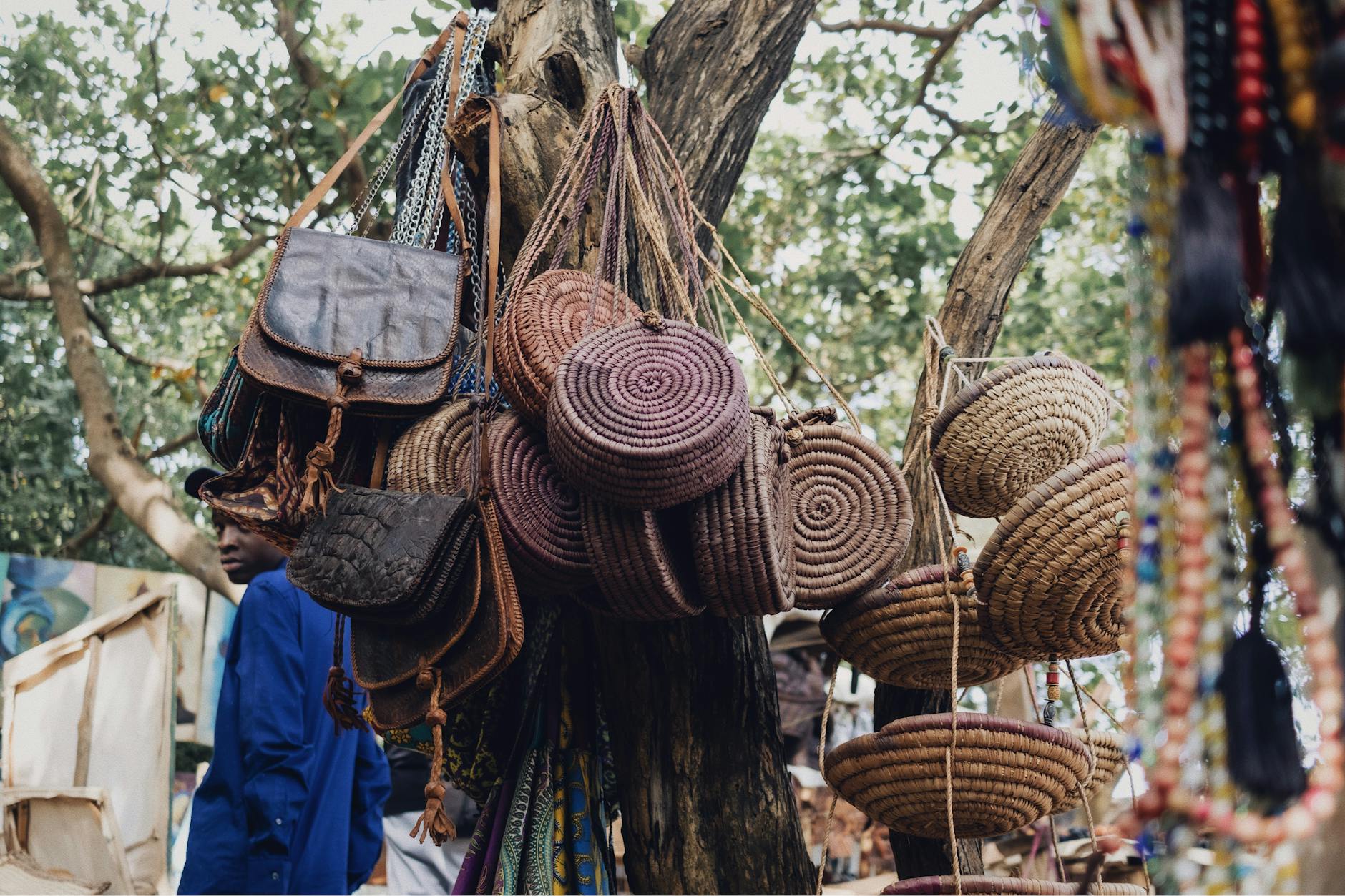
The Marché Artisanal de la Digue, locally just “La Digue”, sits at the bottom of the slope below Pochard, a 10-minute taxi from Independence Avenue. About 200 stalls cover virtually every Malagasy craft category — silk and cotton lamba, marquetry, raffia baskets, aluminium toy cars, polished stones, zebu horn, embroidery, paintings, spices and vanilla. Quality varies wildly from stall to stall. Open 8:00–17:00 daily; arrive before 10:00 for selection and after 15:00 for tired-vendor pricing. Expect opening prices to be 2–4x what locals pay; counter at 30–50%.
For higher-end shopping without bargaining, Lisy Art Gallery in Antaninarenina has fixed-price silk lamba, paintings and curated pieces at museum quality. Madagascar Curio near Antsahavola is similarly trustworthy. The general-purpose Marché Andravoahangy (also called Marché des Artisans) sells more to locals — prices closer to real, fewer English speakers. The 67ha market is the largest in the city for general goods including vanilla and spices. To move efficiently between these spread-out points, a half-day taxi or rental keeps you flexible: Compare Madagascar car rental prices on Carla. See our Antananarivo food markets guide for the food-shopping complement.
The RN7 Craft Trail: Antsirabe, Ambositra, Ambalavao
The highland section of RN7 between Antananarivo and Fianarantsoa is essentially Madagascar’s craft superhighway. Antsirabe, three hours south of Tana, is the lapidary capital — Rue de l’Artisanat hosts dozens of stone-cutting studios where you can watch sapphire and tourmaline rough cut on simple lapidary wheels. The same town’s aluminium-recycling cooperatives on the road toward Andraikiba produce the famous toy cars; a workshop tour costs almost nothing and lets you buy directly. Allow a full day at minimum.
Two hours further south, Ambositra is the marquetry capital. The Centre Artisanal in the town centre and several family workshops around it produce inlay boxes, chess boards, picture frames and ornaments using legal hardwoods. Twenty minutes east, Sandrandahy hosts the Soalandy silk cooperative — the entire silk production chain, from cocoon to woven scarf, available to see and buy. Another two hours south, Ambalavao is famous for Antaimoro paper made from avoha bark and pressed with dried wildflowers — workshops welcome visitors. The town is also a good place for zebu horn carvings. Plan this as a 3–4 day RN7 segment to do it justice. Cross-reference with our traditional architecture guide for the regional context that produced these crafts.
Coastal Markets: Nosy Be, Sainte-Marie and Fort Dauphin
Bazary Be in Hell-Ville, Nosy Be, is the island’s main souvenir market — coastal-themed pieces dominate: cowrie-shell jewellery, raffia beach bags, embroidered cotton sarongs, vanilla and ylang-ylang oils, painted lemur figurines, and spice mixes. Quality is variable and tourist markup is heavier than the highlands. Visit during morning hours (8:00–11:00) when the selection is freshest and vendors more energetic. Bargain to 40–50% of opening prices. For mid-range craft shopping in Nosy Be use Nosy Be hotels on Agoda as your base.
Île Sainte-Marie’s Ambodifotatra market is smaller and more local — fewer crafts per square metre but pleasant browsing. Look for woven raffia bags, basic shell jewellery, and embroidered pieces. Fort Dauphin’s central market stocks Antanosy-style weaving and beadwork that you don’t easily find in the north — worth a visit if your itinerary takes you there. Avoid airport craft shops as standalone destinations; their selection is narrow and prices 30–60% higher than equivalent items at La Digue. Use them only as a last-minute backup. Reach the coastal markets either by domestic Tsaradia flight or by long road journey from Tana — read our budget guide for cost breakdowns and trade-offs.
How to Shop the Markets Strategically
The best craft-shopping trips follow a rhythm: scout first, buy second. Walk the whole market or section once without engaging vendors, just looking. Note the 3–5 stalls with the best quality and broadest selection. Return to those with specific items in mind. This protects you from the rookie mistake of buying the first thing you see at a steep markup, only to find better and cheaper 50 metres further on. Always carry small-denomination cash in Ariary — vendors will not break a 20,000 note for a 5,000 purchase, and pulling a fat wad of bills out resets bargaining position against you.
Time your visits. First hour of opening is selection-rich but vendor energy is fresh and bargaining harder. Last 90 minutes before close is selection-poor but bargaining easier — vendors who have not made their day’s number will accept lower offers. Avoid market days (often Tuesdays and Fridays in some smaller towns) for craft shopping — the crowds make negotiation impossible. Always inspect items before paying: turn them over, check for cracks, run thread tests on textiles, check stones in natural light. Always confirm the price before the seller wraps anything. Combine bargaining technique with our Malagasy language basics guide — a few words of greeting in Malagasy soften any negotiation.
Frequently Asked Questions
Is La Digue safe for tourists?
Yes, during daylight hours with normal big-market vigilance. Pickpocketing happens — keep your phone and wallet in a front pocket or money belt and don’t display large amounts of cash. Avoid the surrounding streets after dusk. Most thefts are opportunistic; serious crime against tourists is rare here.
Do market vendors accept card or only cash?
Almost universally cash in Ariary. Some larger fixed-price boutiques (Lisy Art Gallery, Madagascar Curio, some larger marquetry workshops) accept Visa or Mastercard with a 3–5% surcharge. Bring enough cash for market-day spending; ATM access is reliable in Antananarivo but limited in smaller craft towns.
Should I buy from cooperatives or markets?
Cooperatives like Soalandy pay weavers and artisans more fairly and you can see the production. Prices are 20–40% higher than markets but quality and provenance are guaranteed. Markets are cheaper and have more variety but quality is mixed. For investment pieces use cooperatives; for inexpensive everyday souvenirs, markets are fine.
The right shopping itinerary stitches three things together: a half-day at La Digue in Antananarivo for breadth, a day on the RN7 corridor (Antsirabe + Ambositra + Soalandy) for serious craft, and one coastal market for variety. Cover yourself for everything you carry home: Get SafetyWing before you fly — from $1.82/day. It is one of the cheapest forms of insurance against the most common Madagascar travel headache: lost or delayed luggage.
Travel Insurance for Madagascar
Medical evacuation from Madagascar costs $30,000–$80,000. Don’t travel without cover.
- SafetyWing — monthly-subscription travel medical cover; you can check their plans.
- World Nomads — single-trip travel insurance with adventure-activity options.
Plan Your Trip to Madagascar
- Read the full Madagascar Travel Guide
- Explore itineraries by style and duration
- Explore the full destination guide
Where to Stay