Madagascar vs Tanzanie vs Galápagos faune 2026 : comparaison honnête
Divulgation d’affiliation : Cet article contient des liens sponsorisés vers des hôtels, voyagistes, assureurs et autres services de voyage. Nous percevons une petite commission si vous réservez via nos liens, sans coût supplémentaire pour vous.
Madagascar vs Tanzanie vs Galápagos faune 2026 — En bref
- Madagascar : Le plus haut endémisme terrestre — lémuriens, caméléons, baobabs introuvables ailleurs ; basé sur la marche, peu fréquenté, le plus abordable
- Tanzanie : Safari de gros gibier classique — lions, éléphants, la Grande Migration ; basé sur véhicule, iconique, bien développé
- Galápagos : Faune endémique sans peur, focus marin ; basé sur bateau/île, strictement réglementé, le plus cher
- Le meilleur pour espèces endémiques uniques : Madagascar et Galápagos (genres différents)
- Le meilleur pour gros gibier : Tanzanie
- Meilleure valeur : Madagascar
- Assurance voyage : SafetyWing Nomad Insurance — essentielle pour les trois
- Protection vols : EU261 600 € par passager pour perturbations entrantes européennes
- Hôtels portes de parc : Séjours Madagascar sur Agoda
🐿 Matériel d’observation de la faune
Le bon matériel transforme une sortie nature :
- Jumelles 8×42 — indispensables pour repérer lémuriens et caméléons. Voir sur Amazon →
- Lampe frontale rechargeable — indispensable pour les marches de nuit. Voir sur Amazon →
- Bâtons de randonnée — ultralégers pour les longues randonnées. Voir sur Amazon →
- Sac à dos de randonnée — confortable pour eau, appareil et vêtements. Voir sur Amazon →
- Répulsif à la picaridine — sans DEET, contre les moustiques du paludisme. Voir sur Amazon →
En tant que Partenaire Amazon, nous réalisons un bénéfice sur les achats éligibles.
Pour les amoureux de la faune planifiant un voyage bucket-list, trois destinations se distinguent comme les grandes expériences nature du monde : Madagascar, la Tanzanie, et les Galápagos. Chacune est extraordinaire, mais elles sont profondément différentes — dans la faune qu’elles protègent, la manière dont vous la vivez, le coût, et le caractère du voyage. Bien choisir signifie comprendre ce que chacune offre véritablement et l’adapter au genre d’expérience faune que vous voulez. Cette comparaison honnête pèse les trois à travers faune, style d’expérience, accessibilité, coût, et la question de l’unicité.
La version courte : la Tanzanie délivre le safari de gros gibier classique — lions, éléphants, et la Grande Migration vus depuis un véhicule ; les Galápagos offrent une faune endémique sans peur et approchable dans un archipel marin strictement protégé ; et Madagascar protège la plus haute concentration d’espèces terrestres uniques sur Terre — lémuriens, caméléons, et baobabs introuvables ailleurs — vécue à pied dans des parcs peu fréquentés au prix le plus abordable. Pour l’image complète des parcs de Madagascar, voyez notre pilier des parcs nationaux et réserves.
Les trois destinations en bref
La Tanzanie est la maison du safari africain classique. Ses parcs — le Serengeti, le cratère du Ngorongoro, Tarangire — protègent le gros gibier iconique : lions, éléphants, léopards, buffles, rhinocéros, et les millions de gnous de la Grande Migration. Vue depuis un véhicule de safari à travers la vaste savane, la Tanzanie délivre le spectacle faune de gros mammifères par excellence, avec une infrastructure bien développée et une industrie safari mature.
Les Galápagos, au large de l’Équateur, sont un archipel volcanique où l’isolement a produit une faune sans peur des humains — tortues géantes, iguanes marins, fous à pieds bleus, otaries, et les pinsons qui ont inspiré Darwin. Vécus largement par bateau et lors de marches guidées sur les îles, les Galápagos offrent des rencontres étonnamment rapprochées dans un environnement strictement réglementé et fortement protégé, à des prix premium.
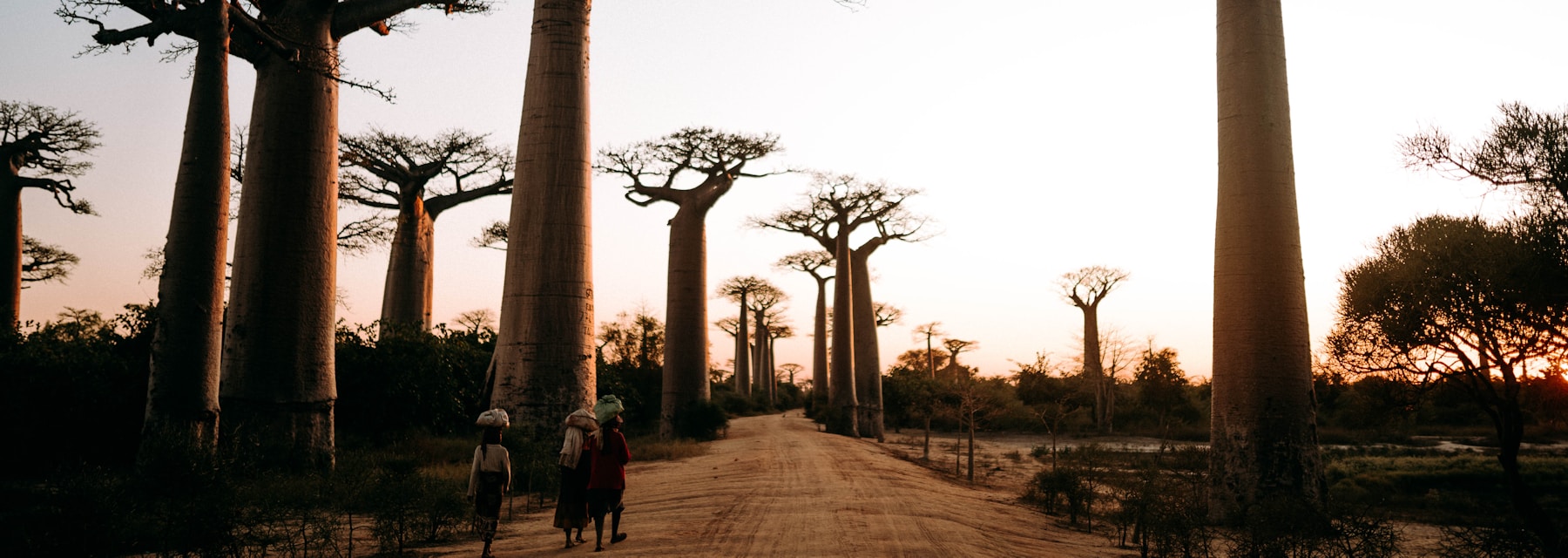
Madagascar protège la faune terrestre la plus distinctive sur Terre. Ayant évolué en isolement pendant des dizaines de millions d’années, les parcs de l’île abritent lémuriens (trouvés seulement ici), la majorité des caméléons au monde, des baobabs uniques, et des familles endémiques entières d’oiseaux et grenouilles. Vécue à pied avec des guides dans des parcs peu fréquentés, Madagascar offre une expérience faune basée sur la marche, intime, au prix le plus abordable des trois.
La faune comparée
Les trois protègent une faune totalement différente. La Tanzanie concerne le gros gibier et l’échelle — le drame d’une chasse de lion, les troupeaux d’éléphants, le spectacle d’un million de gnous traversant une rivière. C’est la faune de grands mammifères dans sa forme la plus cinématographique. Les Galápagos concernent l’approchabilité sans peur et la vie marine — une faune qui vous ignore entièrement, permettant des rencontres d’une intimité extraordinaire, avec un fort focus marin et reptilien. Madagascar concerne l’endémisme et l’unicité — presque tout ce que vous voyez n’existe nulle part ailleurs, de l’indri chanteur au minuscule microcèbe, des caméléons couleur de joyau, et des baobabs surréalistes.
Si votre rêve est les grands félins et éléphants, la Tanzanie est inégalée. Si c’est nager avec des otaries et marcher parmi des tortues géantes, les Galápagos délivrent. Si c’est rencontrer des créatures introuvables ailleurs sur Terre — lémuriens bondissant à travers la forêt pluviale, caméléons changeant de couleur, baobabs contre le ciel — Madagascar est dans une catégorie à part. Aucune n’est « meilleure » ; elles protègent différentes merveilles.
Le style d’expérience
Comment vous vivez la faune diffère fondamentalement. La Tanzanie est basée sur véhicule — vous faites des game-drives à travers les parcs, voyant la faune depuis un 4×4, couvrant de grandes distances pour trouver les animaux. C’est confortable et peut délivrer des observations dramatiques avec relativement peu d’effort physique. Les Galápagos sont basées sur bateau-et-marche — typiquement une croisière entre îles avec marches guidées à terre et snorkeling, une expérience structurée et réglementée. Madagascar est basée sur la marche — vous traversez forêts et canyons à pied avec un guide, cherchant une faune bien camouflée, une expérience active et immersive.
Cela façonne à qui chacune convient. La Tanzanie convient à ceux qui veulent une observation confortable et dramatique sans beaucoup de marche. Les Galápagos conviennent à ceux qui apprécient une croisière structurée avec une activité modérée. Madagascar convient aux voyageurs actifs qui ne dérangent pas de marcher et veulent une expérience faune intime et participative. La nature marchante des parcs de Madagascar fait partie de leur attrait pour beaucoup — et une considération pour ceux avec des limitations de mobilité.
Accessibilité et infrastructure
La Tanzanie a l’infrastructure de tourisme faune la plus développée des trois, avec une industrie safari étendue, des lodges et camps abondants, et une logistique bien organisée, bien qu’atteindre les parcs implique vols et conduites. Les Galápagos, bien que reculées, sont hautement organisées autour de leur industrie de croisière et tour, avec un accès strictement contrôlé qui assure une expérience fluide (bien que réglementée). Madagascar est la moins développée — routes plus lentes, infrastructure plus basique, et besoin de plus de planification — ce qui est précisément pourquoi ses parcs restent peu fréquentés. Le compromis est constant : la difficulté relative de Madagascar est l’envers de sa solitude et son accessibilité financière. Une assurance voyage exhaustive compte pour les trois.
Comparaison des coûts
Le coût est un différenciateur majeur. Les Galápagos sont les plus chères, avec une tarification de croisière premium et une réglementation stricte gardant les coûts élevés. La Tanzanie est aussi coûteuse — les safaris de qualité commandent des prix premium pour lodges, frais de parc, et game-drives guidés, bien qu’une gamme existe. Madagascar est la plus abordable par une marge claire — frais de parc, guides, et hébergement coûtent bien moins, et la dépense principale est simplement d’atteindre l’île. Pour les amoureux de la faune avec un budget, ou ceux voulant le plus d’expérience faune par dollar, Madagascar offre une valeur exceptionnelle, délivrant une faune unique de classe mondiale à une fraction du coût d’une croisière Galápagos ou d’un safari tanzanien premium.
Unicité et endémisme
Deux des trois — Madagascar et les Galápagos — sont des icônes mondiales de l’endémisme, tandis que la faune de la Tanzanie, bien que spectaculaire, est partagée à travers une grande partie de l’Afrique de l’Est. Madagascar et les Galápagos doivent toutes deux leur faune unique à l’isolement, mais elles diffèrent : les Galápagos sont célèbres pour relativement peu mais extraordinairement approchables espèces, tandis que Madagascar arbore une diversité bien plus grande — environ 100 espèces de lémuriens seules, plus des milliers de plantes et animaux endémiques. Pour la pure étendue de vie endémique, Madagascar est inégalée ; pour l’intimité avec une faune sans peur, les Galápagos mènent. Les deux offrent quelque chose que la Tanzanie ne peut : l’expérience de créatures qui n’existent nulle part ailleurs, les résultats vivants de l’évolution en isolement.
Un regard plus approfondi sur chaque destination
Tanzanie : le safari classique
L’expérience faune de la Tanzanie est construite autour des grands parcs de savane et du rythme du game-drive. Dans le Serengeti, vous pistez le mouvement de la Grande Migration ; dans le cratère du Ngorongoro, une caldeira volcanique effondrée grouillant de faune, vous rencontrez une densité étonnante d’animaux dans un seul bol ; à Tarangire, les éléphants se rassemblent parmi les baobabs. L’expérience est confortable et dramatique — drives tôt le matin et en fin d’après-midi, sundowners sur les plaines, lodges et camps de toile allant du rustique à l’ultra-luxe. La Tanzanie délivre le safari de l’imagination, et pour les premiers voyageurs faune il est difficile à battre. La limitation est que l’expérience, aussi magnifique soit-elle, suit un modèle bien établi partagé à travers l’Afrique de l’Est.
Galápagos : le laboratoire de l’évolution
Les Galápagos offrent des rencontres faune contrairement à nulle part ailleurs — non pour la diversité, mais pour l’absence de peur et l’intimité. Parce que les animaux des îles ont évolué sans prédateurs humains, ils ne montrent aucune peur, vous permettant de vous asseoir à côté d’iguanes marins se prélassant, faire du snorkeling avec des otaries curieuses, et passer devant des fous à pieds bleus nichant. L’expérience est typiquement une croisière en petit navire entre îles, avec débarquements guidés par naturaliste régis par des règles strictes pour protéger l’écosystème fragile. C’est une expérience structurée, premium, et profondément gratifiante, et le lieu où les idées de Darwin ont pris forme — mais le compte d’espèces est modeste, et le coût et la réglementation sont élevés.
Madagascar : la frontière endémique
L’expérience faune de Madagascar est la plus active et exploratoire des trois. Vous marchez à travers les forêts pluviales à l’aube écoutant l’appel de l’indri, escaladez les canyons repérant des lémuriens à queue annelée, et vous aventurez la nuit à la lampe torche pour trouver microcèbes et caméléons. La diversité est stupéfiante — environ 100 espèces de lémuriens, des centaines de reptiles et amphibiens, des milliers de plantes endémiques — et presque tout cela n’existe nulle part ailleurs. L’expérience est moins léchée que la Tanzanie ou les Galápagos, avec plus de marche et une logistique plus rude, mais elle offre quelque chose qu’elles ne peuvent : le sentiment d’explorer une frontière évolutive vivante, dans des parcs où vous pourriez être les seuls visiteurs. Pour l’amoureux de la faune qui valorise l’unicité et la découverte au-dessus du confort, Madagascar est incomparable.
Saisons et timing comparés
Tanzanie : Faune toute l’année, mais le timing de la Grande Migration varie selon le mois ; la saison sèche (juin–octobre) offre la meilleure observation générale de gibier alors que les animaux se concentrent aux sources d’eau.
Galápagos : Une destination toute l’année avec deux saisons principales — la saison chaude/humide (décembre–mai) et la saison fraîche/sèche (juin–novembre) — chacune offrant un comportement faune et des conditions marines différents ; il n’y a pas de mauvais moment.
Madagascar : La saison sèche (avril–novembre) est la meilleure pour l’accès au parc et le confort, avec septembre–novembre offrant l’activité maximale des lémuriens et reptiles. La saison humide apporte forêts luxuriantes et activité de reproduction mais un accès plus difficile. Les trois récompensent un timing de saison, mais la fenêtre de saison sèche de Madagascar est la plus importante à respecter pour l’accès au parc.
Notation dimension par dimension
Diversité faune : Madagascar mène sur la diversité endémique ; la Tanzanie sur le spectacle de gros mammifères ; les Galápagos sur l’intimité sans peur avec moins d’espèces.
Unicité : Madagascar et Galápagos mènent (endémique) ; la faune de la Tanzanie est partagée à travers l’Afrique de l’Est.
Facilité et confort : La Tanzanie et les Galápagos mènent ; Madagascar la plus exigeante.
Valeur : Madagascar clairement la moins chère ; les Galápagos les plus chères.
Foules : Madagascar la moins fréquentée ; les parcs populaires de la Tanzanie et les sites réglementés des Galápagos plus occupés.
Activité physique : Madagascar la plus active (marche) ; la Tanzanie la moins (véhicule) ; les Galápagos modérée.
Le schéma : la Tanzanie pour le spectacle de gros gibier confortable, les Galápagos pour les rencontres marines intimes, Madagascar pour la diversité endémique inégalée, la valeur, et la solitude.
La meilleure pour quel voyageur
Choisissez la Tanzanie si vous voulez le safari de gros gibier classique — lions, éléphants, la Grande Migration — vu confortablement depuis un véhicule, avec une faune iconique et dramatique et une infrastructure développée. Idéale pour les premiers safaris et ceux qui rêvent de mégafaune africaine.
Choisissez les Galápagos si vous voulez une faune sans peur et approchable et un focus marin, vécus sur une croisière d’île structurée, et le budget n’est pas un obstacle. Idéales pour ceux attirés par les îles de Darwin et les rencontres marines rapprochées.
Choisissez Madagascar si vous voulez la plus haute diversité de faune terrestre unique et endémique — lémuriens, caméléons, baobabs — vécue à pied dans des parcs peu fréquentés à un prix abordable. Idéale pour les amoureux de la faune actifs cherchant quelque chose de véritablement différent et disposés à échanger un peu de confort contre l’unicité et la valeur.
L’argument unique de Madagascar
L’argument de Madagascar est l’étendue de l’endémisme, l’accessibilité financière, et l’intimité. Aucune destination n’offre autant d’espèces uniques — l’île est une expérience évolutive à l’échelle d’un continent, avec lémuriens, tenrecs, caméléons, et oiseaux et plantes endémiques en variété stupéfiante. Et elle délivre cela au coût le plus bas des trois, dans des parcs où vous pouvez encore avoir la forêt largement pour vous. Pour les amoureux de la faune qui ont fait un safari africain et veulent quelque chose de nouveau, ou qui sont attirés par les créations les plus distinctives de l’évolution, Madagascar offre une expérience que ni la Tanzanie ni même les Galápagos ne peuvent répliquer.
Les compromis sont réels — plus de marche, logistique plus rustique, faune plus subtile que le gros gibier — mais pour le bon voyageur ce sont des caractéristiques. Pour planifier un voyage faune Madagascar qui délivre, les parcs détaillés dans notre pilier des parcs nationaux sont la fondation, et la richesse ornithologique est couverte dans notre guide des espèces endémiques.
Combien de temps vous faut-il dans chacune
Tanzanie : Un safari classique du circuit nord nécessite 6–9 jours pour bien couvrir le Serengeti, le Ngorongoro, et Tarangire, avec plus de temps pour la migration ou les parcs reculés.
Galápagos : Une croisière typique dure 4–8 jours, la durée déterminant combien d’îles et d’espèces vous rencontrez ; les croisières plus longues atteignent les îles extérieures plus reculées et riches en faune.
Madagascar : Un voyage de parc focalisé nécessite 8–12 jours pour le circuit RN7 classique ou la forêt pluviale de l’est, et deux semaines ou plus pour un voyage faune exhaustif atteignant plusieurs écosystèmes. La logistique plus lente de Madagascar signifie budgétiser généreusement et résister à l’envie de se précipiter entre les parcs.
Différences pratiques de réservation
La manière de réserver chaque destination diffère significativement. La Tanzanie a une industrie safari mature avec des opérateurs abondants, des circuits établis, et une réservation simple, souvent comme un forfait incluant lodges, frais de parc, et game-drives. Les Galápagos sont réservées largement via des opérateurs de croisière, avec le choix du navire et de l’itinéraire les décisions principales ; la nature réglementée rend le voyage indépendant limité et dépendant de l’opérateur. Madagascar se situe à l’extrémité coordination-spécialiste : bien que les grands parcs puissent être visités semi-indépendamment, la logistique — vols domestiques, le circuit RN7, permis de parc, guides, et atteindre les parcs reculés — récompense le travail avec un opérateur ou une spécialiste résidente qui peut sécuriser les bons guides et structurer un circuit fluide.
Cela signifie que la Tanzanie et les Galápagos peuvent être réservées via des canaux de forfait établis, tandis que les expériences les plus profondes et les plus fluides de Madagascar viennent de la coordination spécialiste. Les destinations plus développées récompensent la réservation standard ; Madagascar récompense les connaissances locales qui transforment sa complexité logistique en un voyage faune sans couture.
La perspective du voyageur faune expérimenté
Pour les voyageurs qui ont déjà fait un safari africain et peut-être les Galápagos, le calcul penche vers Madagascar. Une fois que vous avez regardé des lions dans le Serengeti et fait du snorkeling avec des otaries aux Galápagos, l’appétit grandit souvent pour quelque chose de véritablement différent — une faune que vous ne pouvez voir nulle part ailleurs, dans une destination qui ressemble encore à une frontière. C’est exactement là que l’argument de Madagascar devient le plus fort.
La Tanzanie et les Galápagos, aussi magnifiques soient-elles, sont bien connues et de plus en plus fréquentées — leur faune documentée, leurs circuits établis. Madagascar reste, par comparaison, une découverte : des parcs où vous pourriez être les seuls visiteurs, une faune introuvable ailleurs sur Terre, et un sentiment de véritable exploration. Le voyageur faune expérimenté qui entend l’appel de l’aube de l’indri, trouve un caméléon à la lampe torche, ou regarde des sifakas danser à travers le sol rencontre quelque chose que les destinations plus célèbres ne peuvent offrir. Il y a une satisfaction particulière dans le voyage faune qui ressemble encore à une découverte — et pour le voyageur qui a « fait » les classiques, les merveilles endémiques de Madagascar la délivrent comme nulle part ailleurs.
Peut-on les combiner ?
Ces trois se situent sur différents continents et se combinent rarement en un seul voyage — chacune mérite son propre voyage dédié. La question plus utile est le séquençage au cours de la vie d’un amoureux de la faune. Beaucoup font un safari africain d’abord (l’icône accessible), les Galápagos quand le budget le permet (l’expérience marine bucket-list), et Madagascar quand ils veulent quelque chose de véritablement différent et hors des sentiers battus. Madagascar devient souvent la plus mémorable pour ceux qui font le voyage, précisément parce que sa faune endémique et ses parcs peu fréquentés offrent un sentiment de découverte que les destinations plus célèbres ont perdu. Pour ceux combinant au sein d’une région, Madagascar s’associe naturellement avec un voyage tanzanien ou africain plus large via les connexions de l’océan Indien.
Un cadre décisionnel
Si vous pesez encore les trois, quelques questions clarifient le choix. Quelle faune voulez-vous le plus voir ? Les grands félins et éléphants pointent vers la Tanzanie ; la vie marine sans peur et les tortues géantes vers les Galápagos ; lémuriens, caméléons, et espèces endémiques introuvables ailleurs vers Madagascar. À quel point voulez-vous être actif ? Le confort basé sur véhicule favorise la Tanzanie ; l’activité de croisière modérée les Galápagos ; la marche active Madagascar.
Quel est votre budget ? Madagascar offre la meilleure valeur ; les Galápagos commandent la prime la plus élevée. À quel point les foules et le sentiment de découverte comptent-ils ? Si les parcs vides et une ambiance de frontière sont importants, Madagascar gagne ; les autres sont plus établies et plus fréquentées. Qu’avez-vous déjà fait ? Si vous avez vécu un safari africain, Madagascar offre le contraste le plus frais ; si vous êtes nouveau au voyage faune, le drame accessible de la Tanzanie est un point de départ naturel.
Parcourez celles-ci honnêtement et la bonne destination émerge généralement. Il n’y a pas de choix universellement meilleur — seulement le meilleur pour un voyageur donné et son stade de vie de voyage faune. Ce qui vaut la peine d’être souligné est que Madagascar est celle que la plupart des voyageurs négligent, et celle dont la combinaison de faune endémique unique, parcs peu fréquentés, et accessibilité financière est véritablement inégalée.
Idées reçues courantes
Plusieurs idées reçues obscurcissent le choix entre ces destinations. « Madagascar est une destination safari comme l’Afrique. » Ce n’est pas le cas — il n’y a pas de gros gibier, et l’expérience est une faune de forêt et canyon basée sur la marche, pas des game-drives de savane basés sur véhicule. Y aller en s’attendant à des lions mène à la déception ; y aller en s’attendant à des lémuriens mène à l’émerveillement.
« Les Galápagos ont le plus de faune. » Les Galápagos sont célèbres pour l’intimité sans peur avec relativement peu d’espèces ; Madagascar a une diversité bien plus grande. Elles offrent différents genres d’expérience endémique. « La Tanzanie est toujours le meilleur voyage faune. » Pour le gros gibier, oui — mais « meilleur » dépend entièrement de quelle faune vous voulez ; Madagascar et les Galápagos offrent des expériences que la Tanzanie ne peut.
« Madagascar est trop difficile pour en valoir la peine. » Elle est plus difficile, mais la difficulté est l’envers de son attrait peu fréquenté, unique, et abordable — et avec une bonne planification, la logistique devient gérable et les récompenses immenses. « Vous devriez en choisir une seule et ne jamais avoir besoin des autres. » De nombreux amoureux de la faune font les trois au fil du temps, parce que chacune offre quelque chose que les autres ne peuvent. Elles sont des compléments, pas des concurrentes.
Carla / Voyagiste Madagascar (coordination de voyage faune)
Spécialiste résidente Madagascar pour le voyage faune et parc national. Contactez Carla directement pour concevoir un voyage faune Madagascar qui délivre les espèces endémiques, parcs peu fréquentés, et valeur qui distinguent l’île des autres grandes destinations nature du monde.
Pourquoi Madagascar surprend les premiers visiteurs
Les voyageurs qui arrivent à Madagascar avec des attentes façonnées par les safaris africains ou les documentaires faune sont presque universellement surpris — et, à la fin, ravis. La surprise vient de combien l’expérience est différente : non de grands animaux sur des plaines ouvertes, mais une rencontre intime et immersive avec un monde naturel d’une étrangeté et d’une beauté étonnantes. Le premier chœur de l’aube d’un indri, résonnant à travers la forêt pluviale brumeuse, arrête les gens net. Le premier regard rapproché sur les yeux pivotants d’un caméléon et sa peau changeant de couleur suscite un véritable émerveillement. La première troupe de lémuriens à queue annelée, détendue et curieuse à proximité, semble un privilège.
Ce qui surprend le plus est le sentiment de découverte. À une époque où les destinations faune du monde peuvent sembler bondées et documentées, Madagascar délivre encore le sentiment d’explorer quelque part véritablement sauvage et peu connu — des parcs où vous pourriez être les seuls visiteurs, des espèces que même les naturalistes passionnés n’ont jamais vues en chair, et des paysages de la forêt pluviale au désert épineux au tsingy de calcaire qui défient l’attente. Pour les voyageurs s’attendant à « une autre destination faune », Madagascar se révèle comme quelque chose de bien plus rare : un monde naturel autonome, le produit de dizaines de millions d’années d’isolement, qui n’existe nulle part ailleurs et qui récompense chaque visiteur disposé à marcher ses forêts et regarder de près. C’est cette qualité d’émerveillement véritable et inattendu qui fait de Madagascar, pour tant de gens, le voyage faune le plus mémorable de leur vie.
Questions fréquentes
Laquelle a la faune la plus unique ?
Madagascar et les Galápagos protègent toutes deux une faune hautement endémique, mais Madagascar a une diversité bien plus grande (environ 100 espèces de lémuriens plus des milliers d’endémiques). Le gros gibier de la Tanzanie est spectaculaire mais partagé à travers l’Afrique de l’Est.
Laquelle est la meilleure pour les gros animaux ?
La Tanzanie, décisivement — lions, éléphants, et la Grande Migration. Madagascar n’a pas de gros gibier ; sa faune est plus petite et unique.
Laquelle est la plus abordable ?
Madagascar, par une marge claire — frais de parc, guides, et hébergement coûtent bien moins qu’une croisière Galápagos ou un safari tanzanien premium.
Laquelle implique le plus de marche ?
Madagascar — ses parcs sont vécus à pied. La Tanzanie est basée sur véhicule ; les Galápagos combinent voyage en bateau avec marches d’île modérées.
Laquelle est la plus facile à voyager ?
La Tanzanie et les Galápagos ont une infrastructure de tourisme faune plus développée ; Madagascar est la plus difficile, ce qui garde ses parcs peu fréquentés.
Ai-je besoin d’une assurance voyage ?
Oui, pour les trois. La couverture exhaustive est essentielle, le plus à Madagascar où l’infrastructure est la plus mince.
🌴 Planifiez le voyage faune Madagascar avec Carla
Si la faune endémique unique et les parcs peu fréquentés de Madagascar séduisent, l’expérience dépend des bons parcs, guides, et planification. Contactez Carla, notre spécialiste résidente Madagascar, pour concevoir un voyage faune qui délivre les lémuriens, caméléons, et paysages qui font de Madagascar l’une des destinations nature véritablement essentielles de la planète.
Planifiez Votre Voyage à Madagascar
- Lire le guide de voyage complet Madagascar
- Explorer les itinéraires par style et durée
- Explorer le guide complet de la destination
Où Dormir