Baobabs of Madagascar 2026: The Complete Guide to Species, Where & When to See Them
Affiliate disclosure: This article contains sponsored links to hotels, tour operators, insurance providers, and other travel services. We earn a small commission if you book through our links, at no extra cost to you.
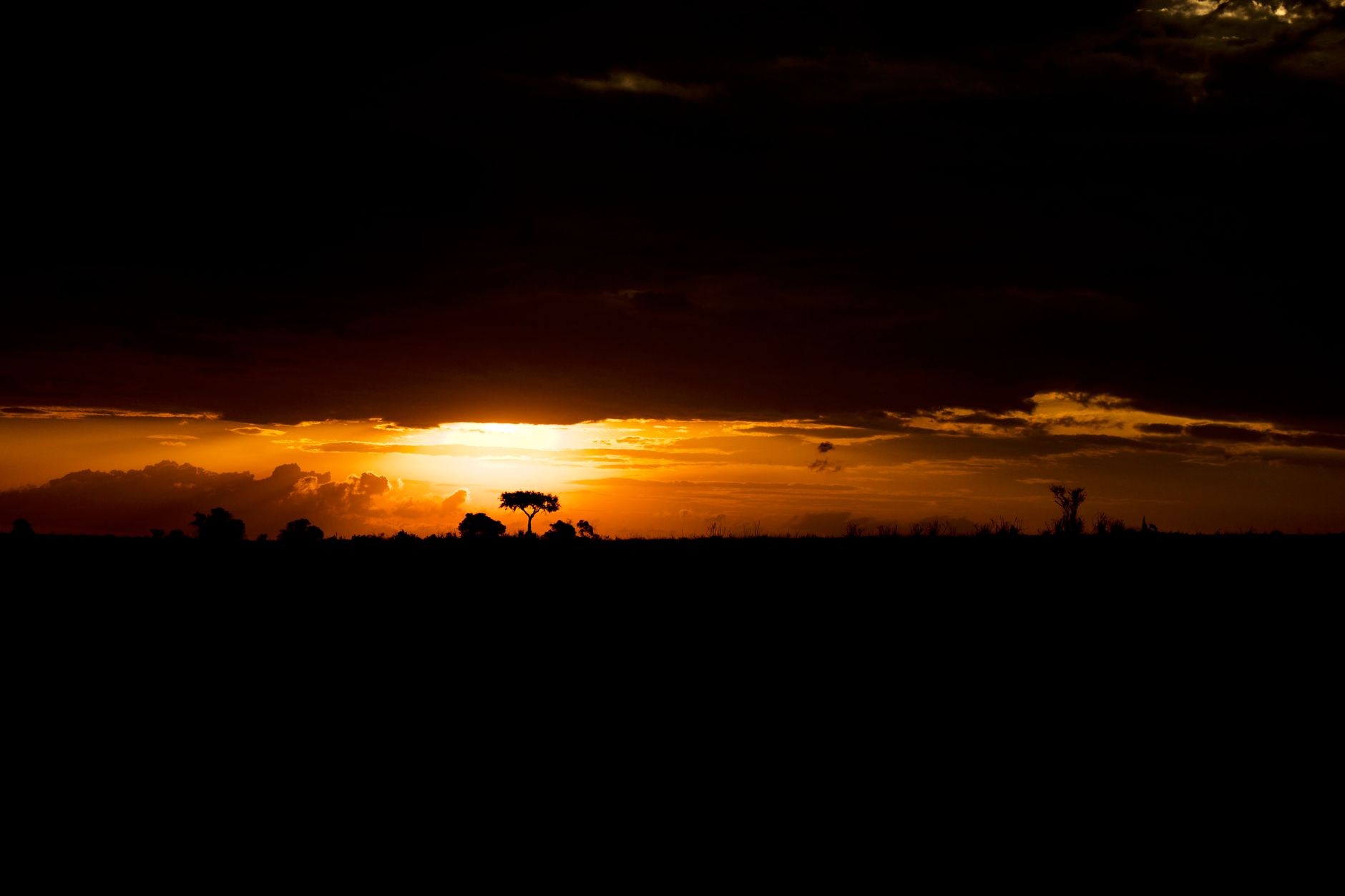
Baobabs of Madagascar 2026 — At a Glance
- What they are: giant, ancient trees of the genus Adansonia — Madagascar has six of the world’s roughly eight species, and all six grow wild nowhere else on Earth
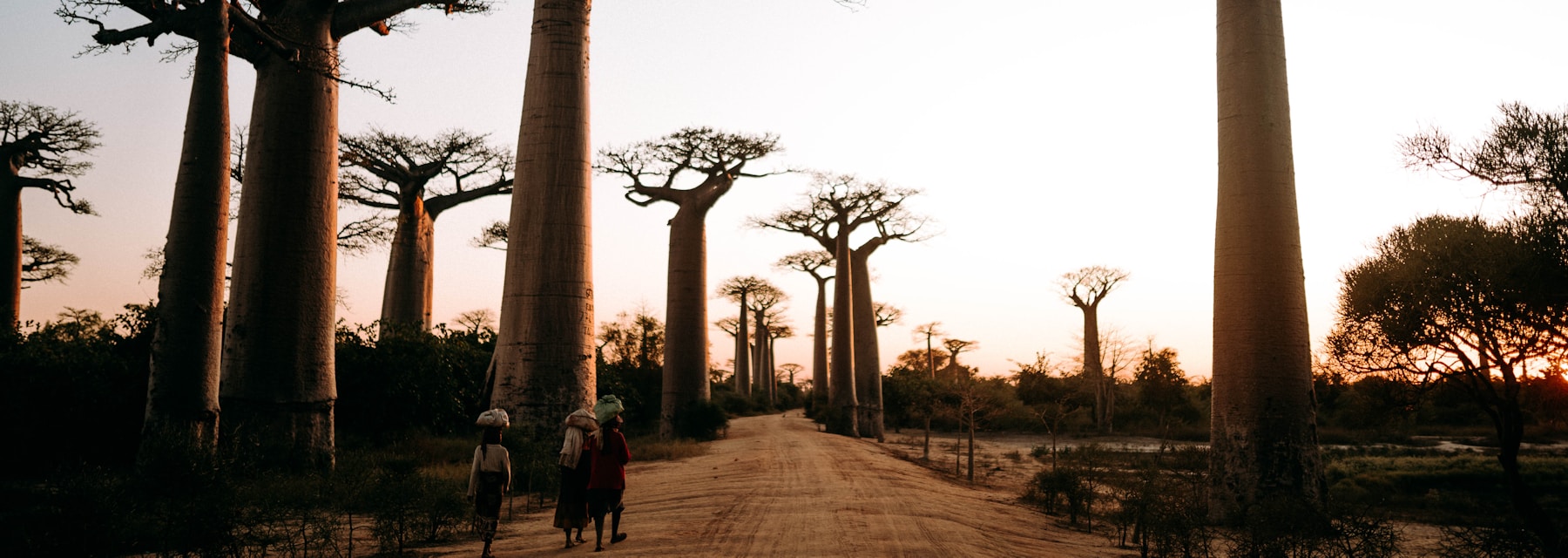
- The icon: Grandidier’s baobab, the colossal grey-trunked giant of the Avenue of the Baobabs near Morondava — Madagascar’s most photographed natural landmark
- Where to see them: the Avenue near Morondava (west), the spiny forest at Ifaty and Mangily (southwest), and the far north around Diego Suarez for the rarest species
- When: the dry season (April–November) is best for the western roads and golden sunsets; the trees stand leafless and sculptural in the dry months
- How old: the largest baobabs are many centuries old, some estimated at over a thousand years — living monuments
- Gateway: Antananarivo by air, then a short flight or overland drive to Morondava, Tuléar, or Diego
- Flight protection: EU261 €600 per passenger on disrupted European inbound flights
- Travel insurance: SafetyWing Nomad Insurance — essential for the long western drives and remote regions
- Where to stay: Madagascar stays on Agoda
Book your Madagascar tours
Madagascar’s best small-group wildlife, lemur and park tours book out months ahead in peak season (July–October). Browse Madagascar tours & check live availability on GetYourGuide →
🐿 Wildlife-Watching Gear for Madagascar
The right kit turns a good wildlife trip into a great one:
- 8×42 binoculars — essential for spotting lemurs and chameleons in the canopy. See on Amazon →
- Rechargeable headlamp — essential for night walks; red mode won’t disturb wildlife. See on Amazon →
- Trekking poles — ultralight support for long park hikes. See on Amazon →
- Hiking daypack — comfortable pack for water, camera and layers. See on Amazon →
- Picaridin insect repellent — DEET-free protection against malaria mosquitoes. See on Amazon →
As an Amazon Associate we earn from qualifying purchases.
The baobab is, with the lemur, the great living symbol of Madagascar — and the island is the global heart of the baobab world. Of the roughly eight baobab species on the planet, six grow in Madagascar, and all six are found wild nowhere else; the African mainland has just one species and Australia one. These are not ordinary trees. Massive, bottle-shaped, sometimes ten metres or more around the trunk and many centuries old, baobabs look like nothing else in nature — which is exactly why the Avenue of the Baobabs near Morondava, where a row of towering Grandidier’s baobabs lines a dirt road against a flaming sunset, has become Madagascar’s single most iconic image. This guide is your complete overview of the baobabs of Madagascar: what they are, the species you can see, where and when to find them, how to plan a trip around them, and why visiting helps protect them. For the famous Avenue itself, see our Avenue of the Baobabs complete guide.
The appeal is partly the sheer strangeness and scale of the trees, and partly the landscapes they define — the dry deciduous forests of the west, the spiny forest of the southwest, and the laterite plains where the giants stand alone like sentinels. Seeing them is woven into a western or southern Madagascar journey rather than being a destination in itself, and a baobab-focused trip pairs beautifully with the limestone tsingy, the lemurs of Kirindy, and the beaches of the southwest coast. Whether you want a single unforgettable sunset at the Avenue or a deeper exploration of all six Malagasy species across several regions, this guide shows you how. For the species in detail, see our types of baobabs guide; for the best places, our where to see baobabs guide.
What Are Baobabs?
Baobabs are large, long-lived deciduous trees of the genus Adansonia, instantly recognisable for their enormously swollen trunks and, in the dry season, their bare, root-like branches — the reason for the old legend that the gods planted the baobab upside down. The swollen trunk is an adaptation to a seasonally dry climate: it stores water and reserves that carry the tree through months without rain, and it gives the baobab its characteristic bottle, teapot, or cylinder shapes. The trees are extraordinarily long-lived, with the largest individuals estimated at many centuries and some perhaps over a thousand years old, making them living monuments that have stood through the whole of recorded Malagasy history.
What makes Madagascar so remarkable is its diversity of baobabs. While most people picture a single kind of baobab — the African one — Madagascar is home to six distinct species, each with its own shape, size, habitat, and character, from the towering, smooth-trunked Grandidier’s baobab to the squat, fire-red-barked Fony baobab of the spiny forest. This concentration of species found nowhere else makes the island the world’s centre of baobab evolution, just as it is for lemurs. The six Malagasy species are spread across the dry west, the southwest, and the far north, so seeing the full range means travelling across several regions — but even a single trip to the west delivers the giant Grandidier’s baobab, the one everyone comes to see. For a full species-by-species profile, see our dedicated types of baobabs guide.
Baobabs are also far more than scenery: they are keystone trees in their ecosystems and deeply useful to people. Their huge flowers, which open at night, are pollinated by lemurs, bats, and hawkmoths; their fruit — sometimes called “monkey bread” — is rich in vitamin C and widely eaten and sold; their bark yields fibre for rope and cloth; and their hollows store water and shelter wildlife. For Malagasy communities, particular baobabs are sacred, the focus of offerings and taboos, and woven into local identity and legend. To stand beneath a thousand-year-old baobab is to stand beneath a tree that is at once a botanical marvel, an ecological keystone, and a cultural monument — which is why these trees move travellers in a way few others do.
It is worth dwelling on just how extraordinary these trees are up close. The biggest Grandidier’s baobabs are so vast that several people linking hands cannot encircle the trunk, and that swollen barrel is largely a living reservoir — a mature baobab can hold many thousands of litres of water in its spongy, fibrous wood, drawn down slowly through the long dry months. The trees are remarkably resilient: they regrow stripped bark, survive bush fires that kill thinner-barked species, and keep standing for centuries with hollow or fire-scarred trunks. Their pale, crepe-paper flowers open at dusk for a single night, releasing a musky scent that draws nocturnal pollinators, and the large gourd-like fruits that follow are a genuine local resource rather than mere curiosity. Dating the oldest individuals is difficult because baobabs do not form conventional growth rings, but radiocarbon studies of the largest African baobabs have pointed to ages well over a thousand years — and Madagascar’s giants are thought to be comparably ancient, which is part of what makes standing among them feel less like visiting a forest than visiting a monument.
The Baobab Species of Madagascar
Madagascar’s baobabs fall into the genus Adansonia, with six species on the island. Here is a brief overview of each — for full profiles, including how to tell them apart and where each grows, see our types of baobabs guide.
Grandidier’s baobab — the giant
Grandidier’s baobab (Adansonia grandidieri) is the largest and most famous of all the Malagasy baobabs — the colossal, grey, smooth-trunked giant with a flat-topped crown that lines the Avenue of the Baobabs near Morondava. Trees reach thirty metres tall, with massive cylindrical trunks, and they are the species nearly every visitor pictures when they think of Madagascar. They grow in the dry deciduous forest and open plains of the west, around Morondava and Belo sur Tsiribihina, and the Avenue is the most accessible and spectacular place to see them, above all at sunrise and sunset. At dusk the trunks glow a warm copper-grey and the flat crowns catch the last light while the road below falls into shadow — a scene so striking it has become shorthand for Madagascar itself, reproduced on book covers, postage stamps, and travel posters the world over. Despite being the icon of Madagascar, Grandidier’s baobab is classed as endangered, a reminder that even the most celebrated of these trees needs protection.
The Za baobab
The Za baobab (Adansonia za) is the most widespread of Madagascar’s baobabs, found across much of the west and southwest, often with a tapering, bottle-shaped trunk and irregular branches. It is the baobab you are most likely to see scattered through the dry-forest landscapes as you travel, sometimes standing alone in fields, sometimes in loose groves, and its yellow flowers are a distinctive feature. Because it is so common across the western and southern regions, the Za is a constant companion on any overland journey through baobab country.
The Fony baobab
The Fony baobab (Adansonia rubrostipa) is the smallest of the Malagasy species — a squat, often dramatically bottle-shaped tree with reddish bark, characteristic of the spiny forest of the southwest around Ifaty and Mangily, near Tuléar. What it lacks in height it makes up in character: ancient Fony baobabs can be hugely fat and gnarled, some of the most photogenic of all, and they share the spiny forest with the octopus trees and other bizarre endemic plants of the arid south. The Reniala reserve near Ifaty is the classic place to walk among them.
Adansonia madagascariensis
Adansonia madagascariensis is a baobab of the north and northwest, varying in form from tall trees to shorter, spreading ones, often with reddish flowers. It grows in the dry forests of the north, including areas reachable from Diego Suarez and the Ankarana region, and adds to the variety of baobabs a far-northern trip can deliver alongside the two rare species below.
Perrier’s baobab — the rarest
Perrier’s baobab (Adansonia perrieri) is the rarest of all Madagascar’s baobabs, a critically endangered species with only a small number of mature individuals surviving in the dry forests of the far north, near Diego Suarez and the Ankarana massif. For dedicated baobab and botany enthusiasts, seeing Perrier’s baobab is a genuine prize and a poignant encounter with one of the world’s most threatened trees — a species clinging on in a few fragments of forest.
Suarez baobab
The Suarez baobab (Adansonia suarezensis) is another far-northern species, restricted to the area around Diego Suarez (Antsiranana), with a distinctive flat-topped crown and tall trunk. Like Perrier’s, it is threatened and very localised, which makes the far north the essential region for anyone wanting to see the rarest and most range-restricted of Madagascar’s baobabs. Together, Perrier’s and the Suarez baobab make a far-north baobab trip a specialist pilgrimage.
A note on the African baobab
Madagascar also hosts the widespread African baobab (Adansonia digitata) — the one species not endemic to the island — in the northwest, including the famous sacred baobab of Mahajanga (Majunga), an enormous, much-revered tree that is a local landmark. So while six baobabs are uniquely Malagasy, the island in fact offers seven of the world’s baobab species in all, more than anywhere else on Earth.
Famous individual baobabs
Beyond the species themselves, Madagascar has a handful of celebrated individual trees that have become attractions in their own right. The best known, after the Avenue itself, is the Baobab Amoureux (“the baobabs in love”) near Morondava — two Za baobabs that have grown twisted around each other over the centuries, the subject of a local legend of forbidden love and a popular short stop on the western circuit. The great sacred baobab of Mahajanga, an immense African baobab many metres around, is a revered civic landmark in the northwest. And scattered through the west and south are individual giants known to local guides for their age, girth, or sacred status. Seeking out these named trees adds a human and storytelling dimension to a baobab trip, and a good local guide will know which ones lie along your route and the legends attached to them — turning a simple photo stop into a richer encounter with the culture that has grown up around these extraordinary trees.
Where to See Baobabs
Baobabs are concentrated in the dry regions of Madagascar — the west, the southwest, and the far north — so where you go depends on which species and scenery you want. Here are the headline destinations; for a fuller comparison of which suits you, see our where to see baobabs guide:
- The Avenue of the Baobabs, near Morondava (west): the iconic row of giant Grandidier’s baobabs — the single most famous and accessible baobab sight in the country, unforgettable at sunset. See our Avenue of the Baobabs guide.
- Kirindy and the dry west (west): baobabs amid the dry deciduous forest that is also home to the fossa and Verreaux’s sifaka — easily combined with the Avenue.
- Ifaty and Mangily, near Tuléar (southwest): the spiny forest, with squat Fony baobabs, octopus trees, and the Reniala reserve — a different, arid, otherworldly baobab landscape.
- Diego Suarez and the far north: the rarest species — Perrier’s and the Suarez baobab — plus Adansonia madagascariensis, for the dedicated enthusiast. See our northern Madagascar guide.
- Mahajanga (Majunga), the northwest: the great sacred African baobab, a much-revered local landmark.
For most travellers, the Avenue near Morondava is the essential baobab experience, and it sits within the wider western circuit that also takes in the Tsingy de Bemaraha and the wildlife of Kirindy, making the west the natural region for a baobab-focused trip. The southwest, around Tuléar and Ifaty, adds the entirely different spiny-forest baobabs and is easily paired with the beaches and reefs of the coast. The far north is for the specialist chasing the two rare species, usually folded into a wider northern itinerary. For combining these regions, see our western Madagascar guide.
The key point is that the giant Grandidier’s baobab of the Avenue — the one image that draws most people — is found in the west, so a western trip is the heart of any baobab journey, while seeing the full range of species means adding the southwest and the far north. Even a single sunset at the Avenue, however, delivers the defining baobab experience, and most travellers combine it naturally with the other highlights of western or southern Madagascar rather than travelling for baobabs alone.
When to See Baobabs
Baobabs can be seen year-round — they are permanent features of the landscape, not seasonal wildlife — but the best time aligns with the dry season (April–November), for two reasons. First, the dirt roads of the west, including the approach to the Avenue and the tracks to the Tsingy, are far easier in the dry months; in the rainy season (roughly December–March) they can become difficult or impassable, and access to the western baobab country is much harder. Second, in the dry season the baobabs stand leafless — their bare, sculptural branches silhouetted against the sky are the classic, iconic look, and the clear dry-season light gives the best sunrises and sunsets. See our best time to visit guide for the full picture.
If you visit in the wetter months, the baobabs are in leaf and the western roads are challenging, so the dry season is strongly preferred for a baobab trip. Within the dry season, the trees look much the same throughout, so timing is more about the roads, the light, and combining the baobabs with the rest of your trip than about the trees themselves. For the Avenue specifically, plan to be there for sunset — the moment the low sun turns the trunks gold and throws long shadows across the laterite is the one nearly every visitor comes for — and ideally for sunrise too, which is quieter. Whenever you go, an early start and a late finish capture the baobabs at their most magical.
Baobabs in Malagasy Culture
Baobabs are not only botanical wonders but cultural ones. In Malagasy, the baobab is often called reniala — “mother of the forest” — and across the island particular trees are sacred, the focus of offerings, prayers, and fady (taboos) that protect them. The great African baobab of Mahajanga is a revered local landmark; certain baobabs are believed to house ancestral spirits; and the trees feature widely in legend, including the famous story that the baobab was planted upside down by the gods, its branches becoming roots. This cultural reverence has, in places, helped protect individual trees and groves for generations.
Baobabs are also practically woven into rural life. The fruit, rich in vitamin C and tangy in flavour, is eaten and sold, and increasingly exported as a “superfood”; the seeds yield oil; the bark provides strong fibre for rope and cloth; and the hollow trunks of some old trees have historically stored water or even served as shelters. For travellers, understanding this dimension deepens the encounter: a baobab is not just a photogenic giant but a tree that has fed, sheltered, and inspired the people who live among it for centuries. Visiting respectfully — not climbing or carving sacred trees, and following your guide’s lead near revered baobabs — honours that relationship.
Baobab Conservation: Why Your Visit Matters
Several of Madagascar’s baobabs are threatened, and the reason, as with so much of the island’s wildlife, is the loss and fragmentation of habitat. Grandidier’s baobab — the very icon of the Avenue — is classed as endangered, and the two far-northern species, Perrier’s and the Suarez baobab, are critically endangered and very localised, surviving in shrinking pockets of dry forest. The trees face pressure from deforestation, agriculture, fire, and the conversion of the surrounding land, and because baobabs are so long-lived and slow to establish, the loss of mature trees and the failure of seedlings to survive are both serious concerns for the future of these species.
This is where responsible tourism plays a genuine role. When travellers come to see the baobabs — paying to visit the Avenue, the Reniala reserve, and the protected areas — they give the trees and their landscapes a tangible economic value, creating an incentive to protect rather than clear them, and supporting the local communities, guides, and reserves that safeguard them. The Avenue of the Baobabs, in particular, has become a focus of conservation effort precisely because of its fame and the visitors it draws. Choosing responsible operators, paying park and reserve fees willingly, and supporting community initiatives all help ensure that these living monuments survive. In a very real sense, the traveller who comes to admire the baobabs becomes part of the reason they are protected.
Responsible baobab tourism also means treating the trees and their environment with care: keeping to paths and boardwalks at sites like Reniala, not climbing or carving the trunks, respecting sacred trees, and supporting reforestation and conservation projects where you can. Some of these baobabs are over a thousand years old and effectively irreplaceable on any human timescale; a baobab lost is lost for centuries. Travelling thoughtfully ensures that your visit helps secure their future rather than adding to the pressures upon them — and that the Avenue’s giants, and the rare baobabs of the north, are still standing for the travellers of the next century.
How to Plan a Baobab Trip
Planning a baobab trip comes down to deciding how much you want baobabs to be the focus, and which regions to combine. For most travellers, the baobabs are woven into a wider western or southwestern Madagascar trip rather than being the sole purpose. The classic approach is to fly from Antananarivo to Morondava, visit the Avenue of the Baobabs for sunset (and ideally sunrise), and combine it with Kirindy for wildlife and, for the more adventurous, the Tsingy de Bemaraha — a western circuit of several days. Alternatively, the southwest around Tuléar and Ifaty offers the spiny-forest Fony baobabs alongside beaches and reefs, while the far north is for the specialist seeking the two rare species. Seeing the full range of all six Malagasy baobabs means combining west, southwest, and far north over a longer trip.
A few principles make for a great baobab trip. Time it for the dry season (April–November), when the western roads are passable and the trees are at their sculptural, leafless best. Plan around sunset at the Avenue — the defining moment — and stay nearby in Morondava so you can be there for the golden light. Combine the baobabs with wildlife and landscapes — Kirindy’s fossa and sifakas, the Tsingy’s pinnacles, the southwest’s reefs — so the trip is rich and varied. And use a good local operator who knows the roads, the timing, and the best viewpoints. A Madagascar-based specialist can sequence the regions, handle the flights and the long western drives, and time your arrivals for the best light. For tour structures, see our baobab tour packages guide, and for budgeting, our baobab tour cost guide.
Practical Tips for Seeing Baobabs
Go in the dry season. April to November is best — the western roads to Morondava and the Avenue are passable, the light is clear, and the trees stand leafless and sculptural against the sky.
Plan around sunset. The Avenue at sunset is the defining baobab experience; arrive in good time, and consider sunrise too for a quieter, equally beautiful scene with fewer people.
Combine regions for variety. The giant Grandidier’s baobabs are in the west; the squat Fony baobabs in the southwest spiny forest; the rare species in the far north. The more regions you visit, the more species you’ll see.
Pair baobabs with wildlife and landscapes. Kirindy’s fossa and sifakas, the Tsingy de Bemaraha, and the southwest’s beaches all combine naturally with the baobabs for a fuller western or southern trip.
Respect sacred and protected trees. Keep to paths and boardwalks, don’t climb or carve the trunks, and follow your guide near revered baobabs — many are sacred to local communities.
Allow for the western roads. The drive to Morondava and beyond to the Tsingy is long and rough; build in realistic travel time, and consider the short domestic flight to Morondava to save a hard overland day.
Who Should Plan a Baobab Trip
A baobab-focused element suits almost anyone visiting western or southern Madagascar — the Avenue of the Baobabs is on most first-time itineraries precisely because the image is so iconic and the experience so accessible. For travellers drawn by photography and landscapes, the baobabs are a dream subject, especially at sunrise and sunset; for those interested in natural history and botany, Madagascar’s six endemic species are a genuine highlight; and for anyone simply wanting to stand beneath a thousand-year-old giant, the Avenue delivers in a single magical evening. The flexibility is part of the appeal — a baobab experience can be a single sunset or a multi-region quest for all the species.
Baobabs also pair naturally with everything else western and southern Madagascar offers, so a baobab trip is rarely only about trees. You can combine the Avenue with the lemurs and fossa of Kirindy, the pinnacles of the Tsingy, the reefs of the southwest, or the wildlife of the wider island. For first-time visitors, the Avenue at sunset is one of the great moments of any Madagascar trip; for returning travellers and enthusiasts, the rarer species of the spiny forest and the far north offer a deeper, more specialist pursuit. Whatever your style — a single unforgettable evening or a dedicated baobab expedition — these extraordinary trees reward the journey in a way that few other sights on Earth can match, precisely because the baobabs of Madagascar, like its lemurs, exist in such variety nowhere else.
Getting There and Travelling Well
Madagascar is reached by connecting flights via Europe, the Gulf, or Africa, landing at Antananarivo, from which the baobab regions are reached by short domestic flight (to Morondava, Tuléar, or Diego) or by long overland drive. Book international flights early and protect them on European routes — EU261 entitles you to up to €600 per passenger for long delays, cancellations, and denied boarding. Register your inbound flight for EU261 coverage with AirAdvisor so any eligible claim is handled for you. Within Madagascar, the western and southern roads are long and rough, so most travellers rent a vehicle with a driver-guide or take the short domestic flights; compare car and 4WD rental prices on Carla if you plan to travel independently, and book ahead in the dry-season peak.
Comprehensive travel insurance is essential for a baobab trip, covering the long western drives, the remote regions far from major facilities, and any combined wildlife or trekking activities. Coverage should include medical evacuation, trip cancellation and interruption, and your activities. SafetyWing Nomad Insurance offers flexible, affordable cover well suited to a Madagascar trip. The baobab regions are often many hours from major hospitals, so good insurance is never optional — confirm it covers your activities and remote-area evacuation before you travel.
Carla / Voyagiste Madagascar (plan your baobab trip)
Madagascar-resident specialist who can build a baobab trip around the species, regions, and light you most want. Contact Carla directly to plan a trip — a sunset at the Avenue near Morondava, a western circuit with Kirindy and the Tsingy, a southwest spiny-forest itinerary, or a far-north quest for the rare species — with the flights, the long drives, the lodges, and the timing all handled. Local knowledge ensures you reach the best baobabs at the best light, on roads timed for the dry season.
Frequently Asked Questions
How many baobab species are there in Madagascar?
Six species grow wild in Madagascar, all of them found nowhere else on Earth, plus the widespread African baobab — so seven of the world’s roughly eight baobab species occur on the island, more than anywhere else. See our types of baobabs guide.
Where is the Avenue of the Baobabs?
The Avenue is near Morondava, on the west coast of Madagascar, reached by a short domestic flight from Antananarivo or a long overland drive. It is the most famous and accessible place to see the giant Grandidier’s baobabs, above all at sunset. See our Avenue of the Baobabs guide.
When is the best time to see baobabs?
The dry season (April–November) is best: the western roads are passable, the light is clear, and the trees stand leafless and sculptural. The rainy season makes western access difficult. See our best time to visit guide.
How old are Madagascar’s baobabs?
The largest baobabs are many centuries old, with some estimated at over a thousand years — living monuments that have stood through the whole of recorded Malagasy history.
Are baobabs endangered?
Several are: Grandidier’s baobab (the icon of the Avenue) is endangered, and the far-northern Perrier’s and Suarez baobabs are critically endangered. Habitat loss is the main threat, which is why responsible tourism that gives the trees value is so important.
Do I need travel insurance for a baobab trip?
Yes — essential, covering the long western drives and medical evacuation from regions far from major hospitals. Comprehensive coverage is a must; confirm it covers your activities before you go.
🧭 Plan Your Madagascar Baobab Trip With Carla
The giants of the Avenue at sunset, the spiny-forest Fony baobabs, the rare trees of the far north — the trees found nowhere else on Earth. Reach out to Carla, our Madagascar-resident specialist, to build a baobab trip with the right regions, the best light, and the timing all handled.
Plan Your Trip to Madagascar
- Read the full Madagascar Travel Guide
- Explore itineraries by style and duration
- Best Tours and Guided Experiences
Where to Stay