Best Madagascar Sailing & Yacht Charter 2026: Nosy Be, Mozambique Channel & Mitsio Complete Guide
Affiliate disclosure: This article contains sponsored links to hotels, tour operators, insurance providers, and other travel services. We earn a small commission if you book through our links, at no extra cost to you.
Best Madagascar Sailing & Yacht Charter 2026 — At a Glance
- Top sailing regions: Nosy Be archipelago (Mitsio, Radama, Iranja), Mozambique Channel west coast, Sainte-Marie island, Diego Suarez Bay (the world’s second-largest natural bay)
- Charter vessel options: Crewed catamarans (most popular), monohull sailing yachts, traditional dhows (cultural experiences), motor yachts for premium private charters
- Best sailing season: April–November (dry season, calmer Mozambique Channel conditions); July–September peak (whale season)
- Standard charter durations: 7-day Nosy Be loop, 10-day Mitsio + Radama archipelagos, 14-day comprehensive west coast, 21-day Madagascar circumnavigation (rare)
- Charter cost range: Bareboat catamaran $4,500-$8,500/week + provisioning; crewed catamaran $12,000-$28,000/week all-inclusive; premium motor yacht $35,000-$95,000+/week
- Operators: Catamarans Voiles Nosy Be, Madagascar Yacht Charters, international charter operators (Sunsail, Dream Yacht), private specialist operators
- Insurance: SafetyWing Nomad Insurance Complete — essential for marine activities and remote evacuation coverage
- Flight protection: EU261 €600 per passenger for European inbound flight disruptions
- Tana hotels (pre-charter buffer): Antananarivo premium suites on Agoda
🎒 Madagascar Trip Essentials
A few inexpensive items make the biggest difference on the ground in Madagascar:
- Picaridin insect repellent — DEET-free protection against malaria mosquitoes. See on Amazon →
- Permethrin clothing spray — treat clothes; kills mosquitoes on contact for weeks. See on Amazon →
- Pop-up mosquito net — budget lodges rarely provide one; packs down tiny. See on Amazon →
- Water filter bottle — tap water isn’t safe to drink in Madagascar. See on Amazon →
- Universal travel adapter (USB-C) — Madagascar uses European-style plugs. See on Amazon →
- 8×42 binoculars — essential for spotting lemurs and chameleons in the canopy. See on Amazon →
As an Amazon Associate we earn from qualifying purchases.
Why Madagascar Is an Emerging Sailing Destination in 2026
Madagascar’s sailing positioning in 2026 reflects a country with genuinely world-class sailing terrain that remains undiscovered by most international yacht charter clients. The Nosy Be archipelago in northwest Madagascar contains over 20 distinct islands within manageable sailing distances, the Mozambique Channel provides reliably good sailing conditions during dry season, and the country offers a combination of marine ecosystems, cultural depth, and uncrowded anchorages that established sailing destinations (BVI, Greek islands, Croatia) simply cannot match.
For experienced sailors who have done the well-trafficked global charter destinations, Madagascar offers what those destinations can’t: genuinely empty anchorages, encounters with traditional Vezo and Sakalava fishing communities, marine biodiversity ranging from whale sharks to humpback whales (in season), and access to remote islands accessible only by boat. The infrastructure is less developed than BVI or Greek islands, but for sailors prioritizing distinctiveness over polish, Madagascar delivers. For broader Madagascar context, see our Madagascar Luxury Itinerary 2026 guide.
The Four Top Sailing Regions
| Region | Signature features | Sailing difficulty | Best months |
|---|---|---|---|
| Nosy Be archipelago | 20+ islands, Mitsio + Radama + Iranja chains, marine reserves | Easy-moderate — protected waters, short hops | April-November |
| Mozambique Channel west coast | Open-water passages, baobab forests visible from sea, traditional Vezo culture | Moderate — open-water sailing, dynamic weather | May-October |
| Sainte-Marie + east coast | Whale watching (July-Sept), pirate history, secluded anchorages | Moderate — Indian Ocean swells, current management | July-October (whale season) |
| Diego Suarez Bay + north coast | World’s 2nd-largest natural bay, sugar loaf rock formations, Emerald Sea reef | Moderate-challenging — wind dynamics | May-October |
1. Nosy Be Archipelago — The Sailing Heartland
The Nosy Be archipelago in northwest Madagascar is the country’s premier sailing destination. Centered on Nosy Be (the country’s largest tourist island) and Hellville port, the archipelago extends north into the Mitsio chain (Tsarabanjina, Grande Mitsio), west into Nosy Iranja, south into Nosy Komba, and includes numerous smaller islands suitable for day anchorages. The waters are typically protected, distances between anchorages are short (2-6 hours sailing), and the variety of island characters (volcanic peaks, white sand beaches, fishing villages, luxury lodges) creates endless cruising variety.
Standard Nosy Be charter routes include: 7-day “Nosy Be classic loop” visiting Komba + Tanikely + Sakatia + Iranja + Mitsio chain; 10-day extended loop adding Radama Islands south; 14-day comprehensive northwest route combining all major archipelagos. Most international charter clients begin and end at Nosy Be (Hellville port) with international flights into Nosy Be Fascene airport.
2. Mozambique Channel West Coast — The Open Water Adventure
For experienced sailors wanting open-water passages, the Mozambique Channel west coast from Nosy Be south to Morondava (or beyond to Toliara) provides genuine offshore sailing. Distances are substantial (Nosy Be to Mahajanga ~150nm; Mahajanga to Morondava ~140nm), making this appropriate for charter clients with multi-day passage experience. The coastline features baobab forests visible from the sea, isolated Vezo fishing villages, and increasingly remote anchorages as you move south.
This region requires more experienced sailing capability or crewed catamaran with experienced skipper familiar with the channel. Weather monitoring critical — Mozambique Channel can produce rough conditions even in dry season. Best for sailors wanting genuine adventure beyond established cruising grounds.
3. Sainte-Marie + East Coast — The Whale Coast
Sainte-Marie island off Madagascar’s east coast becomes a world-class sailing destination during the July-September humpback whale migration. Yachts can approach whales (with appropriate distance regulations) for what is genuinely the world’s best whale-watching-from-sailboat experience. Beyond whale season, Sainte-Marie offers pirate history (the island was a 17th-18th century pirate stronghold), secluded anchorages, and traditional Malagasy culture.
East coast sailing involves more Indian Ocean swell management than the protected Mozambique Channel routes. Charter operators based at Sainte-Marie tend to be smaller-scale than Nosy Be operators; advance booking essential. Combine with Nosy Be charter only with substantial transit time — these are essentially separate sailing regions.
4. Diego Suarez Bay + North Coast — The Dramatic Geography
Diego Suarez (Antsiranana) Bay is the world’s second-largest natural bay after Rio de Janeiro. The bay extends approximately 20km inland with multiple inner bays, dramatic sugar loaf rock formations, and the Emerald Sea (Mer d’Émeraude) — a shallow turquoise reef area requiring shallow-draft sailing capability. The geography is genuinely dramatic.
Charter operations from Diego Suarez are limited — fewer professional charter companies operate from this region. Most charter clients reach Diego Suarez via private yacht charter from Nosy Be or via international yacht passing through. For dedicated explorers wanting the most dramatic Madagascar coastal geography, Diego Suarez justifies the additional logistics complexity.
Charter Vessel Categories — Choosing the Right Boat
Crewed catamarans (most popular)
Catamarans dominate Madagascar charter inventory for legitimate reasons: shallow draft (essential for many anchorages), stable platforms (comfortable for non-sailors), spacious deck areas (ideal for groups), and twin-engine maneuverability (manageable in tight anchorages). Standard charter catamarans range from 38ft (3-4 cabins, 6-8 guests) to 60ft+ (5-6 cabins, 10-12 guests).
Crewed catamarans include captain (essential — local knowledge of waters), often chef/hostess for premium charters, and engineer for larger vessels. All-inclusive crewed catamaran pricing covers vessel charter, fuel, food and beverages, crew salaries, and standard activities.
Bareboat sailing yachts
Experienced sailors with appropriate qualifications can charter bareboat. Madagascar bareboat charter requires ICC (International Certificate of Competence) or equivalent and demonstrated multi-day sailing experience. Bareboat inventory is more limited than catamarans, mostly available from Nosy Be operators. Charterer handles provisioning, crew (typically friends/family who can sail), and self-navigation.
Bareboat suits experienced sailing groups wanting greater autonomy and lower cost. The cost savings versus crewed are substantial (40-60% less) but the responsibility and logistics burden are also substantial.
Traditional dhows (cultural experiences)
Traditional Sakalava sailing dhows can be chartered for day or multi-day cultural sailing experiences. These are smaller vessels (typically 25-40ft) with traditional rigging and Sakalava crew. The experience is more cultural than performance — slower, more authentic, immersive in Sakalava maritime tradition. Day charters $200-$500; multi-day dhow expeditions $1,200-$3,500 for 3-5 nights.
Motor yachts (premium private charter)
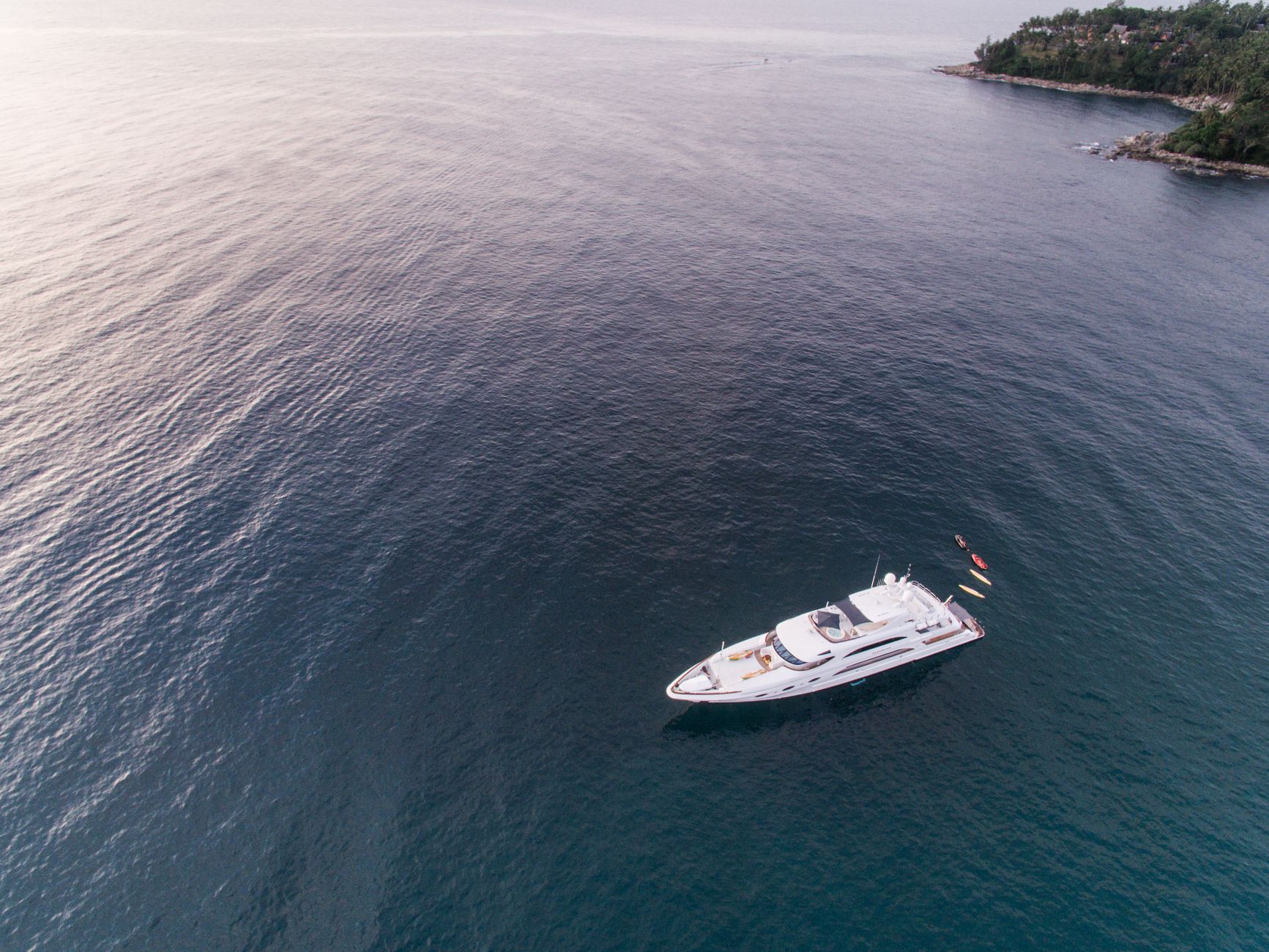
For travelers prioritizing comfort, speed, and privacy over sailing-specific experience, motor yacht charter is available at premium tier. International motor yacht charter from Mauritius or Seychelles into Madagascar costs $35,000-$95,000+ per week. Yacht size typically 80-120ft with full crew including chef, deckhands, and tender support. Provides the most luxurious Madagascar exploration possible.
Detailed Sample Itineraries
7-Day Nosy Be Classic Loop (crewed catamaran)
Day 1: Embark Nosy Be (Hellville), provisioning, sail to Nosy Komba (1 hour), evening sundowner. Day 2: Nosy Komba to Nosy Tanikely marine reserve (2 hours), snorkeling, sail to Nosy Sakatia, overnight. Day 3: Nosy Sakatia to Nosy Iranja (3 hours), beach time, overnight at iconic sand bar. Day 4: Iranja to Mitsio chain (4-5 hours), arrive Tsarabanjina or Grande Mitsio. Day 5: Mitsio islands exploration, day sailing between island clusters. Day 6: Return south toward Nosy Be, overnight anchorage at smaller island. Day 7: Final morning sailing, disembark Nosy Be afternoon. Total cost: $14,000-$22,000 for 6-8 guest crewed catamaran.
10-Day Mitsio + Radama Extended (crewed catamaran)
Days 1-3: Nosy Be → Nosy Komba → Tanikely → Sakatia (familiarization sailing). Days 4-6: Iranja + Mitsio chain extended exploration. Day 7: Long passage south to Radama Islands. Days 8-9: Radama Islands exploration (more remote, fewer visitors). Day 10: Return passage to Nosy Be, disembark. Total cost: $20,000-$32,000 for 6-8 guest crewed catamaran.
14-Day Comprehensive Northwest (crewed catamaran)
Combines Nosy Be classic + Mitsio extended + Radama + optional Mahajanga or Anjajavy approach. The most comprehensive northwest Madagascar sailing route. Total cost: $28,000-$45,000 for 6-8 guest crewed catamaran. Best for sailors wanting maximum Madagascar coverage in single charter.
21-Day Madagascar Circumnavigation (rare)
Genuine Madagascar circumnavigation requires substantial commitment — open-water passages, weather contingency days, refueling logistics, and visa/customs management at multiple ports. Coordinated by specialist operators with appropriate experienced skippers. Total cost: $48,000-$85,000+ for full circumnavigation. Suitable only for experienced sailing groups wanting the ultimate Madagascar sailing achievement.
What Sailing Yields That Other Madagascar Travel Doesn’t
Sailing-specific experiences unavailable from land-based Madagascar travel include:
- Empty anchorages: Many Madagascar islands have no road access; arriving by yacht means experiencing them genuinely uncrowded
- Marine wildlife observation: Whale sharks (Mitsio region October-December), humpback whales (Sainte-Marie July-September), dolphins, marine reptiles, oceanic seabirds — all best observed from sailing vessels
- Vezo fishing community engagement: Traditional Sakalava and Vezo coastal cultures meaningful only experienced from sea
- Reef diving from boat: Access to remote reefs unreachable by land-based diving operations
- Sunset sailing experiences: The Mozambique Channel sunsets viewed from sailing yacht are genuinely distinctive
- Multi-island flexibility: Adjust itinerary daily based on weather, group preferences, and discoveries
- Photography opportunities: Aerial drone shots from yacht perspective, baobab forests from sea, traditional sailing dhows passing
Charter Operators — Who to Use
Catamarans Voiles Nosy Be (specialist local operator)
Nosy Be-based specialist with comprehensive crewed catamaran fleet. Strong local knowledge, experienced skippers, established provisioning network. Best for travelers wanting genuinely local Madagascar sailing expertise.
Madagascar Yacht Charters
Broader Madagascar yacht charter operation with both bareboat and crewed options. Multiple vessel categories. Operates from Nosy Be primarily with some east coast capability.
International charter operators (Sunsail, Dream Yacht Charter, Moorings)
Limited Madagascar inventory through international operators. Useful for travelers preferring booking through familiar international operator brands. Pricing typically higher than direct local booking.
Specialist private yacht charter (Cortez Travel, Steppes Travel adventure)
International specialist operators with Madagascar yacht charter arrangements. Useful for travelers wanting full trip coordination including pre-charter accommodation and post-charter recovery integration.
Carla / Voyagiste Madagascar (resident specialist coordination)
Madagascar-resident specialist for full yacht charter trip coordination. Contact Carla directly for bespoke yacht charter program design including vessel selection, route planning, and Madagascar travel integration.
Sample Multi-Region Sailing Itineraries
10-Day Nosy Be Sailing + Anjajavy Recovery
1 night Nosy Be pre-charter (logistics), 7-day Nosy Be sailing loop, 2 nights Anjajavy luxury recovery. Total cost: $16,500-$28,000 per person for 6-guest charter.
14-Day Nosy Be Sailing + Tsingy Trekking
7-day Nosy Be sailing + 4-day Tsingy de Bemaraha trekking + 3-day Tana recovery. Combines water and land adventure. Total cost: $14,000-$22,000 per person.
16-Day Comprehensive Northwest Madagascar
2 nights Tana, 7-day Nosy Be sailing, 4 nights Anjajavy, 2 nights Tsara Komba, 1 night Tana. Maximum northwest Madagascar coverage. Total cost: $22,000-$38,000 per person.
21-Day Madagascar Comprehensive
Combines yacht charter with wildlife, cultural, and luxury elements. Various permutations depending on traveler priorities. Total cost: $32,000-$58,000 per person.
Seasonality Deep-Dive — Month-by-Month Sailing Conditions
Madagascar’s tropical climate creates distinct sailing windows. The country is best understood as having two coasts with different seasonality patterns — the western Mozambique Channel coast (Nosy Be region) and the eastern Indian Ocean coast (Sainte-Marie region).
January–March (rainy season, cyclone risk): Most charter sailing impractical or unsafe across both coasts. Cyclone formation risk highest December-March. Many operators close completely during this window. Insurance coverage often restricted or excluded during named cyclone events. Charter sailing during these months not recommended.
Continue Reading Sailing Below.
April (transitional): West coast Nosy Be becomes reliable mid-late April as cyclone risk diminishes. East coast Sainte-Marie still affected by lingering trade winds and swell. Good window for early-season travelers wanting fewer crowds and accepting modest weather variability.
May–June (early dry season, optimal sailing): Nosy Be archipelago at its best — calm waters, consistent trade winds, fewer crowds than peak season. East coast becoming reliable for Sainte-Marie operations. Excellent month for first-time Madagascar sailors.
July–September (peak dry, whale season): Peak sailing window with optimal weather across most coasts. Sainte-Marie east coast peak for humpback whale observation (July-September is the migration window). Nosy Be archipelago busy with international charter clients. Book 6-9 months ahead for July-September departures.
October–November (continuing peak, warming): Excellent sailing continues. Nosy Be archipelago busy. Mitsio region peaks for whale shark observation October-December. Increasingly warm temperatures (35°C+ daily highs possible by late November).
December (early wet, ending sailing): Sailing window ending. Cyclone formation risk increasing. Most operators winding down operations. Late-season travelers should monitor weather closely and have flexibility built into plans.
The May-October window provides the most reliable conditions across all Madagascar sailing regions. For travelers prioritizing whale observation, late July-September is the window. For travelers prioritizing whale shark observation, October-November is the window.
Marine Wildlife Calendar for Sailors
One of Madagascar sailing’s greatest distinctiveness is the marine wildlife calendar that affects route and timing decisions.
Humpback whales (July-September): Migrate from Antarctic feeding grounds to Madagascar breeding/calving waters. East coast (Sainte-Marie) is the world-class observation region. Western Madagascar (Nosy Be) sees more limited humpback presence. Charter operators run whale-watching-by-yacht programs with appropriate distance protocols.
Whale sharks (October-December): Aggregate in Mitsio archipelago waters as plankton blooms support feeding. Whale shark snorkel encounters are among the world’s best, with reasonably reliable observation. Plan Mitsio segment of charters to overlap with this window if whale sharks are a priority.
Manta rays (year-round, peak September-November): Resident populations around Nosy Be islands provide reliable observation. Charter operators know specific cleaning station locations.
Dolphins (year-round): Multiple species present in Madagascar waters. Spinner dolphin pods regularly encountered during charter sailing.
Sea turtles (year-round, nesting Oct-March): Green turtles and hawksbills observed during snorkeling. Some islands (Nosy Iranja particularly) have nesting beaches.
Reef fish biodiversity (year-round): Indian Ocean reef ecosystems with substantial biodiversity. Charter operators include snorkeling gear for in-anchorage observation.
For marine wildlife enthusiasts, timing the charter to align with peak species presence dramatically affects experience quality. Coordinate with charter operator on specific wildlife interests before finalizing dates.
What Each Major Anchorage Delivers
Understanding what specific Madagascar anchorages offer helps charter clients prioritize routes.
Nosy Komba (“Lemur Island”): Cone-shaped volcanic island 30 minutes from Nosy Be. Habituated black lemur population at Ampangorinana village. Easy anchorage, traditional Sakalava village engagement, accessible snorkeling. Standard Day 1 anchorage on Nosy Be charters.
Nosy Tanikely (marine reserve): Protected marine reserve with exceptional reef snorkeling. Lighthouse hike to summit provides panoramic views. Strict mooring regulations protect coral. Standard half-day stop on charters.
Nosy Sakatia: Quieter island west of Nosy Be. Less touristed than Komba. Sea turtle observation opportunities. Comfortable overnight anchorage.
Nosy Iranja (“Turtle Island”): Two small islands connected by white sand bar visible only at low tide — iconic Madagascar charter photograph location. Beach picnic anchorage, sea turtle nesting beaches, traditional fishing village. Highlights of any Nosy Be charter.
Tsarabanjina (Mitsio chain): Hosts the luxury Constance Tsarabanjina resort. Yacht charterers can visit beach/restaurant facilities. Comfortable overnight anchorage with reef snorkeling.
Grande Mitsio: Largest Mitsio island. Multiple beach anchorages, traditional Sakalava fishing villages, reef diving access. 2-3 night anchorage typical.
Nosy Mitsio (smaller Mitsio islands): Cluster of smaller islands suitable for day exploration and beach picnics. Whale shark season anchorage choice.
Radama Islands: More remote group south of Nosy Be. Limited operator infrastructure means genuinely uncrowded anchorages. Reef diving exceptional. Cultural village engagement opportunities.
Pre-Charter and Post-Charter Logistics
Most charter clients underestimate the pre- and post-charter logistics that affect overall trip quality.
International flight arrival: Most charter clients fly into Antananarivo (Tana) and connect to Nosy Be on Tsaradia internal flights (90 minutes). Some international routes connect directly to Nosy Be via Réunion, Mauritius, or seasonal European charter flights. Allow minimum 1 buffer day in Tana between international arrival and onward to Nosy Be.
Pre-charter night in Nosy Be: Plan minimum 1 night in Nosy Be (Andilana Beach or Hellville area) before charter embarkation. Use this for provisioning consultation, fitting briefing, weather check, and rest. Premium hotels Andilana area run $200-$450 per night.
Charter embarkation day: Standard embarkation 14:00-16:00 with safety briefing, provisioning, and short shake-down sail. Don’t plan tight international connections immediately before charter embarkation.
Charter disembarkation day: Standard disembarkation 09:00-11:00. Allow at least 6-8 hours buffer before any onward flights to handle disembarkation, transfers, and potential delays.
Post-charter recovery: Many charter clients add 2-4 nights at luxury lodge (Anjajavy, Tsara Komba) post-charter for relaxation before international departure. The contrast between active sailing and luxury wind-down is genuinely satisfying.
International departure buffer: Plan minimum 1 night back in Tana before international departure to handle any internal flight disruptions.
Common Sailing Charter Mistakes
Mistake 1: Underestimating Madagascar travel logistics. Even getting to and from Nosy Be charter base is complex. Plan adequate buffer days.
Mistake 2: Wrong vessel choice. First-time Madagascar charters frequently underestimate the value of crewed catamarans versus bareboat. Local knowledge of waters, anchorages, and weather patterns adds enormous value.
Mistake 3: Insufficient group size. Catamarans configured for 8 guests are not cost-effective for 2-3 passengers. Either find more passengers, charter smaller vessel, or accept per-person premium cost.
Mistake 4: Wrong season selection. December-March cyclone season visits often result in cancelled trips. Stick to April-November window with peak in May-October.
Mistake 5: Inadequate insurance. Madagascar charter sailing requires comprehensive insurance with marine activity coverage. SafetyWing comprehensive insurance with adventure coverage essential.
Mistake 6: Last-minute booking. Peak season (June-September) booking inventory tightens 6-9 months ahead. Walk-in availability essentially zero during peak.
Mistake 7: Ignoring drone regulations. Madagascar has drone regulations that affect aerial photography from yacht. Charter operators advise on current rules.
Real Madagascar Sailing Stories
The First-Time Madagascar Sailors
Profile: UK couple in late 40s, intermediate sailing experience, 10-day Nosy Be charter. October 2026.
Outcome: 7-day Nosy Be classic loop on crewed catamaran ($16,800 couple all-inclusive) + 3 nights Anjajavy recovery. Reported “exceeded expectations — Mitsio anchorages were the most beautiful sailing experience of multiple global charter destinations.”
The Multi-Generational Family Charter
Profile: US family group, 8 people across three generations, 10-day Nosy Be catamaran charter. July 2026.
Outcome: 56-foot crewed catamaran with chef ($32,500 group all-inclusive) covering family interests from snorkeling (kids) to wildlife (grandparents) to sailing (parents). Reported “unique multi-generational experience — yacht format kept everyone together while allowing diverse daily activities.”
The Whale Watching Specialist Charter
Profile: Australian solo traveler, professional wildlife photographer, 12-day Sainte-Marie whale season charter. August 2026.
Outcome: Smaller specialist whale-watching yacht ($14,500 solo with chartered cabin), focused entirely on humpback whale photography. Reported “world-class whale observation — captured photographs I’ve been chasing for 15 years.”
Charter Vessel Selection Deep-Dive
Choosing the right charter vessel meaningfully affects trip outcomes. The following analysis helps match vessel type to group profile.
For couples (2 people)
Crewed cabin charter on shared catamaran most cost-effective ($3,200-$5,400 per couple per week). Private full charter of 38-42ft catamaran ($14,000-$18,000 per couple per week) provides privacy at premium. Avoid larger catamarans (over-capacity, paying for unused cabins).
For small groups (4-6 people, 2-3 couples or family)
42-46ft crewed catamaran ideal. Per-person cost optimized in this group size. Standard 7-day charter $14,000-$22,000 group total ($2,300-$5,500 per person depending on inclusions and tier).
For medium groups (6-10 people, multi-couple or extended family)
52-60ft crewed catamaran ideal. Per-person economics excellent in this range. Standard 7-day charter $22,000-$32,000 group total ($2,800-$5,300 per person). Chef inclusion becomes more cost-effective at this scale.
For larger groups (10-16 people, friend groups or extended family)
60ft+ catamaran or 80ft+ motor yacht. Per-person economics still favorable but absolute costs substantial. Standard 7-day charter $40,000-$85,000+ group total. Larger groups should consider whether single yacht or two-yacht configuration optimal.
For ultra-luxury (any size)
Premium motor yacht (80-120ft) charter $35,000-$95,000+ per week. Suitable for travelers prioritizing comfort and speed over sailing-specific experience. Provides ultra-luxury exploration with full crew (captain, chef, deckhands, stewardess, sometimes additional staff).
What’s Included vs Excluded — Understanding Charter Pricing
Charter pricing structures vary substantially across operators. Understanding standard inclusions/exclusions prevents budget surprises.
Typically included (crewed catamaran): Vessel charter, captain salary, fuel, water, bedding/linens, basic snorkeling equipment, mooring fees (some operators), standard food and beverages (meals + soft drinks + modest wine/beer allowance).
Typically excluded: International flights, pre/post-charter accommodation, premium beverages (specific wines, spirits, champagne), tips (10-15% of charter cost standard), excursion fees (some operators), additional crew (chef, hostess for some configurations), specialized equipment (diving gear, premium fishing equipment).
Often variable: Mooring fees, customs/immigration fees at certain ports, fuel surcharges during high oil price periods, security deposits (refundable).
Add-on services common in Madagascar: Diving certification courses, scuba diving day rates, professional photography services, helicopter transfers to remote anchorages, additional crew for specialty needs.
Tip culture: Crew tips are standard. Plan 10-15% of charter cost as tip budget for crewed catamaran (divided between captain, chef, deckhands). Premium service exceeds tip expectations; basic service merits standard tip.
Booking Strategy for Madagascar Charter
Peak season booking (June-September)
Book 8-12 months ahead. Premium catamarans book out 9-12 months for peak July-August windows. Specialist whale-watching yacht charters book even earlier (10-14 months ahead).
Shoulder season booking (April-May, October-November)
Book 5-8 months ahead. More flexibility but premium vessels still book ahead.
Group coordination considerations
Multi-passenger groups face coordination challenges around date selection, vessel size selection, payment splitting, and cancellation policy management. Use specialist operators experienced with group bookings rather than direct operator coordination for groups over 4 passengers.
Deposit and payment structure
Standard: 25-35% deposit at booking, 50% at 90 days pre-charter, balance at 30 days. Some operators require 100% payment 60 days pre-charter. Read terms carefully — Madagascar charter cancellation policies are generally stricter than European Mediterranean equivalents.
Cancellation insurance
Standard cancellation typically recovers 50-70% if cancelled 90+ days pre-charter, 20-50% at 30-90 days, 0-20% under 30 days. Comprehensive trip cancellation insurance (beyond SafetyWing medical) recommended for high-value charters — typically $300-$800 per person additional for full cancellation coverage.
Madagascar Charter vs Other Indian Ocean Destinations
Sailors evaluating Madagascar charter typically compare against Seychelles, Mauritius, and Mozambique alternatives. Understanding the comparative positioning helps choose appropriately.
Madagascar vs Seychelles: Seychelles has more developed charter infrastructure (more vessels, more operators, more international connections) and slightly higher polish. Madagascar has more distinctive cultural depth, lower trekker density, and meaningfully different marine wildlife (humpback whales, whale sharks). Seychelles costs 15-25% more for equivalent quality. For travelers prioritizing distinctiveness, Madagascar wins; for travelers prioritizing established infrastructure, Seychelles wins.
Madagascar vs Mauritius: Mauritius is more developed but charter sailing focus is limited; most Mauritius marine tourism is day-charter rather than multi-day sailing. Madagascar offers genuine multi-day cruising experience; Mauritius offers more refined hotel-based marine activities. Different propositions for different traveler types.
Madagascar vs Mozambique: Both share Mozambique Channel sailing waters. Mozambique (Bazaruto Archipelago) is comparable in distinctiveness but less developed charter operator infrastructure. Madagascar has more established Nosy Be charter base. Mozambique works for sailing groups with their own boat; Madagascar works better for charter clients.
Madagascar vs Comoros/Mayotte: The Comoros archipelago offers similar Mozambique Channel sailing waters but with very limited charter operator infrastructure. Madagascar is the practical choice for organized charter sailing in this region.
For sailors building a “best Indian Ocean charter experience” portfolio, Madagascar fills the distinctiveness gap that polished destinations like Seychelles cannot. Many sailors do Seychelles first as an introduction to Indian Ocean sailing, then add Madagascar for the genuinely distinctive experience.
Photography on Madagascar Charters
Madagascar yacht charters generate exceptional photography opportunities, but the marine environment poses specific challenges worth preparing for.
Defining photographic moments: Nosy Iranja sand bar at low tide aerial shot, sunset sail with Nosy Be volcanic backdrop, traditional Sakalava dhow passing under sail, whale shark or humpback whale encounters (in season), baobab forests viewed from sea, deserted Mitsio anchorage panoramas, Tanikely reef snorkeling underwater shots.
Equipment considerations: Salt spray protection essential for camera bodies; dry bags mandatory for transit between yacht and tender. Polarizing filters reduce reflection from ocean surface. Wide-angle lenses (16-35mm equivalent) capture yacht-perspective panoramas. Telephoto (70-200mm) useful for wildlife and approaching anchorage detail shots.
Drone photography considerations: Madagascar drone regulations have tightened in recent years. Marine drone work from yacht requires both regulatory compliance and skill in maritime drone operation. Many operators discourage drone use due to liability concerns; check operator policies before charter. Some specialist operators provide drone services rather than allow guest drone use.
Underwater photography: GoPro-style action cameras work well for casual underwater documentation. Serious underwater photography requires dedicated housing investment ($800-$3,500) and operator coordination for stable platforms during photography sessions.
Light timing: Best photographic light occurs during the first 90 minutes after sunrise (when most yachts are still at anchorage) and the last 90 minutes before sunset (when yachts are typically sailing). Plan to be on deck during these windows. Midday tropical light flattens images and creates harsh shadows; reserve midday for snorkeling and swimming rather than photography. Most charter clients return with 2,000-5,000 photographs requiring substantial post-processing time — plan accordingly. Many travelers report that organizing and editing these images forms part of the trip’s lasting value, with the best images becoming wall prints and ongoing memory anchors.
Frequently Asked Questions
Do I need sailing experience to charter in Madagascar?
For crewed catamarans: no experience needed — captain handles all sailing. For bareboat: ICC or equivalent qualification required plus demonstrated multi-day sailing experience.
What’s the minimum group size for charter?
Catamarans typically have 4-6 cabins (8-12 guests capacity). Smaller groups (2-4) can charter entire boat at full cost or join cabin charter (shared boat with other guests, less common in Madagascar).
Are children appropriate on yacht charters?
Yes, with appropriate safety considerations. Children 6+ typically manage well. Discuss safety protocols with charter operator pre-trip.
What about seasickness?
Nosy Be archipelago waters are typically protected with mild conditions. Open-water passages (Mozambique Channel south) can be challenging for prone-to-seasickness travelers. Bring standard medications.
What’s included in crewed catamaran pricing?
Typically: vessel charter, fuel, food, beverages (often including modest wine/beer; premium spirits extra), crew salaries, mooring fees, standard snorkeling equipment. Excludes: international flights, pre/post-charter accommodation, premium beverages, personal purchases.
How safe is sailing in Madagascar?
Madagascar charter sailing is generally safe with reputable operators. Reputable operators carry comprehensive insurance, professional skippers, and modern safety equipment. SafetyWing comprehensive insurance recommended for additional coverage.
Can I combine sailing with other Madagascar experiences?
Yes — many travelers add wildlife (Andasibe), luxury lodge recovery (Anjajavy, Tsara Komba), or trekking (Tsingy) segments before or after charter.
🌴 Plan Your Madagascar Sailing Charter With Carla
Madagascar sailing charters benefit from specialist coordination — vessel selection, skipper matching, route planning. Reach out to Carla, our Madagascar-resident specialist. She’ll structure your sailing program matching your group size, sailing experience, and Madagascar travel goals.
Related Madagascar sailing reading:
- Best Cruises Madagascar 2026
- Best Private Island Resorts Madagascar 2026
- Madagascar Luxury Itinerary 2026
Plan Your Trip to Madagascar
- Read the full Madagascar Travel Guide
- Explore itineraries by style and duration
- Explore the full destination guide
Where to Stay