3-Day Mahajanga Itinerary: Baobabs, Beach and Ankarafantsika
This post contains affiliate links. We may earn a small commission at no extra cost to you.
Essential Travel Gear for Your Madagascar Trip
Madagascar’s Power Cuts Will Kill Your Phone — Here’s 4 Full Charges of Insurance
Délestage — Madagascar’s rolling blackouts — can last 8 to 14 hours a day. Your navigation app, offline maps, and boarding pass for tomorrow’s Tsaradia flight will all be dead. The Anker PowerCore 20,000mAh gives 4 full phone charges with fast USB-C delivery. Charge it during the hotel’s morning power window and you’re covered all day.
Check current price and availability on Amazon →
Madagascar Uses European Plugs Only — Your North American Charger Won’t Work Without This
Madagascar runs on Type C and E/F European plugs, 220V. North American plugs don’t fit. The TESSAN European adapter accepts North American plugs and adds 2 USB ports, so you can charge your phone and power bank simultaneously from a single outlet. Compact, grounded — one of those items that’s obvious in hindsight and impossible to find when you need it.
Check current price and availability on Amazon →
One Adapter for Every Country on Your Madagascar Journey — Including Stopovers in Paris or Réunion
Many travellers reach Madagascar via Paris CDG or Réunion — and face a different outlet at each stop. The GaN Universal Adapter covers all outlet types worldwide with USB-C PD fast charging — one device, 4 ports, every country. GaN technology runs cooler and charges faster than standard adapters.
Check current price and availability on Amazon →
Tsaradia Domestic Flights Have a 15kg Bag Limit — And They Enforce It at the Gate
Getting between Madagascar’s national parks requires domestic flights on Tsaradia — and the 15kg checked baggage limit is strictly enforced at even remote airstrips. The Etekcity Digital Luggage Scale gives an accurate reading in 2 seconds, handles up to 50kg, and fits in any pocket. Weigh your bag the night before every domestic flight. Under $15, sold directly by Amazon.
Check current price and availability on Amazon →
Stop Losing Cables and Adapters in Your Bag Across Madagascar’s 10-Stop Itinerary
A multi-park Madagascar itinerary means packing and unpacking 10 to 15 times. USB-C cables, adapters, SD cards, earphones — every one ends up tangled at the bottom of your bag and easy to leave at a remote guesthouse. The BAGSMART Tech Organizer gives every cable and adapter its own slot. Open flat, find what you need in 5 seconds.
Check current price and availability on Amazon →
At a Glance
- Best time: April–October (dry season) — the wet season (Nov–March) brings heavy rain and reduced park visibility
- Getting there: Air Madagascar from Tana in 1 hour (RN4 drive is 9–10h — viable in dry season)
- Where to stay: Compare Mahajanga beach resorts on Agoda — seafront properties along Avenue de France recommended
- Highlights: Ankarafantsika NP (day trip), Katsepy lighthouse ferry, Bombetoka Bay baobabs, waterfront sunset
- Baobabs: Adansonia grandidieri species found along the Betsiboka estuary — reachable by boat from Mahajanga
- Car hire: Compare 4×4 rates via Carla for Ankarafantsika access
- SafetyWing — monthly-subscription travel medical cover; you can check their plans.
- World Nomads — single-trip travel insurance with adventure-activity options.
Mahajanga (Majunga) sits at the mouth of the Betsiboka River on Madagascar’s northwest coast — a port city with a distinct Swahili-Arab coastal culture, some of the most dramatic baobab landscapes in the country, and a national park an hour away that rivals Ankarana for wildlife density.
Plan your Madagascar trip:
Day 1: Waterfront, Katsepy Ferry and Sunset Promenade
Arrive at Amborovy Airport and transfer to your hotel (taxi: 15,000–25,000 MGA). Mahajanga’s Avenue de France runs along the waterfront for 4 km — the classic Malagasy-French-Arab coastal promenade lined with coconut palms, seafood vendors, and colonial-era buildings. The Katsepy ferry is the first excursion to plan: a public ferry crosses the Betsiboka mouth to the village of Katsepy on the far bank (ticket: 3,000–5,000 MGA each way, 45-minute crossing, several departures daily). From Katsepy, a 6 km walk or motorbike-taxi ride leads to the Katsepy Lighthouse — a functioning 19th-century French lighthouse with a 360-degree view of the Betsiboka estuary and the open ocean. The view at sunset looking back over the bay toward Mahajanga is one of the classic Madagascar coastal images. Return ferry: last departure from Katsepy is typically 17:30 — confirm times at the quay. Evening: Mahajanga’s street food scene concentrates along the lower waterfront near the port. Indian-influenced samosas (samosy), Malagasy grilled fish, and coconut-based desserts are all available from vendors setting up after sunset. Full Katsepy and baobab logistics: Bombetoka Bay guide.
Day 2: Ankarafantsika National Park
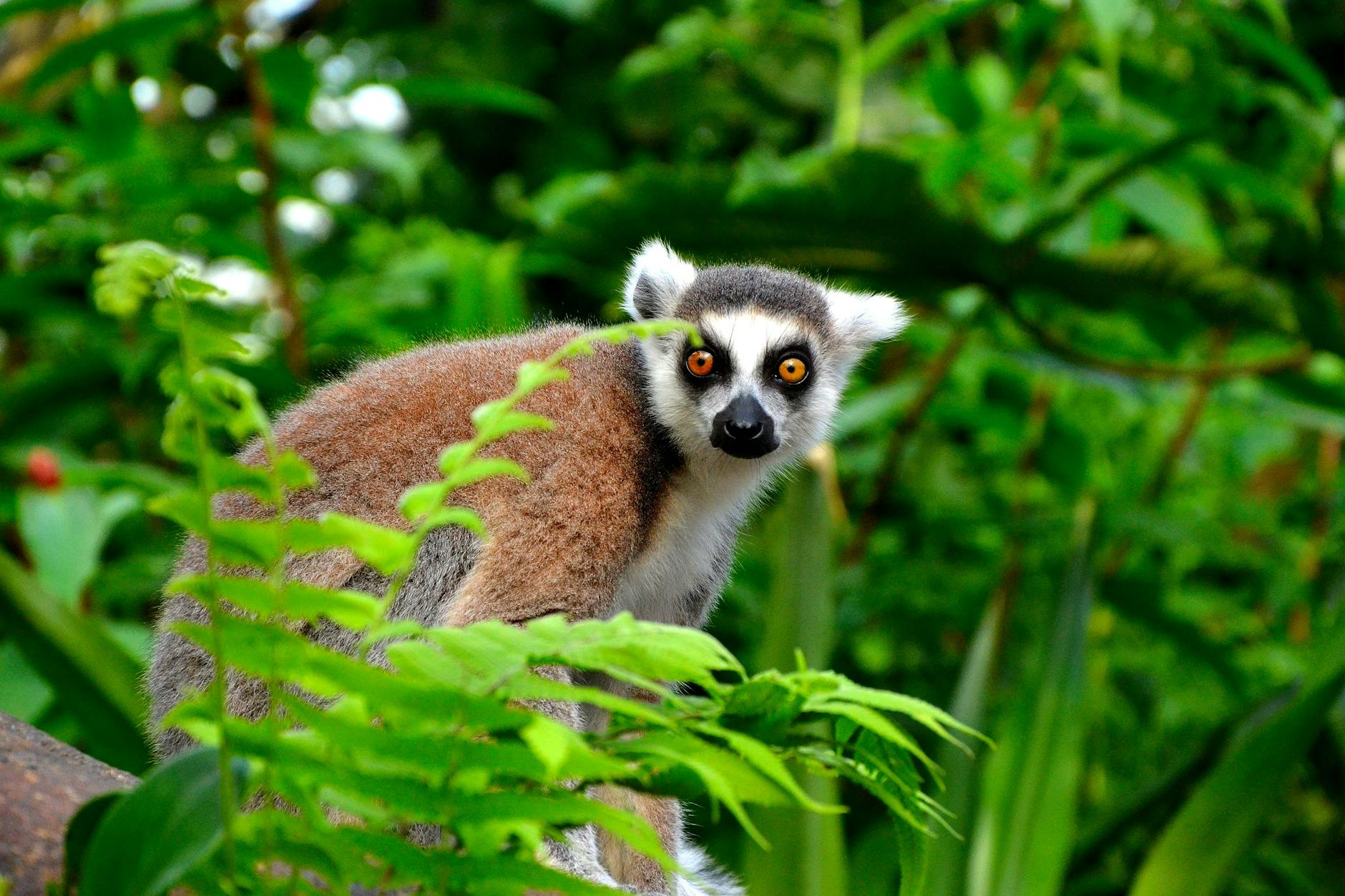
Ankarafantsika National Park is 116 km south of Mahajanga on the RN4 — a 1h30–2h drive through increasingly dry deciduous forest. The park is one of the most wildlife-dense dry forest ecosystems in the world, protecting eight lemur species, 129 bird species, and the park’s most famous resident: the mongoose lemur (only location of a stable wild population). What to book in advance: Entry permits (25,000 MGA per person) and guide fees (25,000–30,000 MGA) at the ANGAP office in Mahajanga or at the park gate. Tours can be arranged through Mahajanga operators for $60–100 including transport, guide, and park fees. Wildlife circuit options: The Lac Ravelobe circuit (3 hours) provides the most reliable lemur and bird sightings — the lake is a critical water source in dry season, concentrating wildlife. The Floristic circuit (2 hours) focuses on the park’s remarkable dry forest flora. Both can be combined in a full day. Bird highlights: Ankarafantsika’s bird list includes the helmet vanga, red-tailed vanga, and Van Dam’s vanga — three endemic species found primarily here. The lake circuit at dawn is peak birding time. Return to Mahajanga by 17:00 for the waterfront sunset — the Mahajanga evening market along Avenue de France is at its best between 18:00 and 20:00. Full park detail: Ankarafantsika wildlife guide.
Read also:
Book activities in Madagascar:
Day 3: Bombetoka Bay Baobabs and Departure
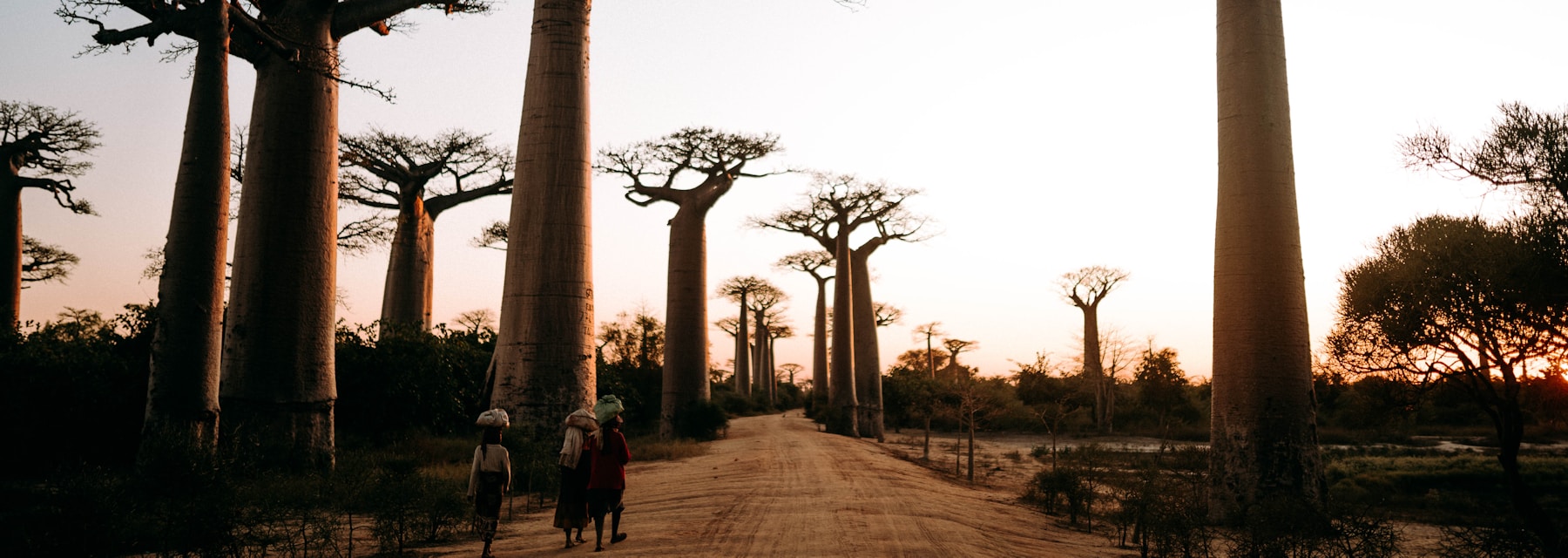
The most spectacular baobab experience accessible from Mahajanga is on the Bombetoka Bay shoreline — a boat trip from the port into the Betsiboka estuary reveals clusters of Adansonia grandidieri baobabs growing directly in the tidal zone. This is not the famous Avenue of Baobabs near Morondava, but a genuinely wild and less-visited scene. How to arrange: Local pirogue (dugout canoe) or small motorboat hire from Mahajanga port for 3–4 hours — price range 50,000–100,000 MGA depending on negotiation and boat type. The mangrove-baobab estuary combination is particularly atmospheric at the morning high tide. Guide services for the estuary boat trip can be arranged through your hotel. Alternative morning (easier logistics): The Mahajanga Cirque Rouge — a canyon of red and ochre laterite cliffs 16 km north of the city — is a 45-minute tuk-tuk or taxi trip. The erosion formations are dramatic at sunrise, with red, purple, and orange strata visible. Entry fee: 5,000 MGA. Best visited before 09:00 for optimal light and before the day heats up. Departure from Amborovy Airport: Allow 45 minutes transfer from town. The airport is a small domestic terminal — check in 45 minutes before flight time. No SIM card kiosk at Amborovy — ensure you have connectivity sorted at Ivato. Full accommodation context for the area: Mahajanga beach resort guide.
Mahajanga Practical Information: Food, Culture and Getting Around
Mahajanga’s cultural identity sets it apart from other Malagasy cities. The population has significant Comorian, Indian, and Arab ancestry from centuries of Indian Ocean trade — this produces a food culture noticeably different from highland Madagascar. Food specialties: Briani (biryani-influenced rice dish), samossas (Indian-derived pastries filled with meat or vegetables), grilled lobster and crayfish from the daily catch, and coconut-milk fish curries. The best seafood restaurant concentration is in the area around Boulevard Philibert Tsiranana near the old port. Transport within Mahajanga: Pousse-pousse (cycle rickshaws) for short distances, 1,000–3,000 MGA. Tuk-tuks for longer city trips, 5,000–10,000 MGA. Private taxis for airport and out-of-town trips, 15,000–30,000 MGA. No metered taxis. Accommodation: Mahajanga has a range of options from beach-facing guesthouses to mid-range hotels along Avenue de France. Book Mahajanga accommodation on Agoda. The 3-star Hôtel de France is a long-standing reliable option with ocean views; smaller guesthouses near the Cirque Rouge side of town offer lower prices. Safety: Mahajanga is considered one of the safer cities in Madagascar for tourists. The main market area near Place Philibert Tsiranana is busy and requires standard pickpocket awareness.
Ready to book your Madagascar trip?
Frequently Asked Questions
Is it worth going to Mahajanga from Antananarivo?
Yes, especially as part of a north-west circuit. The combination of Ankarafantsika National Park, the Betsiboka baobab estuary, Katsepy lighthouse, and Mahajanga’s distinctive coastal culture makes it one of the more varied 3-day stops in Madagascar. The direct flight from Tana takes 1 hour.
What is Ankarafantsika National Park known for?
Its remarkable dry forest biodiversity — eight lemur species including the mongoose lemur (found in viable wild numbers only here), 129 bird species with three endemic vangas, a large crocodile lake (Lac Ravelobe), and exceptional dry forest flora. It is also known for its mongoose lemur, which is absent from most other Madagascar parks.
Can I drive from Antananarivo to Mahajanga?
Yes — the RN4 is the most drivable major national route in Madagascar. In dry season, a private car (standard saloon acceptable) covers the 580 km in 9–10 hours. Taxi-brousse takes 10–14 hours. The road passes through the highland corridor northwest of Tana before descending to the coastal plain.
Mahajanga’s three-day programme covers the full range of northwest Madagascar experiences — wetland bird life at Ankarafantsika, colonial waterfront culture, baobab estuaries, and a kite-surf beach. It works perfectly as a standalone destination or as part of a north-west loop combined with Diego Suarez. Book beach resorts early via Agoda Mahajanga. Activate SafetyWing before departure for medical cover.
Start planning your Madagascar adventure today
Browse Madagascar experiences on GetYourGuide
Affiliate link – commission earned at no extra cost to you.
Flight delayed or cancelled? Flights to Madagascar often connect through Paris or Nairobi. EU regulation EC 261 may entitle you to up to €600 in compensation. Check your claim free on AirAdvisor →
Plan Your Trip to Madagascar
- Read the full Madagascar Travel Guide
- Explore itineraries by style and duration
- Best Tours and Guided Experiences
Where to Stay