Ambohimanga: Inside Madagascar’s Only Cultural UNESCO Site
This article contains affiliate links. We may earn a small commission at no extra cost to you if you book through them.
By Jordan Lamont · Last updated 7 October 2026
At a Glance
- What: the Royal Hill of Ambohimanga — Madagascar’s only cultural UNESCO site
- Where: a forested hill 24 km north of Antananarivo
- Why it matters: spiritual capital of the Merina kingdom, royal burial ground
- See: stone gate disks, the king’s wooden palace, sacred fig trees, tombs
- Visit: stay in Antananarivo · guided tours
Say it like a local: Ambohimanga (am-boo-ee-MANG) — “the blue hill” or “hill of beauty”; rova — the royal compound.
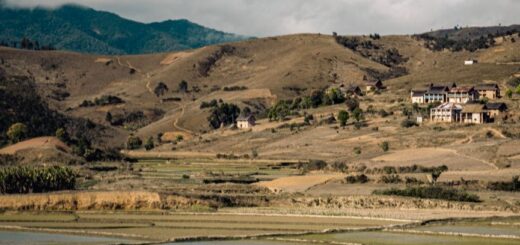
If Antananarivo is where the Merina kings governed, Ambohimanga is where they belonged. A forested hill 24 kilometres north of the capital, it is the spiritual heart of the kingdom that unified Madagascar, the burial place of its sovereigns, and the only site on the island that UNESCO lists for its culture rather than its nature. It is also, unlike a museum, still sacred — a place of living ritual. Here is why it matters more than any palace.
The blue hill of kings
Ambohimanga rose to prominence in the 18th century as the seat of King Andrianampoinimerina, who lived and ruled here from 1788 to 1810 as he set about unifying the island. When he took Antananarivo, he did not abandon Ambohimanga; he declared the two of equal rank, making the capital his political seat and Ambohimanga the kingdom’s spiritual capital. It is one of the twelve sacred hills of Imerina — and arguably the holiest.
Sacred on more than one layer
What deepens Ambohimanga’s sanctity is that its graves run further back than the Merina kings. The hill holds royal tombs, but also burial sites of the Vazimba, the island’s legendary first inhabitants. To stand here is to stand on the ancestors of the ancestors. That is why, inscribed by UNESCO in 2001, the hill is described not as a ruin but as a place of living ritual — Malagasy still come to pray, give thanks and honour the dead.
What you actually see
The rova is a fortified royal enclosure entered through massive stone gate disks — some weighing up to 12 tonnes — that were once rolled shut each night for defence. Inside, the centrepiece is Andrianampoinimerina’s double-storey wooden house, its balconies elaborately carved, startlingly modest for so great a king. A courtyard is shaded by two giant fig trees, and a sacrificial stone nearby is still used for rituals today. Every feature is a statement about sovereignty, ancestry and the sacred.
How to visit with respect
Ambohimanga is a working sacred site, so the ordinary fady apply: dress modestly, follow your guide, and treat the tombs and sacrificial stone as the holy places they are. A good local guide transforms the visit, decoding the symbolism of the gates, trees and tombs that a casual visitor would walk straight past. It is the single most rewarding half-day near the capital.
Why it matters today
Understand Ambohimanga and you understand the spiritual logic beneath modern Madagascar — why hills, tombs and ancestors still shape how people live. Pair it with a day in Antananarivo and the wider central highlands, and build the trip with our Madagascar travel guide.
See it for yourself — Ambohimanga is an easy half-day from Antananarivo, 24 km north.
FAQ
What is Ambohimanga?
A forested royal hill 24 km north of Antananarivo — the spiritual heart of the Merina kingdom and Madagascar’s only cultural UNESCO World Heritage site (inscribed 2001).
Why is it sacred?
It was King Andrianampoinimerina’s capital and a royal burial ground, and it also holds Vazimba (ancestral) graves — layered sacredness that makes it a place of living ritual.
What can you see there?
The fortified rova with huge stone gate disks, the king’s double-storey wooden house, a courtyard with giant fig trees, royal tombs, and a sacrificial stone still used today.
How do you get there?
An easy half-day trip from Antananarivo, 24 km north — best by car with a guide who can explain the fady.
Travel insurance for Madagascar
Medical evacuation from Madagascar’s interior can cost USD 30,000–80,000, so travel medical cover is worth arranging before you go. SafetyWing is the disclosed partner we mention on this site — a monthly-subscription travel medical plan. Check SafetyWing’s plans.
Plan Your Trip to Madagascar
- Read the full Madagascar Travel Guide
- Explore itineraries by style and duration
- Explore the full destination guide
Where to Stay