Andrianampoinimerina: the King Who United Imerina
This article contains affiliate links. We may earn a small commission at no extra cost to you if you book through them.
By Jordan Lamont · Last updated 7 October 2026
At a Glance
- Who: Andrianampoinimerina, king of Imerina (reigned c. 1787–1810)
- Achievement: reunified Imerina after ~77 years of civil war; founded the drive to unify Madagascar
- Capitals: Ambohimanga (spiritual) and Antananarivo (political)
- Motto: “The sea is the boundary of my rice field”
- Legacy: laws, markets, rice irrigation; father of Radama I
Say it like a local: Andrianampoinimerina (an-dree-ah-nam-pwee-nee-MEH-rin) — the name means “the lord at the heart of Imerina.”
Before there was a Madagascar, there were dozens of small kingdoms at war with one another. The man who began welding them into a single nation was a cattle trader turned king with one of the longest names and largest ambitions in African history. Most visitors to Antananarivo stand on the hills he fortified without knowing his story. Here is how one highland ruler set in motion the unification of the world’s fourth-largest island.
A kingdom born from civil war
For roughly 77 years, the highland realm of Imerina had been fractured by civil war, split among rival princes. Andrianampoinimerina rose to power around 1787 by deposing his own uncle, Andrianjafy, who ruled the northern district of Imerina Avaradrano. From the fortified hill-town of Ambohimanga he fought and negotiated his way to reuniting Imerina — a task largely accomplished by 1793. Where his predecessors had seen four warring quarters, he saw one country waiting to be assembled.
The two capitals
When he captured the old capital of Antananarivo, he did not abandon Ambohimanga. Instead he declared the two of equal rank: Antananarivo the seat of government, Ambohimanga the sacred heart of the kingdom, where kings were consecrated and ancestors honoured. That division still shapes the highlands today — it is why Ambohimanga, not the bustling capital, carries Madagascar’s only cultural UNESCO World Heritage listing.
“The sea is the boundary of my rice field”
His ambition survives in a single famous sentence: “Ny ranomasina no valam-parihiko” — “the sea is the boundary of my rice field.” It was not poetry; it was policy. He intended Merina authority to reach every coast of the island, a goal he did not live to complete but handed, fully formed, to his son. Few rulers anywhere have stated a national project so plainly, or so early.
The king who drained marshes and ran markets
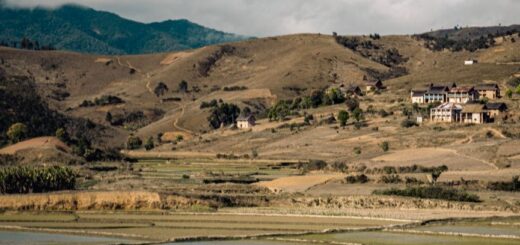
Andrianampoinimerina is remembered as a warrior, but his deeper legacy is administrative. He organised the vast marshes of the Betsimitatatra plain below Antananarivo into irrigated rice paddies that still feed the capital. He codified laws and delivered them through kabary, the formal highland art of public oratory. He regulated weights, markets and trade — the great Friday market that would grow into one of the largest in the world traces to his reforms. He is, in a real sense, the architect of how the highlands still live and eat.
Why it matters today
Andrianampoinimerina holds near-mythic status among the Merina, and you feel it the moment you climb Ambohimanga or walk the hills of the central highlands: the rova, the sacred trees, the rice terraces are all, in a way, his. Understanding him turns Antananarivo from a hard-to-read capital into the centre of a deliberate national idea. For the fuller story of the island he set out to unite, start with our Madagascar travel guide.
FAQ
Who was Andrianampoinimerina?
The king (reigned c. 1787–1810) who reunified Imerina after decades of civil war and set Madagascar on the path to unification under Merina rule.
Where was his capital?
He ruled from the fortified hill of Ambohimanga, then made Antananarivo his political capital while keeping Ambohimanga as the spiritual one.
What is he famous for saying?
His ambition is captured in the famous line “Ny ranomasina no valam-parihiko” — “The sea is the boundary of my rice field.”
What did he leave behind?
A unified Imerina, a legal and market system, vast rice-irrigation works around Antananarivo, and a kingdom his son Radama I would expand across most of the island.
Travel insurance for Madagascar
Medical evacuation from Madagascar’s interior can cost USD 30,000–80,000, so travel medical cover is worth arranging before you go. SafetyWing is the disclosed partner we mention on this site — a monthly-subscription travel medical plan. Check SafetyWing’s plans.
Plan Your Trip to Madagascar
- Read the full Madagascar Travel Guide
- Explore itineraries by style and duration
- Explore the full destination guide
Where to Stay