Madagascar Budget Travel 2026: The Honest Complete Guide to Doing It Cheaply
Affiliate disclosure: This article contains sponsored links to hotels, tour operators, insurance providers, and other travel services. We earn a small commission if you book through our links, at no extra cost to you.
Madagascar Budget Travel 2026 — At a Glance
- The honest truth: Madagascar is not a classic cheap backpacker country — but it can be done on a budget with time and flexibility
- Biggest cost driver: getting around (the car-and-driver or domestic flights), not food or basic lodging
- Realistic budget: roughly €40–70 per person per day travelling cheaply on the ground
- The cheap way to travel: the taxi-brousse (shared bush taxi), guesthouses, local food, and group tours to share costs
- Best value time: the dry season shoulder months (April–May, October–November)
- Find group tours: GetYourGuide Madagascar — sharing a tour spreads the cost
- Flight protection: EU261 €600 per passenger on disrupted European inbound flights
- Travel insurance: SafetyWing Nomad Insurance — cheap, and essential even on a budget trip
- Where to stay: budget stays in Madagascar on Agoda
💰 Carry Your Cash Safely in Madagascar
Madagascar runs largely on cash. Keep your money secure:
- Hidden money belt — keeps cash and passport out of a pickpocket’s reach. See on Amazon →
- RFID-blocking wallet — organises cards and blocks electronic skimming. See on Amazon →
- Neck wallet / passport pouch — discreet document holder for transit days. See on Amazon →
As an Amazon Associate we earn from qualifying purchases.
Can you do Madagascar on a budget? Yes — but it helps to be honest from the start: this is not a cheap backpacker country in the way Southeast Asia or South America can be. The wildlife is the draw, and reaching it — the long distances, the car-and-driver or domestic flights, the compulsory park guides and fees — is what costs money here, far more than food or basic lodging, which are genuinely cheap. The good news is that with time, flexibility, and the right approach, Madagascar can absolutely be travelled affordably: by using the taxi-brousse, staying in guesthouses, eating local, and sharing costs on group tours. This guide is your honest, complete overview of budget travel in Madagascar — what it really costs, how to keep it cheap, where to go, and how to get the most out of the island without breaking the bank. For the backpacking how-to, see our Madagascar backpacking guide.
The key to budget travel here is understanding where the money goes and travelling accordingly. The single biggest lever is transport: a private car-and-driver (the comfortable default) is the main cost, so budget travellers either take the slow, cheap taxi-brousse or share a vehicle and guide with others to split the cost. Beyond that, the savings come from simple guesthouses, local restaurants and markets, and choosing fewer regions to cut down on costly internal travel. Below, we set out exactly how to do Madagascar affordably, with the honesty to tell you where you can save and where you genuinely cannot. For the numbers, see our budget trip cost guide; we also draw on our long-standing Madagascar travel budget guide.
Is Madagascar Cheap? The Honest Answer
It depends what you compare it to. On the ground, many things are genuinely cheap: a meal in a local restaurant, a bottle of water, a basic guesthouse room, a ride on the taxi-brousse, and fresh fruit from a market all cost little. In that sense, daily living in Madagascar is inexpensive, and a frugal traveller can keep costs low. If your benchmark is a European city, Madagascar feels cheap.
But the things that make Madagascar special — the wildlife, the parks, the remote regions — come with real costs that a backpacker in Thailand or Bolivia would not face. Getting around is expensive: the country is huge, the roads are slow, and the comfortable way to travel is a private car with a driver-guide, which is the single largest cost of most trips. Domestic flights save time but add expense. National parks charge entry fees and require paid local guides. And there is far less of the cheap, well-trodden backpacker infrastructure — the €5 dorms, the all-day buses, the tourist-trail efficiency — that keeps costs rock-bottom elsewhere. So Madagascar is cheap to live in day to day, but not cheap to travel around, and budget travel here is about minimising that travel cost.
The honest conclusion is that Madagascar is a mid-range destination that can be done on a budget with effort, rather than a true shoestring country. A determined budget traveller with time and flexibility can keep costs surprisingly low; a traveller who wants to see a lot quickly and comfortably will spend more. Setting realistic expectations is the first step to a happy budget trip — and the rest of this guide shows you how to keep the cost down without missing what makes the island extraordinary. The travellers who are disappointed are usually those who arrived expecting Southeast Asian prices and efficiency; those who arrive understanding that Madagascar trades cheapness for uniqueness, and who plan for slow, frugal, flexible travel, tend to come away delighted — and having spent far less than they feared.
Where the Money Goes
Understanding the cost structure is the key to budget travel here. In rough order of impact:
- Getting around: the biggest cost by far — a private car-and-driver, or domestic flights. This is where budget travellers save most, by taking the taxi-brousse or sharing a vehicle.
- Park fees and guides: national parks charge entry fees and require paid local guides — unavoidable if you want the wildlife, but modest per visit.
- Accommodation: ranges from very cheap guesthouses to expensive lodges; budget travellers stick to guesthouses and hostels, which are inexpensive.
- Food and drink: genuinely cheap if you eat local — markets, street food, and local restaurants cost little.
- International flights: often the single biggest expense of the whole trip, and largely fixed — though booking early helps.
The pattern is clear: food and basic lodging are cheap; transport and access are not. So the art of budget travel in Madagascar is keeping the transport cost down — by travelling slowly and cheaply overland, by sharing vehicles and guides, and by choosing fewer regions so you cover less expensive ground. Get the transport right and the rest of a budget trip falls into place. Put another way, two travellers can spend wildly different amounts in Madagascar on the same itinerary — the one in a private 4WD paying many times what the one on the taxi-brousse does — even though their food, lodging, and park fees are nearly identical. The transport choice, more than anything, decides whether your trip is budget or not. For a full breakdown of the numbers, see our budget trip cost guide.
How to Travel Madagascar Cheaply
Here are the core strategies for keeping a Madagascar trip affordable:
Take the taxi-brousse
The taxi-brousse (shared bush taxi) is how most Malagasy travel between towns, and it is by far the cheapest way to get around — a fraction of the cost of a private vehicle. It is slow, crowded, and unpredictable, with long waits and bumpy roads, but it is cheap, authentic, and connects most of the country. For budget travellers with time and patience, the taxi-brousse is the single biggest money-saver, replacing the costly private car-and-driver. Expect to wait until the vehicle fills before departing, to share space with people, luggage, and sometimes livestock, and for journeys to take far longer than the distance suggests — but also to travel for a tiny fraction of a private vehicle’s cost and to experience the country as the Malagasy do. It is an adventure in itself, and many budget travellers come to enjoy it. See our backpacking guide for how to use it.
Stay in guesthouses and hostels
Madagascar has plenty of cheap guesthouses (chambres d’hôtes) and a growing number of hostels in the main towns and traveller hubs, offering basic but comfortable rooms and dorms for very little. Sticking to these instead of lodges keeps accommodation costs low, and hostels are also great for meeting other travellers to share tours and transport with. Browse budget stays on Agoda to compare options. Standards vary, so it pays to read recent reviews, but a clean room with a fan, a mosquito net, and a cold shower is all most budget travellers need — and the savings over a lodge, night after night, add up to a meaningfully cheaper trip overall.
Eat local
Eating where the locals eat — markets, street stalls, and small local restaurants (hotely) — is both cheap and a genuine cultural experience. A plate of rice with a topping, fresh fruit, and local snacks cost a fraction of tourist-restaurant prices, and the food is good. Self-catering from markets where possible saves more. Eating local is one of the easiest and most enjoyable ways to keep a budget trip cheap. Be sensibly cautious — eat at busy hotely with high turnover, favour freshly cooked hot food, and stick to bottled water — but don’t let over-caution push you into pricey tourist restaurants, as the local food is generally safe, good, and a highlight of the trip in its own right.
Share tours and transport
Because the big cost is the vehicle and guide, sharing them with other travellers dramatically cuts the per-person price. Joining a group tour, or teaming up with travellers met in hostels to hire a vehicle together, spreads the cost of the driver, fuel, and guide across several people. Browse group tours on GetYourGuide — a shared tour is often the best-value way to reach the parks affordably. For the harder-to-reach highlights where the taxi-brousse doesn’t go — the Tsingy, the remote west — sharing a 4WD with three or four others met in a hostel turns an unaffordable private hire into a manageable per-person cost, and is often the only practical budget way to reach them at all.
Travel slowly and focus
Every internal flight and long transfer costs money, so choosing fewer regions and travelling slowly overland keeps costs down. Rather than crisscrossing the island, pick one or two areas, explore them in depth, and avoid expensive internal flights. Slow, focused travel is not just cheaper — it is often more rewarding, and it is the natural rhythm of budget travel in Madagascar. Trying to “do” the whole island on a budget is a false economy: the internal flights you’d need to cover the distances quickly would blow the budget, while the slow overland alternative would eat your whole trip in transit. Far better to pick a region, travel it deeply and cheaply, and save the rest for another time — depth over breadth is both the cheaper and the more satisfying approach.
Best Budget Destinations
Some regions suit budget travel better than others, being cheaper to reach and easier to explore independently:
- The RN7 south: the classic budget route — a paved road from the capital to Tuléar, served by taxi-brousse, linking Antsirabe, Ranomafana, Anja, and Isalo. The best budget itinerary in the country. See our RN7 guide.
- Antananarivo and the highlands: the capital and nearby highland towns are easily reached and explored cheaply, with markets, culture, and the Lemurs’ Park nearby.
- Andasibe (east): the most accessible wildlife, reachable by taxi-brousse on the paved RN2 — the budget traveller’s lemur fix. See our eastern Madagascar guide.
- Nosy Be (north): reachable by ferry and overland, with budget guesthouses alongside the resorts — a beach option for the frugal.
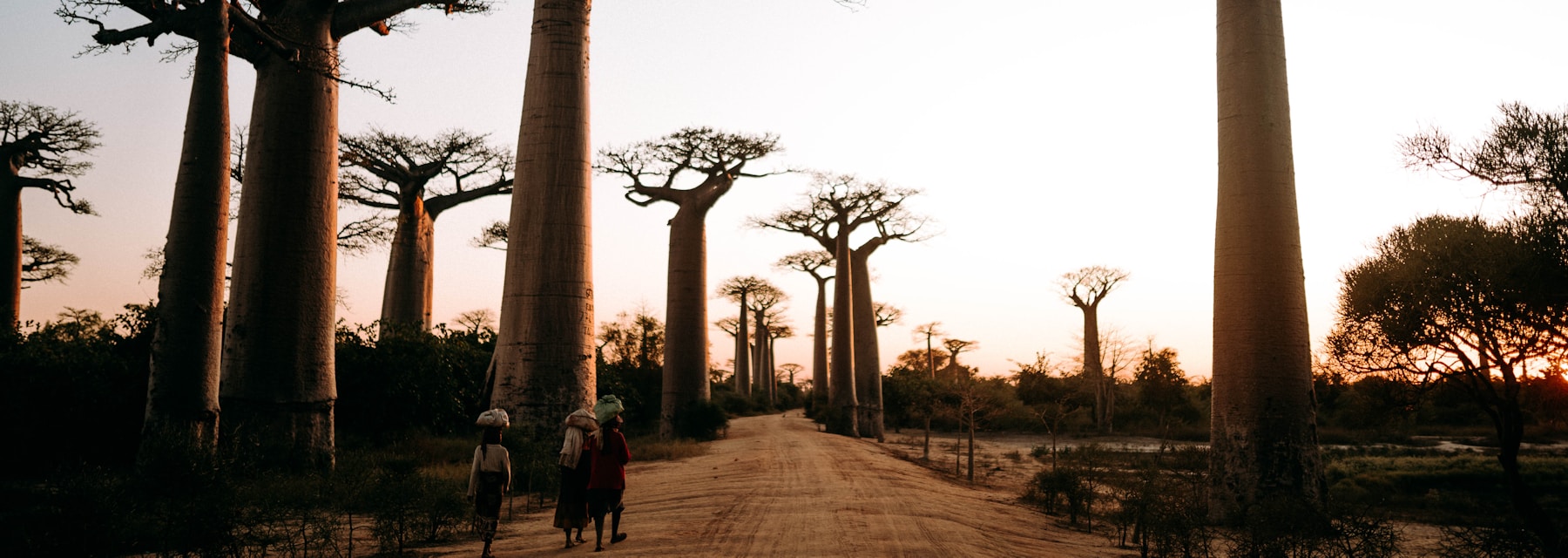
The standout for budget travellers is the RN7 route through the south: a single paved road, served by cheap taxi-brousse, linking a string of the country’s best parks and towns, doable entirely on a budget over a couple of weeks. It is the backbone of independent budget travel in Madagascar, and the easiest way to see a lot for a little. The remote west (Tsingy, baobabs) and far north, by contrast, are harder and costlier to reach independently, so budget travellers often skip or save them. If you do want the western baobabs on a budget, the trick is to base in Morondava (reachable by a long but cheap taxi-brousse or a budget flight) and share a vehicle to the Avenue with others, rather than booking a private western circuit. Tailoring the route to what is cheaply reachable is the essence of budget planning here. For the national parks themselves, see our national parks guide.
Budget Accommodation in Detail
Accommodation is one of the easiest places to save in Madagascar, because the cheap end is genuinely cheap and perfectly comfortable for budget travel. The mainstay is the guesthouse (chambre d’hôte or small hotel), found in every town and at every park gateway, offering a clean basic room — often with private bathroom — for very little. In the traveller hubs and bigger towns, a small but growing hostel scene offers dorm beds even cheaper, plus the bonus of meeting other travellers to share tours and transport with. For beach stays, simple bungalow guesthouses sit alongside the resorts in places like Nosy Be and Ifaty at a fraction of the price.
A few tips stretch the accommodation budget further. Book the cheapest places on arrival or by phone rather than online, where the very budget options often aren’t listed — though comparing online first gives a useful price anchor. Stay near park entrances to avoid extra transport. Choose dorms or shared rooms where available, and team up with others to split twin rooms. And don’t over-prioritise comfort — a basic but clean guesthouse is all you need between days of wildlife and travel. Browse budget stays on Agoda for the mid-budget options, and ask locally for the very cheapest. For the social hostel scene, our existing guide to backpacking Madagascar has more.
Eating Cheaply in Madagascar
Food is where Madagascar is genuinely, reliably cheap, and eating well on a budget is easy. The staple is rice (vary) with a topping — meat, fish, beans, or vegetables in sauce — served at small local restaurants (hotely) for very little, filling and tasty. Street food, sambos (samosas), fried snacks, grilled brochettes, and fresh tropical fruit from the markets are cheaper still. Sticking to where the locals eat, rather than tourist restaurants, cuts the food bill dramatically while giving a more authentic taste of the country.
A few habits keep food costs low. Buy fruit and snacks from markets for the road and between meals. Drink local — bottled water is cheap and essential (don’t drink the tap water), and local drinks cost little. Eat your main meal at a hotely rather than a hotel restaurant. And carry snacks for long taxi-brousse journeys, where stops are unpredictable. Eating local is not just the cheap option but one of the pleasures of budget travel here — the food is good, the markets are vivid, and it connects you to everyday Malagasy life in a way the tourist trail never does.
Budget vs Comfort: What You Give Up
It is worth being clear about the trade-offs of budget travel in Madagascar, because they are real. Travelling cheaply means accepting slower, harder transport — the taxi-brousse is cramped, hot, and subject to long waits and breakdowns, where a private car would be quick and comfortable. It means basic lodging rather than charming lodges, simple food rather than fine dining, and less flexibility, since you travel to public-transport schedules rather than your own. It also typically means seeing less in the same time, since cheap travel is slow, or needing a longer trip to cover the same ground.
None of this need spoil the experience — for many travellers, the taxi-brousse and the guesthouses are part of the adventure and the authenticity, and the wildlife is exactly as magical whether you arrive by bush taxi or private 4WD. But it is honest to say that budget travel here asks more of you in time, patience, and comfort than a mid-range trip. The wildlife, the parks, and the landscapes are the same; what you trade is ease and speed for cost. Knowing this lets you choose the right balance — and many travellers happily mix the two, travelling cheaply most of the time but splashing out on a shared vehicle for a hard-to-reach highlight or a comfortable night after a long journey.
A Sample Budget Itinerary
To show how it comes together, here is a classic two-week budget route down the RN7, doable almost entirely by taxi-brousse: start in Antananarivo (a night or two exploring the markets and the capital); taxi-brousse to Antsirabe (highland town, pousse-pousse, easy and cheap); on to Ranomafana for rainforest and lemurs (park fees and a guide, shared if possible); to Fianarantsoa and the Betsileo country; to Ambalavao and Anja for the near-guaranteed ring-tailed lemurs (a community reserve, cheap to visit); to Isalo for canyon hikes; and finally to Tuléar and Ifaty for a budget beach finish. Add a separate short trip to Andasibe from the capital (by taxi-brousse on the paved RN2) for the indri.
This route links many of the country’s best parks and experiences along a single paved road, served by cheap public transport, with guesthouses all along the way — the backbone of budget travel in Madagascar. It rewards travellers with time and flexibility, and can be done for a fraction of the cost of a private-vehicle tour, especially if you share guides and the occasional vehicle leg with other travellers met along the route. For the route in detail, see our southern Madagascar and RN7 guide, and for a worked budget, our budget trip cost guide.
When to Travel for Value
The dry season (April–November) is the best time to visit, and within it the shoulder months — April–May and October–November — offer the best value, with good conditions, fewer crowds, and slightly lower prices than the July–August peak. Travelling in the shoulder season is a simple way to save, and avoids the peak-season squeeze on the cheaper guesthouses and group tours. The wet season (December–March) is cheapest of all, with the lowest prices, but the rains make travel harder and some roads impassable, so it is a trade-off. See our best time to visit guide for the full picture.
Whenever you travel, booking the budget essentials — the cheap guesthouses, the group tours — a little ahead in peak season ensures you get the best-value options before they fill. Budget travel rewards flexibility, though: travellers who can adjust their dates and routes to availability and conditions consistently save the most. The cheapest trips are usually the slowest and most flexible ones.
Health, Safety, and Insurance on a Budget
Budget travel does not mean skimping on the essentials, and two in particular are non-negotiable. First, health precautions: malaria is present in many areas, so antimalarials and mosquito protection are needed regardless of budget, and a visit to a travel clinic before you go is essential — this is not a place to cut corners. Second, travel insurance: it is cheap (a few euros a day) and absolutely essential, covering medical emergencies and evacuation, which can cost tens of thousands of euros from a remote area — a cost that would dwarf any budget trip. SafetyWing Nomad Insurance is inexpensive and popular with budget and long-term travellers, and is the one thing no budget traveller should skip.
On safety, Madagascar is generally safe for budget and independent travellers with the usual sensible precautions — watch belongings on the taxi-brousse and in busy towns, avoid walking unfamiliar areas after dark, and keep valuables secure. Budget travel by public transport and in guesthouses is well-trodden and manageable, and the backpacker and hostel scene, though small, is friendly. Travelling cheaply here is about patience and flexibility rather than risk, and with sensible precautions it is a rewarding way to experience the island.
Money, ATMs, and Practical Tips
A few practical money matters help a budget trip run smoothly. Madagascar uses the ariary, and it is largely a cash economy outside the bigger hotels and towns — the taxi-brousse, guesthouses, hotely, markets, and park guides all expect cash. ATMs are available in towns and cities but can be unreliable or run out, and are scarce in remote areas, so withdraw enough cash before heading off the beaten track, and carry it securely. Bring a backup card and some euros as emergency reserve. Budgeting in cash also helps you track spending and stick to a daily limit.
Other practical tips: negotiate taxi-brousse and market prices politely where appropriate, but don’t haggle hard over tiny sums that mean little to you and a lot locally. Tip the park guides — they are low-paid and their knowledge makes the wildlife, and it is part of the real cost of a visit. Carry small notes for transport and snacks. Budget a contingency for the unexpected — a breakdown, a changed plan, a splurge on a shared vehicle — because budget travel here is unpredictable. And keep digital and paper copies of documents. These small habits keep a budget trip on track and stress-free, and a little local currency know-how goes a long way.
Is It Worth Doing Madagascar on a Budget?
Given that Madagascar is harder and slower to travel cheaply than the classic backpacker countries, is budget travel here worth it? For the right traveller, absolutely. The wildlife and landscapes — the whole reason to come — are exactly as extraordinary on a budget as in luxury: the lemurs at Anja, the rainforest at Ranomafana, the canyons of Isalo cost little to experience once you have reached them, and a ring-tailed lemur does not care whether you arrived by bush taxi or private 4WD. For travellers with more time than money, budget travel opens up one of the world’s most remarkable destinations at a fraction of the comfortable cost.
Budget travel also brings its own rewards. The taxi-brousse, the local hotely, the guesthouses, and the markets immerse you in everyday Malagasy life in a way a private-vehicle tour never does, and the friendships formed with other travellers and locals along the way are part of the experience. The trade-off is real — more time, more patience, less comfort — but for the independent, flexible traveller, doing Madagascar on a budget is not a compromise but a genuinely rich and authentic way to see the island. It is the right choice for those who value the experience and the adventure over ease and speed, and who would rather travel longer and cheaper than shorter and pricier.
How to Plan a Budget Trip
Planning a budget trip to Madagascar comes down to a few principles. Allow plenty of time: cheap travel (the taxi-brousse, slow overland routes) is slow, so a budget trip needs more days than a comfortable one to cover the same ground. Focus the route: pick one or two regions — the RN7 south is ideal — rather than trying to see everything, to cut costly internal travel. Travel with others: sharing vehicles, guides, and tours is the single biggest saving, so connect with other travellers in hostels and online. And be flexible: adjusting to taxi-brousse schedules, weather, and availability is the nature of budget travel here, and the travellers who flex save the most.
It is also worth knowing when not to economise. The compulsory park guides are inexpensive and essential to seeing the wildlife — pay willingly and tip them. Good insurance and health precautions are not optional. And occasionally splitting the cost of a vehicle for a hard-to-reach highlight is money well spent. The best budget trips save hard on transport, lodging, and food, while still paying for the experiences and safeguards that matter. For ready-made budget structures, see our budget tour packages guide; for the full costs, our budget trip cost guide.
Getting There and Travelling Well
Madagascar is reached by connecting flights via Europe, the Gulf, or Africa, landing at Antananarivo — the international flight is often the single biggest cost of a budget trip, so book early and compare fares carefully for the best deal. Protect it on European routes, where EU261 entitles you to up to €600 per passenger for long delays, cancellations, and denied boarding; register your inbound flight for EU261 coverage with AirAdvisor, which is free and could return real money if your flight is disrupted — a welcome bonus on a tight budget. Within Madagascar, the taxi-brousse is the cheapest way around; if you do hire a vehicle, compare rental prices on Carla and share the cost with others.
Travel insurance is a small, essential cost even on the tightest budget — covering medical emergencies and evacuation from remote regions. SafetyWing Nomad Insurance is inexpensive, flexible, and well suited to budget and long-term travel; the few euros a day it costs are nothing against the price of an uninsured emergency. Confirm it covers your activities and remote-area evacuation before you travel.
Carla / Voyagiste Madagascar (plan an affordable trip)
Madagascar-resident specialist who can help you plan an affordable trip — advising where to save, how to share costs, and which routes work cheaply, as well as arranging a shared vehicle and guide if you want to split the cost with others. Contact Carla directly to plan a budget-conscious trip that still reaches the wildlife and highlights, with honest advice on getting the most for your money. Local knowledge helps a budget go further — finding the value options and avoiding the costly mistakes.
Frequently Asked Questions
Is Madagascar cheap to travel?
Food and basic lodging are genuinely cheap, but getting around (the car-and-driver or domestic flights) and park fees are not, so Madagascar is a mid-range destination that can be done on a budget with time and effort, rather than a true shoestring country. See our budget cost guide.
How much do I need per day on a budget?
Roughly €40–70 per person per day travelling cheaply on the ground (taxi-brousse, guesthouses, local food), plus international flights and park fees. Sharing transport lowers it further.
What’s the cheapest way to get around?
The taxi-brousse (shared bush taxi) — slow and crowded but very cheap, and how most Malagasy travel. It is the budget traveller’s main money-saver over a private vehicle. See our backpacking guide.
What’s the best budget route?
The RN7 south — a paved road served by taxi-brousse, linking Antsirabe, Ranomafana, Anja, and Isalo, doable entirely on a budget over a couple of weeks. See our RN7 guide.
Can I see wildlife on a budget?
Yes — the accessible parks (Andasibe, Ranomafana, Anja) are reachable cheaply by taxi-brousse, with modest entry and guide fees. Sharing a group tour spreads the cost of reaching them.
Do I need travel insurance on a budget?
Absolutely — it is cheap and essential, covering medical evacuation that could cost tens of thousands of euros. Comprehensive coverage is the one thing no budget traveller should skip.
🧭 Plan an Affordable Madagascar Trip With Carla
Honest advice on where to save, how to share costs, and which routes work cheaply — without missing the wildlife. Reach out to Carla, our Madagascar-resident specialist, to plan a budget-conscious trip that still delivers the island’s magic.
Plan Your Trip to Madagascar
- Read the full Madagascar Travel Guide
- Explore itineraries by style and duration
- Best Tours and Guided Experiences
Where to Stay