Best Madagascar Solo Travel Itineraries & Routes 2026: RN7, Regions & Sample Trips
Affiliate disclosure: This article contains sponsored links to hotels, tour operators, insurance providers, and other travel services. We earn a small commission if you book through our links, at no extra cost to you.
Best Madagascar Solo Travel Itineraries & Routes 2026 — At a Glance
- Best solo route: The RN7 (Antananarivo to Tuléar) — the classic, sociable, accessible corridor, ideal for solo travellers
- Best solo regions: RN7 towns and parks, Nosy Be, Andasibe, Isalo — established and traveller-friendly
- Ideal length: 10–16 days for a satisfying first solo trip
- How to travel: Driver-guide or small-group tour for ease and safety; independent (taxi-brousse + flights) for the experienced
- Best season: Dry season (April–November) for easier solo logistics
- Flight protection: EU261 €600 per passenger on disrupted European inbound flights
- Travel insurance: SafetyWing Nomad Insurance — essential for solo travel
- Solo-friendly stays: Madagascar stays on Agoda
🎒 Madagascar Trip Essentials
A few inexpensive items make the biggest difference on the ground in Madagascar:
- Picaridin insect repellent — DEET-free protection against malaria mosquitoes. See on Amazon →
- Permethrin clothing spray — treat clothes; kills mosquitoes on contact for weeks. See on Amazon →
- Pop-up mosquito net — budget lodges rarely provide one; packs down tiny. See on Amazon →
- Water filter bottle — tap water isn’t safe to drink in Madagascar. See on Amazon →
- Universal travel adapter (USB-C) — Madagascar uses European-style plugs. See on Amazon →
- 8×42 binoculars — essential for spotting lemurs and chameleons in the canopy. See on Amazon →
As an Amazon Associate we earn from qualifying purchases.
Choosing the right route and itinerary is the key to a rewarding, manageable solo trip to Madagascar — and the choice matters more for solo travellers than for those with a companion to share decisions and logistics. The best solo routes are the established, sociable, accessible ones, where you’ll meet fellow travellers, find good infrastructure, and travel with relative ease, whether independently or with a guide. This guide maps the best solo travel routes and regions, provides sample itineraries by length and style, and shows how to structure a solo Madagascar trip that’s safe, sociable, and unforgettable. For the full solo travel picture, see our Madagascar solo travel pillar.
The defining principle for solo itineraries: favour the well-travelled routes for your first trip. The RN7 corridor, Nosy Be, and the main national parks are established, accessible, and full of fellow travellers — exactly what makes solo travel sociable and manageable. The truly remote regions, wonderful as they are, are more demanding solo and best added later or done with a guide. Building a solo itinerary around the accessible regions, with the option of a driver-guide or small-group tour, gives the best balance of reward and ease.
It’s worth saying clearly: choosing accessible routes for a first solo trip is not “playing it safe” at the cost of adventure — Madagascar’s accessible regions are still genuinely wild, wildlife-rich, and adventurous by any normal standard. The RN7 passes through rainforest, highland, and canyon; Andasibe puts you among indri at dawn; Nosy Be’s islets feel remote and pristine. The “accessible” routes are accessible only relative to Madagascar’s truly remote corners, which are extreme by global standards. So a solo traveller on these routes still has a profoundly adventurous, off-the-beaten-path experience by any ordinary measure — just with the logistics, safety, and sociability that make solo travel manageable. You give up very little adventure and gain a great deal of ease, which is exactly the trade a first solo trip should make — and most solo travellers find these “accessible” routes more than adventurous enough to satisfy even a strong appetite for the wild and the unfamiliar, while keeping a first solo trip safe, sociable, and genuinely manageable from the very day you arrive right through to the very day you reluctantly head home.
The Best Solo Travel Route: The RN7
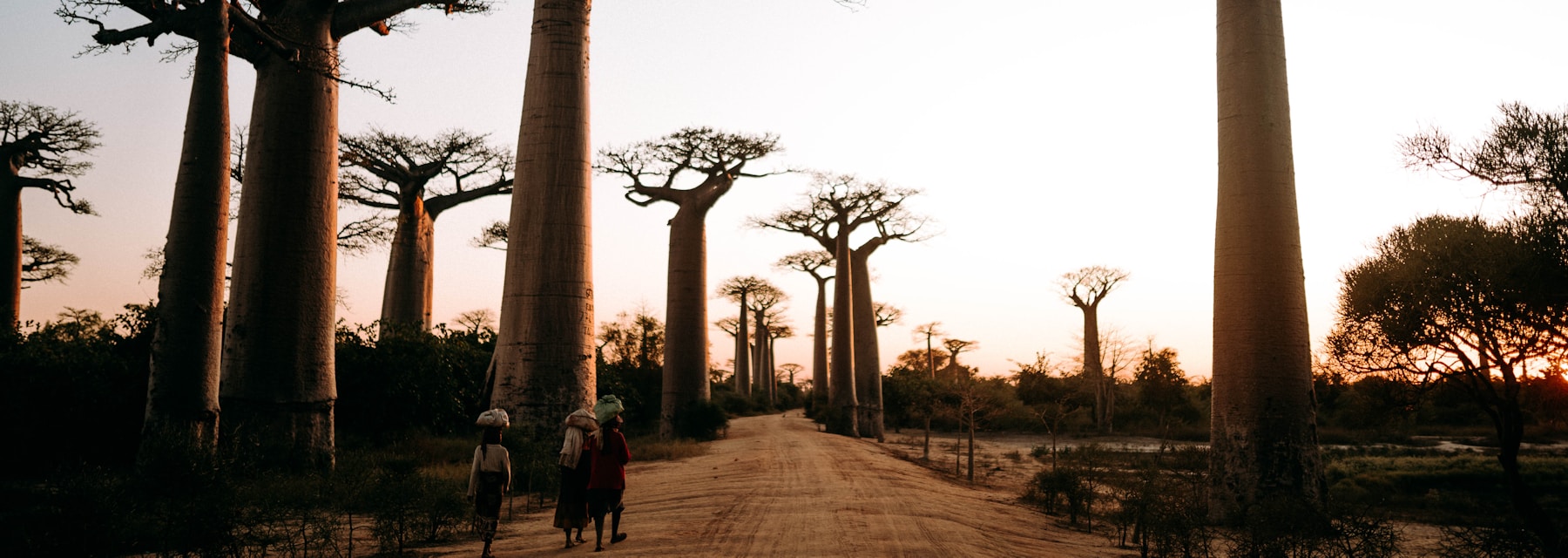
The RN7 (Route Nationale 7), running from Antananarivo south to Tuléar, is the single best route for solo travellers in Madagascar. It’s the classic, well-trodden corridor, and that’s precisely its appeal for solo travel: a string of towns, national parks, and lodges along a navigable route, with plenty of fellow travellers, good (by Madagascar standards) infrastructure, and the easiest independent travel in the country. Solo travellers on the RN7 are rarely isolated — the route brings travellers together at lodges, parks, and over shared transport. Highlights include Antsirabe, Ranomafana National Park, Fianarantsoa, Ranohira/Isalo National Park, and the route’s varied landscapes. Whether travelled independently by taxi-brousse and shared transport, or with a driver-guide, the RN7 is the backbone of solo Madagascar travel and the route we most often recommend for a first solo trip. Our road trips and overland routes guide covers the RN7 in depth.
The Best Regions for Solo Travel
Andasibe and the eastern rainforest
Andasibe, easily reached from Antananarivo, is one of the most accessible and rewarding solo destinations — a rainforest reserve home to the indri (the largest lemur) and much more, well-set-up for visitors with guided walks done in small groups. It’s sociable, accessible, and an easy introduction to Madagascar’s wildlife, making it ideal for solo travellers, often as a first stop.
Nosy Be and the islands
Nosy Be is Madagascar’s most accessible and sociable beach destination, with good infrastructure, plenty of other travellers, and easy logistics — a comfortable solo base for beaches, islands, and watersports. Solo travellers find it easy and sociable, and it pairs well with a wildlife-focused leg elsewhere. Our beaches and coastal escapes guide covers the wider coastal options.
The national parks
Madagascar’s main national parks — Ranomafana, Isalo, Andasibe-Mantadia — are well-set-up for visitors, with park guides (mandatory and excellent) and other travellers, making them sociable and accessible for solo travellers. Park visits, done in small guided groups, are naturally solo-friendly and a highlight of any solo trip.
Sample Solo Itineraries
The 10-day solo classic: RN7 highlights
For a first solo trip, a focused 10-day RN7 itinerary delivers the essentials: Antananarivo (arrival, buffer), Andasibe (rainforest, lemurs), then down the RN7 to Antsirabe, Ranomafana, and Isalo, finishing back in the capital or continuing to Tuléar. Sociable, accessible, and rich — the ideal manageable solo introduction.
The 14-day solo grand tour
With two weeks, add depth: the full RN7 with more time at each park, plus a beach finish at Tuléar/Ifaty or a flight to Nosy Be. This allows a more relaxed pace, more wildlife, and a beach reward, while staying on the accessible, sociable routes.
The wildlife-and-beach solo combo
A popular solo shape pairs a rainforest/wildlife leg (Andasibe or the RN7 parks) with a beach finish on Nosy Be — combining Madagascar’s signature wildlife with relaxed, sociable island time. Both legs are accessible and solo-friendly, and a domestic flight links them.
The independent backpacker route
Experienced solo backpackers can travel the RN7 independently by taxi-brousse, staying in guesthouses and dorms, at the lowest cost and with maximum immersion. Our backpacking Madagascar solo guide covers the candid realities of this approach.
The Short Solo Option: A Focused 7 Days
Solo travellers short on time can have a rewarding trip in a focused week by concentrating on the most accessible highlights. A 7-day solo option: Antananarivo (arrival, buffer), Andasibe (two nights of rainforest and lemurs), then a short RN7 leg to Antsirabe and Ranomafana, before returning to the capital. This delivers Madagascar’s signature wildlife and a taste of the RN7 in a manageable week, all on the most accessible, sociable ground — ideal for a first solo trip with limited time. Alternatively, a week split between Antananarivo, Andasibe, and a flight to Nosy Be gives a wildlife-and-beach taster. A focused week can’t cover the full RN7, but it delivers the essentials accessibly and sociably, and a specialist can structure it to maximise the limited time. As with any solo trip, comprehensive travel insurance is essential even for a short week.
Solo Safety Along the Main Routes
The well-travelled routes are also the safest for solo travellers, which is part of their appeal. On the RN7, in Nosy Be, and in the main parks, the steady presence of other travellers, established lodges and guides, and developed (by Madagascar standards) infrastructure all add a layer of safety and reassurance. The main precautions remain the universal ones: be alert in towns and cities (especially Antananarivo and at night), use trusted transport, don’t display valuables, keep your belongings secure, and trust your instincts. Travelling with a driver-guide or on a small-group tour adds further safety, which is why it’s recommended for solo travellers wanting maximum reassurance. The parks and lodges are generally very safe; the main awareness is needed in urban areas and on public transport. Solo travellers who stay on the main routes, take sensible precautions, and (ideally) use a guide or tour have safe, trouble-free trips overwhelmingly. And comprehensive insurance underpins it all — the foundation of safe solo travel, never to be skipped.
The 10-Day Solo RN7 Itinerary, Day by Day
Here is the classic first solo trip in detail — sociable, accessible, and rich:
Day 1 — Antananarivo: Arrive, settle in, and rest. A buffer day absorbs flight delays and eases you in. Explore the capital with sensible care (daytime, trusted transport).
Days 2–3 — Andasibe: Transfer east to the rainforest reserve. Guided lemur walks (the indri’s call is unforgettable), done in small groups — sociable and a superb wildlife introduction.
Day 4 — Antsirabe: Head down the RN7 to this highland town, known for its colonial architecture and pousse-pousse (rickshaws). A pleasant, walkable stop with fellow travellers.
Days 5–6 — Ranomafana: The misty rainforest national park, rich in lemurs and biodiversity, with guided walks and other travellers. A highlight of the route.
Day 7 — Fianarantsoa: The highland cultural town, gateway to the wine region and the famous FCE railway. A characterful RN7 stop.
Days 8–9 — Isalo: The dramatic sandstone canyons of Isalo National Park, with guided hikes to natural pools and viewpoints — spectacular and sociable.
Day 10 — Finish: Continue to Tuléar for the coast, or fly back to Antananarivo to depart. Build a buffer night against flight delays.
This itinerary keeps you on the well-travelled RN7 throughout, where solo travellers find company, accessible logistics, and the country’s signature wildlife and landscapes. Comprehensive travel insurance should be arranged before you go — essential for any solo trip. Travelled with a driver-guide it’s effortless; independently by taxi-brousse it’s a rewarding adventure.
Adding a Beach Finish: The Nosy Be Extension
Many solo travellers add a beach finish to the wildlife-and-landscape RN7 leg, and Nosy Be is the natural choice — accessible, sociable, and easy. A typical extension flies from Antananarivo (or Tuléar) to Nosy Be for four to six nights of beaches, islet day trips, snorkelling, and relaxed island sociability. Nosy Be’s good infrastructure and steady stream of travellers make it a comfortable, sociable solo base to unwind after the active RN7 leg. It’s an easy add to any solo itinerary and gives a satisfying wildlife-then-beach arc. For the island detail, see our beaches and coastal escapes guide. Solo travellers who want both Madagascar’s wildlife and its beaches find this combination ideal, and the domestic flight linking them is straightforward — though, as ever, build a buffer and keep your insurance details to hand for the internal flights.
Meeting People Along the Route
One of the joys of these established routes is how naturally they bring solo travellers together. On the RN7, guesthouses and lodges create easy social settings, especially over communal dinners; park visits are done in small guided groups; and the steady flow of travellers along the corridor means familiar faces reappear from town to town. In Andasibe and the parks, guided walks group travellers naturally. On Nosy Be, beach bars, excursions, and dive trips bring people together. And throughout, the warmth of the Malagasy people means genuine local connections are part of the journey. Solo travellers who stay on these routes, eat communally, and join group activities rarely feel isolated — and those wanting guaranteed company can choose a small-group tour version of the same routes. The sociability of the well-travelled routes is precisely why they’re the best choice for solo travellers wary of isolation.
Regions to Approach with More Care Solo
Honesty about the harder regions serves solo travellers well. The deep south (beyond the RN7 terminus), the far north interior, the remote west, and the Tsingy regions are wonderful but more demanding solo: harder to reach, less infrastructure, fewer fellow travellers, and more challenging logistics. These are best approached with a driver-guide or as part of an organised trip rather than independently solo, especially for first-timers. They reward the experienced, well-prepared solo traveller (ideally with a guide), but they’re not where to start a solo Madagascar journey. The accessible routes (RN7, Nosy Be, main parks) deliver the country’s highlights with far less difficulty, leaving the remote regions for a return trip or a guided extension once you’ve found your feet. There’s no shame in saving the hardest regions for later or for a guided trip — and a driver-guide makes even the remote regions accessible and safe for solo travellers who want them. Whatever region you choose, never travel without comprehensive insurance, doubly important in the remote areas.
Why the RN7 Is the Solo Traveller’s Backbone
It’s worth understanding why the RN7 specifically is so well-suited to solo travel, beyond simply being the main route. First, it’s navigable: a single, well-defined corridor that’s easy to follow and travel, whether independently or with a guide, removing much of the route-finding uncertainty that can daunt solo travellers elsewhere. Second, it’s well-served: a string of towns with accommodation, food, transport, and services at regular intervals, so you’re never far from what you need. Third, it’s sociable: the steady flow of travellers along it means company at lodges, parks, and on transport. Fourth, it concentrates the highlights: several of Madagascar’s best national parks and most characterful towns sit along or just off it, so a single route delivers enormous variety. And fifth, it supports every travel style: independent taxi-brousse, small-group tour, or private driver-guide all work along it.
This combination makes the RN7 the natural backbone of solo Madagascar travel — the route that turns a potentially daunting destination into a manageable, rewarding solo journey. Whether you travel it in a focused week or a relaxed fortnight, independently or guided, the RN7 gives a solo trip structure, company, accessibility, and richness in a way no other single route in Madagascar can. For a first solo trip especially, building the itinerary around the RN7 is the single best decision you can make, and the foundation on which a great solo Madagascar experience is built. It’s the reason that, however nervous a first-time solo traveller might feel about Madagascar, the RN7 reliably turns that apprehension into one of the most rewarding journeys of their travelling life.
How to Travel Your Solo Itinerary
Each itinerary above can be travelled three ways, and the choice shapes the experience. A private driver-guide follows your itinerary with maximum ease, safety, and flexibility — ideal for solo travellers wanting comfort (at the cost of the solo tax). A small-group tour follows a set version of these routes with company, safety, and shared costs — excellent for sociability and value. Independent travel (taxi-brousse and domestic flights) follows the routes at the lowest cost with maximum freedom, for the experienced. The RN7 and main regions support all three, which is part of why they’re the best solo routes — you can travel them however suits you. Most first-time solo travellers are best served by a driver-guide or small-group tour; experienced independent travellers will relish the taxi-brousse adventure.
When to Travel Solo
The dry season (April–November) is the best time for solo travel, with easier logistics, better roads, more fellow travellers (more sociable), and easier independent travel. Within it, the shoulder and peak months offer the best balance of good conditions and traveller numbers. The wet season (December–March) is more challenging solo, with rougher roads, fewer travellers, and cyclone risk — best avoided for a first solo trip. Timing a solo itinerary to the dry season makes everything — logistics, safety, sociability — easier, and is the single best timing decision for solo travel here.
Pacing a Solo Itinerary: Don’t Rush
One of the most common solo-itinerary mistakes is overpacking — trying to see too much in too little time. Madagascar’s distances are large and internal travel is slow, so a realistic solo itinerary builds in time and doesn’t cram. For solo travellers especially, a relaxed pace pays dividends: it leaves room for the spontaneous encounters and conversations that make solo travel rewarding, reduces the stress of constant movement (harder to manage alone), and absorbs the delays that are part of Madagascar travel. Better to see fewer places well, with time to enjoy them and meet people, than to race through a long list exhausted.
A good rule for solo travellers: allow at least two nights at most stops (one-night stays mean constant packing and travelling), build buffer days for delays and rest, and resist the urge to add “just one more” region. The accessible routes offer plenty within a relaxed itinerary, and the depth you gain from a slower pace — more wildlife sightings, more local connections, more genuine experience — far outweighs the breadth lost. Solo travellers who pace themselves well consistently report the most rewarding trips; those who overpack often arrive home exhausted, having seen much but experienced little. A specialist can help build a realistically paced solo itinerary that maximises reward rather than mileage — and the difference in trip quality is significant.
This matters more for solo travellers than for groups, because there’s no one to share the driving fatigue, the logistics, or the decision-making — so a punishing pace wears on a solo traveller faster. Building in rest, flexibility, and time to simply be somewhere is not laziness; it’s the key to a sustainable, joyful solo trip. The best solo Madagascar itineraries are notable as much for what they leave out as for what they include.
Tailoring the Route to Your Solo Style
The beauty of Madagascar’s accessible routes is how readily they adapt to different solo travellers. The wildlife-focused solo traveller weights the itinerary toward the rainforest reserves (Andasibe, Ranomafana) and parks, with guided walks that are naturally sociable. The landscape-and-adventure solo traveller emphasises Isalo, the RN7’s dramatic scenery, and active hikes. The beach-and-relax solo traveller shifts the balance toward Nosy Be or the coast. The culture-curious solo traveller lingers in the highland towns (Antsirabe, Fianarantsoa) and markets. The budget backpacker travels the whole route independently by taxi-brousse, while the comfort-seeker takes a driver-guide. The same core route flexes to all these styles, which is part of why it’s so well-suited to solo travel — you can shape it around what you most want while staying on accessible, sociable ground.
This adaptability also means a solo itinerary can evolve as the trip unfolds — one of solo travel’s great freedoms. Travelling independently, you can linger longer where you’re enjoying yourself or move on when ready; even with a driver-guide, a good itinerary leaves room for flexibility. Solo travellers should build their route around their genuine interests rather than a generic “must-see” list, and the accessible regions offer enough variety — wildlife, landscape, beach, culture — to satisfy any solo traveller’s particular passions. A specialist can help shape the route to your style before you go, and leave room to adapt as you travel.
What to Pack for the Solo Route
Packing for a solo Madagascar route means balancing self-sufficiency with travelling light (internal flights and transfers reward a modest bag). Essentials: light, breathable layers plus a warm layer for the highlands and cool rainforest nights; a light rain layer; sturdy walking shoes for park hikes; sun protection and insect repellent; a personal first-aid kit and any medications; a power bank and local SIM; copies of documents; a discreet way to carry cash; a padlock for luggage and dorm lockers; and a basic French phrasebook or app. A daypack with secure compartments helps in towns. Solo travellers should pack to be self-reliant — no companion to borrow from — but light, as you’ll be moving between regions. The well-travelled routes mean you’re rarely far from a town for essentials, but rural supply is limited, so bring what you need. A specialist can advise on anything specific to your chosen route and season.
The Cost of a Solo Itinerary
A solo RN7-based itinerary’s cost depends heavily on travel style. Independent backpacking (taxi-brousse, guesthouses/dorms) is the cheapest, keeping a two-week trip affordable. A small-group tour sits in the middle, sharing the vehicle and guide costs (sidestepping the solo tax) for good value with company. A private driver-guide is the most expensive solo option, bearing the per-vehicle cost alone (the solo tax in full), but the most comfortable. Broadly, budget $2,500–$5,000+ for a two-week solo trip depending on style, plus international flights. The biggest variable is how you manage the solo tax — the premium solo travellers pay on per-vehicle and per-room costs. Our dedicated solo travel budget and solo tax guide breaks this down in detail, and is essential reading for budgeting a solo itinerary. Whichever style you choose, factor in comprehensive travel insurance as a non-negotiable line.
Building Your Solo Itinerary
A great solo itinerary balances reward with manageability: favour the accessible, sociable routes (RN7, main parks, Nosy Be) for a first trip; allow enough time (10–16 days) without overpacking; build in buffers for delays; choose your travel style honestly (driver-guide, tour, or independent); travel in the dry season; and arrange comprehensive insurance. A Madagascar-resident specialist can structure a solo itinerary for safety, sociability, and value — invaluable for first-timers. See the full solo travel context in our solo travel pillar.
Carla / Voyagiste Madagascar (bespoke solo itineraries)
Madagascar-resident specialist for solo itineraries. Contact Carla directly to plan a solo route matched to your style, experience, and budget — the right regions, the right travel style, and seamless logistics, so your solo Madagascar trip is safe, sociable, and rewarding.
Frequently Asked Questions
What’s the best route for solo travel in Madagascar?
The RN7 (Antananarivo to Tuléar) — the classic, sociable, accessible corridor with towns, parks, lodges, and fellow travellers. Ideal for a first solo trip.
Which regions are best for solo travellers?
The RN7 towns and parks, Andasibe, Nosy Be, and the main national parks — all established, accessible, and traveller-friendly.
How long should a solo trip be?
10–16 days for a satisfying first solo trip. Ten days covers the RN7 highlights; two weeks allows more depth and a beach finish.
Should I travel solo independently or with a guide?
A driver-guide or small-group tour suits most solo travellers (ease, safety, company); independent taxi-brousse travel suits the experienced. The RN7 and main regions support all three.
When should I travel solo?
The dry season (April–November) — easier logistics, more travellers, and easier independent travel. Best for a first solo trip.
Do I need travel insurance?
Yes — essential for solo travel. Comprehensive coverage is the foundation of a safe solo trip.
🧭 Plan Your Solo Madagascar Route With Carla
The right route makes solo Madagascar safe and sociable. Reach out to Carla, our Madagascar-resident specialist, for a solo itinerary matched to your style and experience — the right regions, travel style, and logistics.
Plan Your Trip to Madagascar
- Read the full Madagascar Travel Guide
- Explore itineraries by style and duration
- Best Tours and Guided Experiences
Where to Stay