Best Madagascar Whale Watching & Marine Mammals 2026: Humpbacks, Sainte-Marie & Complete Guide
Affiliate disclosure: This article contains sponsored links to hotels, tour operators, insurance providers, and other travel services. We earn a small commission if you book through our links, at no extra cost to you.
Best Madagascar Whale Watching & Marine Mammals 2026 — At a Glance
- Signature species: Humpback whales (July–September migration), with one of the Indian Ocean’s most important breeding and calving grounds off Madagascar’s east coast
- Top whale watching regions: Île Sainte-Marie (the world-class humpback hub), Baie d’Antongil (the largest calving bay), Nosy Be region (whale sharks Oct–Dec), Fort Dauphin south coast
- Other marine mammals: Whale sharks (Mitsio archipelago Oct–Dec), spinner and bottlenose dolphins (year-round), occasional Omura’s whales, dugongs (rare, west coast)
- Peak whale season: July–September (humpback migration); whale sharks October–December; dolphins year-round
- Trip cost range: Day-tour-based trips $1,800-$3,500 solo; multi-day specialist $4,500-$9,000 solo; premium private boat $12,000-$24,000+
- Operators: Cétamada (Sainte-Marie research/eco specialist), Les Baleines Rand’eau, Madagascar marine specialists, Carla bespoke coordination
- Insurance: SafetyWing Nomad Insurance Complete — essential for marine activity and remote evacuation coverage
- Flight protection: EU261 €600 per passenger for European inbound flight disruptions
- Sainte-Marie hotels: Madagascar premium stays on Agoda
Book your Madagascar tours
Madagascar’s best small-group wildlife, lemur and park tours book out months ahead in peak season (July–October). Browse Madagascar tours & check live availability on GetYourGuide →
🏖 Beach & Snorkel Kit
For Madagascar’s islands and reefs, pack these:
- UPF-50 rash guard — all-day sun protection in and out of the water. See on Amazon →
- Waterproof phone pouch — IPX8 case for boats, beaches and snorkelling. See on Amazon →
- Waterproof dry bag — keeps gear dry on boat transfers and paddling. See on Amazon →
- Quick-dry travel towel — packs tiny, dries in the Madagascar heat. See on Amazon →
- Reef-safe sunscreen — protects you and the coral reefs. See on Amazon →
As an Amazon Associate we earn from qualifying purchases.
Why Madagascar Is a World-Class Whale Watching Destination in 2026
Madagascar’s whale watching positioning rests on a genuine global distinction: the waters off the east coast, particularly around Île Sainte-Marie and Baie d’Antongil, form one of the Indian Ocean’s most important humpback whale breeding and calving grounds. Each year between July and September, thousands of humpback whales migrate from Antarctic feeding waters to Madagascar’s warm tropical waters to breed, calve, and nurse their young. The concentration, accessibility, and reliability of observation make Madagascar one of the world’s premier humpback whale destinations — comparable to Hermanus (South Africa), Tonga, and Hawaii.
For travelers, Madagascar whale watching offers what few destinations can: reliable close encounters with humpback whales and their calves, the opportunity to hear whale song (Sainte-Marie operators with hydrophones), genuine research-tourism integration (Cétamada is both a research organization and eco-tourism operator), and the broader Madagascar marine mammal portfolio including whale sharks and dolphins. For broader Madagascar context, see our Madagascar Luxury Itinerary 2026 guide.
The Four Top Whale Watching Regions
| Region | Signature species | Peak season | Access |
|---|---|---|---|
| Île Sainte-Marie | Humpback whales (world-class) | July–September | Flight from Tana to Sainte-Marie |
| Baie d’Antongil | Humpback calving (largest bay) | July–September | Via Maroantsetra |
| Nosy Be + Mitsio | Whale sharks, dolphins | October–December (whale sharks) | Flight to Nosy Be |
| Fort Dauphin south coast | Humpback migration route | July–September | Flight to Fort Dauphin |
1. Île Sainte-Marie — The Humpback Whale Capital
Île Sainte-Marie (Nosy Boraha) off Madagascar’s east coast is the country’s premier whale watching destination and one of the world’s best. The waters around Sainte-Marie host thousands of migrating humpback whales between July and September, with the channel between the island and the mainland (the Sainte-Marie channel) providing reliable, accessible observation. The whales come to breed, calve, and nurse — meaning observation includes mother-calf pairs, competitive male escort groups, breaching, tail-slapping, and (with hydrophone-equipped boats) audible whale song.
Sainte-Marie hosts the annual Festival of the Whales (Festival des Baleines) in July, celebrating the migration with cultural events alongside whale watching. The island’s pirate history (it was a 17th-18th century pirate stronghold) and tropical beauty add cultural and scenic dimensions. Cétamada, a research and eco-tourism organization based here, sets the global standard for responsible whale watching with strict observation protocols. For dedicated Sainte-Marie coverage, see our Sainte-Marie Whale Watching 2026 guide.
2. Baie d’Antongil — The Calving Sanctuary
Baie d’Antongil, the large bay near Maroantsetra in northeastern Madagascar, is the most important humpback whale calving area in the western Indian Ocean. The sheltered bay provides ideal conditions for mothers to nurse newborn calves. Whale watching here is less developed than Sainte-Marie but offers more pristine, less-crowded observation. Combined with proximity to Masoala National Park (rainforest, helmet vanga), Antongil suits travelers wanting whale watching plus rainforest experiences.
3. Nosy Be + Mitsio — Whale Sharks and Dolphins
The northwest Nosy Be region offers different marine mammal experiences. Whale sharks (technically fish, not mammals, but a marine megafauna highlight) aggregate in the Mitsio archipelago October–December. Spinner and bottlenose dolphins are observed year-round throughout the Nosy Be archipelago. While not humpback territory, the Nosy Be region complements east-coast whale watching for travelers wanting comprehensive marine megafauna observation.
4. Fort Dauphin South Coast — The Migration Route
The Fort Dauphin (Tolagnaro) area on Madagascar’s southeast coast sits along the humpback migration route. Whale watching here is less developed than Sainte-Marie but possible during July–September. Suits travelers already visiting the south (Berenty, spiny forest) wanting to add whale observation.
Understanding the Humpback Migration
Understanding the migration pattern helps travelers time visits and set expectations.
The migration cycle
Humpback whales spend the southern summer (December–March) feeding in Antarctic waters, building fat reserves. As Antarctic winter approaches, they migrate north to warm tropical breeding grounds. Madagascar’s east coast waters are a primary destination. The whales arrive from late June, peak in July–August, and begin departing in September–October as they return south.
What you observe by month
Late June–early July: First arrivals. Building numbers. Competitive male behavior beginning.
July–August (peak): Maximum whale numbers. Mother-calf pairs, breaching, tail-slapping, competitive escort groups, audible whale song. The optimal observation window.
September: Continued strong observation, with newborn calves now larger and more active. Whales beginning departure preparations.
October: Final stragglers, declining numbers as migration south begins.
Behaviors you might observe
- Breaching: Whales launching their bodies out of the water — the iconic whale watching moment
- Tail-slapping (lobtailing): Whales slapping their tail flukes on the surface
- Pectoral fin slapping: Whales slapping their long pectoral fins
- Spy-hopping: Whales raising their heads vertically to observe surroundings
- Mother-calf interaction: Nursing, teaching, and protective behaviors
- Competitive groups: Multiple males competing for a female — dramatic surface activity
- Whale song: Male humpbacks sing complex songs (audible via hydrophone)
The Marine Mammal and Megafauna Portfolio
Humpback whales (Megaptera novaeangliae)
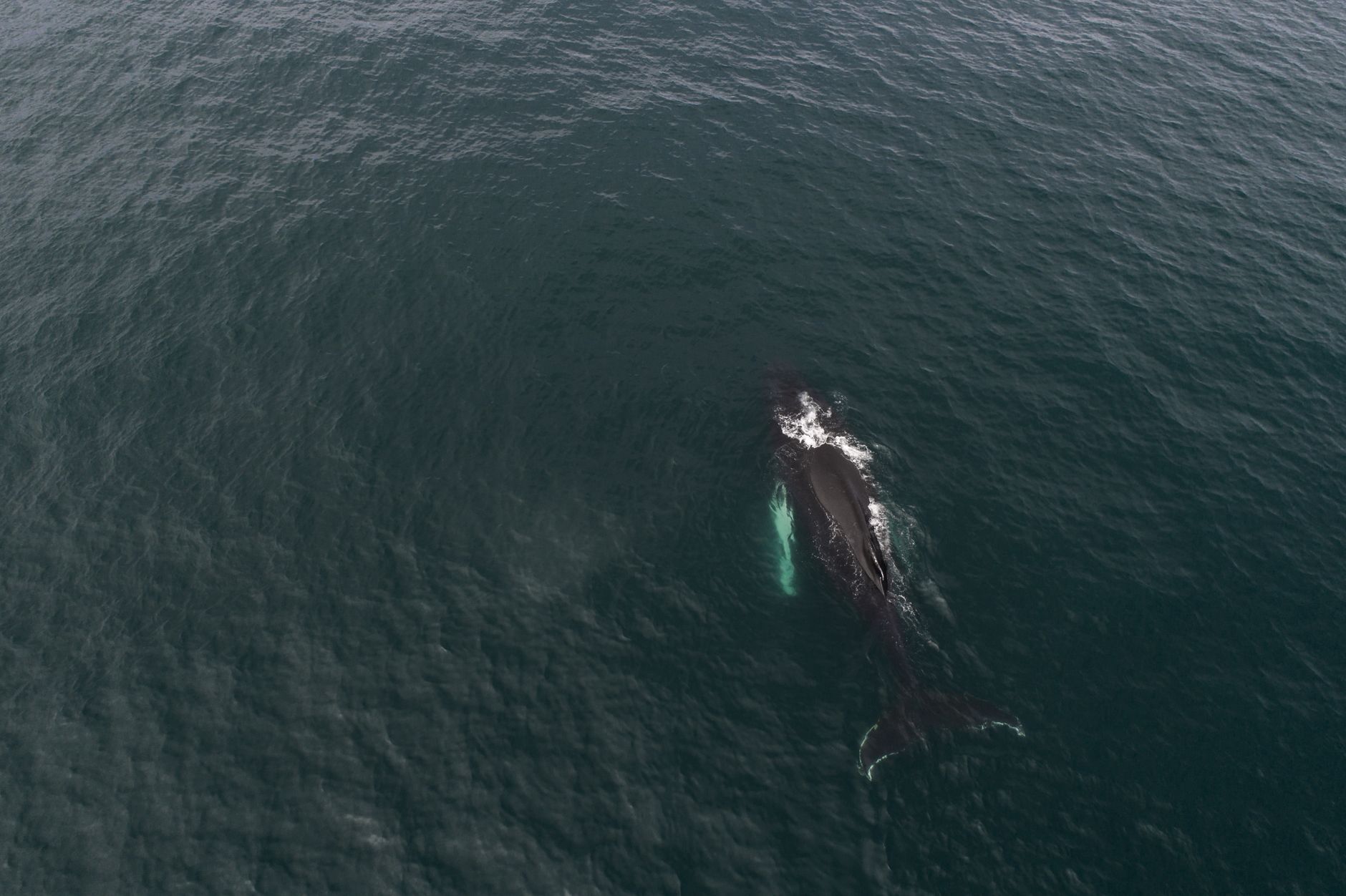
The signature species. Adults reach 12-16 meters and 25-30 tons. Madagascar’s east coast hosts one of the western Indian Ocean’s most important breeding populations. Observation reliable July–September. The most spectacular and accessible marine mammal experience in Madagascar.
Whale sharks (Rhincodon typus)
The world’s largest fish (not a mammal but a marine megafauna highlight). Aggregate in Mitsio archipelago waters October–December as plankton blooms support feeding. Snorkel encounters with these gentle giants are among the world’s best. Reliable observation during the aggregation window.
Spinner dolphins (Stenella longirostris)
Acrobatic dolphins observed year-round throughout Madagascar coastal waters. Known for spinning leaps. Often encountered in large pods during boat trips.
Bottlenose dolphins (Tursiops species)
Larger dolphins observed year-round. Often bow-ride alongside boats. Reliable companions on marine excursions.
Omura’s whales (Balaenoptera omurai)
A rare, recently-described whale species occasionally observed off Madagascar’s northwest coast. Madagascar is one of the few places globally where Omura’s whales are reliably studied. A rare bonus for marine mammal enthusiasts.
Dugongs (Dugong dugon)
Rare and endangered marine mammals occasionally present in western Madagascar seagrass habitats. Genuinely rare observation — not a reliable target but a possibility for dedicated marine mammal travelers.
Responsible Whale Watching — Why It Matters in Madagascar
Madagascar whale watching has a strong responsible-tourism ethos, led by Cétamada’s research-tourism integration. Understanding responsible practices ensures your observation contributes to conservation rather than disturbance.
Observation protocols: Reputable operators maintain minimum distances (typically 100 meters, closer only if whales approach voluntarily), limit boat numbers per whale group, avoid sudden movements, and never pursue or encircle whales. These protocols protect whales — particularly vulnerable mother-calf pairs — from disturbance and stress.
Research integration: Cétamada combines whale watching with photo-identification research, contributing to humpback population science. Choosing research-integrated operators means your trip directly supports conservation knowledge.
Avoiding disruptive operators: Some operators prioritize close encounters over whale welfare. Choose operators with demonstrated responsible practices, ideally research-affiliated. The whale watching experience is better with responsible operators anyway — relaxed whales behave more naturally.
Swimming with whales: Madagascar permits limited responsible swimming with whales through licensed operators under strict protocols. This is genuinely special but must be done responsibly — only through licensed operators following whale-welfare protocols.
Sample Whale Watching Itineraries
5-Day Sainte-Marie Whale Focus
Day 1: Fly Tana → Sainte-Marie, lodge check-in. Days 2-4: Daily whale watching excursions (morning and sometimes afternoon trips), with rest, island exploration, and pirate history between trips. Day 5: Final morning whale trip, fly Sainte-Marie → Tana. Total cost: $2,800-$4,500 per person including flights and accommodation.
8-Day Whale Watching + East Coast
Sainte-Marie whale focus (4 days) combined with east coast mainland experiences (Andasibe rainforest en route, or Antongil bay extension). More comprehensive eastern Madagascar coverage. Total cost: $4,800-$7,500 per person.
12-Day Comprehensive Marine Mammals
Combines Sainte-Marie humpback watching (July-September) with separate timing logistics — though humpbacks (July-Sept) and whale sharks (Oct-Dec) don’t overlap, so comprehensive marine mammal trips require choosing the season focus. Realistically: 12-day east coast whale focus plus broader Madagascar, or separate trips for humpbacks and whale sharks. Total cost: $7,500-$14,000 per person.
10-Day Whale Watching + Luxury Recovery
Sainte-Marie whale focus (4-5 days) plus luxury lodge recovery (Anjajavy or Princesse Bora on Sainte-Marie itself). Combines active whale watching with relaxation. Total cost: $6,500-$12,000 per person.
What Whale Watching Yields That Other Madagascar Travel Doesn’t
- Humpback whale encounters: Close observation of breaching, mother-calf pairs, competitive groups — genuinely awe-inspiring marine megafauna experiences
- Whale song: Audible humpback song via hydrophone — an experience few destinations offer
- Research participation: Cétamada photo-ID contribution means your observation supports conservation science
- Festival of the Whales: July cultural celebration combining whale watching with Malagasy culture
- Marine megafauna diversity: Whales, whale sharks, dolphins across the broader marine mammal portfolio
- Photography: Breaching whales, tail flukes, mother-calf pairs — dramatic marine wildlife photography
- Pirate history + whales: Sainte-Marie’s unique combination of pirate heritage and whale watching
Specialist Operators — Who to Use
Cétamada (Sainte-Marie research/eco specialist)
The leading responsible whale watching organization in Madagascar. Combines research (photo-ID, population studies) with eco-tourism. Sets the global standard for responsible observation protocols. Best choice for travelers prioritizing responsible, research-integrated whale watching. Their hydrophone-equipped boats allow whale song listening.
Les Baleines Rand’eau
Sainte-Marie whale watching operator with responsible practices. Good alternative for Sainte-Marie-based whale watching.
Madagascar marine specialists (various)
Several operators coordinate Sainte-Marie whale watching as part of broader Madagascar marine programs. Quality varies — prioritize responsible-practice operators.
Carla / Voyagiste Madagascar (bespoke coordination)
Madagascar-resident specialist for bespoke whale watching coordination. Contact Carla directly for custom whale watching programs combining responsible operators with broader Madagascar travel.
Combining Whale Watching With Other Madagascar Experiences
Whale watching + rainforest: Sainte-Marie or Antongil whale watching combines with eastern rainforest (Andasibe en route, or Masoala via Antongil). Whales plus lemurs plus rainforest birds creates comprehensive eastern Madagascar nature trip.
Whale watching + luxury beach: Sainte-Marie itself has luxury lodges (Princesse Bora). Whale watching by day, beach luxury by evening.
Whale watching + culture: Sainte-Marie’s pirate history and Festival of the Whales (July) add cultural dimensions to whale watching.
Whale watching + diving: Sainte-Marie offers diving alongside whale watching. The marine focus combines naturally.
Practical Planning Considerations
Timing is everything
Humpback whale watching is strictly seasonal (July–September peak). Visiting outside this window means no humpback observation. This is the single most important planning factor — confirm dates align with the season.
Sea conditions and seasickness
Whale watching involves boat trips in open coastal waters that can be choppy. Travelers prone to seasickness should bring medication. The Sainte-Marie channel is relatively protected but can still produce motion.
Weather and flight reliability
July–September is dry season with generally good conditions, but flight connections to Sainte-Marie can face weather-related disruptions. Build buffer time. AirAdvisor EU261 protection applies on European inbound flights.
Booking ahead for peak season
July–August peak season accommodation and whale watching tours book up months ahead. Sainte-Marie has limited accommodation. Book 4-8 months ahead for peak season.
Common Whale Watching Mistakes
Mistake 1: Wrong timing. Visiting outside July–September means no humpbacks. Confirm season alignment.
Mistake 2: Choosing irresponsible operators. Operators prioritizing close encounters over whale welfare deliver worse experiences and harm whales. Choose responsible, research-integrated operators (Cétamada).
Mistake 3: Insufficient time. Single-day whale watching may encounter poor weather or quiet whale activity. Allocate 3-4 days for reliable quality observation.
Mistake 4: Underestimating logistics. Sainte-Marie access requires flights that can face disruptions. Build buffer time.
Mistake 5: Inadequate insurance. SafetyWing comprehensive coverage essential for marine activity.
Real Madagascar Whale Watching Stories
The Bucket-List Whale Encounter
UK couple in their 50s, marine wildlife enthusiasts. 5-day Sainte-Marie whale focus. August 2026. Outcome: multiple humpback encounters including a breaching mother-calf pair and audible whale song via hydrophone. Reported “the whale song through the hydrophone was the most moving wildlife experience of our lives.”
The Research-Tourism Participant
US solo traveler, conservation-minded, chose Cétamada specifically for research integration. August 2026. Outcome: contributed whale photo-IDs to the research database while observing humpbacks over 4 days. Reported “knowing my whale watching directly supported humpback research made the experience meaningful beyond just observation.”
The Combined Nature Trip
Australian couple, late 40s, comprehensive eastern Madagascar trip. Combined Sainte-Marie whales (4 days) with Andasibe rainforest (4 days). September 2026. Outcome: humpback whales plus indri lemurs plus rainforest birds. Reported “whales and lemurs in one trip — eastern Madagascar delivered an extraordinary nature combination.”
What a Whale Watching Excursion Actually Involves
For travelers unfamiliar with whale watching, understanding the typical excursion structure helps set expectations.
Pre-departure briefing
Quality operators begin with a briefing covering whale biology, observation protocols (distances, behavior), safety procedures, and what to expect. Cétamada and similar research-integrated operators include educational content about humpback ecology and the research your observation supports.
The boat trip out
Excursions typically depart morning (calmer seas, often better whale activity). Boats range from small inflatables to larger catamarans depending on operator. The journey to whale areas takes 20-60 minutes depending on whale locations that day. Guides scan for blows (the visible spout when whales surface to breathe), surface activity, and other indicators.
The whale encounter
Once whales are located, the boat approaches to observation distance (respecting minimum-distance protocols) and engines are often cut or idled to minimize disturbance. Observation can last from minutes to over an hour depending on whale behavior. Mother-calf pairs, competitive groups, and surface-active individuals provide different observation experiences. Hydrophone-equipped boats lower the device to listen for whale song.
Duration and what to bring
Typical excursions last 2-4 hours total. Bring sun protection, water, camera with telephoto lens, seasickness medication if prone, and warm layers (mornings can be cool on the water). Waterproof protection for cameras essential given sea spray.
Multiple trips for reliability
While peak-season sightings are highly reliable, individual excursions vary based on weather and whale activity. Serious whale watchers book multiple excursions across 3-4 days to ensure quality encounters and diverse behaviors. A single trip might be excellent or merely good; multiple trips guarantee memorable observation.
Île Sainte-Marie Beyond Whales
Sainte-Marie offers more than whale watching, making it a rewarding multi-day destination.
Pirate history: Sainte-Marie was a major 17th-18th century pirate stronghold. The island hosts a pirate cemetery (Cimetière des Pirates) with graves of historical pirates. The combination of pirate heritage and whale watching is genuinely unique.
Île aux Nattes: A small island off Sainte-Marie’s southern tip with pristine beaches, accessible by short boat crossing. Idyllic tropical beach experience.
Beaches and tropical scenery: Sainte-Marie offers beautiful beaches, palm-fringed coastline, and laid-back tropical atmosphere. The island’s natural beauty complements whale watching.
Diving and snorkeling: Sainte-Marie offers reef diving and snorkeling alongside whale watching. The marine focus extends beyond whales.
Luxury accommodation: Princesse Bora Lodge & Spa is Sainte-Marie’s premier luxury property, combining beach luxury with whale watching access. Several mid-tier options also available.
Cultural experiences: Sainte-Marie’s Malagasy culture, the Festival of the Whales (July), and traditional village life add cultural dimensions.
Photography Guide for Madagascar Whale Watching
Whale photography is challenging but rewarding. Strategic preparation maximizes results.
Equipment: Telephoto lens (200-400mm) ideal for whale photography from boats. Image stabilization helpful given boat movement. Fast shutter speeds (1/1000+) freeze breaching action. Weather-sealed camera bodies preferred given sea spray. Bring lens cloths for spray.
The defining shots: Breaching whales (the iconic shot, requiring anticipation and fast reaction), tail flukes raised before deep dives, mother-calf pairs surfacing together, pectoral fin slaps, and competitive group surface activity.
Techniques: Anticipate behavior — whales often show patterns before breaching. Keep camera ready continuously. Shoot in burst mode for action. Account for boat movement. Accept high failure rate — successful breach shots require many attempts.
Beyond stills: Video captures whale behavior and song effectively. Underwater cameras (where swimming with whales is permitted) capture unique perspectives. Drone photography is restricted near whales — check regulations.
Conservation Context for Madagascar Whale Watching
Madagascar whale watching intersects directly with conservation, particularly through Cétamada’s research-tourism model.
Humpback recovery: Humpback whales were heavily hunted historically, with populations devastated by 20th-century whaling. Post-whaling-ban recovery has been substantial but ongoing. Madagascar’s breeding population is globally significant for the species’ continued recovery.
Research contribution: Cétamada and research organizations conduct photo-identification (each humpback’s tail fluke is unique, like a fingerprint), population monitoring, and behavioral studies. Tourist observation contributes data and funds this research. Choosing research-integrated operators directly supports humpback science.
Responsible tourism economics: Whale watching provides economic incentive for whale conservation. When local communities benefit economically from living whales (tourism), the incentive structure favors protection over exploitation. Your whale watching trip strengthens this conservation economy.
Threats: Humpbacks face threats including ship strikes, fishing gear entanglement, and climate change affecting Antarctic feeding grounds. Responsible whale watching tourism supports the conservation efforts addressing these threats.
How to maximize conservation contribution: Choose Cétamada or research-integrated operators, follow observation protocols, support whale conservation organizations, and share your experience to raise awareness of Madagascar’s globally significant humpback population.
Month-by-Month Whale Watching Calendar
Precise timing dramatically affects whale watching outcomes. This month-by-month guide helps optimize trip dates.
January–May: No humpback whales (they’re in Antarctic feeding waters). Dolphins observable year-round. Not whale watching season. Madagascar’s rainy season (Jan–March) also affects east coast travel.
June: First humpback arrivals from late June. Numbers building. Early-season travelers see fewer whales but enjoy lower prices and crowds. Some operators not yet fully operational.
July (peak begins): Strong whale numbers. Festival of the Whales celebration. Competitive male behavior, breaching, early mother-calf pairs. Excellent observation. Peak season pricing and crowds begin.
August (peak): Maximum whale numbers and activity. Mother-calf pairs abundant, dramatic surface behavior, reliable whale song. The single best month for Madagascar humpback watching. Book well ahead.
September (peak continues): Continued excellent observation. Calves now larger and more active. Mothers teaching calves. Strong observation with slightly declining peak crowds toward month-end.
October: Declining humpback numbers as migration south begins. Final whale watching opportunities. Meanwhile, whale sharks begin aggregating in the Nosy Be/Mitsio region (northwest) — a different marine megafauna season starting.
November–December: No humpbacks. Whale sharks peak in Nosy Be region (Oct–Dec). For whale shark focus, this is the season. Different region (northwest) and species than humpback watching.
The two-season reality
Madagascar marine megafauna has two distinct seasons in two different regions: humpback whales on the east coast (Sainte-Marie) July–September, and whale sharks in the northwest (Nosy Be/Mitsio) October–December. These don’t overlap, so a single trip focuses on one or the other. Travelers wanting both must make separate trips or accept that one season’s species will be the focus.
Accommodation Options for Whale Watching
Sainte-Marie luxury — Princesse Bora Lodge & Spa
Sainte-Marie’s premier luxury property. Beach villas, spa, fine dining, and whale watching access. The luxury whale watching base. Rates $300-$600+ per night during peak season. Combines whale watching with beach luxury.
Sainte-Marie mid-tier lodges
Several comfortable mid-tier lodges along Sainte-Marie’s coast. Rates $120-$280 per night. Comfortable bases for whale watching focus without luxury premium. Book early for peak season.
Sainte-Marie budget options
Basic guesthouses and budget accommodation for cost-conscious whale watchers. Rates $40-$100 per night. Functional bases prioritizing whale watching over accommodation luxury.
Antongil/Maroantsetra accommodation
More basic accommodation near Baie d’Antongil. Suits travelers combining whale watching with Masoala rainforest. Less developed than Sainte-Marie.
Accommodation booking strategy
Peak season (July–August) accommodation books up months ahead given Sainte-Marie’s limited capacity. Book 4-8 months ahead for peak season, particularly for Princesse Bora and quality mid-tier options. Last-minute peak-season booking is difficult.
Whale Watching for Different Traveler Types
Different travelers approach Madagascar whale watching differently.
Marine wildlife enthusiasts: Prioritize multiple excursions, research-integrated operators (Cétamada), and extended observation. The species and behaviors are the focus. Allocate 4-5 days minimum for comprehensive observation.
Photographers: Need extended time, multiple excursions, and ideally smaller boats for positioning. Telephoto equipment essential. Premium operators accommodating photography priorities worth the cost.
Families: Whale watching engages children effectively. Consider seasickness for younger children. Sainte-Marie’s beaches and pirate history add family appeal beyond whales.
Couples/honeymooners: Sainte-Marie combines whale watching with beach luxury (Princesse Bora) for romantic whale-and-beach trips. The Île aux Nattes day trip adds romance.
Conservation-minded travelers: Cétamada’s research-tourism integration appeals strongly. Knowing observation supports humpback science adds meaning.
Combined-nature travelers: Pair whale watching with eastern rainforest (Andasibe, Masoala) for whales-plus-lemurs-plus-birds comprehensive nature trips.
The Science Behind Madagascar’s Humpback Population
Understanding the scientific context enriches the whale watching experience and clarifies Madagascar’s global significance.
The breeding ground role: Madagascar’s east coast waters serve as a critical breeding and calving ground for the southwestern Indian Ocean humpback population (designated “Breeding Stock C” by the International Whaling Commission). Whales from this population feed in Antarctic waters and migrate to Madagascar, Mozambique, and surrounding waters to breed. Madagascar’s role is globally significant for this population’s reproduction.
Photo-identification science: Each humpback whale’s tail fluke has a unique pattern of markings, scars, and pigmentation — like a human fingerprint. Researchers (including Cétamada) photograph flukes to identify individual whales, track their movements across years, estimate population size, and study behavior. When you photograph a whale’s fluke, you may be contributing to this research database. Some whales identified off Madagascar have been re-sighted in Antarctic feeding grounds and other Indian Ocean locations, revealing migration patterns.
Whale song research: Male humpbacks sing complex, evolving songs during the breeding season. All males in a population sing similar songs that change over time, with new song variations spreading through populations. Madagascar researchers study these songs, contributing to understanding of humpback communication and culture. Hearing whale song via hydrophone connects you directly to this fascinating research area.
Population recovery monitoring: The southwestern Indian Ocean humpback population was severely depleted by historical whaling. Ongoing research monitors the population’s recovery. Madagascar whale watching tourism, by funding and contributing to research, directly supports this recovery monitoring — making your trip part of the conservation success story.
What researchers have learned: Decades of Madagascar humpback research have revealed migration timing, breeding behavior, population trends, song evolution, and individual whale life histories. This accumulated knowledge informs conservation policy and demonstrates the value of research-integrated tourism.
East Coast Logistics and Access
Reaching Madagascar’s whale watching regions requires understanding the east coast logistics.
Getting to Île Sainte-Marie
Most travelers fly from Antananarivo (Tana) to Sainte-Marie (Nosy Boraha) airport — approximately 1 hour flight. Tsaradia operates this route. Flights can face weather-related disruptions, so build buffer time. Alternative: drive to Soanierana-Ivongo (8+ hours from Tana) then ferry to Sainte-Marie (1-1.5 hours) — longer and weather-dependent, but an option if flights are unavailable.
Getting to Baie d’Antongil
Access via Maroantsetra, reached by Tsaradia flight from Tana or via challenging road journeys. Maroantsetra also serves as the gateway to Masoala National Park, making whale-watching-plus-rainforest combinations logical.
Tana buffer recommendation
Given internal flight disruption risk, plan a Tana buffer night before and after the whale watching segment. International arrivals connect through Tana, and the buffer protects against flight delays affecting the whale watching dates.
Internal flight booking
Book Tsaradia internal flights well ahead for peak season (July–September). These flights fill up, and last-minute availability is limited. Specialist operators handle flight coordination as part of packages.
Combining logistics
Whale watching combines logistically with: Andasibe rainforest (en route from Tana, before flying to Sainte-Marie), Masoala (via Antongil/Maroantsetra), or luxury recovery elsewhere. The east coast focus means western Madagascar (Tsingy, Nosy Be) requires separate logistics due to distance.
How Madagascar Compares to Other Whale Watching Destinations
Madagascar occupies a distinctive position among global humpback whale destinations.
Versus Hermanus (South Africa): Hermanus offers land-based whale watching (southern right whales primarily) with developed infrastructure. Madagascar offers boat-based humpback watching with research integration and tropical setting. Madagascar’s mother-calf concentration and whale song access distinguish it.
Versus Tonga: Tonga is famous for swimming with humpbacks. Madagascar offers limited responsible swimming plus the broader research-tourism model and Madagascar’s unique biodiversity context (combine with lemurs). Both are world-class humpback destinations with different emphases.
Versus Hawaii: Hawaii offers accessible humpback watching with developed infrastructure. Madagascar offers more distinctive context (research integration, pirate history, lemur combinations) and genuinely uncrowded observation versus Hawaii’s higher traffic.
Madagascar’s distinctive position: The combination of world-class humpback breeding-ground observation, research-tourism integration (Cétamada), audible whale song, the broader Madagascar biodiversity context (whales plus lemurs plus endemic birds), and genuinely distinctive cultural setting (Sainte-Marie pirate history, Festival of the Whales) makes Madagascar unique among whale watching destinations. For travelers wanting whale watching embedded in a genuinely distinctive destination rather than a standalone whale watching trip, Madagascar excels.
That said, Madagascar’s whale watching infrastructure is less developed than Hawaii or Hermanus, and access is more complex. Travelers prioritizing convenience and developed infrastructure may prefer those alternatives; travelers prioritizing distinctiveness, research integration, and a genuinely unique destination context choose Madagascar. The choice reflects what each traveler values most in a whale watching experience — convenience versus distinctiveness. For many travelers, the distinctive character of the Madagascar experience — audible whale song, research integration, and lemurs nearby — fully justifies the additional logistical complexity it requires.
Frequently Asked Questions
When is the best time for whale watching in Madagascar?
July–September for humpback whales (peak July–August). October–December for whale sharks (Nosy Be region). Dolphins year-round. Humpback timing is strict — outside July–September means no humpbacks.
Where is the best whale watching?
Île Sainte-Marie is the world-class humpback destination. Baie d’Antongil offers calving observation. Both on the east coast.
Can I swim with whales?
Limited responsible swimming with whales is permitted through licensed operators under strict protocols. Must be done responsibly through licensed operators only.
How reliable are whale sightings?
During peak season (July–August) at Sainte-Marie, sightings are highly reliable — thousands of whales present. Single-day trips occasionally encounter quiet conditions, so 3-4 days ensures quality observation.
Is it suitable for children?
Yes — whale watching is family-friendly. Children enjoy whale encounters. Consider seasickness for younger children on boat trips.
What about photography?
Telephoto lens (200-400mm) ideal for whale photography. Fast shutter speeds for breaching. Waterproof protection essential. Dramatic photography opportunities throughout peak season.
How safe is whale watching?
Safe with responsible operators. SafetyWing comprehensive insurance recommended for marine activity coverage.
🌴 Plan Your Madagascar Whale Watching Trip With Carla
Madagascar whale watching benefits from specialist coordination — responsible operator selection, season timing, Sainte-Marie logistics. Reach out to Carla, our Madagascar-resident specialist. She’ll match your whale watching goals and Madagascar travel preferences to the right responsible operator and program.
Related Madagascar whale watching reading:
- Whale Season Madagascar July–September Planning Guide 2026
- Best Madagascar Sailing & Yacht Charter 2026
- Madagascar Luxury Itinerary 2026
Plan Your Trip to Madagascar
- Read the full Madagascar Travel Guide
- Explore itineraries by style and duration
- Best Tours and Guided Experiences
Where to Stay