Driving in Madagascar: Your Complete Road Trip Guide for Self-Drive Adventures
Affiliate disclosure: This article contains sponsored links to hotels, tour operators, insurance providers, and other travel services. We earn a small commission if you book through our links, at no extra cost to you.
At a Glance — Driving in Madagascar
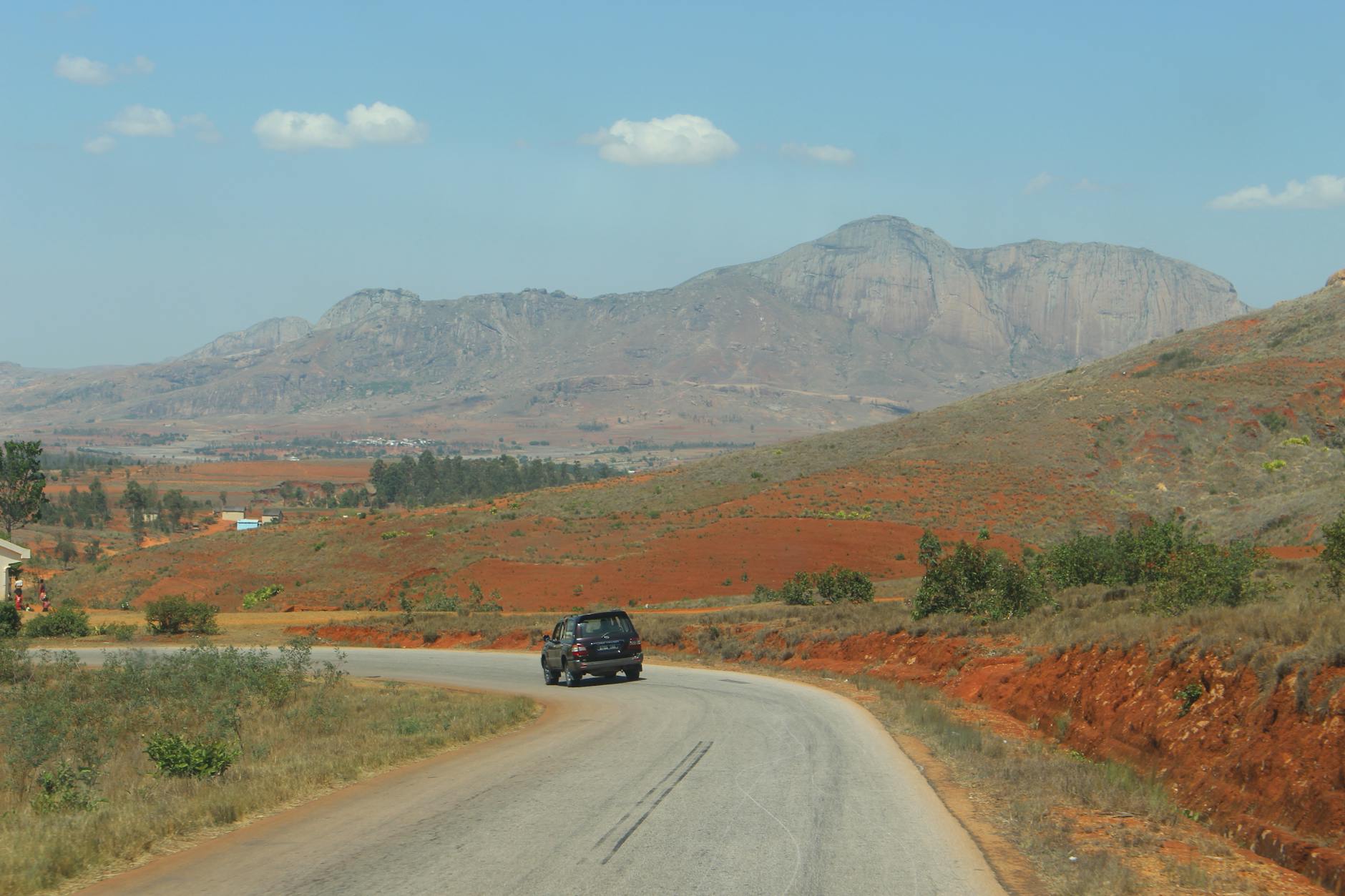
Yes, you can self-drive in Madagascar — but very few travellers do, and for good reason. Roads range from smooth sealed Route Nationale sections to badly potholed and unpaved tracks, signage is thin, navigation apps are unreliable, breakdowns are common, and most business happens in French or Malagasy. Madagascar drives on the right. For the vast majority of visitors, the smart, safe and often cheaper-than-you-think choice is to hire a car with a local driver. Here is how to decide, and how to plan realistic distances and costs.
- Book a car & driver (recommended): Arrange a private car and driver for Madagascar (Carla)
- Talk to us directly: Get help planning a driver-guided route
- Where to stay in the capital: Check Antananarivo hotels on Agoda
- Book tours & day trips: Browse Madagascar experiences on GetYourGuide
- Travel insurance: Cover your trip with SafetyWing
🎒 Madagascar Trip Essentials
A few inexpensive items make the biggest difference on the ground in Madagascar:
- Picaridin insect repellent — DEET-free protection against malaria mosquitoes. See on Amazon →
- Permethrin clothing spray — treat clothes; kills mosquitoes on contact for weeks. See on Amazon →
- Pop-up mosquito net — budget lodges rarely provide one; packs down tiny. See on Amazon →
- Water filter bottle — tap water isn’t safe to drink in Madagascar. See on Amazon →
- Universal travel adapter (USB-C) — Madagascar uses European-style plugs. See on Amazon →
- 8×42 binoculars — essential for spotting lemurs and chameleons in the canopy. See on Amazon →
As an Amazon Associate we earn from qualifying purchases.
Madagascar is one of the great overland destinations on earth — a giant island of baobab avenues, spiny forests, highland rice terraces and rutted red-earth roads that lead to lemur parks few tourists ever reach. Getting between those places, though, is the single biggest logistical question of any Madagascar trip. Do you rent a car and drive yourself, or do you hire a car with a driver? This guide answers that honestly, then walks through licences, vehicle types, fuel, hazards, the rules of the road, insurance, realistic costs and how far you can actually travel in a day.
Short version: driving here is genuinely rewarding but genuinely hard, and the balance of risk and reward pushes most independent travellers toward a driver rather than a rental steering wheel. Read on for why, and for the situations where self-driving still makes sense.
Can You Self-Drive in Madagascar?
Yes — self-driving is legal and possible, and a small number of confident, experienced overlanders do it every year. There is no rule stopping a foreign visitor with the right paperwork from renting a vehicle and driving it. But it is uncommon, and it is more challenging than self-driving almost anywhere in Southern or East Africa you may have tried before.
The difficulties stack up quickly. Road quality is wildly inconsistent, so a route that looks like a three-hour hop on the map can take most of a day. Navigation is unreliable because signage is sparse and mapping apps frequently mislabel roads or show tracks that are seasonally impassable. Breakdowns and punctures are a real risk on rough surfaces, and roadside help is not always close by. Most everyday interactions — buying fuel, asking directions, dealing with a police checkpoint — happen in French or Malagasy rather than English. Add night-driving dangers, free-roaming livestock and unpredictable local driving styles, and self-driving becomes a demanding full-time job on top of your holiday.
None of this makes it impossible. It just means the honest recommendation for a first-time visitor, a family, or anyone who wants to relax and watch the scenery is different — and that brings us to the norm.
Why Most Travellers Choose a Car & Driver
Across Madagascar, hiring a vehicle with a driver is the standard way independent and small-group travellers get around. It is so normal that many local operators quote trips this way by default. There are several strong reasons for this.
- Roads and navigation: a driver who knows the routes reads conditions you cannot — which pothole to swerve, where a “shortcut” turns to mud, which section is worth slowing for. They rarely need a map app at all.
- Breakdowns: experienced Madagascar drivers can handle a puncture, a stuck vehicle or a minor mechanical problem far better than a visitor, and they know who to call and where the nearest help is.
- Language: your driver handles fuel stops, directions, checkpoints and small negotiations in French or Malagasy, removing the single biggest friction of self-driving.
- Checkpoints: police and gendarmerie checkpoints are routine. A local driver knows the etiquette and keeps things calm and quick.
- Fatigue and safety: long days on rough roads are exhausting. With a driver, you arrive rested and you are far less likely to be behind the wheel on a bad surface at dusk.
- Local knowledge: many drivers double as informal guides, suggesting stops, food and lodges you would never find alone.
Crucially, a car and driver is often not dramatically more expensive than an equivalent 4×4 rental once you factor in insurance, fuel and the value of your own time and stress. For most people it is the better deal as well as the safer one. You can arrange a car and driver here, or contact us for help matching a driver to your route.
Licences and the International Driving Permit
If you do decide to self-drive, carry both your valid home-country driving licence and an International Driving Permit (IDP). An IDP is an inexpensive translation booklet you obtain from an automobile association in your own country before you travel — it cannot be issued once you have arrived. Rental companies typically expect to see it, and it makes checkpoint interactions smoother.
Rules and enforcement can vary, so verify the current requirement with your rental company and, if in doubt, your embassy before departure. When you hire a car with a driver, none of this applies to you — the driver holds the appropriate local licence and takes responsibility for the vehicle.
Car Hire Types and Whether You Need a 4×4
Rental options in Madagascar broadly fall into a few categories: compact cars and sedans suited only to good sealed roads around the capital and highlands; higher-clearance SUVs; and full 4×4 vehicles built for rough tracks. There are also minibuses and larger vehicles for groups, almost always supplied with a driver.
Whether you need a 4×4 depends entirely on where you are going. Many of Madagascar’s most rewarding destinations — remote parks, western baobab country, the deep south — are reached on unpaved or degraded roads where a standard car simply cannot cope. In the wet season, even routes that are passable when dry can require four-wheel drive, and some become impossible altogether. As a rule of thumb, if your itinerary strays off the main sealed Route Nationale corridors or falls in the rains, plan for a 4×4. When in doubt, ask a local operator to confirm what the specific roads on your route demand at the time you are travelling.
Fuel and Availability
Fuel (petrol and diesel) is reliably available in and around larger towns and along the busier Route Nationale corridors. In remote regions, stations thin out fast, and you should treat a full tank as something to top up whenever you reasonably can rather than when you are running low. Carrying extra fuel in an approved container is a sensible precaution on long, isolated legs — ask your operator or driver whether it is advisable for your route.
Prices vary and change over time, so we won’t quote a figure that will quickly be wrong — check the current pump price locally. The practical planning point is availability, not cost: it is the gap between stations, not the price per litre, that catches self-drivers out.
Driving Conditions and Hazards
Understanding the hazards is the most important part of planning any Madagascar road trip, whether you drive or not.
Road surfaces and potholes
The sealed Route Nationale network can be pleasant in stretches, but even “good” roads develop severe potholes, broken edges and unexpected rough patches. Unpaved sections range from graded gravel to deeply rutted tracks. Average speeds are far lower than the distances suggest.
Night driving — avoid it
The single most important safety rule is simple: do not drive at night. Roads are unlit, hazards are unmarked, livestock and pedestrians appear without warning, and visibility is poor. Plan every leg to arrive before dark, with a buffer for delays.
Livestock and pedestrians
Zebu cattle, other livestock, cyclists and pedestrians share the road, especially near villages and markets. People walk on the carriageway because there is nowhere else to walk. Slow right down through built-up areas and expect the unexpected.
Weather and season
The rainy season (roughly November to April) brings flooding, mud, landslides and washed-out bridges that can close routes entirely. The drier months (broadly May to October) offer far better road conditions and are the sensible window for overland travel.
Other traffic
Local driving styles can feel unpredictable, overtaking can be assertive, and heavily loaded taxis-brousses and trucks share narrow roads. Defensive, patient driving is essential.
Rules of the Road
Madagascar drives on the right-hand side of the road, with the steering wheel on the left of the vehicle. Seatbelts, sensible speeds and sobriety behind the wheel are expected as anywhere. Police and gendarmerie checkpoints are a normal, frequent feature of overland travel; keep your documents accessible, stay polite and patient, and — again — let a local driver handle these if you can, because they know the routine. Because average speeds are so low, do not rely on posted or mapped travel times; build in generous margins.
Insurance
Two separate kinds of insurance matter here. First, vehicle insurance: if you rent and self-drive, confirm exactly what the rental policy covers — third-party liability at minimum, and ideally comprehensive cover, plus any excess and any surcharge for gravel or unpaved roads. Read the exclusions before you sign. With a car and driver, the vehicle cover is the operator’s responsibility, which is one more reason travellers favour that option.
Second, and non-negotiable for everyone, is personal travel and medical insurance. Madagascar is remote, medical facilities are limited outside the capital, and a serious problem can require costly evacuation. Make sure your policy covers the activities and regions on your itinerary. We use and recommend SafetyWing travel medical insurance, which is straightforward to buy online for a Madagascar trip. Do not travel without cover of some kind.
Costs to Expect
Be wary of any guide that quotes precise daily rates, because prices vary widely by vehicle type, season, route, distance and operator, and they change over time. What we can give you is the shape of the budget rather than exact figures.
- A car with driver is typically priced per day and usually bundles the vehicle, the driver’s time and often their meals and lodging on the road. Fuel may or may not be included — confirm.
- A self-drive rental is priced per day for the vehicle, plus fuel, plus insurance and any excess, plus possible surcharges for rough-road use. The headline rental rate is only part of the true cost.
- 4×4 vehicles cost more than compact cars in both models.
When you compare properly — adding fuel, insurance and your own time to a self-drive quote — a car and driver is frequently competitive or even cheaper. Always get a written, itemised quote so you know what is and is not included. For a tailored estimate, get in touch with us or request a car-and-driver quote through Carla.
Planning Realistic Daily Distances
The most common mistake first-time visitors make is underestimating how long journeys take. Because average speeds on Madagascar’s roads are low — often far below what you would expect elsewhere — a distance that looks modest on a map can eat an entire day. Plan short, honest daily hops rather than ambitious marathons, always aim to arrive before dark, and build in a buffer for punctures, checkpoints, livestock, weather and photo stops. It is nearly always better to see less and enjoy it than to spend your holiday exhausted behind (or beside) the wheel. A good driver will help you set a sane pace.
Regional Notes
Conditions differ sharply by region. The central highlands around Antananarivo and Antsirabe have some of the country’s better sealed roads. The classic southern RN7 corridor is one of the most popular and manageable overland routes, though still slow. Western routes toward the baobabs and remote parks, and much of the deep south and far north, involve long unpaved sections and often demand a 4×4 — especially outside the dry season. Some destinations are so remote by road that flying part of the way is the sensible option. Research your specific route carefully, and lean on local knowledge: what was fine last dry season may be washed out this year.
Getting There and Getting Around — Read Next
For the full picture of moving around the island, these companion guides go deeper on the roads and the alternatives to driving yourself:
- Road conditions in Madagascar explained — what every traveller must know
- Public transport in Madagascar — your complete practical guide
- Taxi-brousse in Madagascar — the complete guide to travelling like a local
- The best Madagascar road trips — overland routes for 2026
- RN7 road trip — the complete guide for 2026
If your itinerary includes any flights to reach remote regions, remember that delays and cancellations are possible. Flights to Madagascar often connect through Paris or Nairobi, and EU regulation EC 261 may entitle you to compensation. Check a delayed or cancelled flight claim free on AirAdvisor. And whatever you decide about the wheel, do not skip travel medical insurance with SafetyWing.
Frequently Asked Questions
Can foreign tourists legally self-drive in Madagascar?
Yes. Self-driving is legal for foreign visitors who hold a valid home-country licence and, typically, an International Driving Permit obtained before arrival. It is legal but uncommon — most travellers hire a car with a driver because the roads, navigation, language and breakdown risks make self-driving demanding.
Which side of the road does Madagascar drive on?
Madagascar drives on the right, with left-hand-drive vehicles, the same as continental Europe and the United States.
Do I need a 4×4 in Madagascar?
Often, yes. Many rewarding destinations are reached on unpaved or degraded roads where an ordinary car cannot cope, and in the rainy season four-wheel drive is frequently essential. If you stick to the main sealed corridors in the dry season you may manage with a higher-clearance car, but confirm the requirement for your specific route.
Is it cheaper to self-drive or hire a car with a driver?
Once you add fuel, insurance, any rough-road surcharge and the value of your own time and stress, a car with a driver is frequently competitive with — and sometimes cheaper than — an equivalent 4×4 rental. Get an itemised written quote for each option and compare like with like. Prices vary by season, route and operator.
Is it safe to drive at night in Madagascar?
No — avoid it. Roads are unlit, hazards are unmarked, and livestock and pedestrians appear without warning. Plan every leg to arrive before dark, and never rely on mapped travel times, which underestimate how slow the roads really are.
The Easy, Safe Way to Get Around Madagascar
Skip the stress of unfamiliar roads, checkpoints and breakdowns. Travel with a local driver who knows the routes, handles the logistics and lets you actually enjoy the scenery.