Hidden Wildlife Parks in Madagascar: Lesser-Known Reserves Worth Visiting
This post contains affiliate links. We may earn a small commission at no extra cost to you.
At a Glance
- Where to stay: Check hotel availability on Agoda — Madagascar
- Book tours: Browse Madagascar tours on GetYourGuide
Beyond the famous parks of Ranomafana, Isalo, and Nosy Be, Madagascar has dozens of lesser-known reserves that offer exceptional wildlife with minimal tourist pressure. This guide covers the best under-visited protected areas — the access logistics, wildlife highlights, and the reasons they remain overlooked despite what they offer.
Recommended Gear for Your Madagascar Wildlife Trip
You’re Flying 10,000km to See Lemurs, Chameleons, and Fossa — Don’t Document It With a Phone Camera
Indri lemurs calling across the canopy of Andasibe. Panther chameleons in electric blue and orange. The fossa spotted on a night walk in Kirindy. A smartphone sensor in low rainforest light produces grainy, blurred images. The Sony a6400 with Real-Time Eye Autofocus locks onto animal eyes instantly — even through undergrowth and low light. APS-C sensor, 4K video, flip-up touchscreen.
Check current price and availability on Amazon →
Madagascar Has Over 100 Species of Lemur and 280 Species of Bird — You’ll Miss Most of Them Without Binoculars
Sifaka lemurs leap between canopy trees 30 metres up. The Madagascar fish eagle perches on a branch 200 metres across a lake. Without binoculars, you’re looking at distant shapes and taking your guide’s word for it. The Vortex Diamondback HD 10×42 delivers HD optical clarity with edge-to-edge sharpness. Waterproof, fog-proof, backed by Vortex’s unconditional lifetime warranty.
Check current price and availability on Amazon →
Madagascar Goes Completely Dark After Sunset — Don’t Navigate It Blind
Outside of Antananarivo’s main streets, Madagascar has virtually no street lighting. Wildlife walks in Ankarana, night lemur spotting in Ranomafana, the path to your bungalow — all navigated in total darkness. The Black Diamond Spot 400-R delivers 400 lumens with a 100-metre beam, USB-C rechargeable, IPX8 waterproof, with red night-vision mode for wildlife observation without disturbing animals.
Check current price and availability on Amazon →
Madagascar Has Some of the Highest Malaria Risk in the World
The rainforests of Andasibe, the wetlands of Morondava, the rice paddies outside every village — mosquitoes are relentless and bite at dusk and dawn. DEET burns skin and destroys gear. Natrapel 20% Picaridin is the CDC-recommended alternative that repels mosquitoes, ticks, and sandflies for up to 12 hours without damaging your equipment.
Check current price and availability on Amazon →
No Grid, No Problem — Charge Your Devices From the Sun in Madagascar’s Remote Parks
Marojejy. Andringitra. Tsingy de Bemaraha. Madagascar’s most spectacular parks are its most isolated — no power outlets, no phone signal. A 3-day wilderness circuit means running on whatever charge you left camp with. The BLAVOR Solar Power Bank pairs 10,000mAh with a fold-out solar panel that recharges itself from sunlight as you trek.
Check current price and availability on Amazon →
Plan your Madagascar trip:
Marojejy National Park — Madagascar’s Most Remote Wilderness
Marojejy in the far northeast is arguably Madagascar’s most spectacular and least-visited major park. The massif rises to 2,132 metres through lowland rainforest, montane forest, and high-altitude heath, harboring the silky sifaka — one of the world’s rarest primates with under 1,000 individuals remaining. The three-day summit trek from Manantenina camp is physically demanding and requires camping equipment, but delivers wildlife encounters across five distinct elevation zones. Access from Sambava by 4×4 takes approximately 2 hours over rough roads. Fewer than 1,500 tourists visit annually, making it genuinely uncrowded. The park entrance fee is 35,000 Ariary, guide fees approximately 50,000 Ariary per day, and camping costs a further 10,000 Ariary per night. Rainfall is high year-round — bring fully waterproof gear.
Tsingy de Namoroka — Smaller but More Accessible Than Bemaraha
Tsingy de Namoroka in northwest Madagascar is a UNESCO World Heritage Site component that receives a fraction of Tsingy de Bemaraha’s visitors. The limestone formations here are smaller in scale but equally dramatic, with the added advantage of easier access from Mahajanga (approximately 4 hours by 4×4 on the RN6). The park supports 8 lemur species including the rare mongoose lemur and the bamboo lemur variant found only in this region. Guided circuit options include a half-day tsingy walk and an overnight trail to a cave system with cave fish and endemic bats. Park fees are 25,000 Ariary per person and the site has basic camping facilities managed by ANGAP. Dry season visits (April–October) are strongly recommended as the access track becomes impassable in the wet season.
Read also:
Save money on your Madagascar trip:
Zombitse-Vohibasia National Park — Dry Forest Gems Near Toliara
Zombitse-Vohibasia occupies 36,000 hectares of transitional dry forest in southwest Madagascar between Toliara and Isalo. It is almost always overlooked in favour of Isalo and yet holds several bird species rarely observed elsewhere — the appert’s greenbul is a Madagascar endemic found almost exclusively in this park. The Hubbard’s sportive lemur, long-tailed ground roller, and sub-desert mesite are regular sightings. The park is bisected by the RN7 highway, making it among the easiest national parks in Madagascar to access by road from Antananarivo. A half-day guided walk costs approximately 30,000 Ariary in guide fees plus a 25,000 Ariary entrance fee. Most visitors combine it with Isalo as a transit stop, but dedicated birders and lemur enthusiasts justify a full day here.
Réserve Spéciale de Beza Mahafaly — Ringtail Lemur Hotspot
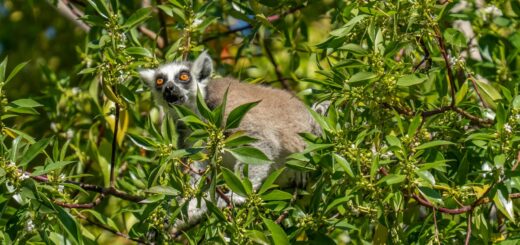
Beza Mahafaly Special Reserve in the far southwest is a relatively small protected area (600 hectares) jointly managed by Madagascar and Yale University’s conservation programme. It is famous for a habituated population of ring-tailed lemurs that move freely through the visitor area, making for exceptionally intimate close-range encounters. The white sifaka is also present. Access requires a 70-kilometre detour south of the RN7 on a rough track from Betioky — 4×4 is essential. There are no facilities beyond a simple camp platform, and the nearest town with accommodation is Betioky (approximately 1 hour). The reserve charges 20,000 Ariary entrance plus guide fees of approximately 25,000 Ariary per day. For ring-tailed lemur photography at close range, Beza Mahafaly delivers results that no other accessible site in Madagascar can match.
Ready to book your Madagascar trip?
Frequently Asked Questions
Which lesser-known Madagascar park is best for a day visit?
Zombitse-Vohibasia is the most accessible — it sits directly on the RN7 highway between Antananarivo and Toliara, requires no 4×4, and offers excellent dry-forest birding and lemur encounters in a half-day stop.
Is Marojejy National Park difficult to get to?
Yes. It requires a flight or long overland journey to Sambava in the far northeast, followed by a 2-hour rough 4×4 transfer. But it receives under 1,500 visitors per year and the wildlife encounters are exceptional.
Where can I see ring-tailed lemurs very close in Madagascar?
Beza Mahafaly Special Reserve in the southwest has a habituated population that moves freely through the visitor area. The encounters are significantly closer than at more commercialised sites.
Madagascar’s lesser-known reserves are among the island’s best-kept secrets. Marojejy, Namoroka, Zombitse-Vohibasia, and Beza Mahafaly all deliver extraordinary wildlife with essentially no crowds and lower costs than the flagship parks. If you have already visited Ranomafana and Isalo, these are the next chapter of a deeper Madagascar wildlife experience.
Flight delayed or cancelled? Flights to Madagascar often connect through Paris or Nairobi. EU regulation EC 261 may entitle you to up to €600 in compensation. Check your claim free on AirAdvisor →
Plan Your Trip to Madagascar
- Read the full Madagascar Travel Guide
- Explore itineraries by style and duration
- Explore the full destination guide
Where to Stay
Hotels, lodges, and tours fill fast for July–September — compare availability now.