Lemur Island Tours in Madagascar: Which Operators Are Ethical? 2026
This post contains affiliate links. We may earn a small commission at no extra cost to you.
Recommended Gear for Your Madagascar Wildlife Trip
You’re Flying 10,000km to See Lemurs, Chameleons, and Fossa — Don’t Document It With a Phone Camera
Indri lemurs calling across the canopy of Andasibe. Panther chameleons in electric blue and orange. The fossa spotted on a night walk in Kirindy. A smartphone sensor in low rainforest light produces grainy, blurred images. The Sony a6400 with Real-Time Eye Autofocus locks onto animal eyes instantly — even through undergrowth and low light. APS-C sensor, 4K video, flip-up touchscreen.
Check current price and availability on Amazon →
Madagascar Has Over 100 Species of Lemur and 280 Species of Bird — You’ll Miss Most of Them Without Binoculars
Sifaka lemurs leap between canopy trees 30 metres up. The Madagascar fish eagle perches on a branch 200 metres across a lake. Without binoculars, you’re looking at distant shapes and taking your guide’s word for it. The Vortex Diamondback HD 10×42 delivers HD optical clarity with edge-to-edge sharpness. Waterproof, fog-proof, backed by Vortex’s unconditional lifetime warranty.
Check current price and availability on Amazon →
Madagascar Goes Completely Dark After Sunset — Don’t Navigate It Blind
Outside of Antananarivo’s main streets, Madagascar has virtually no street lighting. Wildlife walks in Ankarana, night lemur spotting in Ranomafana, the path to your bungalow — all navigated in total darkness. The Black Diamond Spot 400-R delivers 400 lumens with a 100-metre beam, USB-C rechargeable, IPX8 waterproof, with red night-vision mode for wildlife observation without disturbing animals.
Check current price and availability on Amazon →
Madagascar Has Some of the Highest Malaria Risk in the World
The rainforests of Andasibe, the wetlands of Morondava, the rice paddies outside every village — mosquitoes are relentless and bite at dusk and dawn. DEET burns skin and destroys gear. Natrapel 20% Picaridin is the CDC-recommended alternative that repels mosquitoes, ticks, and sandflies for up to 12 hours without damaging your equipment.
Check current price and availability on Amazon →
No Grid, No Problem — Charge Your Devices From the Sun in Madagascar’s Remote Parks
Marojejy. Andringitra. Tsingy de Bemaraha. Madagascar’s most spectacular parks are its most isolated — no power outlets, no phone signal. A 3-day wilderness circuit means running on whatever charge you left camp with. The BLAVOR Solar Power Bank pairs 10,000mAh with a fold-out solar panel that recharges itself from sunlight as you trek.
Check current price and availability on Amazon →
At a Glance
- Most ethical commercial option: Vakona Forest Lodge Lemur Island (Andasibe area)
- Entry fee: 60,000 MGA (~$13) at Vakona; 50,000 MGA at Lemuria Land
- Best wild alternative: Andasibe-Mantadia NP (55,000 MGA/day park entry)
- What to avoid: Ring-tailed lemur handling sessions in tourist market areas
- Book tours: Madagascar wildlife tours on GetYourGuide
- Travel insurance: SafetyWing
Madagascar’s lemur islands — river or lake islands where semi-habituated lemurs live in semi-free conditions — draw enormous visitor interest, but welfare standards vary dramatically between operators. Some facilities contribute meaningfully to conservation; others function as glorified petting zoos. This guide identifies the operators that meet minimum welfare criteria and explains the questions to ask before booking.
How to Identify an Ethical Lemur Island Operation
Five criteria separate ethical lemur island facilities from wildlife-tourism traps. First, island size: the habitat should be large enough that lemurs can avoid human visitors rather than being cornered for interaction — anything under one hectare should be scrutinised. Second, feeding protocol: ethical operators do not allow visitors to hand-feed lemurs directly, as this creates food-associative aggression and dietary disruption. Third, veterinary access: ask whether the facility has a named veterinary partner and a documented health-monitoring programme.
Fourth, species selection: nocturnal species like mouse lemurs or aye-ayes should not be displayed in daylight conditions — light stress causes chronic welfare damage. Fifth, physical contact policy: any facility that markets ‘hold a lemur’ as the primary experience is prioritising revenue over welfare. Lemurs are wild animals; regular forced human contact increases cortisol levels and transmission risk for zoonotic diseases.
Legitimate operations publish their conservation mission clearly. Ask before booking via GetYourGuide — reputable operators on that platform include welfare statements in their tour descriptions.
Vakona Forest Lodge: The Most Recommended Commercial Island
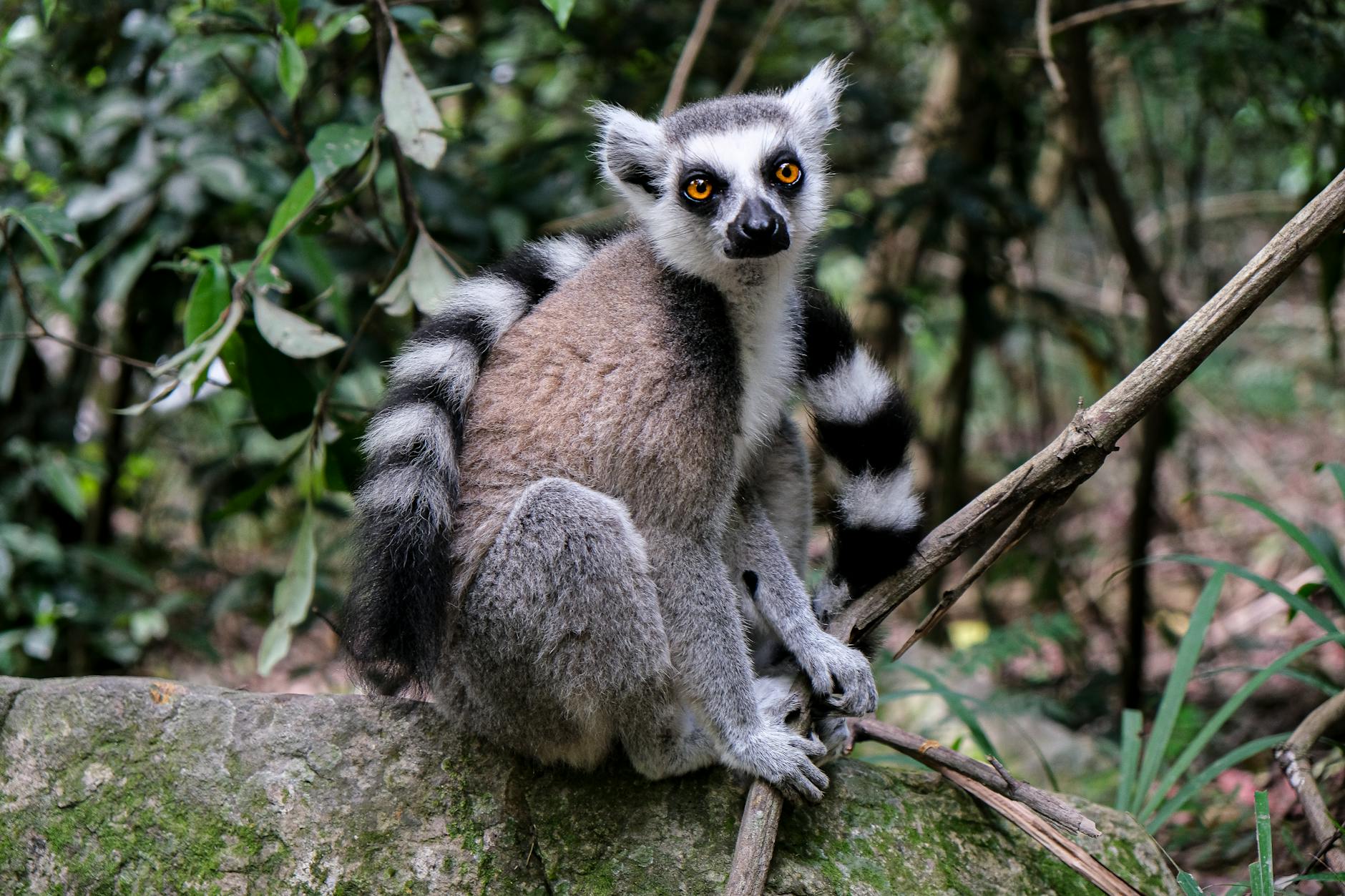
Vakona Forest Lodge sits 8 km from Andasibe village at the edge of Andasibe-Mantadia National Park. Its lemur island is accessed by dugout canoe across a small lake within the lodge grounds — the canoe crossing alone makes the experience feel genuinely wild. The island houses brown lemurs (Eulemur fulvus), black-and-white ruffed lemurs (Varecia variegata), and occasionally ring-tailed lemurs and bamboo lemurs. Entry is 60,000 MGA per adult and can be purchased without staying at the lodge.
The island spans approximately 2–3 hectares of forested land, giving lemurs room to retreat into the canopy when not interested in visitors. Guides accompany all groups and enforce a no-feeding, no-chasing policy. The combination of semi-free habitat, professional guiding, and proximity to genuine wild park access makes Vakona the most defensible commercial lemur island in Madagascar as of 2026.
Book your Andasibe accommodation alongside the Vakona visit through Agoda — Andasibe Hotel and Mikalo Hotel are the primary alternatives for visitors who prefer to stay off the lodge grounds.
Lemuria Land and Other Commercial Operations
Lemuria Land operates near Toamasina (Tamatave) on the east coast, housing brown lemurs and bamboo lemurs on a larger land parcel than most commercial facilities. Entry is approximately 50,000 MGA. The site is best combined with a Toamasina stopover rather than a standalone trip from Antananarivo, as the drive from the capital takes 6–7 hours.
Several facilities marketed as ‘lemur parks’ near Antananarivo — particularly operations around the Nosy Be tourist strip and in Antananarivo market areas — offer ring-tailed lemur photo sessions for 5,000–15,000 MGA. These are uniformly low-welfare: lemurs are typically leashed, kept in small enclosures between sessions, and subjected to extended human handling daily. Avoid any operation where the primary pitch is a photograph with a lemur on your shoulder.
Lemur’s Park (23 km from Antananarivo) occupies a middle ground: larger enclosures than market-level operations, 9 species, and professional guides, at 60,000 MGA entry. It does not claim conservation status but maintains better welfare standards than the lowest-tier tourist market operations.
Wild Encounters: Andasibe-Mantadia as the Gold Standard
No commercial lemur island replaces the experience of hearing an indri territorial call at dawn in Andasibe-Mantadia National Park, or spotting a diademed sifaka (Propithecus diadema) moving through the upper canopy of Mantadia. Wild park entry costs 55,000 MGA per day at Andasibe — less than many commercial island operations — and the revenue directly supports park management and community ranger employment.
Ranomafana National Park adds the critically endangered golden bamboo lemur (Hapalemur aureus), found in fewer than 1,000 individuals globally. Kirindy Forest Reserve, near Morondava, offers white sifaka (Propithecus verreauxi) and the unique spectacle of fossa-lemur predator interactions during March and April when fossas are most active.
Wild sightings require more planning than a commercial island visit — you need transport, a guide, and park entry — but the ecological contribution is measurably larger and the experience incomparably more authentic. Browse GetYourGuide Madagascar wildlife tours for operator-led packages covering Andasibe, Ranomafana, and Kirindy with transport included.
Frequently Asked Questions
Are all lemur islands the same quality?
No. There is a significant welfare spectrum from large semi-wild island habitats with minimal human contact, to small pens where lemurs are force-fed by tourists for photography tips. Ask each operator about enclosure size, daily feeding protocol, veterinary oversight, and whether nocturnal species are displayed in daylight before booking.
Can I hold or touch lemurs at ethical facilities?
Ethical operators discourage or prohibit direct lemur contact. Lemurs are wild animals — regular human handling increases stress and disease transmission risk for both lemurs and visitors. If an operator markets ‘hold a lemur’ as the main attraction, treat this as a welfare red flag regardless of how the facility is presented.
How much does Vakona Forest Lodge Lemur Island cost?
Entry to Vakona Lemur Island is approximately 60,000 MGA (around $13) per adult as of 2026. The island is accessed by canoe from within the Vakona Forest Lodge grounds. You can visit independently without staying at the lodge, though lodge guests receive priority morning access during peak visitor periods.
What lemur species will I see at commercial island facilities?
Vakona Forest Lodge hosts brown lemurs, black-and-white ruffed lemurs, and sometimes bamboo lemurs. Lemuria Land near Toamasina typically houses brown lemurs and bamboo lemurs. For wider species diversity including indri, diademed sifaka, and multiple nocturnal species, wild park access at Andasibe-Mantadia is the only reliable option.
Choosing an ethical lemur island experience in Madagascar starts before you arrive — research operator welfare standards, ask about enclosure size and contact policies, and favour facilities adjacent to genuine wild park access. For a full wildlife itinerary covering Vakona and Andasibe, activate SafetyWing Nomad Insurance before you leave home — medical evacuation from Andasibe to Antananarivo costs $15,000–$30,000, and from Madagascar to regional hospitals the bill routinely exceeds $50,000. For trekkers combining lemur island visits with multi-day Ranomafana or Mantadia circuits, World Nomads covers the rainforest trekking activities that basic travel insurance excludes. Get SafetyWing activated before your flight to Madagascar — it starts from your home country departure.
Flight delayed or cancelled? Flights to Madagascar often connect through Paris or Nairobi. EU regulation EC 261 may entitle you to up to €600 in compensation. Check your claim free on AirAdvisor →
Plan Your Trip to Madagascar
- Read the full Madagascar Travel Guide
- Explore itineraries by style and duration
- Explore the full destination guide
Where to Stay