Madagascar vs Kenya for Wildlife: Which Safari Is Worth More? 2026
This post contains affiliate links. We may earn a small commission at no extra cost to you.
At a Glance
- Where to stay: Check hotel availability on Agoda — Madagascar
- Book tours: Browse Madagascar tours on GetYourGuide
Madagascar and Kenya represent two fundamentally different wildlife experiences. Kenya offers the Big Five, vast open savannahs, and mature infrastructure. Madagascar offers 90% endemic species, dense rainforest encounters, and almost no crowds. This comparison breaks down cost, wildlife diversity, logistics, and overall value to help you decide which destination delivers more for your specific travel priorities.
Recommended Gear for Your Madagascar Wildlife Trip
You’re Flying 10,000km to See Lemurs, Chameleons, and Fossa — Don’t Document It With a Phone Camera
Indri lemurs calling across the canopy of Andasibe. Panther chameleons in electric blue and orange. The fossa spotted on a night walk in Kirindy. A smartphone sensor in low rainforest light produces grainy, blurred images. The Sony a6400 with Real-Time Eye Autofocus locks onto animal eyes instantly — even through undergrowth and low light. APS-C sensor, 4K video, flip-up touchscreen.
Check current price and availability on Amazon →
Madagascar Has Over 100 Species of Lemur and 280 Species of Bird — You’ll Miss Most of Them Without Binoculars
Sifaka lemurs leap between canopy trees 30 metres up. The Madagascar fish eagle perches on a branch 200 metres across a lake. Without binoculars, you’re looking at distant shapes and taking your guide’s word for it. The Vortex Diamondback HD 10×42 delivers HD optical clarity with edge-to-edge sharpness. Waterproof, fog-proof, backed by Vortex’s unconditional lifetime warranty.
Check current price and availability on Amazon →
Madagascar Goes Completely Dark After Sunset — Don’t Navigate It Blind
Outside of Antananarivo’s main streets, Madagascar has virtually no street lighting. Wildlife walks in Ankarana, night lemur spotting in Ranomafana, the path to your bungalow — all navigated in total darkness. The Black Diamond Spot 400-R delivers 400 lumens with a 100-metre beam, USB-C rechargeable, IPX8 waterproof, with red night-vision mode for wildlife observation without disturbing animals.
Check current price and availability on Amazon →
Madagascar Has Some of the Highest Malaria Risk in the World
The rainforests of Andasibe, the wetlands of Morondava, the rice paddies outside every village — mosquitoes are relentless and bite at dusk and dawn. DEET burns skin and destroys gear. Natrapel 20% Picaridin is the CDC-recommended alternative that repels mosquitoes, ticks, and sandflies for up to 12 hours without damaging your equipment.
Check current price and availability on Amazon →
No Grid, No Problem — Charge Your Devices From the Sun in Madagascar’s Remote Parks
Marojejy. Andringitra. Tsingy de Bemaraha. Madagascar’s most spectacular parks are its most isolated — no power outlets, no phone signal. A 3-day wilderness circuit means running on whatever charge you left camp with. The BLAVOR Solar Power Bank pairs 10,000mAh with a fold-out solar panel that recharges itself from sunlight as you trek.
Check current price and availability on Amazon →
Plan your Madagascar trip:
- Browse Madagascar tours and experiences (GetYourGuide)
- Get travel insurance for Madagascar (SafetyWing)
- World Nomads — covers adventure activities: trekking, diving, motorbikes. Compare both.
Wildlife: What You See and Where
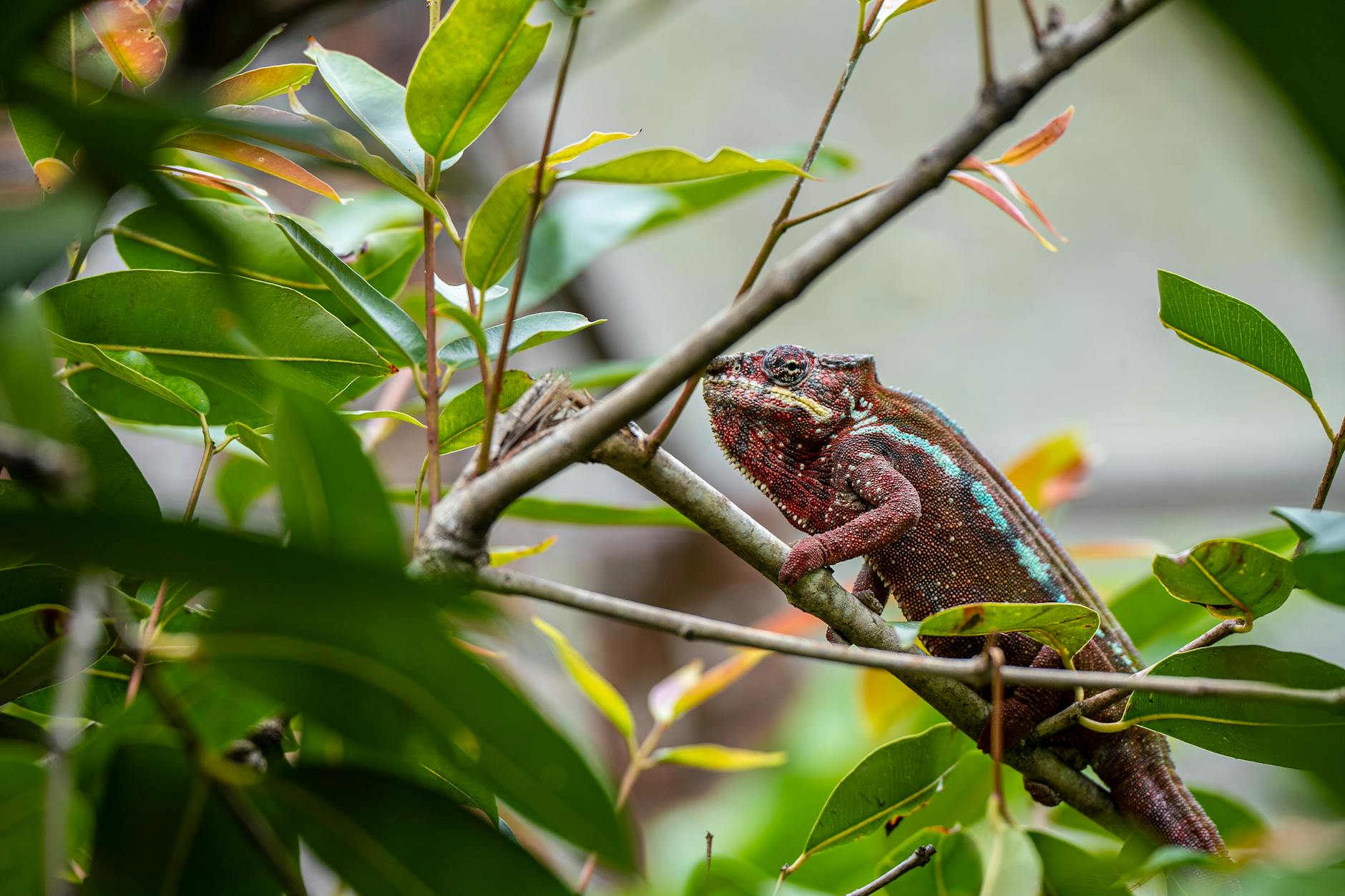
Kenya’s wildlife portfolio centres on the Big Five — lion, leopard, elephant, buffalo, and rhino — in open grassland settings where viewing distances of hundreds of metres are normal. The Great Migration in the Maasai Mara (July–October) delivers large mammal spectacle at unparalleled scale. Madagascar offers something categorically different: over 110 lemur species, 5 endemic bird families, 350-plus species of reptile including 60% of the world’s chameleons, and 103 endemic birds. Roughly 90% of Madagascar’s wildlife is found nowhere else on earth. In Kenya, wildlife is shared with Africa broadly. In Madagascar, every observation of a lemur, indri, fossa, or helmet vanga is genuinely unique to the island. The question is whether you prioritise megafauna spectacle or intimate endemic encounters.
Cost Comparison: Safari Pricing in 2026
Kenya is significantly more expensive than Madagascar for comparable wildlife tourism. A mid-range 7-day safari in the Maasai Mara and Amboseli typically costs $2,500–$4,000 USD per person including accommodation, park fees, and guiding. Budget options exist but often compromise on park access or accommodation quality. Madagascar offers strong value by comparison — a 10-day wildlife itinerary covering Andasibe, Ranomafana, Isalo, and Kirindy costs $1,200–$2,500 USD per person for mid-range accommodation, guides, and park fees. Madagascar’s park fees (35,000–45,000 Ariary, or $8–12 USD) are among the lowest in the world for a biodiversity hotspot. Budget travellers can experience Madagascar’s national parks for $50–80 USD per day all-inclusive. Kenya’s cheapest equivalent is approximately $150–200 USD per day.
Read also:
Book activities in Madagascar:
Logistics and Infrastructure
Kenya has highly developed safari infrastructure. Nairobi is a major hub with direct flights from Europe, North America, and Asia. Domestic flights, well-maintained safari vehicles, and experienced English-speaking guides are universally available at all price points. Madagascar requires more planning effort. Antananarivo has limited direct connections (Paris, Nairobi, Dubai, Johannesburg). Domestic travel relies on Tsaradia domestic airlines or rough overland routes. Road conditions outside main routes are challenging, and accommodation quality outside the tourist circuit varies significantly. Madagascar rewards planning and flexibility; Kenya rewards the traveller who wants seamless logistics. For first-time African wildlife travellers, Kenya’s infrastructure removes complexity that Madagascar would introduce.
Which Is Worth More? A Summary by Traveller Type
Choose Kenya if: you want the Big Five, you are on a first-time Africa trip, you prefer seamless logistics and a mature guide industry, or you are visiting during the Great Migration (July–October). Choose Madagascar if: endemic and unique species matter more than volume, you have already done a Kenya-style safari, you prefer intimate encounters over open-air spectacle, you are a photographer targeting reptiles or birds found nowhere else, or budget matters and you want exceptional biodiversity at lower cost. The two destinations do not compete directly — they offer genuinely different experiences. Travellers with time and budget should visit both; those choosing just one should base the decision on whether megafauna or endemism is their priority.
Ready to book your Madagascar trip?
Frequently Asked Questions
Is Madagascar better than Kenya for wildlife?
Different, not better or worse. Kenya offers the Big Five and the Great Migration. Madagascar offers 90% endemic species — lemurs, chameleons, endemic birds — found nowhere else. The priorities of the traveller determine the better choice.
Is Madagascar cheaper than Kenya for wildlife tourism?
Yes, significantly. A comparable 10-day wildlife itinerary in Madagascar costs $1,200–$2,500 USD vs $2,500–$4,000 USD for 7 days in Kenya. Park fees in Madagascar are among the lowest in the world.
Can I see the Big Five in Madagascar?
No. Madagascar has no elephant, lion, leopard, buffalo, or rhino. Its wildlife is entirely different — the island’s top predator is the fossa (a cat-like carnivore), and the megafauna equivalent is the indri lemur.
Madagascar and Kenya both justify a long-haul trip — they simply deliver different things. For endemic wildlife at lower cost with no crowds, Madagascar wins clearly. For seamless infrastructure, megafauna, and the Great Migration, Kenya has no equal. Know your priorities before choosing, and if budget allows, visit both in the same Indian Ocean–East Africa itinerary.
Start planning your Madagascar adventure today
Browse Madagascar experiences on GetYourGuide
Affiliate link – commission earned at no extra cost to you.
Flight delayed or cancelled? Flights to Madagascar often connect through Paris or Nairobi. EU regulation EC 261 may entitle you to up to €600 in compensation. Check your claim free on AirAdvisor →
Plan Your Trip to Madagascar
- Read the full Madagascar Travel Guide
- Explore itineraries by style and duration
- Explore the full destination guide
Where to Stay
Hotels, lodges, and tours fill fast for July–September — compare availability now.