Disclosure: This page contains affiliate links. If you book or buy through them, we earn a small commission at no extra cost to you.
Madagascar rewards those who arrive prepared. This page connects you to the right information for every stage of planning — from choosing when to go to booking your first activity.
Step 1: Decide When to Go
Madagascar has a wet season (November–April) and a dry season (May–October). The right time depends on which regions you’re visiting and what you want to do.
- April–November — Dry season in the south. Best for hiking Isalo, the Avenue of the Baobabs, and diving around Nosy Be.
- July–September — Humpback whale season off Nosy Be. One of the best whale encounters in the Indian Ocean.
- October–December — Baby lemur season, wildflowers in Isalo, lower visitor numbers.
→ Best time to visit Madagascar: month-by-month guide
Step 2: Book Your Flights
No direct transatlantic flights exist to Madagascar. All routes connect through European or African hubs — Paris (Air France), Addis Ababa (Ethiopian), or Nairobi (Kenya Airways). The main international airport is Antananarivo-Ivato (TNR).
→ Full guide: How to get to Madagascar
Entry Requirements, Visa & Safety
Madagascar has a simple visa-on-arrival process (30 days, extendable). Vaccinations are strongly recommended, including yellow fever if arriving from an endemic country. The country is generally safe for prepared travelers.
- Madagascar visa guide: everything you need before you go
- Visa, vaccines and entry requirements
- Is Madagascar safe to travel? Complete safety guide
Step 3: Get Travel Insurance (Non-Negotiable)
Medical evacuation from Madagascar can exceed USD 50,000. SafetyWing travel insurance covers emergency evacuation, medical costs, and trip cancellation at a flat daily rate. Buy before your flight departs.
→ Madagascar travel insurance guide
Step 4: Plan Your Route
First-time visitors typically follow the classic southern circuit: Antananarivo → Andasibe (Indri lemurs) → Ranomafana (UNESCO rainforest) → Isalo (canyons) → Morondava (Baobabs). This covers Madagascar’s signature landscapes in 10–14 days.
→ 10-day Madagascar itinerary (full breakdown)
Step 5: Book Tours and Park Guides
National park guides are legally required throughout Madagascar. You cannot enter parks unaccompanied. Book guides in advance for Andasibe and Ranomafana — they fill up in peak season (July–September).
→ Browse all Madagascar tours on GetYourGuide
→ Best tours in Madagascar: our guide
Step 6: Sort Out Transport
The RN7 (south route) is mostly paved and manageable. Off-route roads need a 4WD. For most visitors, hiring a driver costs only slightly more than self-drive and eliminates the risk of getting stuck in remote areas.
→ Car rental in Madagascar: what you need to know
Step 7: Pack Right
Madagascar spans 1,600 km across four climate zones. Domestic flights have strict weight limits (15–20 kg total). What you bring determines whether the trip is comfortable or difficult.
→ The ultimate Madagascar packing list
Essential Destination Guides
- Nosy Be — Complete Visitor’s Guide
- Andasibe-Mantadia: Complete Guide to Madagascar’s Best Wildlife Park
- Tsingy de Bemaraha: UNESCO Rock Forest Guide
- Where to See Lemurs in Madagascar
- Best Hotels in Madagascar by Budget
Explore by Destination
- Nosy Be — coral reefs, humpback whales, and Indian Ocean island life
- Isalo National Park — sandstone canyons, ring-tailed lemurs, natural pools
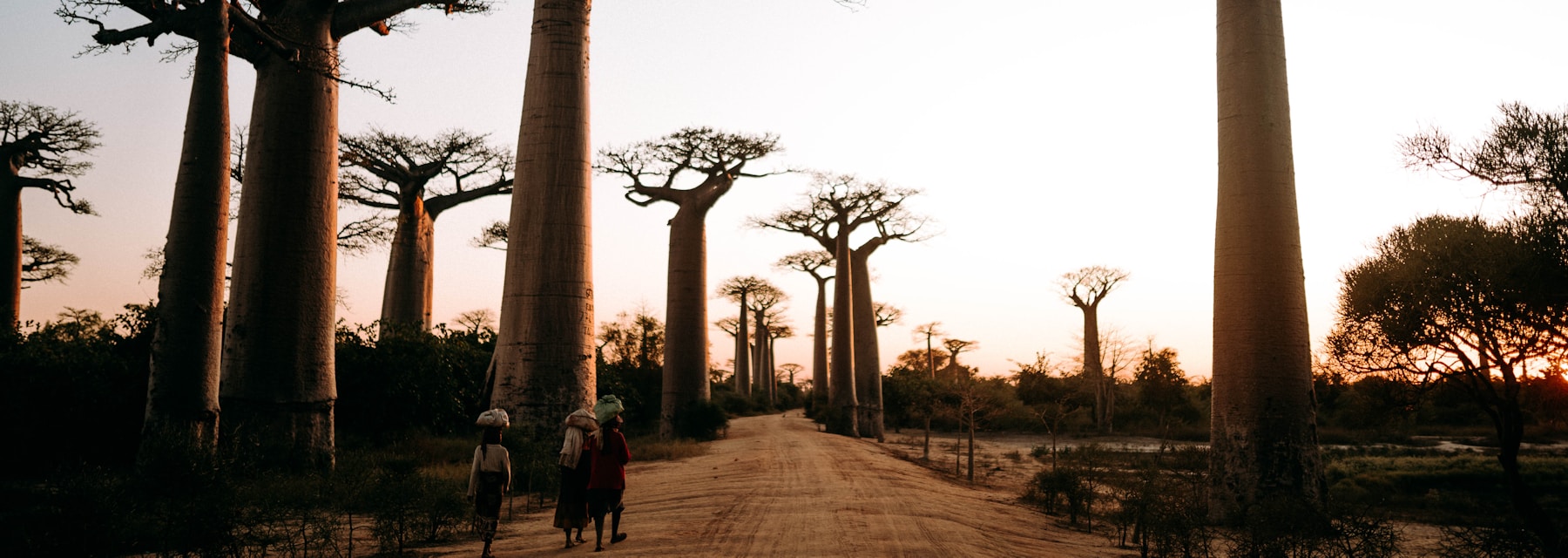
- Avenue of the Baobabs — Madagascar’s most iconic landscape
- All destinations →
Free Madagascar Travel Guide
Get our 10-day itinerary, packing list, and budget guide as a free PDF.