Sunday in Antananarivo: Church, Family, and Rice
This article contains affiliate links. We may earn a small commission at no extra cost to you if you book through them.
By Jordan Lamont · Last updated 10 October 2026
At a Glance
- The city: Antananarivo, a hill capital and heart of Malagasy Protestantism
- The morning: church — the FJKM is the largest Protestant body, based here
- The table: a family meal built, as ever, around rice
- The overlap: church and ancestor respect, side by side
- Visit: Antananarivo travel guide
Say it like a local: Antananarivo (an-ta-na-na-REEV) — “the city of the thousand”; vary (VAHR) — rice.
To see the real character of Madagascar’s capital, come on a Sunday. The weekday chaos of taxis-be and market crowds gives way to something slower and more formal: families in their best clothes climbing the city’s stairways toward church, hymns drifting across the hills, and then the long, rice-centred lunch that anchors the day. Antananarivo on a Sunday is a highland city being most fully itself. For the weekday version, see our look at everyday Malagasy life.
A city of churches
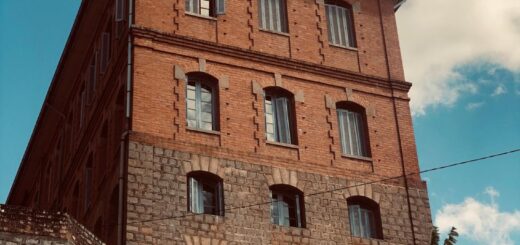
The highlands are the heartland of Malagasy Protestantism, and nowhere shows it like the capital. Antananarivo is dense with churches, and the largest Protestant body in the country, the FJKM, has its headquarters here. In the old centre stands one of the island’s oldest religious monuments — the FJKM Tranovato (“stone house”) church at Ambatonakanga, remembered as a cradle of Malagasy Protestantism and built in 1867. On Sunday mornings these churches fill, and the sound of massed Malagasy hymn-singing — a genuine highland art form — carries across the terraced slopes.
Why faith runs so deep here
This is not accidental. Protestant Christianity took root early among the Merina highland elite in the 19th century, becoming bound up with the upper classes and the central-highland identity. Today roughly a quarter of Madagascar’s population is Protestant, concentrated in these highlands. To be a highland family is very often to be a churchgoing one, with a pew, a choir, and generations of membership behind it — which is why Sunday is not a quiet afterthought to the week but one of its anchors.
The Sunday table
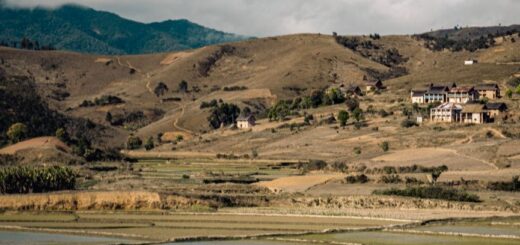
After the service comes the meal, and in Madagascar a meal means rice (vary). Rice is so central to highland life that many Merina consider eating it essential to a proper, moral life; a day without rice barely counts as a day. The Sunday lunch is the week’s most generous version — rice with a good meat stew, perhaps zebu or chicken, shared slowly with extended family. It is the social hinge of the week, the moment the family gathers in full.
Faith and the ancestors, side by side
Here is the subtlety outsiders miss. The same families who fill the churches on Sunday also honour the razana, the ancestors, through tombs, taboos and ritual. Most highland Christians see no contradiction: church on Sunday and respect for the dead are two parts of one moral world. It is one of the quiet achievements of Malagasy culture — a Christianity woven into, rather than erasing, the island’s older beliefs.
Why it matters today
A Sunday in Antananarivo tells you more about the highlands than any monument: the churches, the hymns, the rice, the family, and the ancestors behind them all. For a visitor, it is the gentlest and most honest way to read the city. Plan your time with our Antananarivo travel guide, and go deeper into the culture with our look at everyday Malagasy life.
FAQ
Is Antananarivo a religious city?
Strongly so. The highlands are the heart of Malagasy Protestantism, and the capital is full of churches; Sunday worship is a central feature of highland life. The FJKM, the largest Protestant church, has its headquarters in Antananarivo.
Why is Protestantism so strong among the Merina?
It spread early among the Merina highland elite in the 19th century, becoming associated with the upper classes and the central-highland ethnic group. Roughly a quarter of Madagascar’s population is Protestant.
What do people eat on Sunday?
Rice, as at nearly every meal. Rice is so central to highland life that many Merina hold it essential to a proper, moral life; the Sunday family meal is built around it.
Does traditional belief survive alongside church?
Yes. Most highland Christians also honour the ancestors (razana); the two coexist without being seen as contradictory.
Travel insurance for Madagascar
Medical evacuation from Madagascar’s interior can cost USD 30,000–80,000, so travel medical cover is worth arranging before you go. SafetyWing is the disclosed partner we mention on this site — a monthly-subscription travel medical plan. Check SafetyWing’s plans.
Sources
Plan Your Trip to Madagascar
- Read the full Madagascar Travel Guide
- Explore itineraries by style and duration
- Explore the full destination guide
Where to Stay