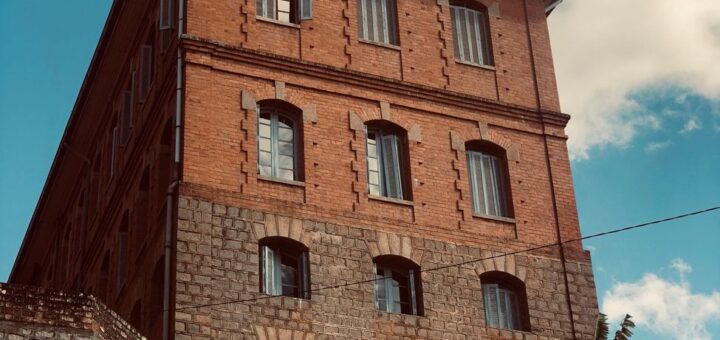
Sunday in Antananarivo: Church, Family, and Rice
To see the real Antananarivo, come on a Sunday: families in their best climbing to church, massed hymns over the hills, and the long rice-centred family lunch that anchors the day.
Bridge article — connects traffic to money. Itineraries, destination guides, transport.
To see the real Antananarivo, come on a Sunday: families in their best climbing to church, massed hymns over the hills, and the long rice-centred family lunch that anchors the day.
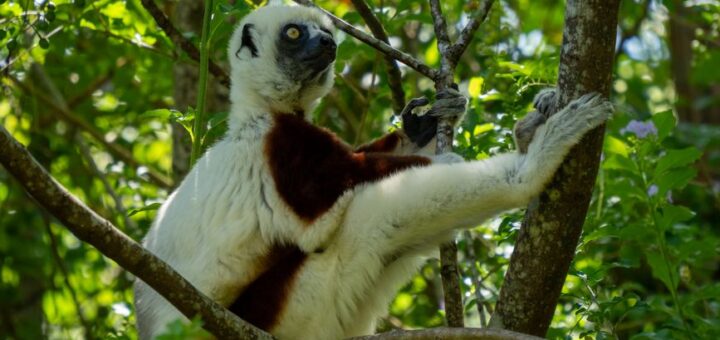
Lemurs live wild nowhere but Madagascar. The reason: ancestors rafted from Africa 50+ million years ago to a predator-free island — and monkeys evolved too late to follow.
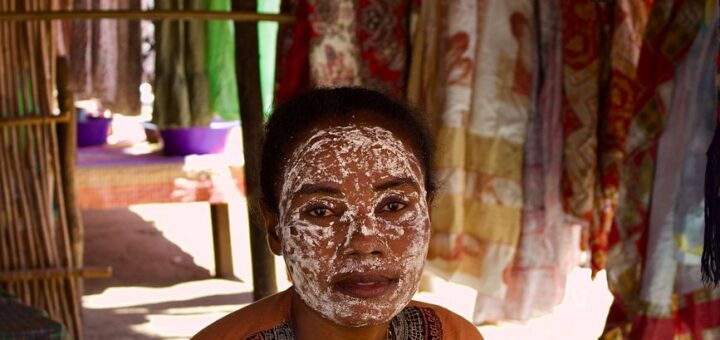
You can smell Nosy Be before you land. Inside Madagascar’s Perfume Island: the ylang-ylang flower behind Chanel No. 5, and the rare honeys of an endemic Malagasy bee.
In the heart of Antananarivo lies a heart-shaped lake and a black monument topped by a golden angel — a memorial to Malagasy soldiers who died for France in World War I.
The indri — babakoto, ‘father of man’ — is fady to harm because many Malagasy believe it carries ancestral spirits. How a taboo quietly protects Madagascar’s sacred lemurs.
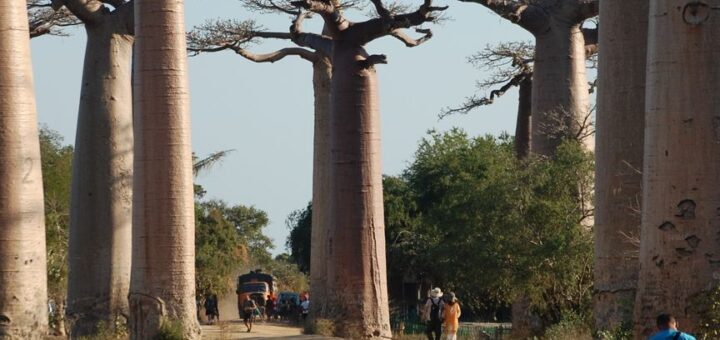
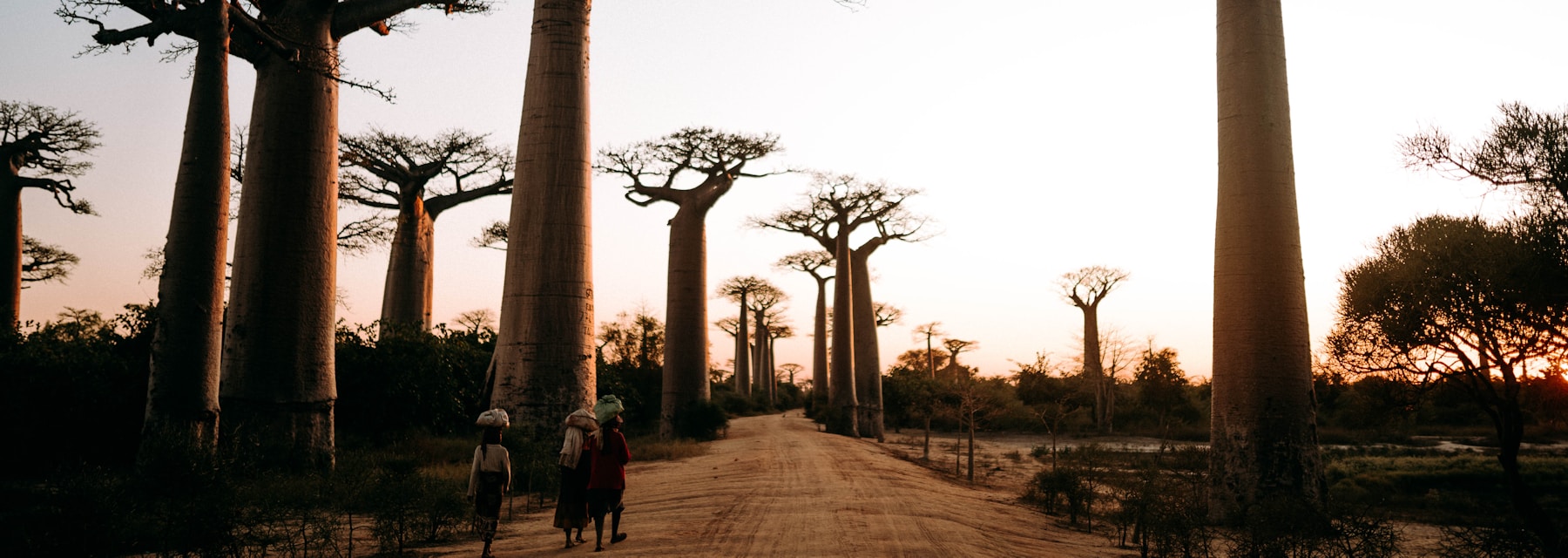
Legend says the gods planted the baobab upside down for its pride. The truth is a water-storing giant — and 6 of the world’s 8 baobab species are Malagasy, not African.
The Tsingy is a forest of razor-sharp limestone spires — an ancient seabed uplifted and carved by rain into a stone maze ‘where one cannot walk barefoot.’
Every Friday, white parasols buried the heart of Antananarivo under what was called the world’s largest open-air market. The story of the Zoma — and what replaced it in 1997.