Miavana by Time + Tide: Complete Guide to Madagascar’s Most Exclusive Private Island
Affiliate disclosure: This guide contains affiliate links to travel services. If you book through these links, Voyagiste Madagascar may earn a small commission at no extra cost to you. Miavana is direct-booking only and we earn no commission on the resort itself — we only feature it because it genuinely is what its reputation suggests.
At a Glance — Miavana by Time + Tide
- Location: Nosy Ankao, Loky-Manambato Protected Area, northeast Madagascar
- Villas: 14 standalone villas with private pools and direct beach access
- Owner / operator: Time + Tide (also runs premier safari lodges in Zambia)
- Designed by: Silvio Rech (also designed North Island Seychelles)
- Access: Helicopter transfer (~25 min) from Diego Suarez, included at the top rate tier
- Rate (2025–26 reference): All-inclusive from USD $2,300–$2,800 per villa per night, two guests
- Best season: May–October (closed mid-January through mid-March for cyclone season)
- How to book: Direct via Time + Tide, or through a luxury Indian Ocean travel specialist at rate parity
- Where it sits in our ranking: #1 in Best Luxury Resorts in Madagascar 2026
🎒 Madagascar Trip Essentials
A few inexpensive items make the biggest difference on the ground in Madagascar:
- Picaridin insect repellent — DEET-free protection against malaria mosquitoes. See on Amazon →
- Permethrin clothing spray — treat clothes; kills mosquitoes on contact for weeks. See on Amazon →
- Pop-up mosquito net — budget lodges rarely provide one; packs down tiny. See on Amazon →
- Water filter bottle — tap water isn’t safe to drink in Madagascar. See on Amazon →
- Universal travel adapter (USB-C) — Madagascar uses European-style plugs. See on Amazon →
- 8×42 binoculars — essential for spotting lemurs and chameleons in the canopy. See on Amazon →
As an Amazon Associate we earn from qualifying purchases.
The Most Exclusive Resort in the Indian Ocean — and Why That’s Defensible
Miavana by Time + Tide is not the most expensive resort in the world. It is not the largest, the newest, or the loudest in the luxury travel press. What it is — by any reasonable measure of privacy, scale, ecological integrity and access difficulty — is the most exclusive resort currently operating in the Indian Ocean. That claim survives comparison to Soneva Jani, to North Island Seychelles, to Cheval Blanc Randheli, and to the small handful of Maldives properties that operate on the same tier.
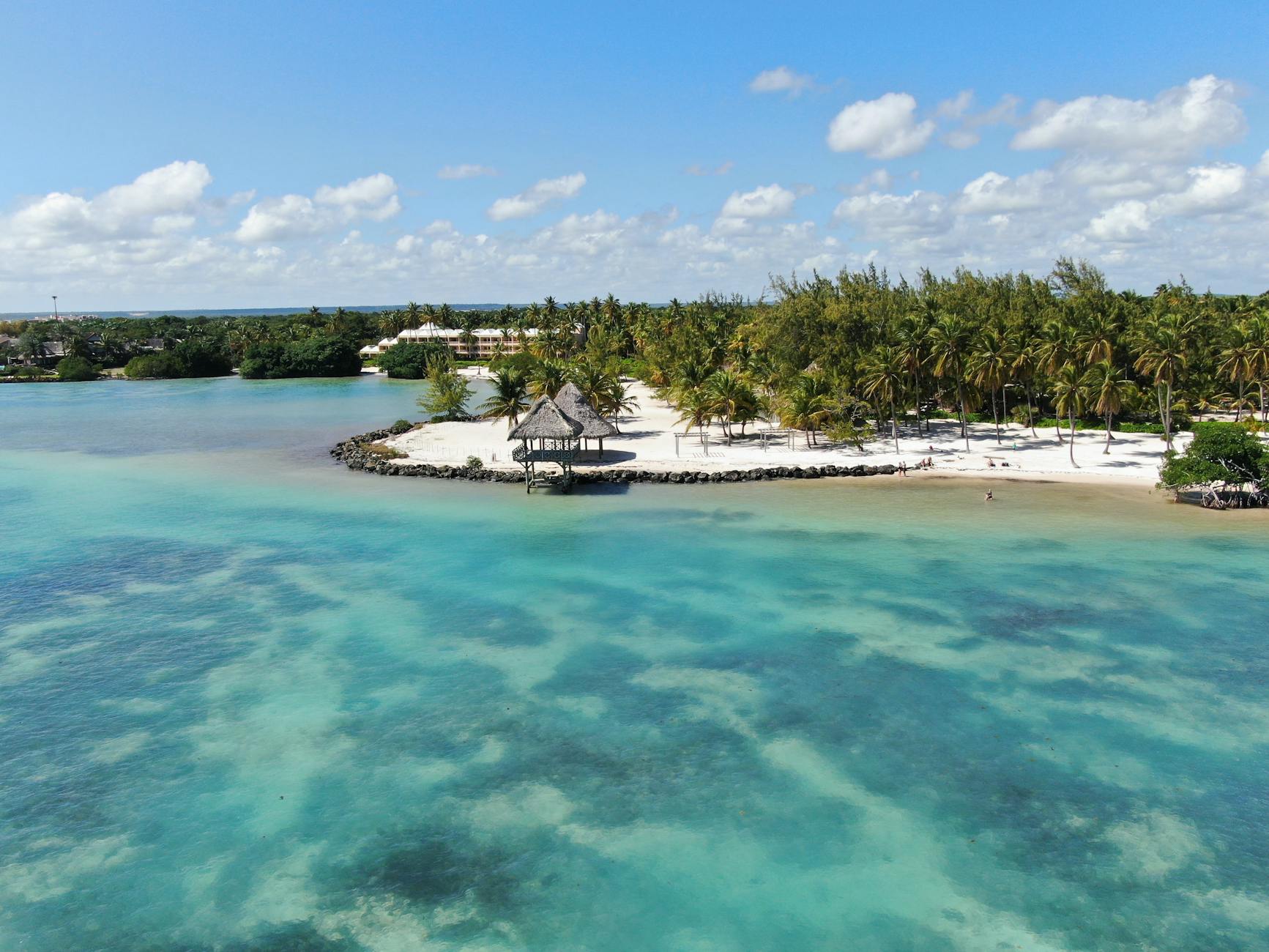
The reason is simple. Miavana sits on Nosy Ankao, a private island inside the Loky-Manambato protected area on the northeast coast of Madagascar. There is no commercial development of any kind within sight or sound of the property. There are no scheduled flights to the island. The only way in is helicopter or private charter from the nearest mainland airport, which is itself two flights and an overnight from any major international hub. Fourteen villas total, on an island that supports an active marine reserve. If you book Miavana for a week, you have, functionally, leased a private piece of Madagascar.
This guide covers everything a serious traveler needs to know before booking: what the property actually delivers, how to get there, what to expect once you arrive, how Miavana compares to its Indian Ocean peers, and the booking specifics that determine whether a stay goes smoothly or burns money on logistics that should have been handled in advance.
Where Miavana Sits — Nosy Ankao and the Loky-Manambato Protected Area
Nosy Ankao is a small island in a five-island archipelago off the northeast coast of Madagascar, north of Antsiranana (Diego Suarez). The surrounding waters form part of the Loky-Manambato Protected Area, a network of marine and coastal ecosystems that has been under increasing conservation focus over the past decade. There is no commercial fishing pressure on the reef around Nosy Ankao. The marine ecosystem is, for the Indian Ocean in 2026, unusually intact.
The island itself is small enough to walk from end to end in under an hour. The terrain is low coastal scrub and white-sand beaches, with reef flats at low tide and deep dropoffs within a short boat ride. The four other islands in the archipelago are uninhabited and form part of the resort’s broader activity territory — guests are taken to them for picnics, snorkeling and exploration. No other operator works the same water.
This geography matters because it determines what Miavana can offer that resorts on more developed islands cannot. Privacy on Nosy Be or Mauritius is purchased by paying for proximity to other paying guests inside a sealed property. Privacy on Nosy Ankao is structural — there are no other guests, no other properties, no other boats, no other lights at night.
The Property — 14 Villas, Designed for People Who Already Live Well
Miavana operates 14 standalone villas across two configurations (One-Bedroom Beach Villa and the larger family configurations). Each villa is positioned to give a wholly private view of the Indian Ocean and direct beach access. The architecture was led by Silvio Rech, the South African architect best known for designing North Island in the Seychelles — the property to which Miavana is most often compared, often unfavorably for North Island.
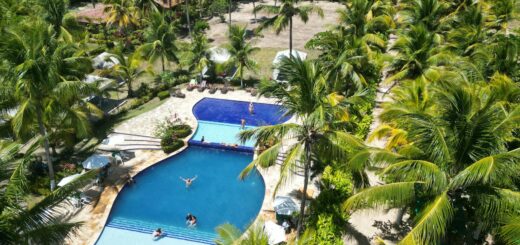
The villas are deliberately understated. Concrete, timber, woven fibers, large openings to the sea, deep eaves for shade. Each villa has its own infinity pool, an outdoor shower, and a covered deck large enough to host a private dinner for six. The interior design avoids the visual clutter and gilt-heavy palette common in legacy luxury — Miavana reads more like a contemporary art collector’s beach house than a hotel suite.
Personal staff ratios are exceptional. With 14 villas served by what is generally reported as 70+ staff in season, the ratio comfortably exceeds 5:1. In practice, you do not meet most of those staff — service is choreographed to be invisible. The villa attendant who turns down your bed in the evening is the same person who set out your morning coffee. The dive instructor recognizes you by name on day two.
What Time + Tide Brings to the Table
Time + Tide is a relatively young brand in the ultra-luxury space, but the operator’s track record matters because it explains why Miavana runs the way it does. The same group operates Time + Tide Chongwe and Time + Tide Mchenja in Zambia’s South Luangwa, plus a portfolio of safari lodges across southern Africa. The conservation-first operating philosophy that defines those properties — guides as scientists, properties as research bases, guest revenue funding active protection — was imported wholesale into Miavana.
This is visible at the property level in three ways. First, the marine reserve around Nosy Ankao is protected through an active partnership with the operator, not as a passive overlay. Second, the marine biologists who lead dive and snorkel activities at Miavana are working scientists, not entertainers — guests get genuine context on what they’re looking at. Third, the lodge supports turtle nesting protection and reef monitoring as part of daily operations.
For travelers who care about whether their luxury spending genuinely supports the place they are visiting, this is the property in Madagascar where the answer is unambiguous yes.
The Marine Reserve — Why Miavana Is a Diving Destination
Most luxury Indian Ocean resorts can offer a house reef. Few offer one this intact. The reef structure around Nosy Ankao supports the full suite of Indian Ocean reef species — over 200 species of fish, turtles year-round, regular shark sightings (mostly grey reef and blacktip), and a small resident population of dolphins in the channel between the islands.
Whales pass within sight of the property between July and October, mirroring the eastern Madagascar humpback migration that is the centerpiece of Madagascar’s best-time-to-visit window. The dive operation runs from the property and is run by resident marine biologists, which means dive briefings include genuine information about what divers are likely to see rather than the rehearsed dive-shop patter that dominates many tropical luxury operations.
Snorkelers do not need to leave the property — the shallow reef on the lagoon side is rich in soft corals, anemonefish and reef life. For divers, the operation runs to the offshore pinnacles where larger pelagic life is more likely. Wreck diving is not the highlight here; the appeal is intact tropical reef ecosystem at a quality that has become difficult to find anywhere in the Indian Ocean.
Activities and the All-Inclusive Structure
Miavana operates on an all-inclusive model at its top rate tier, which is the rate most guests pay. Included in the rate are all meals, soft drinks and most premium drinks, a daily activity selection (snorkeling, kayaking, paddleboard, guided beach walks, sunset boat outings, guided dives at certain reefs), and helicopter transfers to and from Diego Suarez at the start and end of the stay.
What is not included — and worth knowing in advance — includes deep-tier wine pairings, advanced dive packages (PADI courses, multi-tank charter dives, technical diving), private boat charters to neighboring islands beyond the standard activity set, fishing excursions, and most spa treatments beyond the basic offering. A typical Miavana extras bill for a luxury-aware couple is in the USD $1,500–$3,000 range across a week. This is small relative to the room rate but should be planned for.
The activities to prioritize on a first visit, in order:
- A full-day boat trip to one of the four uninhabited islands in the archipelago. Private beach lunch, snorkel stops at reef sites with no other operators present. This is the experience that justifies Nosy Ankao geographically.
- One guided dive per day. The marine biologist team rotates sites; ask which sites are running well that week.
- A sunset boat outing on the channel between islands. Dolphins are reliably seen, the light over the archipelago is exceptional, and the operation includes drinks.
- Quiet days. The mistake first-time guests make is over-scheduling. Pace the activities; two structured per day is plenty.
Food and the Kitchen
The Miavana kitchen runs to a standard that supports the published room rate. Two kitchens operate on property — one for the main dining room (a beach-facing open structure) and one for in-villa dining. Both are run by chefs trained in France and South Africa, working with produce flown in from Antananarivo twice weekly plus a continuous supply of fresh fish, shellfish and seasonal local ingredients sourced from mainland Madagascar.
The food style is broadly contemporary French Indian Ocean — clean preparation, French technique, ingredients that highlight what is available locally rather than imported globally. Wines lean South African and French. The bar program is restrained and well-executed (the rum selection is notably better than typical luxury Indian Ocean — Madagascar is a serious rum-producing region and the property reflects that).
For a week-long stay, the kitchen rotates menus daily without repetition and accommodates dietary requirements with no friction. Private dinners on the beach or at the villa can be arranged with 24 hours’ notice; couples typically book one or two of these per stay.
The Spa
The spa at Miavana is small — three treatment rooms in a separate building with views over the ocean — and the treatment list is shorter than the menus at large Maldives spa resorts. The trade-off is quality: therapists are senior, treatments run their published time without compression, and the product line is genuine. This is the right structure for the property. Spa is a complement to the natural environment, not the centerpiece.
Pricing — What You Actually Pay
All-inclusive rates at Miavana, based on publicly published 2025–26 indications, run approximately:
- One-Bedroom Beach Villa, low season: USD $2,300–$2,500 per villa per night, two guests, all-inclusive
- One-Bedroom Beach Villa, high season (July–September, Christmas): USD $2,600–$2,800 per villa per night
- Larger configurations (family, two-bedroom): Roughly 1.6–2x the one-bedroom rate, depending on configuration and party size
- Helicopter transfer from Diego Suarez: Included at the top all-inclusive tier; otherwise approximately USD $1,200–$1,800 round trip per couple
For a full week (seven nights) for two guests in low season, the all-in cost lands in the USD $18,000–$22,000 range before extras and international flights. In high season the same week is closer to USD $20,000–$26,000. These ranges are reference points; confirm live rates with Time + Tide or a luxury travel specialist before committing.
Rate parity is enforced across booking channels. There is no advantage in shopping multiple agents on price. The value of using a luxury travel specialist is access to upgrade availability, complimentary experiences (an extra dive day, a spa credit, a private beach dinner) that do not appear on the public rate sheet, and a relationship to lean on if anything goes wrong with the helicopter transfer or international connections.
Getting to Miavana — The Full Routing
Miavana is genuinely remote. The routing from a major international city to the villa is:
- International long-haul to Antananarivo (TNR). Air France from Paris CDG is the most direct (~10 hours, daily). Ethiopian Airlines via Addis Ababa serves most European, Middle Eastern and African origin cities. Kenya Airways via Nairobi is the third option.
- Overnight in Antananarivo. Almost mandatory — international arrivals into Tana are typically late night, and the onward connection to Diego Suarez departs in the morning. A single night at a quality Antananarivo property is the standard.
- Domestic flight Antananarivo to Diego Suarez (DIE). Around 1 hour 45 minutes on Madagascar Airlines (formerly Tsaradia). Daily service in season; less frequent in low season.
- Helicopter transfer from Diego Suarez to Nosy Ankao. Approximately 25 minutes, included in the top all-inclusive rate. The helicopter operates only in good weather; in poor visibility transfers may delay by 4–24 hours.
Plan two full travel days each direction. Build in a buffer day in Antananarivo at the back end (post-Miavana) for international flight resilience. The first night of an Indian Ocean luxury trip should not be the night you fly home.
Flight delayed or cancelled? Long-haul connections to Antananarivo via Paris, Addis Ababa or Nairobi are subject to weather, congestion and the usual delays. If your Air France, Ethiopian or Kenya Airways flight was delayed and disrupted your onward Miavana transfer, EU regulation EC 261 may entitle you to up to EUR 600 in compensation, plus possible duty-of-care reimbursement.
Check your claim free on AirAdvisor.
The Mainland Stopovers — Antananarivo and Diego Suarez
The two mainland overnights bookending a Miavana trip are not throwaway logistics. They are part of the experience.
Antananarivo is Madagascar’s highland capital, sitting at 1,280 meters above sea level. Cool, layered city built on twelve hills, with French colonial residue, a serious food scene growing in the upper town, and the Queen’s Palace silhouette visible from most of the city. A single night at La Varangue or a comparable heritage hotel in the Haute-Ville is enough to register the city’s character. We cover the city in detail in the broader Madagascar luxury resorts guide.
Diego Suarez (Antsiranana) is the northern mainland gateway. The bay is geologically dramatic — sometimes called one of the most beautiful natural harbors in the world — and the town itself has a distinctive colonial-era atmosphere that is rare in Madagascar. If the helicopter transfer is delayed, a half-day in Diego is genuinely worthwhile. The pre-Miavana overnight is best at one of the small boutique properties near the bay.
If your itinerary allows it, a 4WD day trip from Diego to Montagne d’Ambre National Park (lemurs, waterfalls, cool montane forest) is one of the best single-day experiences in northern Madagascar. Compare 4WD rental prices on Carla if you want a self-drive option, or have the hotel arrange a guide-driver — driving in Madagascar outside major routes is not recommended without local experience.
Best Time to Visit Miavana
Miavana operates seasonally. The property closes from approximately mid-January through mid-March for the cyclone season, when conditions on Nosy Ankao become unsafe for guest operations. Outside that closure, the calendar splits broadly into:
- April: Property reopens. Conditions are still humid and water visibility recovering. Lower rates; lower crowds, but you are at the edge of the operational window.
- May–June: Excellent. Dry, mild, water clearing, fewer guests than peak.
- July–September: Peak. Whale season is active, water is clear, weather is consistent. Books out 6–9 months ahead. Rates 15–25% higher than shoulder.
- October–November: Excellent quiet shoulder. Water warming, fewer guests, often the best value-per-experience ratio of the year.
- December–early January: Christmas/New Year is high season again. Closure typically begins mid-January.
For a first-time Miavana stay, target the May–June window or the October–November shoulder. Both give peak-equivalent conditions at significantly better rate availability.
Miavana vs the Maldives and Seychelles Ultra-Luxury Set
The Indian Ocean ultra-luxury comparison set is small. The relevant peer group for Miavana is roughly:
- North Island Seychelles — Silvio Rech’s earlier design. Comparable rates. The Seychelles equivalent of a private-island ultra-luxury experience.
- Soneva Jani (Maldives) — Different vibe, more aestheticized, water villas as the iconic format.
- Cheval Blanc Randheli (Maldives) — More polished, more brand-driven, less ecological emphasis.
- Anantara Kihavah (Maldives) — One tier below in price but in the same conversation for honeymoon shortlists.
What Miavana offers that none of the Maldives peers can match: a genuinely wild marine ecosystem, structural privacy on an island with no other commercial operation, and the active conservation operating model. What the Maldives peers offer that Miavana doesn’t: more polished public spaces, larger spas, a wider activity menu around water sports, and shorter international flights from Europe for some markets.
For first-time Indian Ocean luxury, Maldives is the safer choice. For travelers who have already done the Maldives and want a different shape of experience — wilder, more remote, more conservation-relevant — Miavana is the right next step.
For travelers cross-shopping with Mauritius (a much larger luxury market), see our detailed Madagascar vs Mauritius comparison. The short answer: they are not the same kind of trip and the choice depends on whether you want infrastructure plus polish (Mauritius) or remoteness plus wildlife (Madagascar).
Booking — The Specifics
Miavana is direct-booking only at rate parity. Three legitimate ways to book:
- Direct via Time + Tide. Property website, direct email. The rate is the public rate. This is the simplest route for repeat luxury Indian Ocean travelers who know what they want.
- Through a luxury Indian Ocean specialist agent. Same rate, but you gain access to value-adds: an extra night occasionally, complimentary dives, spa credit, room category upgrade subject to availability. The agent is paid by the property, not by you. For a first Miavana booking, this is usually the right route.
- Through a luxury travel concierge tied to a financial product (Amex Centurion, equivalent). If you already hold one of these memberships, the included travel-concierge program will book Miavana at rate parity with additional perks. The value-add is similar to a specialist agent.
A few specifics worth knowing before paying a deposit:
- The deposit is non-trivial. Typically 25–50% at booking, balance due 60–90 days before arrival. Confirm cancellation policy in writing before paying.
- Confirm helicopter routing in writing. The transfer is included at the top tier, but get the routing, the operator, and the weather-delay protocol in writing as part of the reservation.
- Book international flights with status flexibility. A delayed connection in Paris that costs you a full Miavana day is expensive. Use airlines and fare classes that allow changes.
- Buy genuinely comprehensive travel insurance. Medical evacuation from Nosy Ankao is the single most important coverage you will buy — see below.
Travel Insurance for a Miavana Trip — Why This Coverage Matters
Miavana sits on a remote private island. The on-property medical setup handles routine issues and provides reasonable first response, but any serious medical event requires either a long boat or helicopter transfer back to the mainland, then a domestic flight to Antananarivo, then in serious cases an international medevac to Réunion, Johannesburg or Paris. A full chain medevac from Nosy Ankao to a European hospital can run USD $80,000–$200,000.
This is not abstract. The two insurance options we use for Madagascar luxury travelers:
- SafetyWing — subscription model, around USD $1.65/day for travelers over 40, with comprehensive medevac under the Nomad Insurance Complete plan. The simplest option for travelers who do not want to optimize on policy details. Check SafetyWing rates.
- World Nomads — single-trip policy, better suited for travelers who plan to include adventure activities (diving, trekking, motorbikes) elsewhere in the trip. Slightly more expensive but stronger on adventure-specific coverage.
Whichever you choose, the minimum medical evacuation coverage to target for Madagascar is USD $250,000. For a stay that includes Miavana specifically, target USD $500,000. Save your policy summary, the 24-hour assistance number and your policy ID on your phone and in a printed copy in your luggage — mobile coverage at Miavana is intentionally limited.
Our full Madagascar travel insurance guide covers the specifics.
What to Pack for Miavana
Miavana is relaxed in dress code by ultra-luxury standards. Beach-evening rather than yacht-club. The packing focus is on quality basics, sun protection and items the property does not provide.
- Camera gear that does Madagascar justice. The wildlife and landscape opportunities at Miavana and on the surrounding boat trips deserve more than a phone. A capable mirrorless camera with a versatile zoom is the right kit.
- Quality binoculars for whale watching (July–October), bird watching, and reef observation. A good 8×42 or 10×42 pair pays for itself in one week.
- Reef-safe sunscreen and a UPF rash guard. Reef-safe sunscreen is required at any reputable Indian Ocean marine reserve. The rash guard means less reapplication and less sunscreen burden on the reef.
- A small dry bag for boat days. The property provides snorkel gear; you do not need to bring your own.
- A reliable headlamp for evening walks along the beach paths between villas. The property keeps lighting deliberately low to preserve turtle nesting and night sky.
- Light layers. Evenings on the deck and on boat returns at sunset can be cool even in tropical Madagascar. A long-sleeve linen shirt and light pants are the right move.
- Backup power. Wi-Fi at Miavana is intentionally light. A portable battery for camera batteries and a phone is useful; some travelers also bring a small solar charger for villa-deck use.
Frequently Asked Questions
How many villas does Miavana have?
Fourteen standalone villas. The largest standard configuration is a one-bedroom beach villa with private pool; larger family configurations are available by combining adjacent villas.
Is Miavana all-inclusive?
Yes, at the top published rate tier — and that is the rate most guests pay. The all-inclusive rate covers all meals, soft drinks and most premium drinks, a daily activity selection, and helicopter transfers from Diego Suarez. Wine pairings beyond the included list, advanced dives, fishing excursions, private boat charters beyond the standard activity set, and most spa treatments are extras.
What does a week at Miavana actually cost?
For two guests in low season: USD $18,000–$22,000 all-inclusive for seven nights, before extras and international flights. In high season: USD $20,000–$26,000. Travel insurance, international flights, mainland domestic flights and the two mainland overnights add another USD $3,000–$8,000 depending on routing.
How do I get to Miavana?
International long-haul to Antananarivo (Air France, Ethiopian, or Kenya Airways), overnight in the capital, domestic flight to Diego Suarez (~1h45), helicopter transfer to Nosy Ankao (~25 min). Plan two travel days each direction.
When does Miavana close?
Approximately mid-January through mid-March for the cyclone season. Confirm exact dates with the property when booking — these dates shift slightly year to year based on weather patterns.
Is Miavana better than the Maldives?
Different. The Maldives delivers polished resort infrastructure, water villas as the iconic format, and shorter flights from Europe. Miavana delivers a genuinely wild marine ecosystem, structural privacy on an island with no other commercial operation, and an active conservation model. Honeymoon for first-time Indian Ocean travelers — Maldives is the safer choice. Honeymoon for travelers who have done the Maldives — Miavana.
Where does Miavana rank among Madagascar luxury resorts?
Miavana is the #1 ranked property in our Best Luxury Resorts in Madagascar 2026 guide by privacy, ecological integrity and overall experience. The most accessible alternatives in the same conversation are Constance Tsarabanjina (all-inclusive, ~one-third the price) and Anjajavy le Lodge (Relais & Châteaux, wildlife-and-beach combined).
Can I dive at Miavana?
Yes. The dive operation runs from the property and is led by resident marine biologists. The reef is in unusually intact condition for the Indian Ocean in 2026. Snorkel-only travelers also do well — the reef on the lagoon side is rich and accessible directly from the beach.
Are children welcome at Miavana?
Yes, with the caveat that the property is more naturally suited to couples and small adult groups than to families with young children. The larger villa configurations accommodate families well; the activity program adapts.
Do I need an agent to book Miavana?
Not strictly. You can book direct. For a first booking, a luxury Indian Ocean specialist agent provides real value — same rate, with added access to upgrades and complimentary inclusions — and a relationship to lean on if logistics go wrong.
If Miavana Is Out of Reach or Full
The two natural alternatives in the Madagascar luxury market:
- Constance Tsarabanjina — private island all-inclusive on the Mitsio archipelago. Approximately one-third the price of Miavana. The closest direct comparable for honeymoon and beach-focused stays.
- Anjajavy le Lodge — Relais & Châteaux property on a private 450-hectare nature reserve in northwest Madagascar. Combines beach and wildlife in a way Miavana does not (lemurs walk between villa decks). Roughly half to two-thirds the rate.
Both are covered in detail in our Best Luxury Resorts in Madagascar 2026 ranking. For travelers who want luxury within Nosy Be itself (rather than a satellite private island), see our Best Hotels in Nosy Be guide.
Final Verdict
Miavana is the most exclusive resort currently operating in the Indian Ocean. It is not the right property for every luxury traveler — first-time Indian Ocean luxury travelers, families with young children expecting kids’ club infrastructure, and travelers who prioritize spa over nature will all do better elsewhere. For travelers who have already experienced the Maldives or Seychelles luxury circuit and want a wilder, more remote, more conservation-relevant equivalent — Miavana is the property in Madagascar that delivers on the reputation.
Book early. Build flight buffer. Insure properly. The trip is worth the logistics.
Planning a Miavana trip? Useful next steps: Compare Miavana against the full Madagascar luxury set · See how Madagascar compares to Mauritius luxury · Browse Madagascar premium experiences on GetYourGuide · Get medevac-grade insurance from SafetyWing.
Plan Your Trip to Madagascar
- Read the full Madagascar Travel Guide
- Explore itineraries by style and duration
- Explore the full destination guide
Where to Stay