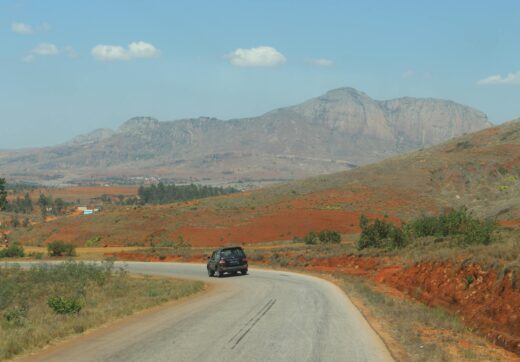
Madagascar Transport Cost 2026: What Getting Around Really Costs
Affiliate disclosure: This article contains sponsored links to hotels, tour operators, insurance providers, and other travel services. We earn a small commission if you book through our links, at no extra cost to you.
Madagascar Transport Cost 2026 — At a Glance
- What drives the cost: moving across the island — the private car + driver-guide + fuel, plus any domestic flights
- The cheap option: the taxi-brousse is very inexpensive, but slow and tough
- The biggest saving: sharing the fixed car-and-driver cost across a group, and focusing your route
- Hire a car & driver: compare car-and-driver options on Carla
- Cost a trip honestly: contact Carla for figures with no hidden extras
- Book tours & transfers: on GetYourGuide
- International flight protection: EU261 up to €600 per passenger
- Travel insurance: SafetyWing Nomad Insurance
- Where to stay: Antananarivo stays on Agoda
💰 Carry Your Cash Safely in Madagascar
Madagascar runs largely on cash. Keep your money secure:
- Hidden money belt — keeps cash and passport out of a pickpocket’s reach. See on Amazon →
- RFID-blocking wallet — organises cards and blocks electronic skimming. See on Amazon →
- Neck wallet / passport pouch — discreet document holder for transit days. See on Amazon →
As an Amazon Associate we earn from qualifying purchases.
Most people planning a first trip to Madagascar budget carefully for hotels and meals, then get a surprise when they start pricing the actual journey. On this island the food is cheap, the guesthouses are cheap, and a cold beer at the end of a long day costs very little. What is not cheap is the simple act of moving from one place to the next. Madagascar is enormous, the roads are slow, and the distances between the things you came to see are long. Getting around is not a line item buried at the bottom of the budget — for most itineraries it is the single largest cost of the whole trip.
This guide breaks down what getting around really costs in 2026: what drives the price, where the money actually goes, and the few decisions that move the total more than anything else. We will keep the numbers honest — relative ranges and plain descriptions rather than precise figures, because real costs swing with your route, your dates, your group size, and the fuel price on the day. For the full menu of ways to travel, start with our pillar guide on how to get around Madagascar, then come back here to understand the money.
The Big Picture: Transport Is the Biggest Movable Cost
Here is the counter-intuitive truth that catches almost every first-timer. In a cheap country, you expect the big costs to be flights and hotels, with local travel a rounding error. Madagascar flips that. Your daily living costs — a clean guesthouse, a plate of rice and zebu, a coffee, a bottle of water — stay genuinely low almost everywhere you go. But the cost of crossing the island does not. It is large, and crucially, it is the part of the budget you have the most control over.
We call it the biggest movable cost for a reason. You cannot make Madagascar smaller or its roads faster, but you can decide how you cross it, how much ground you try to cover, and how many people share the vehicle. Those three choices — mode, distance, and group size — between them swing the transport bill more than anything else you will decide. Understand them, and you control the trip’s price. Ignore them, and the trip controls you.
Think of it this way: the rest of your budget scales roughly with how long you stay. Transport scales with how far you move and how you choose to move. A two-week trip that loops a single region can cost far less to get around than a two-week trip that races from the highlands to the far north and back, even though the hotel and food bills are nearly identical. The route is the lever.
What Drives Transport Cost
Before you can budget, you need to know what you are actually paying for. Madagascar transport costs come from a handful of distinct sources, and they behave very differently from one another. Some are largely fixed no matter how many of you travel; others scale per person. Knowing which is which is the whole game.
The private car + driver-guide (largely fixed)
For most independent travellers, the backbone of the trip is a private 4×4 or sturdy car with a driver-guide. This is almost always the single biggest line on the transport budget — and the most important thing to understand about it is that the cost is largely fixed. You are renting the vehicle, the driver’s time, and his local knowledge for the duration. Whether one person sits in the back or four do, the day rate barely changes. That single fact reshapes everything else in this guide, which is why it gets its own section below. For the full picture of what that backbone involves, see our private driver-guide guide.
Fuel and long distances
Fuel is folded into most car-and-driver arrangements, but it is worth pulling out because it is the part that responds directly to your route. Madagascar’s distances are long and its roads are slow, so a route that covers a lot of ground burns a lot of fuel and a lot of days. The further and the rougher you go, the more this costs — both in fuel itself and in the extra driving days you are paying the driver for. A focused route that lingers in one or two regions is dramatically cheaper to fuel than a sprint across the map.
Domestic flights
Madagascar’s domestic flights are a per-person cost, and they are not cheap relative to local living. But they buy back something valuable: time. A flight that replaces two or three brutal days on the road can be worth every cent if it lets you reach the far north or a remote park without losing half your holiday to driving. They are a lever, not a default — used wisely on the right legs, they can actually make a trip cheaper overall by cutting driving days. We dig into the trade-off in our domestic flights guide.
Taxi-brousse (the cheap option)
At the very bottom of the cost scale sits the taxi-brousse — the shared minibus that is how most Malagasy people travel. It is astonishingly cheap, a tiny fraction of the cost of a private car, and it is a per-person fare rather than a fixed vehicle rate. That makes it the natural choice for the true shoestring traveller. The trade-off is time, comfort, and predictability, which we cover honestly further down. But on pure cost, nothing beats it.
Boats to the islands
If your route includes islands — Nosy Be, Sainte-Marie, or the smaller offshore spots — you will pay for boat transfers on top of everything else. These range from cheap public ferries to private speedboat charters, and the cost depends heavily on the crossing and whether you share it. Island legs are easy to forget when you are budgeting on a map, so flag them early; they can add up, especially if weather forces a flight instead of a ferry.
In-town transfers and pousse-pousse
Within towns, costs drop back to almost nothing. Airport transfers, short taxi hops in Antananarivo, and the pousse-pousse (the hand-pulled or pedal rickshaws of towns like Antsirabe) are all small change by comparison. They matter for convenience and for tipping etiquette, but they will never move your overall budget. Where they catch people out is the airport transfer on arrival and departure — easy to overlook, simple to pre-arrange.
The Car-and-Driver Backbone
This is the section to read twice, because the car and driver is where most of your transport money goes and where the smartest saving lives. The arrangement is simple: you hire a vehicle with a driver-guide for a set number of days, and that day rate covers the car, the fuel, the driver’s time, and his expertise on roads, parks, and logistics. It is the safest, most flexible, and most comfortable way to see Madagascar — and it is the biggest single line on the budget.
The key insight is that this cost is largely fixed. The car costs what it costs for the day whether it carries one passenger or four. That means the per-person cost falls sharply the more people share it. A solo traveller carries the entire fixed cost alone. A couple splits it in two. A group of four splits it four ways and each person pays a fraction of what the solo traveller pays — for the exact same vehicle, driver, and route.
This is the most important budgeting lever in the whole country, and it explains why so much advice for Madagascar comes back to one idea: share the car. Travelling as a small group, or joining others to share a vehicle, is the single biggest saving available. It does not make the trip worse — you get the same driver, the same flexibility, the same safety — it simply spreads a fixed cost across more wallets. If you want help understanding what the backbone involves day to day, our private driver-guide guide walks through it, and our car rental guide covers the vehicle side.
Domestic Flights: The Time-vs-Money Cost
Domestic flights are where the budgeting gets interesting, because they are the one cost that trades directly against time. On paper, a domestic flight looks expensive — it is a real per-person outlay in a country where almost everything else is cheap. But that framing misses the point. The right flight does not just move you faster; it removes paid driving days, fuel, and a night or two of accommodation from the budget, and it gives back the most valuable thing on a finite holiday: time at your destination rather than time on the road.
The classic example is the far north or a remote southern park. Driving there and back can swallow four or five days of a two-week trip. A flight collapses that into a couple of hours each way. Once you net out the driving days you no longer pay for, the flight can be close to cost-neutral — and you arrive with several extra days to actually enjoy. That is the calculation to make: not “is the flight cheap?” but “what does the alternative cost in days and driving?”
Used badly — flying short legs you could comfortably drive, or flying simply because you can — domestic flights just add cost. Used well, on the long, slow, unavoidable legs, they are one of the smartest ways to spend your transport budget. Our flights versus driving comparison works through which legs are worth flying and which are better driven.
The Budget Option: Taxi-Brousse
If your priority is keeping costs as low as humanly possible, the taxi-brousse is the answer. These shared minibuses connect virtually every town in the country, leave when full, and charge a per-person fare that is a tiny fraction of a private vehicle. For a backpacker on a true shoestring, this is how you make Madagascar affordable — and it is also how you travel alongside Malagasy people, which many find is the most memorable part of the trip.
The trade-off is real and worth stating plainly. Taxi-brousses are slow. They leave when the vehicle is full, not when the schedule says, so departures are fluid and a journey can take far longer than the distance suggests. They are crowded, often well beyond what feels comfortable, and the vehicles vary enormously in condition. You sacrifice flexibility — you cannot stop for a photo or a park you spot along the way — and you spend a lot of your holiday simply waiting and travelling.
For some travellers that trade is exactly right: the cost saving is enormous and the experience is authentic. For others, the time lost and the discomfort eat into a short holiday too heavily to justify. If you are weighing this seriously, our budget travel guide covers how to combine taxi-brousse legs with the occasional shared car to balance cost against sanity.
Sample Transport Budgets by Travel Style
The honest way to think about transport cost is by travel style rather than by precise figures, because the figures move too much to quote reliably. Here is how the three broad styles compare on a relative scale — and notice how group size changes everything in the middle and upper tiers.
Shoestring — taxi-brousse and public transport
This is the lowest-cost way to cross Madagascar by a wide margin. You travel almost entirely by taxi-brousse, supplemented by the occasional shared taxi or local boat. Transport becomes a small fraction of your total budget, dwarfed by even your modest accommodation. The cost is paid in time and comfort rather than money. Because taxi-brousse fares are per person and already cheap, group size barely matters here — there is little fixed cost to share.
Mid-range — a shared car-and-driver
This is the sweet spot for most travellers and the style that rewards smart planning the most. You hire a private car and driver-guide but share it across a group — a couple, a family, or friends travelling together. Because the car cost is fixed, the per-person figure drops steeply with every extra seat filled. Two people pay roughly half each of what a solo traveller would; four pay roughly a quarter each. Transport is still the biggest line on the budget, but a shared car can land at a surprisingly reasonable per-person figure while giving you full flexibility and safety.
Comfort — a private car-and-driver, and selective flying
At the top, you take a private car and driver-guide for your own party and add domestic flights to skip the longest, dullest legs. This is the most comfortable and time-efficient way to travel, and it is the most expensive per person — though again, the more people in your party, the more the fixed car cost spreads. The flying portion adds a genuine per-person cost but buys back days. For travellers with limited time and a healthy budget, this style maximises what you actually see per day on the ground.
The pattern across all three is the same: the fixed car cost is the swing factor, and the more people who share it, the lower everyone’s per-person transport bill. That is why a comfortable shared trip for four can cost less per person than a bare-bones solo journey that still has to cover the same fixed vehicle if it uses one at all.
How Transport Fits the Total Trip Budget
It helps to zoom out and see where transport sits in the whole picture. For a typical mid-range Madagascar trip using a car and driver, transport is usually the largest single category — often larger than accommodation and food combined. That is not a sign you have planned badly; it is simply what crossing this particular island costs. The mistake is to budget for hotels and meals carefully and then treat transport as an afterthought, only to find it dominates the total.
Once you accept that transport leads the budget, the planning falls into place. You build the trip around the route, decide how to cross each leg, and lock in the car-and-driver arrangement and any flights early, because those are the big numbers. Everything else — where you sleep, where you eat — flexes around them and stays affordable. To see how transport slots into a complete trip cost, read our itinerary cost guide, and for the lowest-cost approach overall, our budget travel guide shows how to keep the whole trip lean.
How to Keep Transport Costs Down
Because transport is the biggest movable cost, it is also where smart planning pays off most. A handful of decisions move the bill far more than haggling ever will. None of them involve cutting corners on safety — that is never the saving to make.
Share the car. This is the big one, and it deserves repeating. The car-and-driver cost is fixed, so every extra person who shares it lowers the per-person bill. Travel as a couple, a family, or a small group, or join others to share a vehicle. Nothing else you do will save as much.
Focus the route. Resist the urge to cover the whole island in one trip. A tight loop through one or two regions cuts driving days, fuel, and fatigue, and almost always delivers a richer experience than a frantic dash. Less ground covered means less money spent — and more time enjoying each place. Our best itinerary guide and the southern RN7 route show how a focused route can still pack in plenty.
Mix flying and driving wisely. Use a domestic flight to erase one long, unavoidable leg, then drive the scenic parts. Flying the right leg can be close to cost-neutral once you remove the paid driving days it replaces, while saving you days you would otherwise lose on the road.
Travel in a small group. This is the same point as sharing the car, viewed from the other side: the ideal Madagascar group is small enough to fit one vehicle comfortably and large enough to share its fixed cost. That is the configuration that delivers comfort, flexibility, and a low per-person transport bill all at once.
Hidden Transport Costs to Budget For
The headline car-and-driver rate is the big number, but a few smaller costs ride alongside it. None are large on their own, but together they round out a realistic budget and prevent unwelcome surprises.
- The driver’s meals and accommodation. On some arrangements the driver-guide’s food and lodging on the road are your responsibility; on others they are included. Clarify this upfront, because it quietly changes the true daily cost.
- Tips. A good driver-guide who has kept you safe and shown you the country well is customarily tipped at the end of the trip. Budget for it as a genuine line, not an afterthought.
- Fuel surcharges on rough routes. The hardest, most remote tracks burn more fuel and wear the vehicle harder, and some arrangements price that in separately. Ask whether your quote covers the rough legs of your route.
- Domestic-flight baggage. Domestic flights can carry tighter baggage limits than your international flight. Check the allowance so you are not paying excess fees at a small airport.
- Transfers. Airport pickups, drop-offs, and short hops between a hotel and a boat jetty are small individually but easy to forget entirely when budgeting from a map.
Is a Private Car and Driver Worth the Cost?
For the great majority of visitors, yes — and not as a luxury, but as good value once you account for what it actually buys. The headline cost is real, but so is what you get for it: safety on roads that can be genuinely demanding, the time you save by never waiting for a taxi-brousse to fill, and the flexibility to stop where you like, change plans with the weather, and reach places public transport simply cannot. A good driver-guide is also your translator, fixer, and local expert rolled into one.
Set against the alternatives, the maths is kinder than the sticker price suggests. The moment you share the fixed cost across two, three, or four people, the per-person figure drops into a range that most mid-range travellers find very fair for what they receive. The taxi-brousse is cheaper in raw money, but it costs you days and comfort that a short holiday cannot spare. For most people, on most trips, the car and driver is the option that delivers the most trip per dollar — provided you share it and focus the route.
Getting There and Travelling Well
Before any of this transport begins, you have to reach Madagascar, and the international flight is its own budget line worth protecting. Most routes from Europe connect through a hub, and delays or cancellations happen. If your international flight is routed through Europe and runs into trouble, you may be entitled to compensation of up to €600 per passenger under EU261 — a useful protection on a long, multi-leg journey. You can check your eligibility for EU261 compensation up to €600 per passenger here. Note that this covers the European-routed international flight only — it does not apply to Madagascar’s domestic flights.
Just as important is travel insurance, and on a trip where so much time is spent on the road and in remote regions, it is not optional. Long drives, rough tracks, domestic flights, and out-of-the-way parks all raise the odds of a delay, a missed connection, or a medical need far from a good hospital. SafetyWing Nomad Insurance is built for exactly this kind of long, multi-stop travel, and it is one transport-adjacent cost you should never trim to save money. A single emergency evacuation can dwarf your entire transport budget, which is precisely why SafetyWing cover belongs in your plan from the start.
Cost Your Trip Honestly with Carla
The hardest part of budgeting Madagascar transport from afar is getting honest figures — numbers that match your real route, your dates, and your group size, with no hidden extras tacked on later. That is exactly what a Madagascar-resident specialist can give you. Carla can cost your trip properly, tell you where a flight beats a drive, and show you how the per-person figure falls when you share the car. Reach out to Carla for a transparent costing before you commit, and compare car-and-driver options on Carla to see the backbone of your trip priced clearly. You can also book tours and transfers on GetYourGuide for the legs you want handled in advance.
Frequently Asked Questions
Why is transport the biggest cost in such a cheap country?
Because daily living in Madagascar is genuinely inexpensive, but the island is huge and slow to cross. The cost of moving — a private car, driver-guide, fuel, and the occasional flight — dominates the budget precisely because everything else is so cheap. It is the part of the trip you pay most for and control most.
What is the single biggest way to save on transport?
Share the car. The car-and-driver cost is largely fixed regardless of how many people travel, so splitting it across a small group lowers the per-person figure more than any other decision. Focusing your route to cover less ground is the close second.
Is the taxi-brousse really that much cheaper?
Yes — it is a tiny fraction of the cost of a private vehicle, charged per person. The catch is time and comfort: taxi-brousses are slow, crowded, and leave only when full, so you trade money for hours and flexibility. It suits true shoestring travellers more than time-pressed ones.
Are domestic flights worth the extra money?
On the right legs, yes. A flight that replaces several days of hard driving removes paid driving days, fuel, and nights of accommodation, and can be close to cost-neutral while saving you precious holiday time. On short legs you could easily drive, flying just adds cost.
Should I budget anything beyond the car-and-driver rate?
Yes — allow for the driver’s meals and lodging if not included, a tip at the end, possible fuel surcharges on rough routes, domestic-flight baggage limits, and airport and boat transfers. None are large alone, but together they round out a realistic budget.
💰 Know What Getting Around Will Cost — Ask Carla
Get honest transport figures for your route, dates, and group size — with no hidden extras — from a Madagascar-resident specialist. Reach out to Carla.
Plan Your Trip to Madagascar
- Read the full Madagascar Travel Guide
- Explore itineraries by style and duration
- Explore the full destination guide
Where to Stay