Madagascar vs Costa Rica vs Borneo for Wildlife Photography 2026: Which Should You Choose
Affiliate disclosure: This article contains sponsored links to hotels, tour operators, insurance providers, and other travel services. We earn a small commission if you book through our links, at no extra cost to you.
Madagascar vs Costa Rica vs Borneo for Wildlife Photography 2026 — At a Glance
- Madagascar strengths: Lemurs (100+ species, all endemic), chameleons (two-thirds of global species), fossa, unique evolutionary lineages, dry-forest + rainforest variety
- Costa Rica strengths: Easy access, established infrastructure, neotropical bird diversity (900+ species), accessible rainforest, well-developed photographer logistics
- Borneo strengths: Orangutans, proboscis monkeys, hornbills, Bornean elephants, Sumatran-overlap species, rainforest specialist subjects
- Cost comparison (10 days wildlife photography couple): Madagascar $25K–$45K, Costa Rica $14K–$28K, Borneo $18K–$32K
- Logistics difficulty: Madagascar high (private planes, helicopters, weather contingency), Costa Rica low (commercial flights, well-paved roads), Borneo moderate (boats, river transport, regional flights)
- Best for first-time tropical wildlife photographer: Costa Rica (easiest), then Madagascar (most unique), then Borneo (specialist)
- Insurance: SafetyWing Nomad Insurance Complete — non-negotiable for all three destinations given remote-region medical exposure
- Flight protection: EU261 €600 per passenger for European inbound flight disruptions
- Madagascar Tana hotels: Antananarivo premium suites on Agoda
🐿 Wildlife-Watching Gear for Madagascar
The right kit turns a good wildlife trip into a great one:
- 8×42 binoculars — essential for spotting lemurs and chameleons in the canopy. See on Amazon →
- Rechargeable headlamp — essential for night walks; red mode won’t disturb wildlife. See on Amazon →
- Trekking poles — ultralight support for long park hikes. See on Amazon →
- Hiking daypack — comfortable pack for water, camera and layers. See on Amazon →
- Picaridin insect repellent — DEET-free protection against malaria mosquitoes. See on Amazon →
As an Amazon Associate we earn from qualifying purchases.
Why This Three-Way Comparison Matters for Wildlife Photographers
Madagascar, Costa Rica, and Borneo are the three most-considered destinations for serious tropical-region wildlife photography in 2026. Each delivers exceptional photography but targets meaningfully different priorities. Choosing the wrong destination for your trip profile produces excellent work that’s not what you wanted. This guide compares the three across the dimensions photographers actually care about: subject uniqueness, logistical complexity, cost, infrastructure, and the practical trip experience.
For dedicated Madagascar coverage, see our Best Wildlife Photography Destinations Madagascar 2026 pillar.
The Quick-Answer Comparison Table
| Dimension | Madagascar | Costa Rica | Borneo |
|---|---|---|---|
| Signature subjects | Lemurs, chameleons, fossa | Quetzals, sloths, hummingbirds, frogs | Orangutans, proboscis monkeys, hornbills |
| Endemic species concentration | ~80% | ~5% | ~35% |
| Logistics difficulty | High | Low | Moderate |
| 10-day couple cost | $25K–$45K | $14K–$28K | $18K–$32K |
| Best photography season | Sept–Nov | Dec–Apr | May–Sept |
| Travel time from Europe | 14–18 hours | 11–14 hours | 14–20 hours |
| Established luxury accommodation | Limited (Anjajavy, Miavana, Tsara Komba) | Extensive (Lapa Rios, Pacuare, Nayara) | Moderate (Sukau Rainforest, Borneo Rainforest Lodge) |
| Best for portfolio uniqueness | Yes — no overlap with other destinations | No — extensive other-photographer overlap | Moderate — orangutan iconography is shared |
Subject Comparison — What You Can Photograph Where
Madagascar’s exclusive subjects
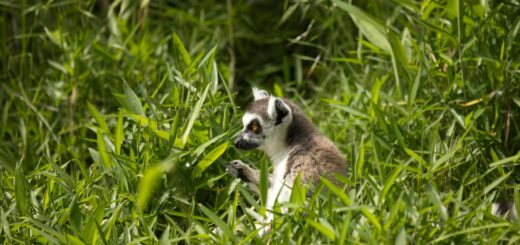
Lemurs (100+ species, all endemic to Madagascar). Fossa (apex predator, no close relative anywhere else). Two-thirds of global chameleon species. Leaf-tailed geckos (Uroplatus genus). Endemic bird families (5 families found only here including ground-rollers, asities). Tomato frogs. Lemurs alone — the indri’s haunting calls, sifakas dance-walking, ringtailed lemurs sun-worshiping — produce images that immediately read as “Madagascar” rather than generic tropical content.
Costa Rica’s exclusive subjects
Resplendent quetzal (the most photographed neotropical bird), 50+ hummingbird species at feeder stations, three-toed sloths, two-toed sloths, red-eyed tree frogs, jaguar (very difficult — only in remote Corcovado), tapir, ocelot, multiple monkey species (white-headed capuchin, mantled howler, Geoffroy’s spider). Costa Rica’s strength isn’t endemism — it’s diversity and accessibility, with 900+ bird species in a country smaller than West Virginia.
Borneo’s exclusive subjects
Bornean orangutan (the iconic primate of the destination), proboscis monkey (endemic, with bizarre nose), Sunda clouded leopard (rare), Bornean pygmy elephant, Asian black hornbill, rhinoceros hornbill, ten species of hornbill total, multiple langur species, bearded pigs. Borneo’s photography strength is primate diversity with a single iconic subject (orangutan) that defines portfolio work.
The Cost Comparison — Real Numbers for 10-Day Couple Trips
Madagascar 10-day couple wildlife photography
Base trip cost: $25,000–$45,000 for couple all-inclusive, depending on tier. Andasibe + Anjajavy combination most common pattern. Costs include: international flights from Europe ($5,000–$15,000), Madagascar internal flights/transfers ($3,000–$5,000), 7–8 lodge nights ($8,000–$22,000), park fees and guides ($1,200–$2,000), specialist operator markup ($3,000–$6,000).
The high end ($45K+) reflects Miavana inclusion or specialist photographer-workshop format. The low end ($25K) assumes mid-tier accommodation (Vakôna + Andasibe Hotel rather than Anjajavy or Miavana).
Costa Rica 10-day couple wildlife photography
Base trip cost: $14,000–$28,000 for couple all-inclusive. Multi-destination pattern common — Monteverde + Osa Peninsula + Arenal volcano region. Costs include: international flights from Europe ($3,000–$8,000), Costa Rica internal road/regional flight transfers ($1,500–$3,000), 8 lodge nights ($4,000–$11,000), park fees and guides ($800–$1,400), specialist operator markup ($1,500–$3,500).
Costa Rica’s lower cost reflects established infrastructure (commercial flights, paved roads, no helicopter/private plane requirement) and more competitive accommodation pricing.
Borneo 10-day couple wildlife photography
Base trip cost: $18,000–$32,000 for couple all-inclusive. Multi-destination pattern — Kinabatangan River + Sepilok + Danum Valley typical. Costs include: international flights from Europe ($4,500–$10,000), regional flight transfers ($800–$1,500), 8 lodge nights ($6,000–$14,000), park fees and guides ($1,000–$1,800), specialist operator markup ($2,500–$5,000).
Borneo sits between Madagascar and Costa Rica on cost — more infrastructure than Madagascar, less than Costa Rica, with the orangutan subject driving premium accommodation pricing at the few luxury rainforest lodges.
The Logistics Comparison
Madagascar — High Complexity
Logistics involve: private plane transfers (Anjajavy), helicopter transfers (Miavana), Tsaradia internal flights, multi-property combinations with weather contingency. Each transition consumes most of a day. Roads outside main routes are demanding. Equipment-survival requires active humidity management. Specialist operator essentially required for premium trips. The logistical complexity is part of the experience and adds adventure narrative; for pure photography efficiency, it’s the most demanding of the three destinations.
Costa Rica — Low Complexity
Commercial flights to San José (SJO), then 4WD or regional flights to wildlife reserves. Most lodges accessible by sealed road (some final-kilometer rough sections). Internal regional flights are reliable. Self-drive is feasible for confident travelers. Specialist operator helpful but not essential. Costa Rica delivers more photography time per day spent traveling than either Madagascar or Borneo.
Borneo — Moderate Complexity
International flights to Kota Kinabalu or Sandakan, then regional flights or river boats to wildlife reserves. The Kinabatangan River requires boat-based logistics (a positive — best primate viewing is from boats). Danum Valley requires 2-hour drive then river crossing. Equipment management in 95% humidity is demanding. Specialist operator typical but DIY is feasible for experienced travelers.
The Season Conflict — Why You Can’t Combine All Three Easily
The three destinations peak in different seasons, making “I’ll do all three in one year” planning challenging:
- Madagascar peak: September–November (dry, baby lemurs)
- Costa Rica peak: December–April (dry season, easier photography conditions)
- Borneo peak: May–September (dry, orangutan and primate visibility)
The seasons are essentially non-overlapping — meaning a serious photographer aiming to cover all three over time spreads them across 24–36 months, not within a single trip year.
Which Destination for Which Photographer Profile
For first-time tropical wildlife photographers
Start with Costa Rica. The easier logistics, lower cost, and established photographer infrastructure mean your first tropical wildlife trip won’t be derailed by logistical surprises. Returning to Madagascar or Borneo as a “second tropical destination” is the standard pattern.
For photographers building genuinely unique portfolios
Madagascar. The endemic species concentration means your portfolio won’t overlap with the thousands of other Costa Rica and Borneo portfolios in circulation. Editorial and stock photography buyers explicitly value the Madagascar-specific imagery for the uniqueness premium.
For primate photography specialists
Borneo if orangutan is the priority. Madagascar if lemur diversity is the priority. Costa Rica only as a secondary primate destination — its monkey diversity is solid but not the global flagship.
For photographers with limited time but maximum diversity priority
Costa Rica. The country’s small size and concentrated biodiversity mean a 7-day Costa Rica trip can deliver impressive species variety that Madagascar or Borneo can’t match in the same window.
For photographers building a milestone trip narrative
Madagascar. The combination of unique subjects + access logistics (helicopter to Miavana, private plane to Anjajavy) + luxury accommodation creates a milestone-trip experience that Costa Rica’s more accessible nature can’t match.
For specialist bird photographers
Costa Rica has 900+ species, Borneo has the iconic hornbills, Madagascar has the endemic families. The choice depends on whether you want diversity (Costa Rica), iconic targets (Borneo), or endemism (Madagascar).
The Portfolio Distinctiveness Question
One under-discussed dimension: how distinctive will your portfolio be vs other photographers covering the same subjects?
Costa Rica is the most-photographed of the three by serious photographers. Quetzal images, sloth portraits, hummingbird flight shots, red-eyed tree frog macros — these are accessible to virtually every photographer who visits Costa Rica with the right gear. Your Costa Rica portfolio will be technically excellent but contextually familiar.
Borneo’s orangutan imagery is widely photographed but the proboscis monkeys, hornbill diversity, and clouded leopard rarities offer distinctive content. Mid-distinctiveness.
Madagascar produces the most distinctive portfolios because the species (and the visual aesthetic of the dry-forest and rainforest habitats) are simply not photographed at scale by other photographers. Indri, sifakas, leaf-tailed geckos, fossa — these are subjects that read immediately as “Madagascar” to viewers and stand apart from generic tropical portfolios.
The Practical Decision Tree
If you’re trying to decide between these three destinations for a specific upcoming trip, use this practical decision tree:
Question 1: Is this your first tropical wildlife photography trip?
If yes → Costa Rica. The infrastructure forgives mistakes and the species variety builds confidence. If no → continue to question 2.
Question 2: Is portfolio uniqueness the primary goal?
If yes → Madagascar. The endemic concentration is unmatched and the editorial premium for Madagascar imagery is real. If no → continue to question 3.
Question 3: Is orangutan or rainforest primate diversity the priority?
If yes → Borneo. The Sepilok-Kinabatangan-Danum sequence is the gold standard for orangutan and rainforest primate work. If no → continue to question 4.
Question 4: Is budget under $20K for couple, 10 days?
If yes → Costa Rica. Madagascar and Borneo can be done at this tier but compromise quality; Costa Rica delivers full quality at sub-$20K. If no → continue to question 5.
Question 5: Is the trip a milestone celebration (anniversary, retirement, etc.)?
If yes → Madagascar with Anjajavy or Miavana inclusion. The milestone-trip premium is justified by Madagascar’s unique experience. If no → reconsider Costa Rica for the cost-benefit balance.
Question 6: Do you have specific bucket-list species?
Indri or lemurs → Madagascar. Quetzal or sloth → Costa Rica. Orangutan or proboscis monkey → Borneo. The bucket-list trumps general comparison. Photographers who try to satisfy all bucket-list species in a single trip end up with mediocre coverage of all three; specialists who target their bucket-list destination produce far stronger portfolios.
For most photographers, this decision tree resolves to one of three clear answers. If you’re still uncertain after running through it, default to the destination matching your primary photographic interest rather than trying to optimize across all dimensions. The mistake most photographers make is trying to choose the “best” destination overall; the better question is which destination matches the specific portfolio gap or experience priority you have right now. A photographer with extensive Costa Rica work but no Madagascar imagery has a clear next-trip answer; a photographer with no tropical wildlife experience has a different clear answer.
Equipment Considerations — What’s Different at Each Destination
The gear that thrives in Costa Rica’s well-lit lodges differs meaningfully from what survives Madagascar’s high-humidity rainforests and Borneo’s river boats. Photographers choosing destinations should also consider equipment-related implications.
Madagascar equipment realities
The eastern rainforest sites (Andasibe, Masoala, Ranomafana) impose 80–95% humidity for extended periods. Equipment that hasn’t been actively dried fogs internally and degrades over a week-long trip. Sealed dry boxes, silica gel rotation, and microfiber daily care are mandatory. Most photographers also bring rain covers for the inevitable showers. The dry sites (Anjajavy, Berenty) are much easier on equipment but still demand basic dust management.
Lens choice favors fast f/4-5.6 native telephoto over slow f/6.3 zooms. The rainforest light demands light-gathering capability. Tripod use is feasible on marked trails but slows the pacing — many photographers compromise with monopod for rainforest work.
Costa Rica equipment realities
More moderate humidity (60–80% typical) and less aggressive on equipment than Madagascar. Cloud forest sites still demand dry-box overnight storage but less intensively than Madagascar. The bigger Costa Rica equipment consideration is feeder-station and blind work — flash photography is more accepted at established blinds, and many photographers carry multiple flash units for fill and key light on hummingbird feeder stations.
Costa Rica’s well-developed lodge infrastructure means power is reliable, equipment-cleaning stations are common, and replacement gear can sometimes be sourced via San José photo shops if something fails. None of this is true in Madagascar.
Borneo equipment realities
Highest humidity of the three (often 95%+ on Kinabatangan boats), most aggressive on gear. River boat work also introduces water-spray risk that doesn’t apply to Madagascar or Costa Rica. Waterproof bag protection is essential for boat days. Salt corrosion isn’t a major issue (freshwater rivers) but mineral spotting on lenses requires daily wipe-down.
Borneo’s bird and primate photography often happens at greater distances (orangutan canopy nests, hornbill perches) requiring 500mm+ telephoto for many compositions. The longer-reach equipment requirement is genuinely a Borneo-specific consideration.
The mirrorless transition implications
All three destinations work well with modern mirrorless systems (Canon R5/R6, Nikon Z8/Z9, Sony A1/A7R V). Battery life is a genuine consideration at all three — mirrorless systems consume more battery than DSLR equivalents, and Madagascar especially has limited charging infrastructure at some lodges. Pack 3-4x your normal battery capacity.
Storage and backup workflow
All three destinations benefit from dual-SSD redundant backup. Costa Rica’s reliable WiFi makes cloud backup more feasible than Madagascar or Borneo. Most serious photographers maintain dual-SSD plus selective cloud upload of critical frames daily.
Field Photographic Workflow Comparison
How the actual shooting day differs across the three destinations matters as much as subject availability. Photographers comparing destinations should understand how the shooting cadence varies.
Madagascar field cadence
Dawn departures from lodge with pre-arranged park entry, 2–3 hour primary shooting window, return to lodge for mid-day break, afternoon secondary session, night walks for nocturnal subjects. Typically 6–8 hours of active photography per day, with the constraint being light and species activity rather than infrastructure. The challenge is matching naturalist-guide pacing to photographer pace.
Frame production: 800–1,500 frames per active day on lemur subjects. Higher on chameleon and macro days (1,500–2,500 frames). Most days produce 100–200 candidate keepers before final culling.
Costa Rica field cadence
More flexibility on timing because infrastructure supports day-trip access from lodge bases. Dawn quetzal sessions at Talamanca cloud forest, full-day Corcovado peninsula trips, night frog walks, hummingbird feeder stations (productive at virtually any time of day). Typically 7–9 hours of active photography per day with less infrastructure friction.
Frame production: 1,500–2,500 frames per active day. Hummingbird feeder stations and frog macro sessions are particularly high-volume. Many days produce 200–400 candidate keepers.
Borneo field cadence
Boat-based primary shooting on Kinabatangan River (4-hour dawn and dusk boat sessions), interspersed with rainforest treks at Sepilok and Danum Valley. Boats are excellent platforms — stable, allow longer working distances, can position photographers for optimal light. Typically 6–8 hours of active photography per day.
Frame production: 1,000–2,000 frames per active day. Orangutan encounters can be intensive (multiple hours of close-range work); proboscis monkey sessions are usually faster (10–20 minutes per family).
The post-trip workflow difference
Costa Rica’s higher frame volume + higher keeper density means more intensive post-trip culling work. Madagascar’s lower volume but higher uniqueness premium means each keeper has more long-term value but requires more careful editing. Borneo sits between.
Operator Selection Per Destination
Madagascar specialist operators
For Madagascar: Steppes Travel (UK, research-grade), Cortez Travel (US, family + premium), Voyages Madagascar (local, flexible), Audley Travel (UK, white-glove), Wildlife Worldwide (UK, photography-focused). Markup 8–18% above DIY. For detailed operator comparison, see our Madagascar Private Island Packages 2026 guide.
Costa Rica specialist operators
For Costa Rica: Wildlife Worldwide, NaturetTrek, Holbrook Travel, Costa Rica Gateway, Caligo Ventures. The Costa Rica operator market is more competitive, meaning markup is typically lower (5–12%) and quality more variable. Photographer-specific operators include Tropical Birding and Rockjumper Birding Tours for bird-focused work.
Borneo specialist operators
For Borneo: Borneo Eco Tours, Wildlife Worldwide, NaturetTrek, Sticky Rice Travel. The Borneo operator market is dominated by Malaysian and Australian operators with established Kinabatangan + Sepilok + Danum routes. Markup 8–15% above DIY.
Cross-destination operators
Wildlife Worldwide and NaturetTrek work all three destinations. For photographers planning a multi-year sequence covering Madagascar, Costa Rica, and Borneo, working with a consistent operator across destinations builds relationship value and operational efficiency. The specialist relationships compound over multiple trips.
Three Decision Stories — How Real Photographers Chose
Story 1 — The Magazine Photographer Choosing Madagascar
Profile: London-based wildlife photographer for BBC Wildlife, deciding between Madagascar and Borneo for a 2026 feature assignment. Chose Madagascar because the editorial brief explicitly required “subjects readers haven’t seen before.” Borneo’s orangutan imagery is too saturated; Madagascar’s lemurs and chameleons satisfied the uniqueness requirement.
Story 2 — The Stock Photographer Choosing Costa Rica
Profile: NYC-based stock contributor with multi-year contracts. Choosing 2026 trip destination. Chose Costa Rica because the established infrastructure allows reliable trip planning (no helicopter weather contingencies) and the volume of frames per trip-day is highest. Stock photography revenue per trip-day is meaningfully better in Costa Rica.
Story 3 — The Honeymoon Photographer Choosing Borneo
Profile: Singapore-based couple, both photographers, honeymoon 2026. Chose Borneo because regional proximity made it feasible without the long-haul flight from Europe/America and because the orangutan iconography matched their portfolio-building priorities. Plan to follow with Madagascar in 2028.
Combining Madagascar with Costa Rica or Borneo — The Multi-Year Plan
Serious tropical wildlife photographers typically don’t choose between these destinations — they sequence them over 2–4 years. The common pattern:
- Year 1: Costa Rica (December–April) for first tropical wildlife trip experience, infrastructure learning, basic gear-survival skills
- Year 2: Madagascar (September–November) for endemic-species portfolio building
- Year 3: Borneo (May–September) for orangutan and primate specialist work
- Year 4+: Return trips to whichever destination produced the strongest portfolio chemistry
This sequencing allows skills and gear to build from accessible (Costa Rica) to demanding (Madagascar) to specialist (Borneo). For dedicated Madagascar trip planning within this sequence, see our Madagascar Luxury Itinerary 2026 guide.
🛡️ Insurance for All Three Destinations — Madagascar travel insurance guide
All three destinations involve remote-region exposure with significant medical evacuation risk. SafetyWing Nomad Insurance Complete at $35–$85/person/week covers unlimited evacuation. For higher equipment coverage, supplement with World Nomads or manufacturer warranty extensions.
Common Mistakes Made Choosing Between These Three
- Choosing Madagascar for “easy first tropical wildlife trip.” Madagascar is genuinely demanding logistically. Costa Rica is the first-tropical-trip default for most photographers.
- Skipping Madagascar because of cost. Madagascar at the $25K-$35K tier delivers portfolio uniqueness that Costa Rica at the same price cannot. The price reflects access difficulty rather than fundamental quality difference.
- Trying to do Madagascar and Borneo in one trip. Different seasons, different routing, different gear requirements. Sequence them in different years.
- Underestimating Costa Rica’s photographer-saturation. Costa Rica wildlife photography is excellent but extremely well-trodden. Editorial buyers explicitly note the genericness of Costa Rica portfolios vs Madagascar.
- Choosing Borneo for “primate diversity.” Borneo has fewer primate species than Madagascar (12 vs 100+). Borneo’s primate appeal is the iconic orangutan, not diversity.
Frequently Asked Questions
Which destination should I do first?
Costa Rica for accessibility-first learning, Madagascar for portfolio uniqueness, Borneo for orangutan specifically. Most photographers in the multi-destination sequence start with Costa Rica.
Can I combine Madagascar with another Indian Ocean destination?
Yes — Madagascar + Mauritius or Madagascar + Seychelles works for couples wanting wildlife + beach. Madagascar + Africa mainland safari (Tanzania, Kenya) is the safari-extension pattern, common with Audley Travel itineraries.
Which has the best birds?
Costa Rica for diversity (900+ species). Borneo for iconic hornbills. Madagascar for endemic-family uniqueness (5 endemic families). Specialist bird photographers usually prioritize Costa Rica for portfolio building, then add Madagascar for uniqueness.
Which is best for macro photography (frogs, reptiles, insects)?
Costa Rica has the highest macro-subject density (red-eyed tree frog, glass frog, poison dart frog, etc.). Madagascar has unique macro subjects (leaf-tailed gecko, tomato frog, panther chameleon). Borneo’s macro is excellent but less iconic.
How does Madagascar’s accommodation tier compare to Costa Rica’s?
Costa Rica has more luxury lodge options (Lapa Rios, Nayara, Pacuare). Madagascar’s top tier (Anjajavy, Miavana) is competitive on a per-property basis but the total selection is narrower.
What about Madagascar + cruise extensions?
Some operators offer Madagascar + Indian Ocean cruise combinations (Silversea, Ponant) for couples wanting wildlife + beach + ship-based travel. Less photographer-friendly but appealing to soft-adventure couples.
Can I see jaguar / leopard / orangutan / lemur all in one year?
Yes if you sequence: Madagascar (September), Borneo (May next year), Costa Rica (December same year as Borneo) — but it requires aggressive planning and significant cost. Most photographers spread these across 3 years.
🌴 Plan Your Madagascar Photography Trip With Carla
If you’ve decided Madagascar is the right photography destination for your portfolio, reach out to Carla, our Madagascar-resident specialist. She’ll help you sequence the right reserves, identify the best dates for your target species, and coordinate the logistics that make Madagascar wildlife photography work.
Related Madagascar wildlife photography reading:
- Best Wildlife Photography Destinations Madagascar 2026 — Complete Pillar
- Andasibe-Mantadia for Photographers 2026 — Complete Guide
- Madagascar Luxury Itinerary 2026 — How to Build the Trip
Plan Your Trip to Madagascar
- Read the full Madagascar Travel Guide
- Explore itineraries by style and duration
- Explore the full destination guide
Where to Stay