RN7 Road Trip Complete Guide 2026: Antananarivo to Tuléar Stage by Stage
Affiliate disclosure: This article contains sponsored links to hotels, tour operators, insurance providers, and other travel services. We earn a small commission if you book through our links, at no extra cost to you.
RN7 Road Trip Complete Guide 2026 — At a Glance
- The route: Antananarivo to Tuléar (Toliara) — roughly 950 km of Madagascar’s most varied and rewarding road, the country’s iconic overland journey
- Duration: 8–10 days to do it justice (the drive alone is several days; the stops deserve time)
- Key stops: Antsirabe, Ranomafana, Fianarantsoa, Ambalavao/Anja, Isalo, Tuléar
- What you see: Highlands, rainforest, terraces, wine country, community reserves, canyons, spiny forest, and the southwest coast
- How: Car and driver-guide (standard vehicle suffices); dry season (April–November) strongly recommended
- Flight protection: EU261 €600 per passenger for European inbound flight disruptions
- Travel insurance: SafetyWing Nomad Insurance — essential for overland travel
- En-route hotels: RN7 stays on Agoda
🎒 Madagascar Trip Essentials
A few inexpensive items make the biggest difference on the ground in Madagascar:
- Picaridin insect repellent — DEET-free protection against malaria mosquitoes. See on Amazon →
- Permethrin clothing spray — treat clothes; kills mosquitoes on contact for weeks. See on Amazon →
- Pop-up mosquito net — budget lodges rarely provide one; packs down tiny. See on Amazon →
- Water filter bottle — tap water isn’t safe to drink in Madagascar. See on Amazon →
- Universal travel adapter (USB-C) — Madagascar uses European-style plugs. See on Amazon →
- 8×42 binoculars — essential for spotting lemurs and chameleons in the canopy. See on Amazon →
As an Amazon Associate we earn from qualifying purchases.
The RN7 is Madagascar’s great road trip — a roughly 950-kilometre journey from the highland capital of Antananarivo south to the coastal town of Tuléar, threading through the most varied and rewarding stretch of the entire island. In a single overland route it delivers misty rainforest, terraced highlands, wine country, granite landscapes, community reserves, dramatic canyons, surreal spiny forest, and finally the reef-sheltered beaches of the southwest. For most travelers who want to experience Madagascar’s diversity in one coherent journey, the RN7 is the answer — and this complete guide covers everything you need to plan and enjoy it.
It builds on our Madagascar road trips and overland routes pillar with a stage-by-stage, practical deep dive into the route itself: every major stop, how long to spend, what to see, where to stay, how to travel it, and how to make the most of the journey. Whether you’re planning the classic 8–10 day version or a longer exploration, this is your RN7 companion.
Why the RN7 Is Madagascar’s Classic Road Trip
The RN7 earns its status as Madagascar’s iconic overland route through sheer variety and accessibility. No other single road delivers such a cross-section of the island: you begin in the cool highlands amid rice terraces and brick villages, descend into misty rainforest alive with lemurs, pass through the Betsileo terrace country and Madagascar’s surprising wine region, cross granite landscapes dotted with community reserves, reach the dramatic canyons of Isalo, and finally descend through the otherworldly spiny forest to the warm southwest coast. Each stage is distinct; together they form a journey through Madagascar’s astonishing diversity.
Crucially, the RN7 is also the most travel-friendly of Madagascar’s overland routes. It’s paved and in reasonable condition by Madagascar standards, dotted with good lodges and welcoming towns, and well-served by experienced driver-guides who know it intimately. This combination of unmatched variety and relative ease makes it the natural choice for a first Madagascar road trip, and the spine of most southern Madagascar itineraries. It’s the route that shows you, in one journey, why Madagascar is unlike anywhere else.
The Route Stage by Stage
Antananarivo to Antsirabe (about 170 km)
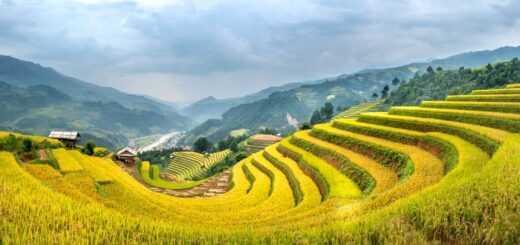
The journey begins in the capital and climbs through the highland heartland — terraced rice paddies, brick villages, and the cool, clear light of the high plateau — to Antsirabe, a colonial-era spa town about three to four hours south. Antsirabe is famous for its colorful pousse-pousse (rickshaws), its thermal heritage, and its craft workshops producing semi-precious stones, intricate miniatures, zebu-horn items, and embroidery. It’s a gentle, characterful first stop that introduces highland culture and the rhythm of the road.
Antsirabe to Ranomafana (about 240 km)
Continuing south and east, the route descends toward Ranomafana National Park, a misty montane rainforest that is one of the RN7’s wildlife highlights. The park protects the golden bamboo lemur — whose discovery led to its creation — along with red-bellied lemurs, diverse birds, and the atmospheric cloud forest. Day and night walks reveal the rainforest’s wildlife. Ranomafana deserves at least a full day, ideally two, and its full story appears alongside the island’s other parks in our national parks guide.
Ranomafana to Fianarantsoa and Ambalavao (about 150 km)
The road climbs back into the highlands to Fianarantsoa, the cultural capital of the Betsileo people and the gateway to Madagascar’s unexpected wine country. The old town, the surrounding terraces, and the historic Fianarantsoa–Côte Est railway are highlights, and the Fianarantsoa wine region is a delightful surprise. Continuing south, Ambalavao offers Antemoro paper-making, one of Madagascar’s largest zebu markets, and — just beyond — the Anja Community Reserve, a model of village-led conservation where habituated ring-tailed lemurs live among dramatic granite cliffs.
Ambalavao to Isalo (about 270 km)
This is one of the RN7’s most dramatic stages, as the highland terraces give way to vast, open landscapes and the road descends toward Isalo National Park. The scenery opens up spectacularly, and Isalo itself — Madagascar’s “Grand Canyon” of eroded sandstone, deep canyons, natural pools, and palm-lined oases — is the scenic climax of the route. Ring-tailed lemurs, hiking, swimming in natural pools, and the famous sunset at the Window of Isalo make this a highlight for most travelers; the full guide is our Isalo complete guide. Allow at least two nights here.
Isalo to Tuléar (about 240 km)
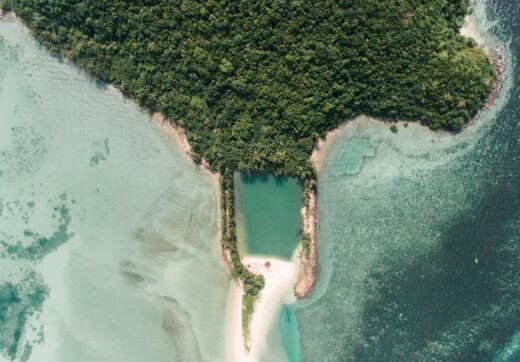
The final stage descends through the increasingly arid landscape to the spiny forest — a surreal ecosystem of thorny, water-storing endemic plants found nowhere else — and on to Tuléar (Toliara) on the southwest coast. Tuléar is the gateway to the reef-sheltered beaches of Ifaty and Anakao, where many RN7 travelers finish their journey with a few days of sand, snorkeling, and seafood — a fitting reward after the overland adventure.
How Long to Spend
The RN7 rewards time. While the driving alone could theoretically be compressed, doing so wastes the journey’s greatest assets — the stops. A satisfying RN7 trip needs 8–10 days: realistically, that’s a night in Antsirabe, two at Ranomafana, one or two around Fianarantsoa and Ambalavao, two at Isalo, and a finish at Tuléar or the coast. Trying to do it in less means rushing the highlights and spending exhausting days driving. With more time, two weeks allows a more relaxed pace and additional exploration. The most common RN7 mistake is under-allowing time, turning a rich journey into a tiring dash. Build in generous time, and the RN7 becomes one of the great road trips anywhere.
How to Travel the RN7
The RN7 is best — and almost always — traveled by car with a driver-guide. While it’s the most self-drive-feasible of Madagascar’s routes (it’s paved and relatively straightforward), the overwhelming majority of travelers use a driver-guide, and for good reason: the driver handles the variable road conditions, the language, and the logistics, while doubling as a guide who interprets the landscape, culture, and wildlife along the way. A standard vehicle suffices for the RN7 (unlike the rough western and southern routes that need 4×4). The driver-guide model turns the drive from a chore into a continuous, guided experience, and is excellent value. The honest comparison of self-drive versus driver-guide versus flying is covered in our companion article.
Realistic pacing is essential: the RN7’s stages take longer than the distances suggest, with slow stretches, towns, and stops. Plan for driving days that don’t exhaust, leave time for the stops, and never drive at night. Comprehensive travel insurance is essential given the overland nature and remote stretches.
When to Drive the RN7
The dry season (April–November) is the time to drive the RN7. Roads are in their best condition, the weather is comfortable for long drives and the stops, and the parks are at their most accessible. The cooler dry-season months (roughly May–September) are especially pleasant. The wet season (December–March) brings rain that can affect the road and the experience, though the RN7 remains more passable than Madagascar’s rougher routes. For the best combination of road conditions, weather, and wildlife, the dry season — particularly the September–November window when wildlife is most active — is ideal.
A Sample RN7 Day-by-Day Itinerary
For travelers wanting a concrete plan, this classic 9-day RN7 itinerary works beautifully and can be adjusted to taste.
Day 1 — Antananarivo to Antsirabe: A morning departure, driving through the highlands to Antsirabe. Afternoon exploring the town by pousse-pousse, visiting craft workshops. Overnight Antsirabe.
Day 2 — Antsirabe to Ranomafana: A scenic drive descending toward the rainforest, arriving at Ranomafana. Optional afternoon orientation walk. Overnight near the park.
Day 3 — Ranomafana National Park: A full day in the rainforest — a morning guided walk to find lemurs and birds, a night walk for nocturnal species. Overnight near the park.
Day 4 — Ranomafana to Fianarantsoa and Ambalavao: Drive to Fianarantsoa, exploring the old town and perhaps a wine tasting, then on to Ambalavao for Antemoro paper and the zebu market. Overnight Ambalavao area.
Day 5 — Anja Reserve to Isalo: A morning at the Anja community reserve with its ring-tailed lemurs and granite cliffs, then the dramatic drive to Isalo. Sunset at the Window of Isalo. Overnight Isalo.
Day 6 — Isalo National Park: A full day hiking Isalo’s canyons, swimming in a natural pool, and soaking in the landscape. Overnight Isalo.
Day 7 — Isalo to Tuléar and the coast: Drive down through the spiny forest to Tuléar and on to Ifaty or Anakao. Overnight on the coast.
Days 8–9 — Southwest coast: Relax on the reef-sheltered beaches, snorkel, and enjoy seafood before flying back from Tuléar. A perfect beach finale to the overland adventure.
This itinerary can be compressed to 7 days by trimming the coast, or extended with an eastern rainforest start (Andasibe) or more time at the highlights. It captures the full RN7 experience at a satisfying pace.
RN7 Wildlife
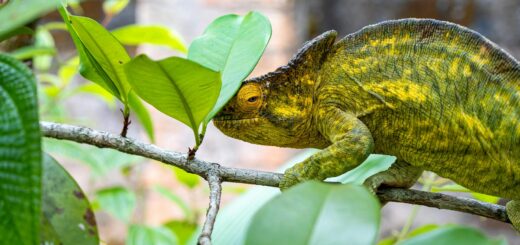
The RN7 is as much a wildlife journey as a scenic one. Ranomafana’s rainforest is the wildlife highlight, home to the golden bamboo lemur, red-bellied lemurs, diademed sifakas, and a wealth of birds, chameleons, and frogs, with night walks revealing nocturnal species. The Anja reserve offers superb close encounters with habituated ring-tailed lemurs against its granite backdrop. Isalo shelters ring-tailed lemurs and Verreaux’s sifakas among its canyons, plus endemic birds and the unique Pachypodium flora. Along the route, roadside chameleons, birds, and the gradual transitions between ecosystems add constant natural interest. The RN7 thus delivers a genuine cross-section of Madagascar’s wildlife — rainforest, dry-forest, and canyon species — making it a rewarding route for nature lovers as well as scenery and culture seekers. A good driver-guide spots wildlife along the way and ensures the best park experiences at each stop.
Highlights and Detours Off the RN7
Beyond the main stops, the RN7 offers worthwhile detours and lesser-known highlights. Near Fianarantsoa, the historic railway to the east coast is one of the world’s great scenic train journeys for those with time. The wine estates around Fianarantsoa offer tastings of Madagascar’s unexpected highland wines. Ambalavao’s surroundings include granite domes popular with climbers and the gateway to the Andringitra massif for trekkers. Beyond Isalo, the sapphire-mining town of Ilakaka offers a glimpse into Madagascar’s gem trade. And the southwest coast beyond Tuléar opens up the reef, the Vezo fishing culture, and quieter beaches. These detours let travelers with extra time deepen the RN7 experience, turning the classic route into a richer, more personalized journey. A knowledgeable driver-guide can suggest detours suited to your interests and the season.
RN7 for Different Travelers
First-time visitors find the RN7 the ideal Madagascar introduction — varied, manageable, and delivering the island’s highlights in one journey. Wildlife enthusiasts value the rainforest and reserve stops, with lemurs at every major park. Culture-focused travelers appreciate the highland heartland, the Betsileo country, and the craft towns. Active travelers enjoy the hiking at Ranomafana and Isalo. Families can manage the RN7 well if they embrace the pace, with the variety keeping children engaged and the natural pools and lemurs as highlights. Couples and honeymooners can pair the journey with a romantic coastal finale. The RN7’s versatility — delivering wildlife, culture, landscape, and coast — is precisely what makes it suit such a range of travelers, and why it remains Madagascar’s most popular overland route.
Where to Stay Along the RN7
The RN7 is well-served by accommodation, one of the reasons it’s the most traveler-friendly route. Each major stop has good options: characterful hotels in Antsirabe, forest lodges at Ranomafana, comfortable hotels in Fianarantsoa, and a range at Isalo from comfortable to genuinely upscale (some with pools overlooking the massif). Basing your overnight stops at these towns breaks the journey well and puts each stage’s highlights within reach. Compare current RN7 accommodation on Agoda to plan your stops; the best lodges, especially at Ranomafana and Isalo, book out in peak dry-season months, so early booking is wise.
The RN7 in the Wet Season
While the dry season is strongly recommended, some travelers do drive the RN7 in the wet season (December–March), and understanding the trade-offs helps. In its favor, the wet season brings lush green highlands, dramatic skies, fewer tourists, and the rainforest at its most vibrant — Ranomafana is especially atmospheric. Chameleons and frogs are more active, and the landscapes are at their greenest.
Against it, the rains can make the road rougher and slower, with the risk of delays from weather, and the experience is generally less comfortable for long drives. The RN7 remains more passable than Madagascar’s rougher western and southern routes — it doesn’t close entirely — but conditions are variable, and cyclonic weather (most likely January–March) can cause serious disruption. The parks remain accessible but wetter underfoot.
The verdict: the dry season is the safer, more comfortable, and generally better choice for the RN7, and most travelers should plan accordingly. The wet season can work for flexible travelers who prioritize lush scenery and fewer crowds over comfort and reliability, and who build in buffer time for weather — but it’s not the default recommendation. For a first RN7 trip, or for travelers without flexibility, the dry season (April–November) is the clear choice, and the shoulder months around it offer a good balance of decent weather and lighter crowds.
Combining the RN7 with the Rest of Madagascar
The RN7 is often the centerpiece of a broader Madagascar trip. Many travelers add an eastern rainforest extension (Andasibe, for the indri) before starting south, or fly to Tuléar at the end to avoid the long return drive and add a southwest beach finale. Others combine the RN7 with a flight to Nosy Be or the north for a beach-and-wildlife contrast. The route’s position as the spine of southern Madagascar makes it easy to extend with the highlands’ culture (detailed in our Antananarivo and highlands cultural guide) at the start, or coastal relaxation at the end. However you frame it, the RN7 delivers the richest overland core of any Madagascar itinerary.
Practical RN7 Tips
Allow generous time: The single most important tip — don’t rush the RN7. Build in two nights at the major stops and realistic driving times.
Use a driver-guide: Far better value and experience than self-driving; the guide interprets the journey and handles the logistics.
Travel in the dry season: April–November for the best roads, weather, and wildlife.
Pack layers: The highlands are cool (even cold at night in winter), while the southwest is hot — bring clothing for both.
Bring swimwear: Isalo’s natural pools and the southwest beaches reward it.
Carry cash: Roadside purchases and smaller towns need cash; carry enough in small denominations.
Embrace the stops: The markets, viewpoints, and roadside life are part of the RN7 experience — build in time to enjoy them.
The Character of the RN7
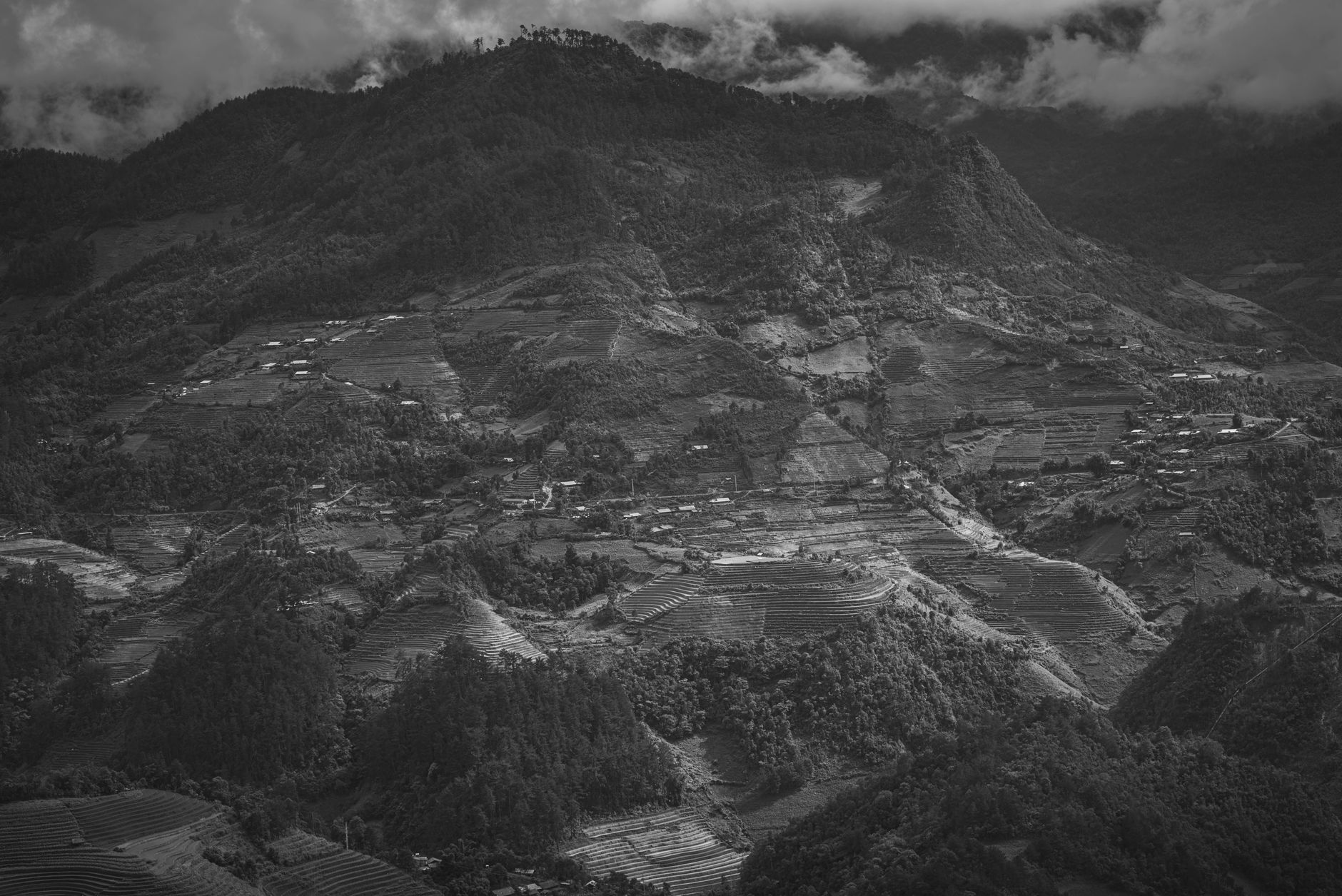
Part of what makes the RN7 special is its character — the texture of the journey itself, beyond the headline stops. This is a road that passes through the living heart of highland Madagascar, and the experience of traveling it is a continuous immersion in the country’s landscapes and daily life. The terraced rice paddies of the highlands, sculpted over generations, are among the most beautiful agricultural landscapes anywhere. The brick villages with their distinctive highland architecture, the markets spilling onto the roadside, the zebu carts and the rhythm of rural life — these unfold continuously, making the drive itself an experience rather than mere transit.
The road also tells the story of Madagascar’s geography and history. It connects the highland kingdoms’ heartland to the southern frontier, passing through the territories of the Merina, Betsileo, Bara, and other peoples, with the changing architecture, dress, and customs revealing the island’s human diversity. The gradual transition from cool highlands to arid south, from rainforest to spiny forest, is a journey through Madagascar’s astonishing ecological range. Travelers who pay attention to this texture — who watch the landscape and life change mile by mile — find the RN7 far richer than a simple list of stops suggests. The road is a thread connecting the many Madagascars into one, and traveling it slowly, in the spirit of mora mora, is the way to appreciate the whole.
Practical Driving Notes
A few practical realities shape the RN7 experience. The road is paved throughout and in reasonable condition by Madagascar standards, but expect rough patches, potholes, and slow stretches — average speeds are low, and the stages take longer than the distances suggest. The road carries varied traffic: trucks, taxi-brousse (bush taxis), zebu carts, pedestrians, and livestock, all requiring careful, attentive driving — which is one reason the driver-guide model is so valuable.
Night driving is strongly discouraged and should be avoided entirely; plan to reach your overnight stops before dark. Fuel is available in the towns along the route, but it’s wise to keep the tank topped up between major stops. The towns offer the services travelers need — accommodation, food, fuel, basic supplies — and the spacing of stops along the RN7 is convenient, with no impractically long gaps. The key practical principle is realistic pacing: respect the slow speeds, build buffer time, and don’t over-pack the days. With a good driver-guide handling the practicalities, the RN7’s driving challenges become a smooth background to the journey rather than a source of stress, leaving you free to enjoy the landscapes and stops.
Why the RN7 Endures as Madagascar’s Classic
Of all the ways to experience Madagascar, why does the RN7 remain the classic? Because it distills the island’s diversity into a single, coherent, achievable journey. Madagascar’s wonders are scattered across a vast island with challenging logistics, and the RN7 threads the greatest concentration of them — rainforest, highlands, wildlife, culture, canyons, and coast — into one route that’s both rich and relatively manageable. For travelers who want to understand Madagascar rather than just visit a highlight or two, the RN7 delivers the fullest picture in the most accessible form.
It endures, too, because the journey itself is so rewarding. The RN7 isn’t just a way to connect destinations; it’s an experience in its own right, the drive as memorable as the stops. The gradual unfolding of the landscape, the roadside encounters, the sense of traveling through the living country — these are what travelers remember, and what no fly-in itinerary can replicate. The RN7 is Madagascar’s classic precisely because it captures what makes Madagascar special: not just the destinations, but the extraordinary, varied, living island that connects them.
For first-time visitors, the RN7 is the natural introduction; for returning travelers, it remains a touchstone, the route against which other Madagascar journeys are measured. It is, quite simply, the best single way to experience the island’s diversity — and the reason it tops most travelers’ Madagascar plans. Whether you have a week or two, whether you want wildlife, culture, or scenery, the RN7 delivers, and delivers richly. It is Madagascar’s great road, and traveling it well is one of the finest experiences the island offers.
Carla / Voyagiste Madagascar (RN7 trip coordination)
Madagascar-resident specialist for RN7 and overland travel. Contact Carla directly to coordinate an RN7 road trip — a quality car and expert driver-guide, well-placed overnight stops, realistic pacing, and the right extensions — for the richest overland journey Madagascar offers.
Packing and Preparing for the RN7
A little preparation makes the RN7 far more comfortable. Because the route spans cool highlands and the hot southwest, pack layers: warm clothing for the highland evenings (genuinely cold in the dry-season winter) and light, breathable clothes for the south and coast. Bring sturdy footwear for the park walks at Ranomafana and the canyon hikes at Isalo, and swimwear for Isalo’s natural pools and the southwest beaches.
For the drive itself, bring water, snacks, sun protection, and motion-sickness remedies if you’re prone (the winding stretches can be testing). A camera is essential — the landscapes, wildlife, and roadside scenes are endlessly photogenic. Binoculars enhance the wildlife stops. Carry cash in small denominations for roadside purchases, smaller towns, and tips, as card acceptance is limited outside larger hotels. A basic first-aid kit, any personal medications, and insect repellent (especially for the rainforest) round out the essentials.
Beyond packing, preparing mentally for the RN7’s pace is important: embrace the slow speeds and the journey-as-experience ethos, and you’ll enjoy it far more than if you arrive expecting fast, efficient travel. Booking your route, vehicle, driver-guide, and key accommodation in advance — especially for the dry season — ensures a smooth trip. And building in a little flexibility for the unexpected, whether a roadside market that catches your eye or a longer-than-planned wildlife sighting, lets the RN7’s spontaneous pleasures unfold. Well-prepared and well-paced, the RN7 rewards the traveler with one of the world’s great road-trip experiences. The combination of practical readiness and the right mindset — patient, curious, open to the journey — is what turns a good RN7 trip into an unforgettable one.
Frequently Asked Questions
How long is the RN7?
Roughly 950 km from Antananarivo to Tuléar, best done over 8–10 days to allow time for the stops.
What are the must-see stops?
Ranomafana (rainforest and lemurs), Fianarantsoa (culture and wine), Ambalavao/Anja (community reserve), and Isalo (canyons) are the highlights, with Antsirabe a pleasant first stop.
Can I self-drive the RN7?
It’s the most self-drive-feasible Madagascar route, but the overwhelming majority of travelers use a car and driver-guide for better value, safety, and a guided experience.
When is the best time?
The dry season (April–November), with September–November offering the best wildlife. The wet season brings rain that affects the road and parks.
How many days do I need?
8–10 days for a satisfying trip; two weeks for a relaxed pace with extensions. Don’t rush it in less.
Is travel insurance necessary?
Yes. Overland travel makes comprehensive coverage essential.
🌴 Plan Your RN7 Road Trip With Carla
The RN7 is Madagascar’s iconic road trip — and a well-planned journey makes the most of every stage. Reach out to Carla, our Madagascar-resident specialist, to structure your RN7 with a quality car and expert driver-guide, well-placed stops, realistic pacing, and the right extensions for an unforgettable overland adventure.
Plan Your Trip to Madagascar
- Read the full Madagascar Travel Guide
- Explore itineraries by style and duration
- Explore the full destination guide
Where to Stay