Traditional Malagasy Wedding: What Visitors Should Know 2026
This post contains affiliate links. We may earn a small commission at no extra cost to you.
At a Glance
- Three ceremonies typically: traditional engagement (vodiondry), civil registration, religious blessing
- Vodiondry meaning: “sheep’s rump” — the symbolic bride-price the groom’s family offers to the bride’s elders
- Wedding season: peaks May–September (dry season, post-harvest, school holiday weddings)
- Visitor invitation: increasingly common at upper-end hotels — guests are expected to bring a small monetary gift in an envelope
- Dress code if invited: dark suit or formal lamba for men, dress or lamba akotofahana for women, no white
- Best base for highland weddings: Find hotels in Antananarivo on Agoda
- Travel insurance: SafetyWing
💼 Paperwork & Documents Kit
Keep your visa, passport and papers organised and secure:
- RFID passport holder — protects your passport and blocks card-skimming. See on Amazon →
- Travel document organizer — keeps visa papers, tickets and copies in one place. See on Amazon →
- Digital luggage scale — avoid overweight fees at the airport. See on Amazon →
- Travel journal — record the trip and keep key numbers offline. See on Amazon →
- Packing cubes — pack faster and find everything in seconds. See on Amazon →
As an Amazon Associate we earn from qualifying purchases.
A Malagasy wedding is a multi-day, multi-family affair that blends pre-colonial customs with French civil law and (in most cases) a Catholic or Protestant blessing. Visitors are occasionally invited and the protocol is precise. This guide explains what actually happens, what’s expected of guests, and how to behave with grace.
The Vodiondry: Engagement and Bride-Price
The vodiondry — literally “sheep’s rump” — is the foundation of a Malagasy wedding. The groom’s family travels (sometimes hundreds of kilometres) to the bride’s family compound bearing gifts: money in odd-numbered amounts (the locally significant figures of 333,333 Ar or 1,000,001 Ar are common), rum, a slaughtered or live zebu, and pieces of lamba cloth. The bride’s elders receive them, perform a formal speech of acceptance or polite rejection, and the families then negotiate face-to-face under the gaze of an officiating ray amandreny (elder).
The negotiation is theatrical but real. The bride’s family will challenge the groom’s family with questions about his intentions, his trade, his ability to support a household, his reputation. The groom’s family answers through their designated speaker (the mpikabary) in elaborate poetic Malagasy. The vodiondry can take three to four hours. When it ends, the engagement is formal in the eyes of both families and the community. Many Malagasy couples consider this the more important of the wedding moments, with the church ceremony being almost a formality. See our guide to Merina culture and travel customs for the highland version of vodiondry.
The Civil Ceremony and the Religious Blessing
Malagasy weddings have a civil registration at the mayor’s office (mairie) of the bride’s neighbourhood — short, formal, conducted in French and Malagasy, and recorded in the national civil registry. Witnesses sign; the couple sign; the deed is delivered. Most couples then proceed to a religious blessing on the same or following day. Around 40% of Malagasy are Roman Catholic, 40% Protestant (various denominations), and the rest are Muslim or follow traditional ancestor practice. The religious ceremony adapts accordingly.
Catholic weddings at the Cathédrale d’Andohalo in Antananarivo or local parish churches follow the standard Catholic rite, with hymns in Malagasy. Protestant ceremonies tend to be longer with more congregational singing and a substantial sermon. Family members offer testimonials and blessings — a practice borrowed from indigenous tradition and woven into Christian forms. Wedding photographers will work the church doors at signed-off times. After the religious ceremony, the wedding party moves to the reception venue — typically a hotel or family compound. Combine a visit during wedding season with our guide to the best time to visit Madagascar for context on May–September timing.
The Reception: Food, Toasts and Hira Gasy
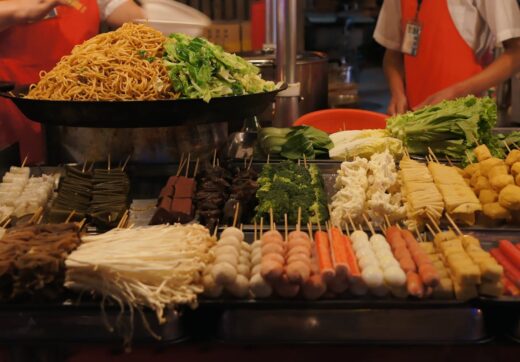
The wedding reception (fety) is the longest and most public part. It opens with formal speeches from designated speakers on both sides — the same theatrical kabary style as the vodiondry, often quoting proverbs (ohabolana) and rhetorical questions. The bride and groom are seated at a high table with elders on either side. Each speaker is applauded politely; speeches can total an hour or more before food appears. Food: typically rice (vary), zebu beef (hen’omby), chicken (akoho), greens (brèdes) and rum. The amount of meat served signals the family’s generosity.
Live music alternates between Hira Gasy on the highlands, salegy in the north, and a DJ playing French and Malagasy pop later. Dancing starts after the meal and may continue past midnight. Guests are expected to dance at least briefly with the bride or groom — refusing is awkward. Wedding gifts arrive throughout: cash in envelopes is handed to a designated family treasurer who records each amount for later reciprocity. Household items (kitchen sets, blankets, bed linens) are also welcome. For visitor protocol, see our fady guide — wedding-day fady vary by region but several are universal.
What to Do If You’re Invited as a Visitor
If a hotel owner, Malagasy friend, or driver-guide invites you to a wedding, accept graciously. Treat the invitation as a serious honour, not a tourist novelty. Prepare a gift: 50,000–100,000 Ar in a sealed envelope is appropriate for foreign guests — equivalent to what a moderately wealthy Malagasy guest would give. Hand it discreetly to the family treasurer, never to the bride or groom directly. Dress code: dark suit for men or a clean smart shirt with no white; modest dress or skirt (knee-length minimum) for women; no white for either — it is the bride’s colour.
Arrive on time for the religious ceremony but expect the reception to run on Malagasy time — start declared at 14:00 may actually launch at 15:30. Speak when spoken to during the formal speeches; do not start side-conversations. Dancing: yes if invited, no if not — never pull the bride away from her family. Photography: ask the family photographer before raising your camera; many will welcome additional shots they can share. Drinking: rum and beer flow; do not visibly outpace the elders. If your invitation is in a remote village, you may need to plan multi-day transport via private 4WD: Compare Madagascar car rental prices on Carla.
Frequently Asked Questions
How likely am I to be invited to a Malagasy wedding as a tourist?
More likely than you’d expect, particularly if you stay multiple nights in family-run guesthouses, take a multi-day driver-guide circuit, or visit during May–September wedding season. Invitations from hotel staff, drivers, or new acquaintances are sincere and should be honoured.
Can I attend a vodiondry as a visitor or only the public ceremony?
The vodiondry is typically a closed family affair. Visitors are usually invited only to the religious ceremony and reception. If invited to the vodiondry itself, it is a major honour — sit quietly with elders on the groom’s side and do not contribute to the speeches unless explicitly asked.
What is the difference between a Merina wedding and a coastal Sakalava wedding?
Highland Merina weddings emphasise the kabary (formal oratory) and lamba akotofahana silk. Sakalava coastal weddings emphasise the zebu sacrifice, drumming and ancestral invocations, with less formal speech-making. Length, formality and food details all vary regionally.
A Malagasy wedding is one of the deepest cultural experiences a visitor can have on the island — but it is also a major event for the host family. Honour the invitation, follow the protocol, bring a thoughtful gift, and you will be welcomed warmly. Cover your trip properly: Get SafetyWing before you fly — from $1.82/day. Multi-day rural travel to a remote wedding venue is exactly when medical or evacuation cover earns its premium.
Travel Insurance for Madagascar
Medical evacuation from Madagascar costs $30,000–$80,000. Don’t travel without cover.
- SafetyWing — monthly-subscription travel medical cover; you can check their plans.
- World Nomads — single-trip travel insurance with adventure-activity options.
Plan Your Trip to Madagascar
- Read the full Madagascar Travel Guide
- Explore itineraries by style and duration
- Explore the full destination guide
Where to Stay