Tsingy de Bemaraha 2-Day Tour: Route, Access and Lodge Guide
This post contains affiliate links. We may earn a small commission at no extra cost to you.
Essential Trekking Gear for Madagascar
Tsingy, Marojejy, Andringitra — Madagascar’s Hardest Treks Demand Proper Poles
The Tsingy needle-field requires scrambling over razor-sharp limestone. Marojejy’s Camp 3 gains 1,700 metres on muddy, root-tangled trail. Andringitra’s Pic Boby is a 4-hour vertical slog. Cascade Mountain Tech Carbon Fiber Poles are ultralight (under 500g per pair), quick-lock adjustable, sold directly by Amazon at a fraction of the cost of Black Diamond or Leki equivalents.
Check current price and availability on Amazon →
The Lightest Safe Water System on the Market — Built for Madagascar’s Remote Trek Circuits
Carrying a Grayl GeoPress on a 7-day wilderness circuit adds nearly 500 grams to your pack — every gram matters at 1,700 metres of elevation. But streams in Madagascar’s national parks are not safe to drink untreated. The Sawyer SP129 Squeeze weighs just 85 grams and filters 100,000 gallons down to 0.1 microns — removing 99.99999% of bacteria and protozoa. Sold directly by Amazon.
Check current price and availability on Amazon →
The Invisible Barrier That Keeps Malaria Mosquitoes Off Your Clothes
Your repellent only protects exposed skin — but in Madagascar’s humid evenings, mosquitoes bite through thin fabric. Sawyer Permethrin bonds to fabric fibres and kills mosquitoes on contact for up to 6 weeks and 6 washes. Treat your shirts, pants, socks, and tent before you fly — by the time you land in Antananarivo, the protection is already active.
Check current price and availability on Amazon →
Madagascar’s Rainforest Trails Are Infested With Leeches — These Keep Them Out of Your Boots
Andasibe-Mantadia, Ranomafana, Marojejy — Madagascar’s rainforest trails are where leeches thrive. They drop from leaves, emerge from wet soil, and find the gap between your sock and boot in minutes. You don’t feel them until you look down and see blood. Pike Trail Adjustable Leg Gaiters seal that gap physically, blocking leeches, mud, and water. Lightweight, waterproof, 3,600+ Amazon reviews.
Check current price and availability on Amazon →
Madagascar Goes Completely Dark After Sunset — Don’t Navigate It Blind
Outside of Antananarivo’s main streets, Madagascar has virtually no street lighting. Wildlife walks in Ankarana, night lemur spotting in Ranomafana, the path to your bungalow — all navigated in total darkness. The Black Diamond Spot 400-R delivers 400 lumens with a 100-metre beam, USB-C rechargeable, IPX8 waterproof, with red night-vision mode for wildlife observation without disturbing animals.
Check current price and availability on Amazon →
No Grid, No Problem — Charge Your Devices From the Sun in Madagascar’s Remote Parks
Marojejy. Andringitra. Tsingy de Bemaraha. Madagascar’s most spectacular parks are its most isolated — no power outlets, no phone signal. A 3-day wilderness circuit means running on whatever charge you left camp with. The BLAVOR Solar Power Bank pairs 10,000mAh with a fold-out solar panel that recharges itself from sunlight as you trek.
Check current price and availability on Amazon →
Your Hotel Room Door in Madagascar May Not Lock Properly — This Costs $16 and Fixes That
Budget guesthouses and mid-range hotels across Madagascar share one problem: flimsy door locks. Handles that wiggle, bolts that don’t catch. The Addalock slides over any standard door latch in seconds and makes your door physically impossible to open from outside — regardless of what key someone uses. No screws, no installation, 75 grams.
Check current price and availability on Amazon →
Madagascar Budget Guesthouses Often Don’t Provide Towels — Pack One That Weighs Nothing
Across Madagascar’s affordable guesthouses — especially near national park entrances — towel provision is hit-or-miss. The Rainleaf Microfiber Travel Towel dries you faster than cotton, then air-dries in under an hour in Madagascar’s heat. It packs to the size of a water bottle, weighs 200 grams, and sand doesn’t stick to it — essential for Nosy Be and Île Sainte-Marie beaches.
Check current price and availability on Amazon →
At a Glance
- Location: Melaky Region, western Madagascar (UNESCO World Heritage Site)
- Access: Morondava + 3.5–4 hour 4×4 drive to Bekopaka village
- Entry fee: 55,000 Ar (~$11) per person per day
- Duration: 2 days minimum — one day each for Petite and Grande Tsingy
- Best season: April–November only (reserve closes December–March)
- Book tours: Browse Tsingy tours on GetYourGuide
- Car rental to Morondava: Compare 4×4 rates on Carla
- Insurance: Get SafetyWing — essential for remote adventures
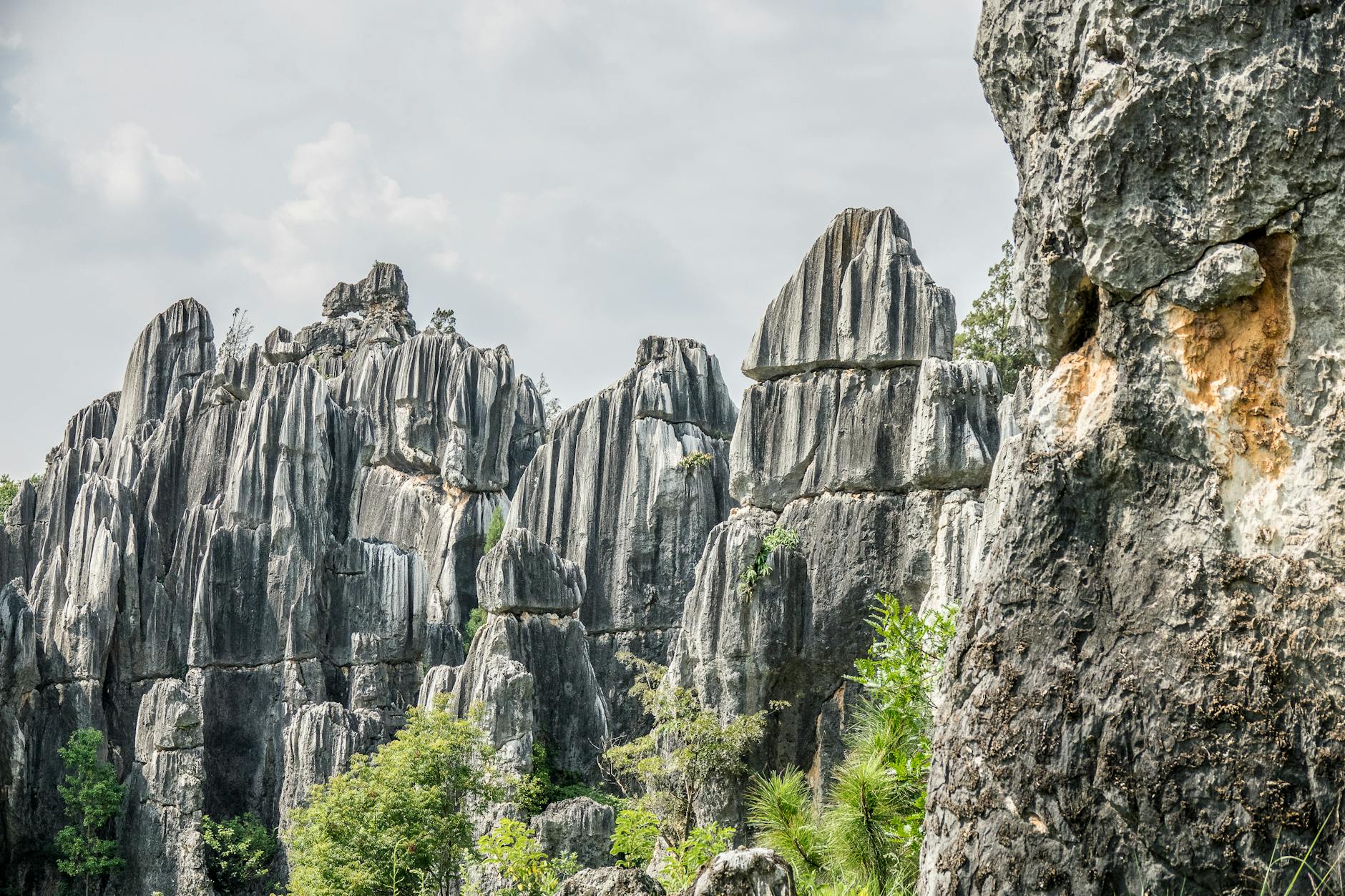
Tsingy de Bemaraha is a UNESCO World Heritage Site unlike anything else on earth — a vast stone forest of razor-edged limestone pinnacles rising from western Madagascar’s dry deciduous plateau. Two days here, navigating suspension bridges and cable-assisted climbs above the pinnacle field, deliver memories that last a lifetime.
Getting to Tsingy: The Drive from Morondava to Bekopaka
Tsingy de Bemaraha sits 190km north of Morondava in the Melaky Region, reached via an unpaved track that takes 3.5–4 hours by 4×4 in dry season. The route crosses the Tsiribihina River by flat-bottomed ferry at Belo-sur-Tsiribihina — a 30-minute crossing costing 15,000 Ar per vehicle, with departures approximately every two hours from 06:00 to 16:00. After the ferry, the road continues north on laterite through dry deciduous forest and baobab savanna to Bekopaka village, the base for all Tsingy visits. A 4×4 is non-negotiable — the track floods completely during the rainy season (December–March) and the reserve closes. Do not attempt this road in a standard car even in dry season; the sandy sections and rocky creek crossings require significant ground clearance. Depart Morondava by 07:00 to arrive in Bekopaka by midday, allowing the afternoon for Petite Tsingy. Fill up completely in Morondava — there are no fuel stations between Morondava and Bekopaka. Compare 4×4 rental rates on Carla and book with a driver-guide for maximum convenience — local drivers know the crossing schedule and road conditions.
Petite Tsingy vs Grande Tsingy: Which Circuit to Choose
The reserve offers two distinct circuits. Petite Tsingy (2–3 hours) is accessible to most travellers and follows a marked trail with metal harnesses, helmets and hand rungs at key crossing points above the pinnacles, which reach 15–30 metres high. The circuit crosses suspension bridges and navigates narrow canyons where the limestone formations close to within arm’s reach on both sides. Grande Tsingy (5–7 hours) is longer, more vertical, and significantly more exposed — it includes metal cable-assisted climbs to elevated viewpoints above the full pinnacle field, with sections requiring both hands on fixed ropes. Both circuits require closed-toe shoes with good ankle support; sandals and flip-flops are refused at the entrance gate. A guide is compulsory for both circuits at 40,000–60,000 Ar per group depending on the circuit chosen. Reserve entry fees of 55,000 Ar per person are collected at the Bekopaka entrance post each morning. Most two-day itineraries allocate the first afternoon to Petite Tsingy as acclimatisation, and the full second day to Grande Tsingy. Check Viator for small-group Tsingy tours with all entry fees and guide costs included in the quoted price.
Lodges at Bekopaka: Where to Stay Overnight
Bekopaka village supports several lodges at different price points. Olympe du Bemaraha is the most established, with bungalows starting at approximately $70–$90 per night including breakfast, a small swimming pool, and a restaurant serving reliable Malagasy and Western dishes using local produce. Camp Amoureux de Tsingy offers tented-style accommodation for budget travellers at $30–$50 per night with clean shared facilities and a friendly atmosphere. Le Soleil des Tsingy, opened in 2022, has the most comfortable rooms in Bekopaka including air-conditioning and a curated menu featuring local seafood. All lodges are completely off-grid: diesel generators run from approximately 18:00 to 22:00 and solar panels supplement daytime power. Mobile data is intermittent at best — Orange Madagascar has the only coverage in Bekopaka and it is unreliable. Carry adequate cash before leaving Morondava, as no ATM exists between Morondava and Bekopaka. Total budget including accommodation, meals, guide fees and reserve entry runs $120–$180 per person per day at Bekopaka. Book your Morondava base hotel on Agoda before heading north to Bekopaka.
Wildlife, Flora and the UNESCO World Heritage Value
Tsingy de Bemaraha was designated a UNESCO World Heritage Site in 1990, protecting a karst landscape formed over millions of years as rainwater dissolved soluble limestone into the razor-edged pinnacle forest. The tsingy (a Malagasy word meaning roughly ‘where one cannot walk barefoot’) harbours extraordinary biodiversity. At least 11 lemur species inhabit the reserve, including Decken’s sifaka, the western woolly lemur, and the fossil-white crowned lemur, which is often seen at the base of the pinnacles on morning circuits. The Madagascar fish eagle — one of the world’s rarest raptors — nests near the Bemaraha lake systems north of the reserve. The reserve shelters 103 endemic plant species adapted to growing from bare rock crevices, including specialist succulents and figs with roots snaking 20 metres down crack systems. Chameleon diversity is exceptional with 15 species recorded; Furcifer rhinoceratus (the rhinoceros chameleon) is endemic to this area. Wildlife sightings are not guaranteed, but circuits starting at 06:00 when permitted dramatically improve encounter rates before the heat increases and tourist groups arrive. Book an early-start guided wildlife circuit at Tsingy via GetYourGuide.
Frequently Asked Questions
When is Tsingy de Bemaraha open to visitors?
The reserve is open April through November. It closes completely from December to March during the rainy season, when the access road from Morondava becomes impassable and the pinnacle circuits are unsafe due to flooding and slippery rock surfaces.
Is Tsingy de Bemaraha physically demanding?
Petite Tsingy is manageable for most reasonably fit travellers. Grande Tsingy involves multi-hour cable-assisted climbs, exposed ridge walking and fixed-rope sections — best suited to travellers comfortable with heights and sustained physical exertion over 5–7 hours.
How much does a 2-day Tsingy trip cost in total?
Budget $120–$180 per person per day, covering accommodation in Bekopaka, three meals, a compulsory guide, reserve entry fees (55,000 Ar per person per day), and a share of 4×4 transport from Morondava. All-inclusive tour packages typically run higher.
Can I visit Tsingy without a pre-arranged guide?
No. Guides are compulsory and non-negotiable for both Petite and Grande Tsingy circuits. The park authority assigns guides at the entrance post in Bekopaka each morning. Independent entry to the pinnacle field is strictly prohibited.
Two days at Tsingy de Bemaraha is one of the most unusual physical experiences on the African continent — a landscape with no parallel, harbouring wildlife that exists nowhere else. Plan your access carefully, hire a driver from Morondava, carry all the cash you need, and bring proper footwear. Most importantly, Check the plans before you go: SafetyWing covers medical emergencies and evacuation from remote locations — and the Bemaraha plateau is as remote as Madagascar gets. For adventure activities specifically, compare with World Nomads, which explicitly covers climbing and cable-assisted trekking. Medical evacuation from western Madagascar costs $30,000–$80,000.
Plan Your Trip to Madagascar
- Read the full Madagascar Travel Guide
- Explore itineraries by style and duration
- Plan a 10-Day Madagascar Itinerary
Where to Stay