Madagascar Fossa Tour Packages 2026: Kirindy, Baobabs & Wildlife Trips
Affiliate disclosure: This article contains sponsored links to hotels, tour operators, insurance providers, and other travel services. We earn a small commission if you book through our links, at no extra cost to you.
Madagascar Fossa Tour Packages 2026 — At a Glance
- What it really is: a Kirindy/western wildlife trip — usually paired with the Avenue of the Baobabs — not a standalone “fossa tour”
- Main types: Kirindy & baobabs short trip, western wildlife circuit, fossa add-on to a bigger tour, photography trip, or tailor-made private
- Time it right: Oct–Dec at Kirindy, with night walks and more than one attempt
- Book a Kirindy / wildlife tour: on GetYourGuide
- Arrange a private trip: contact Carla
- Getting there: car & driver on Carla
- Flight protection: EU261 up to €600 per passenger
- Travel insurance: SafetyWing Nomad Insurance
- Where to stay: Madagascar stays near the parks on Agoda
🐿 Wildlife-Watching Gear for Madagascar
The right kit turns a good wildlife trip into a great one:
- 8×42 binoculars — essential for spotting lemurs and chameleons in the canopy. See on Amazon →
- Rechargeable headlamp — essential for night walks; red mode won’t disturb wildlife. See on Amazon →
- Trekking poles — ultralight support for long park hikes. See on Amazon →
- Hiking daypack — comfortable pack for water, camera and layers. See on Amazon →
- Picaridin insect repellent — DEET-free protection against malaria mosquitoes. See on Amazon →
As an Amazon Associate we earn from qualifying purchases.
The fossa is the animal serious wildlife travellers come to Madagascar hoping to see, and yet you cannot really walk into a travel agency and buy “a fossa tour” the way you might book a gorilla trek or a Big Five game drive. Madagascar’s largest carnivore is shy, mostly solitary, and active around dawn, dusk and the night. The realistic way to give yourself a genuine chance is to build a trip around the one place where fossa sightings are reliably possible — Kirindy Forest in the dry west — and to combine it with the spectacular scenery and wildlife that lie a short drive away, above all the Avenue of the Baobabs near Morondava.
This guide explains what a fossa-focused package actually looks like in practice, the main types of trip on offer, and how to choose between them. If you want the full natural-history background on the animal itself — what it is, how it behaves and where it lives — start with our complete guide to the fossa of Madagascar, then come back here to plan the trip around it.
What a Fossa-Focused Trip Really Is
It helps to set expectations before you compare packages. A “fossa tour” is, in reality, a western Madagascar wildlife trip with the fossa as its headline target. The fossa is not found in a single fenced reserve where a ranger can point you straight at one. The species ranges widely across the island’s forests, but the place that has become synonymous with seeing it is Kirindy Forest, a dry deciduous forest in the Menabe region inland from Morondava. Kirindy’s fossa have become habituated to the research camp and lodge there, which is why your odds are far better at Kirindy than almost anywhere else.
Because Kirindy is a few hours’ rough drive from Morondava, and Morondava itself is the gateway to the Avenue of the Baobabs and — for those with more time — the Tsingy de Bemaraha further north, the whole western leg is almost always sold as a combined wildlife-and-scenery trip. Trying to reach Kirindy purely “for the fossa” and nothing else rarely makes sense: the same journey delivers the baobabs, the western dry forest, nocturnal lemurs, chameleons and birds. A good package treats the fossa as the star of a broader cast, not as a one-animal guarantee.
The other thing to understand is timing. Fossa are most visible, and most active around the Kirindy camp, during the October-to-December mating season, when males gather and the animals move boldly in daylight. Outside that window sightings still happen, but they become less predictable. Any package that takes the fossa seriously will be built around the season and around night walks and drives — and will be honest that no sighting is ever guaranteed.
The Main Types of Fossa & Wildlife Package
Almost every trip that puts the fossa front and centre falls into one of five broad shapes. The differences come down to how much time you have, how far you want to travel beyond Kirindy, and whether you are travelling to photograph, to tick the species off, or simply to experience the western wilderness. You can browse and book Kirindy and wider Madagascar wildlife experiences on GetYourGuide to get a feel for what is available before you commit to a route.
Kirindy & Baobabs Short Trip (from Morondava)
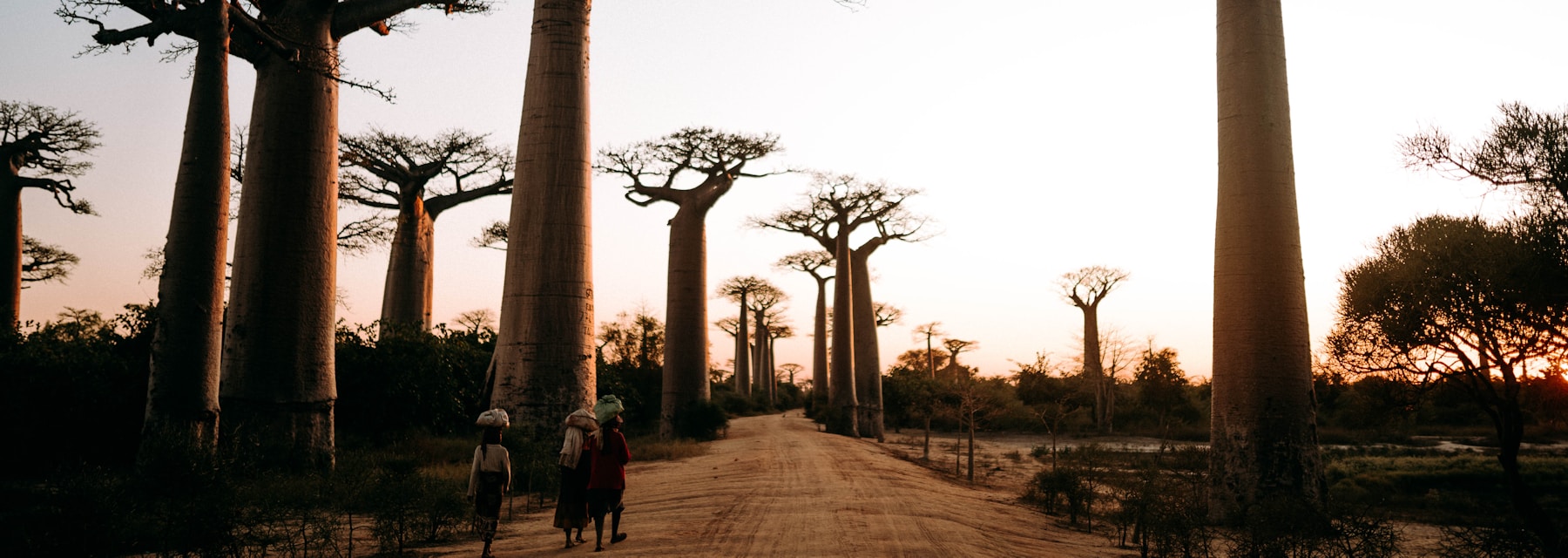
This is the classic fossa-focused option and the one most travellers picture. You base yourself in or around Morondava, then make a short trip up to Kirindy Forest — typically with at least one overnight at the forest lodge so you can do an evening or night walk and an early-morning walk, which is when the fossa and the nocturnal lemurs are active. The Avenue of the Baobabs sits on the route between Morondava and Kirindy, so it folds naturally into the same itinerary, usually photographed at sunrise or sunset.
A short Kirindy-and-baobabs trip can be done as a focused two-to-four-day extension and pairs neatly with a wider tour of the island. It is the most efficient way to give yourself a real fossa chance without committing to a long western expedition. For the full picture of what this corner of the country offers, see our guide to the best of western Madagascar: baobabs and tsingy, and for where exactly the fossa turns up, our companion piece on where to see the fossa in Madagascar.
Western Madagascar Wildlife Circuit (Kirindy + Tsingy + Baobabs)
If you have a week or more for the west, the natural step up is a full western circuit that adds the Tsingy de Bemaraha — the dramatic limestone pinnacle forest and UNESCO World Heritage Site north of Morondava — to Kirindy and the baobabs. This is a more demanding trip, with long drives on rough tracks and river crossings, but it strings together three of Madagascar’s signature landscapes in one loop and gives you several nights in fossa country rather than a single rushed visit.
The extra time at and around Kirindy genuinely improves your odds: more night walks and more morning walks mean more attempts, and attempts are what turn into sightings. A western circuit also delivers a richer supporting cast — the Tsingy has its own endemic lemurs and reptiles, and the dry forests are excellent for chameleons and birds. Our western Madagascar guide walks through how the Kirindy, Tsingy and baobabs pieces fit together.
Fossa Add-On Within an RN7 or Grand Tour
Many visitors come to Madagascar for a broad first-timer’s loop — often the classic Route Nationale 7 (RN7) from Antananarivo south to the rainforest parks of Andasibe and Ranomafana and on towards the southern highlands and Isalo. The west, and therefore Kirindy, is not on that road. The common solution is to bolt a short Kirindy-and-baobabs leg onto the wider tour, usually reached by a domestic flight to Morondava rather than a long overland detour.
This add-on approach suits travellers whose main goal is lemurs and rainforest but who do not want to miss the fossa and the baobabs. You get the headline western experiences without committing your whole trip to the west. If you want to see how the fossa leg slots alongside the rest of Madagascar’s protected areas, our overview of the best national parks and reserves in Madagascar shows where each piece sits on the map.
Photography-Focused Wildlife Trip
For photographers, the fossa is a serious prize, and a trip built around photographing it looks different from a general sightseeing tour. The priorities shift: more nights at Kirindy, deliberately timed to the October-to-December season when males are bold and active in daylight, plenty of early-morning and late-afternoon outings for the best light, and a guide who understands where the animals tend to appear and how to position you without disturbing them.
A photography trip usually runs slower and more flexible than a standard tour, with the schedule bent around light and animal activity rather than a fixed checklist. It pairs well with the baobabs at golden hour and with night photography of the region’s nocturnal wildlife. Because this kind of trip lives or dies on timing and local knowledge, it is almost always best arranged privately — something we return to below.
Tailor-Made Private Trip
The most reliable way to maximise your fossa chances is a tailor-made private trip designed around the season and around your own pace. A private itinerary lets you put several nights into Kirindy at the right time of year, add or drop the Tsingy depending on your appetite for rough roads, and shape the days around night walks and dawn outings rather than a group’s compromise schedule. It also lets you combine the western fossa leg with whatever else you want from Madagascar — rainforest lemurs in the east, beaches in the north, or a longer grand tour.
Because a fossa trip is so dependent on timing and on a guide who knows the forest, a private arrangement with a Madagascar-resident specialist tends to give you the best return. You can contact Carla to have a season-timed Kirindy itinerary built around your dates and interests.
Why Night Walks & Drives Matter
If there is one feature that separates a serious fossa package from a superficial one, it is the inclusion of night walks and night drives. The fossa is crepuscular and partly nocturnal — most active around dawn, dusk and after dark — and so are many of the other animals you have travelled this far to see. A daytime-only itinerary at Kirindy misses the best window for the headline species and for the forest’s wider nocturnal life.
A good package therefore builds in at least one evening walk and an early-morning walk per night at Kirindy, led by a local forest guide. These outings are where you find not only the fossa but also the nocturnal lemurs the western dry forest is known for — the giant jumping rat, mouse lemurs and sportive lemurs — along with chameleons, geckos and the occasional owl. The supporting cast is part of the reward, which is exactly why a fossa trip is really a broader wildlife trip.
When you compare packages, check explicitly that night walks are included and that you have more than one chance. A single evening at Kirindy can come up empty through nothing but bad luck; two or three nights, each with an evening and a morning outing, dramatically raises the probability of a sighting. More attempts, not just more hope, is what turns the odds in your favour.
Timing It to the Season
Timing is the single biggest lever you can pull on a fossa trip. The window to aim for is roughly October to December, when the fossa mating season brings the animals out into the open around the Kirindy camp and males become unusually bold, sometimes visible in broad daylight. This is comfortably the best time to see the species, and any package that is honest about the fossa will be built around it.
That season also sits within Madagascar’s broader dry season, which generally makes the rough western roads to Kirindy and the Tsingy more passable. Travel later, into the wet months, and access becomes harder while sightings grow less predictable. For the full island-wide picture of when to go and how it interacts with the regions, read our guide to the best time to visit Madagascar and cross-reference it with the fossa detail in the complete fossa guide.
The practical takeaway is simple: time the western leg to the season, and then give yourself more than one attempt. A trip squeezed into a single night, in the wrong month, is a trip that depends entirely on luck. A trip with several nights at Kirindy in the October-to-December window has stacked the odds in your favour as far as they can realistically be stacked.
What’s Included — and What’s Not
Knowing what a quoted package actually covers is the key to comparing prices fairly, because two trips that look similar can include very different things. For a full breakdown of what drives the numbers, see our companion piece on Madagascar fossa tour costs. In broad terms, here is what most well-built western wildlife packages include and exclude.
Usually included: a private vehicle with a driver-guide for the western leg, which is the backbone of any Madagascar trip; the park and reserve entrance fees for Kirindy (and the Tsingy if it is on the route); the services of the local forest guides who lead your walks; accommodation along the way, including at least one night at or near the Kirindy forest lodge; and, in most cases, the night walks themselves and some or all meals.
Often not included: international flights to and from Madagascar; the domestic flight to Morondava if you are flying in rather than driving overland; travel insurance; drinks and meals not specified in the itinerary; and tips for your driver-guide and the local forest guides, which are customary and appreciated. Always read the inclusions line by line so you are comparing like with like, and so a low headline price does not hide a stack of extras.
Group vs Private / Tailor-Made
Fossa trips can be sold as scheduled group departures or as private, tailor-made arrangements, and the choice matters more here than on a typical sightseeing tour. The reason is that a fossa sighting depends so heavily on timing, on the number of attempts, and on the flexibility to linger when the conditions are right. A fixed group schedule is, by nature, a compromise — it has to keep everyone moving on a set timetable.
A private trip, by contrast, lets you put your nights where they count, time the western leg to the season, and bend the daily rhythm around night walks and dawn outings rather than a coach’s departure clock. It also lets you combine the fossa leg with exactly the rest of Madagascar you want. For a sighting-dependent, season-sensitive target like the fossa, that flexibility translates directly into a better chance of success — which is why most travellers serious about the fossa lean towards a private or tailor-made arrangement.
How to Choose the Right Package
Choosing between the package types comes down to a handful of honest questions about your own trip. Start with time: if the fossa and baobabs are an add-on to a wider Madagascar holiday, a short Kirindy-and-baobabs extension is the efficient choice; if you have a week or more for the west, the full Kirindy-Tsingy-baobabs circuit rewards the extra days. Then consider how much rough road you are willing to tolerate, because the Tsingy in particular involves long, demanding drives.
Next, weigh your priorities. If photography is the point, lean towards a private, slower, season-timed trip with extra nights at Kirindy. If you simply want a good chance of seeing the animal as part of a broader Madagascar holiday, an add-on leg booked at the right time of year will do the job. And think about how much you want to combine: the western leg pays off best when it earns its travel time by bundling the baobabs and other wildlife rather than chasing one species in isolation.
Finally, let budget guide the format. Group departures spread fixed vehicle and guide costs across travellers and tend to come in cheaper; private trips cost more but buy flexibility and better odds. To see how those choices feed into the price, route through our fossa tour cost guide before you commit.
Combining Fossa with the Baobabs & Lemurs
The single best piece of advice for planning the western leg is to combine. Kirindy does not sit out on its own; it shares a region and a road with two of Madagascar’s greatest attractions, and a well-built trip uses that proximity. The Avenue of the Baobabs is essentially on the way between Morondava and Kirindy, which means the same journey that gives you a fossa chance also delivers one of the most iconic landscapes on Earth, best photographed at sunrise or sunset.
Lemurs, too, are part of the package. The western dry forest is home to nocturnal species you will not see in the eastern rainforest, and your night walks at Kirindy are as much a lemur experience as a fossa one — the fossa, after all, is itself a specialist lemur hunter, so the two are ecologically bound together. For the broader picture of Madagascar’s signature primates and where to find them, see our complete guide to the lemurs of Madagascar. Bundling the baobabs and the lemurs into the western leg is what makes the long drive worthwhile, whether or not the fossa obliges on any given night.
Getting There
Kirindy is reached via Morondava, the main town on Madagascar’s west coast and the gateway to the whole Menabe region. Most travellers reach Morondava either by a domestic flight from Antananarivo — the time-efficient option, especially if Kirindy is an add-on to an eastern or RN7 trip — or by a long overland drive across the centre of the island. From Morondava it is a few hours by road, much of it rough track, up to the forest, with the Avenue of the Baobabs along the way.
However you reach Morondava, the western leg itself is best done with a private vehicle and a driver-guide rather than attempting it independently. The roads are demanding, distances are deceptive, and a driver-guide who knows the region is worth far more than the cost. You can arrange a car and driver on Carla for the Morondava-and-Kirindy leg. For the wider picture of moving around the island, our guide to how to get around Madagascar covers flights, roads and the realities of long-distance travel here.
Where to Stay
Morondava is the natural base for the western leg. It has the broadest choice of accommodation in the region, sits on the coast for a relaxed start or finish, and is the launch point for the run up to the baobabs and Kirindy. A typical trip spends a night or two in Morondava either side of at least one night at or near the Kirindy forest lodge, which puts you on the spot for the evening and early-morning walks when the fossa is most active.
The Kirindy lodge itself is simple — you are staying in a research-forest setting, not a resort — but its location is the whole point, placing you inside fossa country for those crucial dawn and dusk outings. For comfort either side of the forest, browse Madagascar stays near the parks on Agoda and base yourself in Morondava before heading inland.
Why a Locally-Arranged Trip Beats Booking Blind
A fossa trip rewards local knowledge more than almost any other Madagascar experience, which is why arranging it through a resident specialist beats booking blind from abroad. The two things that most determine whether you see a fossa — getting the season right and being paired with a guide who knows where the animals appear — are exactly the things a Madagascar-based operator handles best. Someone on the ground knows when the Kirindy camp is at its liveliest, which lodge to use, and how many nights you realistically need.
A locally-arranged trip also means your itinerary can flex around real conditions: road states, weather, and the simple fact that wildlife does not run to schedule. Rather than a rigid package bought sight unseen, you get an itinerary shaped by someone who knows the west and can build in the night walks and the multiple attempts that actually improve your odds. Reach out to Carla to have a season-timed Kirindy-and-baobabs trip put together around your dates.
Getting There and Travelling Well
Reaching Kirindy means an international flight to Antananarivo and, for most travellers, a domestic connection on to Morondava. Long-haul flights routed through Europe are covered by the EU261 regulation, which entitles passengers to up to €600 in compensation for long delays or cancellations on that European-routed international flight — it does not apply to Madagascar’s domestic legs. If your international flight is disrupted, you can check your EU261 claim for up to €600 per passenger.
A western wildlife trip also means rough roads, remote forest, and being a long way from major hospitals — so travel insurance is not optional. SafetyWing Nomad Insurance is a straightforward option that covers medical issues and trip disruptions for this kind of adventurous, off-the-beaten-track travel. Given the distances and the demanding terrain on the way to Kirindy, having cover in place before you leave is simply common sense.
🐾 Plan Your Kirindy Fossa Trip with a Local Specialist
The surest way to give yourself a real fossa chance is to let someone who knows the west build the trip. A Madagascar-resident specialist can time your Kirindy nights to the October-to-December season, pair you with the right forest guides, and combine the fossa leg with the baobabs and the rest of your Madagascar plans. Contact Carla to start shaping a season-timed western wildlife trip, and protect the flights either side with SafetyWing.
Frequently Asked Questions
Can I book a tour that guarantees I’ll see a fossa?
No reputable operator will guarantee a fossa sighting, because the animal is wild, shy and partly nocturnal. What a good package can do is stack the odds in your favour: visit Kirindy in the October-to-December season, include night and early-morning walks, and allow more than one attempt. Several nights at Kirindy at the right time of year give you a genuinely good chance, but it is always a chance, never a certainty.
What is the best place to base a fossa trip?
Kirindy Forest in the Menabe region, reached via Morondava on the west coast, is the single best place to see a fossa thanks to the animals habituated around the research camp there. Most trips base in Morondava and make a short trip up to Kirindy, staying at or near the forest lodge for the crucial dawn and dusk outings. For more detail, see our guide on where to see the fossa in Madagascar.
How many days do I need for a fossa and baobabs trip?
A focused Kirindy-and-baobabs extension can be done in two to four days from Morondava, which is enough for at least one or two nights in fossa country plus the baobabs at sunrise or sunset. If you want to add the Tsingy de Bemaraha for a full western circuit, allow around a week to absorb the long, rough drives and the extra nights.
Should I combine the fossa with an RN7 or grand tour?
Many travellers do exactly that. The classic RN7 route through Andasibe, Ranomafana and the southern highlands does not pass the west, so the common approach is to add a short Kirindy-and-baobabs leg, usually reached by a domestic flight to Morondava. It lets you keep the rainforest-and-lemurs core of your trip while still catching the fossa and the baobabs.
Is a private trip really better than a group tour for fossa?
For a sighting-dependent, season-sensitive target like the fossa, a private or tailor-made trip usually gives a better outcome. It lets you time the western leg to the mating season, put extra nights into Kirindy, and bend the daily schedule around night walks and dawn outings rather than a group’s fixed timetable. Group departures are cheaper but less flexible. You can contact Carla to arrange a private trip.
🐾 Get a Season-Timed Fossa & Baobabs Trip — Ask Carla
A Madagascar-resident specialist can build a Kirindy-and-baobabs trip timed to the season for the best chance of a fossa. Reach out to Carla.
Plan Your Trip to Madagascar
- Read the full Madagascar Travel Guide
- Explore itineraries by style and duration
- Explore the full destination guide
Where to Stay