The Lost Hilltop Fortress of Antongona
This article contains affiliate links. We may earn a small commission at no extra cost to you if you book through them.
By Jordan Lamont · Last updated 7 October 2026
At a Glance
- What: Antongona — a fortified ancient royal hill
- Where: Itasy region, ~36 km west of Antananarivo
- Features: two royal houses (16th & 18th c.), a tomb, stone gateways
- Why there: a 360° lookout to warn of invaders
- Visit: a day trip from the capital, with a small museum
Say it like a local: rova — a fortified royal compound; vavahady (va-va-HAHD) — the stone gateway of a hill fort.
Everyone who visits the highlands sees Ambohimanga. Almost no one sees Antongona — and that is exactly the point. An hour west of Antananarivo, a rocky hilltop carries the weathered remains of a royal fortress centuries older than the famous palaces of the capital. It is one of the most atmospheric and least-visited sacred hills in Imerina, a place to understand how the highland kingdoms were built: on defensible rock, with a long view of danger.
A fortress on the rock
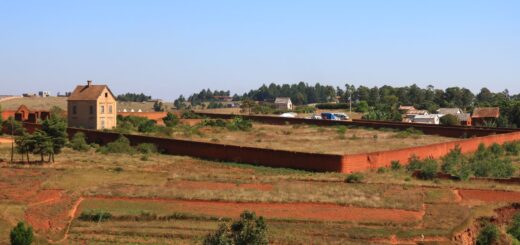
Antongona sits in the Itasy region, roughly 36 kilometres west of Antananarivo, on the old road toward Tsiroanomandidy. It is a sacred hill in the classic Imerina mould: builders used the natural rock formations as ready-made defences and augmented them with stone walls and doorways, turning the summit into a stronghold. At its heart stand two royal houses, dated to the 16th and 18th centuries, set about 300 metres apart, along with a royal tomb.
Built to see trouble coming
The genius of the site is its sightlines. From the centre of the fortress a full 360-degree view opens over the surrounding plains — and that was the whole idea. In an age of raids and rival kingdoms, a hill fort lived or died by how early it could see an enemy. Watchmen at Antongona could spot an approaching force from far off and raise the alarm to warn the king, buying the time that meant the difference between defence and disaster. The hill is a lesson in pre-modern security, written in stone.
The quiet alternative to the famous hills
Antongona belongs to the same world as the twelve sacred hills and the royal domain of Ambohimanga, but it receives a tiny fraction of the visitors. That is its charm. There is a small museum (usually open in the afternoon), weathered ruins to climb among, and silence — a chance to stand inside Imerina’s deep past without a crowd. For travellers who like their history uncrowded and their views enormous, it is a rewarding half-day.
Why it matters today
Antongona shows how the highland kingdoms actually worked before the great palaces: fortified hills, long sightlines, royal houses and tombs on defensible rock. It deepens everything you see at the famous sites, with none of the queues. Base yourself in Antananarivo, take a guide, and fold it into your highlands plan with our Madagascar travel guide.
See it for yourself — Antongona is an easy day trip west of Antananarivo, on the Tsiroanomandidy road.
FAQ
What is Antongona?
A fortified ancient royal hill in the Itasy region, about 36 km west of Antananarivo, with two old royal houses, a tomb and defensive stone gateways.
How old is it?
Its two royal houses date from the 16th and 18th centuries, making it an early fortified site of the Imerina highlands.
Why was it built on a hill?
For defence: the summit gives a 360-degree view, so watchmen could spot an approaching enemy and warn the king.
Can you visit?
Yes — it is a day trip from Antananarivo and has a small museum (typically open mid-afternoon); go with a guide to read the ruins.
Travel insurance for Madagascar
Medical evacuation from Madagascar’s interior can cost USD 30,000–80,000, so travel medical cover is worth arranging before you go. SafetyWing is the disclosed partner we mention on this site — a monthly-subscription travel medical plan. Check SafetyWing’s plans.
Plan Your Trip to Madagascar
- Read the full Madagascar Travel Guide
- Explore itineraries by style and duration
- Explore the full destination guide
Where to Stay