Best National Parks for First-Time Visitors: Easy Lemur Experiences 2026
This post contains affiliate links. We may earn a small commission at no extra cost to you.
At a Glance
- Easiest first park: Andasibe-Mantadia (2.5 hrs from Antananarivo)
- Guaranteed lemur sightings: Vakona Forest Lodge feeding station
- Best for families: Andasibe (flat trails, morning indri calls guaranteed)
- Book guided lemur walks: Browse tours on GetYourGuide
- Base hotels near parks: Check Antananarivo hotels on Agoda
Not all Madagascar parks are created equal for first-time visitors. Some require multi-day treks to reach core wildlife zones; others put lemurs at arm’s reach within 30 minutes of the entrance gate. This guide focuses exclusively on the parks that deliver high-quality lemur experiences without the logistical complexity that makes some sites better suited to returning visitors with specific target species.
Recommended Gear for Your Madagascar Wildlife Trip
You’re Flying 10,000km to See Lemurs, Chameleons, and Fossa — Don’t Document It With a Phone Camera
Indri lemurs calling across the canopy of Andasibe. Panther chameleons in electric blue and orange. The fossa spotted on a night walk in Kirindy. A smartphone sensor in low rainforest light produces grainy, blurred images. The Sony a6400 with Real-Time Eye Autofocus locks onto animal eyes instantly — even through undergrowth and low light. APS-C sensor, 4K video, flip-up touchscreen.
Check current price and availability on Amazon →
Madagascar Has Over 100 Species of Lemur and 280 Species of Bird — You’ll Miss Most of Them Without Binoculars
Sifaka lemurs leap between canopy trees 30 metres up. The Madagascar fish eagle perches on a branch 200 metres across a lake. Without binoculars, you’re looking at distant shapes and taking your guide’s word for it. The Vortex Diamondback HD 10×42 delivers HD optical clarity with edge-to-edge sharpness. Waterproof, fog-proof, backed by Vortex’s unconditional lifetime warranty.
Check current price and availability on Amazon →
Madagascar Goes Completely Dark After Sunset — Don’t Navigate It Blind
Outside of Antananarivo’s main streets, Madagascar has virtually no street lighting. Wildlife walks in Ankarana, night lemur spotting in Ranomafana, the path to your bungalow — all navigated in total darkness. The Black Diamond Spot 400-R delivers 400 lumens with a 100-metre beam, USB-C rechargeable, IPX8 waterproof, with red night-vision mode for wildlife observation without disturbing animals.
Check current price and availability on Amazon →
Madagascar Has Some of the Highest Malaria Risk in the World
The rainforests of Andasibe, the wetlands of Morondava, the rice paddies outside every village — mosquitoes are relentless and bite at dusk and dawn. DEET burns skin and destroys gear. Natrapel 20% Picaridin is the CDC-recommended alternative that repels mosquitoes, ticks, and sandflies for up to 12 hours without damaging your equipment.
Check current price and availability on Amazon →
No Grid, No Problem — Charge Your Devices From the Sun in Madagascar’s Remote Parks
Marojejy. Andringitra. Tsingy de Bemaraha. Madagascar’s most spectacular parks are its most isolated — no power outlets, no phone signal. A 3-day wilderness circuit means running on whatever charge you left camp with. The BLAVOR Solar Power Bank pairs 10,000mAh with a fold-out solar panel that recharges itself from sunlight as you trek.
Check current price and availability on Amazon →
Plan your Madagascar trip:
Andasibe-Mantadia — The Gold Standard First Park
Andasibe-Mantadia National Park sits at 900m elevation in the eastern rainforest, 2.5 hours by road from Antananarivo. It is the single most accessible major park in Madagascar and the only place where the indri — the largest living lemur — produces its haunting call reliably within earshot of the entrance. The park has two sections: the smaller Analamazaotra Special Reserve, which most visitors walk, and the larger Mantadia section 20km north, which requires a guide and more time. For a first visit, Analamazaotra provides everything: indri family groups move through a designated circuit of 2 to 4 km that guides know well, black-and-white ruffed lemurs are seen on most morning walks, and diademed sifaka are present in lower forest areas. Grey mouse lemurs emerge on evening walks along the road edge. Vakona Forest Lodge, 3km from the park entrance, maintains a small island reserve where ring-tailed, black-and-white ruffed and brown lemurs approach visitors at extremely close range — a useful supplement for photographs when the main park produces distant encounters. Two nights minimum is strongly recommended: morning walks (6:30am start) dramatically outperform afternoon visits for indri sightings.
Ranomafana — Highland Forest and Rare Species
Ranomafana National Park in the southern highlands is a seven-hour drive from Antananarivo but merits the distance for serious first-timers. It holds 12 confirmed lemur species including the golden bamboo lemur and greater bamboo lemur — both discovered here and found in very few other locations globally. The park’s trail system radiates from Ranomafana village along the RN7 highway, and the lower forest circuits visited by most guests are well-maintained with modest elevation change. Night walks add specific nocturnal species: grey-brown mouse lemur, sportive lemurs and Milne-Edwards’ sifaka move through light beams on most evenings. The golden bamboo lemur is the flagship encounter — groups have maintained territory in the same valley sections for over 30 years and sightings are near-certain with a specialist guide on a half-day walk. Ranomafana also sits at an elevation that keeps temperatures comfortable year-round (16–24°C), making it a viable park even in the warmer months. Stay at least two nights in village guesthouses or the mid-range lodges that line the road through town. July and August see the highest guide availability — book specialist lemur walks on GetYourGuide at least four weeks ahead to secure an early morning slot.
Read also:
Save money on your Madagascar trip:
Kirindy Forest — Western Dry Forest for the Adventurous First-Timer
Kirindy Forest sits 60km north of Morondava in the western dry forest zone, a 4-hour drive from Antananarivo or accessible by domestic flight to Morondava. It requires more planning than Andasibe or Ranomafana but delivers a meaningfully different ecosystem: open deciduous canopy, deep red soil trails and the western species set including Verreaux’s sifaka — the dancing lemur of tourist photography — performing its iconic sideways leaping runs across open clearings. Verreaux’s sifaka groups of 4 to 8 individuals are habituated to human presence and approach to within a few metres during the morning circuit. Red-fronted brown lemurs are seen on almost every walk. Giant jumping rats — the world’s largest jumping rodent, endemic to Madagascar — emerge from burrows at dusk near the forest camp. The fossa possibility at Kirindy during September–November adds motivation for wildlife-focused travelers who want to see Madagascar’s apex predator. The key limitation: Kirindy has minimal accommodation infrastructure. Menabe Forest Camp is the main on-site option (basic bungalows, shared facilities, good food) and must be booked directly in advance. Morondava town, 60km south, has hotel options for those who prefer a base.
Isalo National Park — Ring-Tailed Lemurs in Canyon Scenery
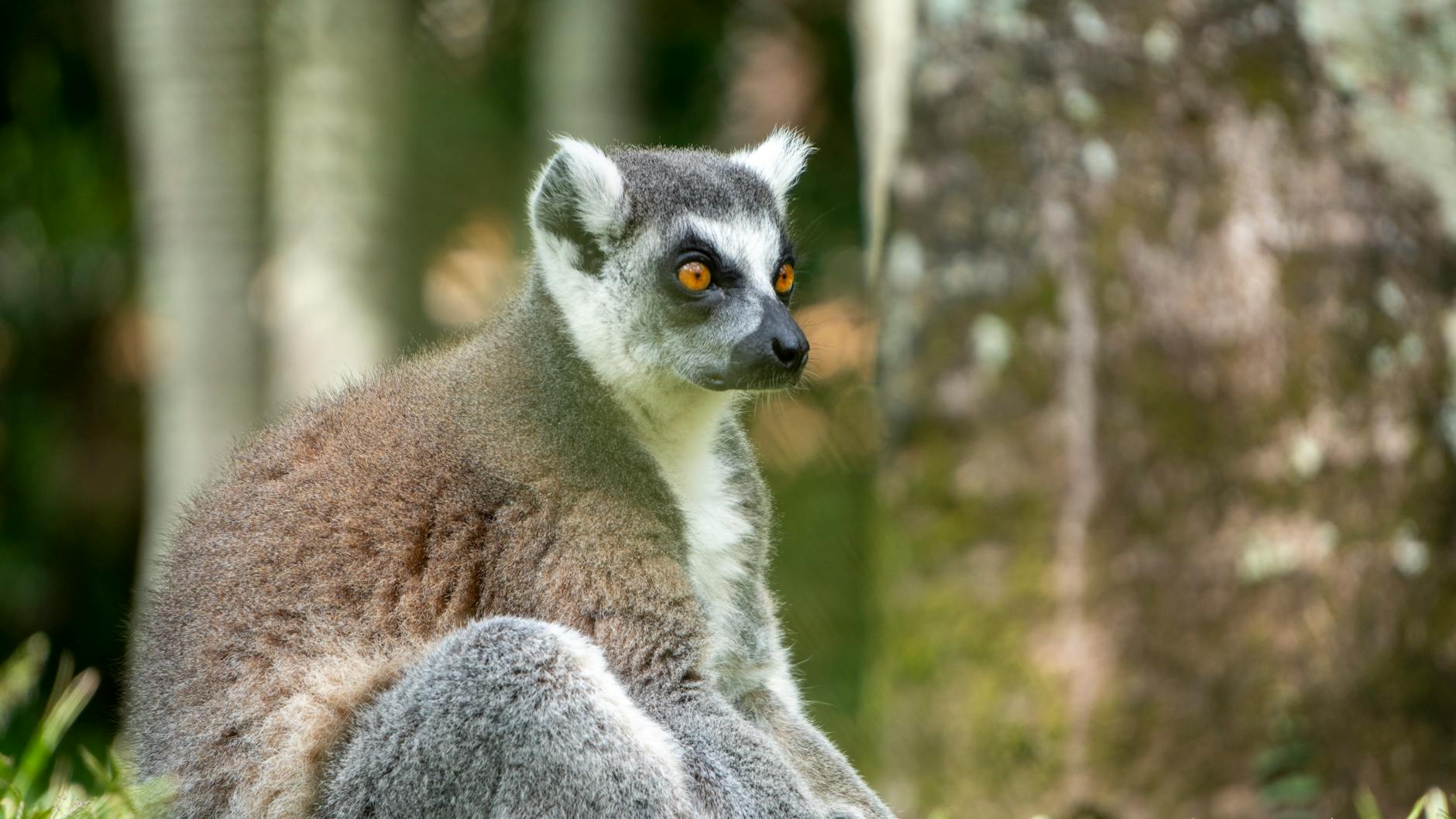
Isalo National Park in the southern highlands is exceptional in one specific way: ring-tailed lemurs here are more consistently visible than in almost any other park, because they have colonised the canyon edges and rocky outcrops around the park’s natural swimming pools and gorge walks. Most visitors come for the dramatic sandstone canyon scenery — the Circuit des Cascades passes natural swimming pools with genuinely crystal water — but lemur encounters happen incidentally and predictably throughout. Groups of 10 to 20 ring-tailed lemurs warm themselves on canyon walls in the early morning within easy photography range. Brown lemurs (specifically the red-fronted subspecies) share the canyon habitat. Isalo is best positioned as a mid-route stop between Ranomafana and the southwest coast: the town of Ranohira at the park entrance has solid mid-range hotels and the park circuit is manageable as a single long day with an early start. For a broader southern circuit, pair Isalo with Berenty Reserve near Fort-Dauphin, where ring-tailed lemur group sizes can reach 30 and individual animals approach visitors seeking mineral licks — genuinely crowd-pleasing encounters for first-time travelers. Check lodge availability near Isalo through Agoda for Antananarivo as your base before your southern circuit begins.
Ready to book your Madagascar trip?
Frequently Asked Questions
Can I see lemurs on a one-day trip from Antananarivo?
Yes — Andasibe-Mantadia is designed for this. A day trip (4am departure, return by 9pm) gives you a full morning and afternoon walk with a specialist guide. However, two nights is strongly recommended: morning indri calls are the park’s defining experience and start at dawn, which means an overnight stay rather than a same-day departure from the capital. One-day visitors consistently report regret at not staying longer.
Which park is best for children under 12?
Andasibe-Mantadia is the most family-friendly option. Trails in the lower Analamazaotra circuit are flat to gently sloping, walks last 1.5 to 3 hours and the Vakona Lodge lemur island provides close encounters at walking pace. Ranomafana works well for older children (10+) who can manage steeper forest trails. Avoid multi-day trek parks (Marojejy, Masoala) for families with young children.
Is it worth paying for a specialist lemur guide versus a standard park guide?
For rare species — golden bamboo lemur at Ranomafana, aye-aye at Masoala, silk lemur at Marojejy — specialist guides make the difference between seeing and not seeing the target species. For Andasibe’s indri groups on standard circuits, standard guides are sufficient. A specialist guide typically costs 20,000 to 30,000 MGA more per walk and is worth it whenever a specific rare species is your primary goal.
Madagascar’s four best first-park experiences — Andasibe, Ranomafana, Kirindy and Isalo — cover four completely different ecosystems and four distinct wildlife sets. No single visit sees everything, but any of these four parks, approached with two nights and morning walks, delivers a genuinely world-class wildlife experience. Plan the parks before you plan the accommodation; the best lodges in each area fill months ahead in peak season.
Flight delayed or cancelled? Flights to Madagascar often connect through Paris or Nairobi. EU regulation EC 261 may entitle you to up to €600 in compensation. Check your claim free on AirAdvisor →
Plan Your Trip to Madagascar
- Read the full Madagascar Travel Guide
- Explore itineraries by style and duration
- Best Tours and Guided Experiences
Where to Stay
Hotels, lodges, and tours fill fast for July–September — compare availability now.