3-Day Toliara Itinerary: Spiny Forest, Reef and Vezo Villages 2026
This post contains affiliate links. We may earn a small commission at no extra cost to you.
At a Glance
- Getting there: Tsaradia flight from Antananarivo (~1h 20min) or 2-day overland on RN7
- Best time: April–November (dry season — the south is hot and arid year-round)
- Must-see: Réserve de Reniala spiny forest, Nosy Ve snorkeling, Vezo pirogue fishing village
- Budget: ~$55–80/day economy | ~$90–140/day mid-range
- Book reef and spiny forest tours: Browse Toliara tours on GetYourGuide
- Book hotels: Compare Toliara hotels on Agoda
Toliara sits at the edge of Madagascar’s driest region — a landscape shaped by octopus trees, taboo plants, and the Vezo fishing people who have lived from the Mozambique Channel reef for centuries. Three days here samples three entirely different ecosystems: the alien spiny forest, the turquoise reef at Nosy Ve, and the river-mouth pirogue villages where outrigger canoes outnumber motorised boats ten to one.
Essential Gear for Madagascar’s Coastal Activities
Madagascar’s Underwater World Is World-Class — Film It in 5.3K Before It’s Gone
The coral gardens off Nosy Be, the whale sharks of the Mozambique Channel, the humpback whales migrating to Île Sainte-Marie — your phone doesn’t go underwater. The GoPro HERO13 Black shoots 5.3K60 video and is waterproof to 10 metres without any housing. Mount it on your snorkel mask, clip it to your kayak, hand it to your dive guide. Sold directly by Amazon.
Check current price and availability on Amazon →
Madagascar’s UV Index Hits 11+ — Your Skin Needs More Than Sunscreen in the Water
Nosy Be, Île Sainte-Marie, the reefs off Fort Dauphin — spectacular coastal waters under an equatorial sun with UV regularly hitting 11+. Sunscreen washes off within 20 minutes in water. O’Neill’s UPF 50+ long-sleeve rash guard blocks 98% of UV radiation all day, in and out of the water, without reapplication. Stays in place during snorkelling and dives.
Check current price and availability on Amazon →
Snorkelling Madagascar’s Reefs Without UV Protection Is How You Come Home With a Week of Sun Damage
The coral reefs of Nosy Be and Île aux Nattes are some of the most beautiful snorkelling in the Indian Ocean — in direct equatorial sunlight every minute you’re in the water. Hurley’s Women’s UPF 50+ long-sleeve rashguard covers your core, arms, and shoulders with full-spectrum UV protection. Lightweight, fast-drying, designed for real ocean conditions.
Check current price and availability on Amazon →
One Wave, One Pirogue Crossing, One Rain Shower — That’s All It Takes to Lose Your Phone in Madagascar
Madagascar’s water crossings are done in pirogues — narrow dugout canoes with no sides to speak of. One unexpected wave. One overfilled pirogue. One downpour on the RN7 with nowhere to shelter. The JOTO Universal Waterproof Pouch seals your phone in an IPX8-rated case to depths up to 30 metres. Use the touchscreen through the case, take underwater photos. Under $15.
Check current price and availability on Amazon →
Your Camera, Passport, and Valuables Need a Waterproof Shell for Madagascar’s Boat Transfers
Boat transfers to Nosy Komba, dive sites, and the remote beaches of Masoala — waves hit the deck, spray soaks everything unprotected. A wet camera, a soaked passport, or a ruined MacBook is not a one-hour problem in a country where Apple Stores don’t exist. The Earth Pak Dry Bag rolls and clips shut to create a 100% waterproof seal rated to IPX8. NY Times Wirecutter-recommended, 5-year warranty.
Check current price and availability on Amazon →
Madagascar’s Power Cuts Will Kill Your Phone — Here’s 4 Full Charges of Insurance
Délestage — Madagascar’s rolling blackouts — can last 8 to 14 hours a day. Your navigation app, offline maps, and boarding pass for tomorrow’s Tsaradia flight will all be dead. The Anker PowerCore 20,000mAh gives 4 full phone charges with fast USB-C delivery. Charge it during the hotel’s morning power window and you’re covered all day.
Check current price and availability on Amazon →
Madagascar Uses European Plugs Only — Your North American Charger Won’t Work Without This
Madagascar runs on Type C and E/F European plugs, 220V. North American plugs don’t fit. The TESSAN European adapter accepts North American plugs and adds 2 USB ports, so you can charge your phone and power bank simultaneously from a single outlet. Compact, grounded — one of those items that’s obvious in hindsight and impossible to find when you need it.
Check current price and availability on Amazon →
One Adapter for Every Country on Your Madagascar Journey — Including Stopovers in Paris or Réunion
Many travellers reach Madagascar via Paris CDG or Réunion — and face a different outlet at each stop. The GaN Universal Adapter covers all outlet types worldwide with USB-C PD fast charging — one device, 4 ports, every country. GaN technology runs cooler and charges faster than standard adapters.
Check current price and availability on Amazon →
Plan your Madagascar trip:
- Browse Madagascar tours and experiences (GetYourGuide)
- Get travel insurance for Madagascar (SafetyWing)
- World Nomads — covers adventure activities: trekking, diving, motorbikes. Compare both.
Day 1: Arriving in Toliara and the Réserve de Reniala Spiny Forest
Flights from Antananarivo land at midday, leaving the afternoon free. Toliara city is functional rather than charming — the draw is never the city itself but the landscapes surrounding it. Book your Tsaradia flights with AirAdvisor to cover delays on this remote southern route. Drive or take a taxi 8 kilometres north to the village of Ifaty, where the Réserve de Reniala sits directly behind the beach. This private spiny forest reserve is home to seven species of baobab, the strange Didierea madagascariensis (octopus tree), ring-tailed lemurs, and over 50 endemic bird species. Guided walks run 45 minutes to 2 hours; the 30,000–50,000 MGA entry fee funds conservation. The spiny forest biome exists almost nowhere else on Earth — the plants here evolved in total isolation from the rest of the island’s flora, developing water-storage strategies found in no other ecosystem. Evening: seafood dinner on the Ifaty beach at one of the dozen simple restaurants overlooking the Mozambique Channel. Fresh lobster averages 30,000–60,000 MGA per plate.
Day 2: Nosy Ve Reef — Snorkeling, Red-Tailed Tropicbirds and Whale Sharks
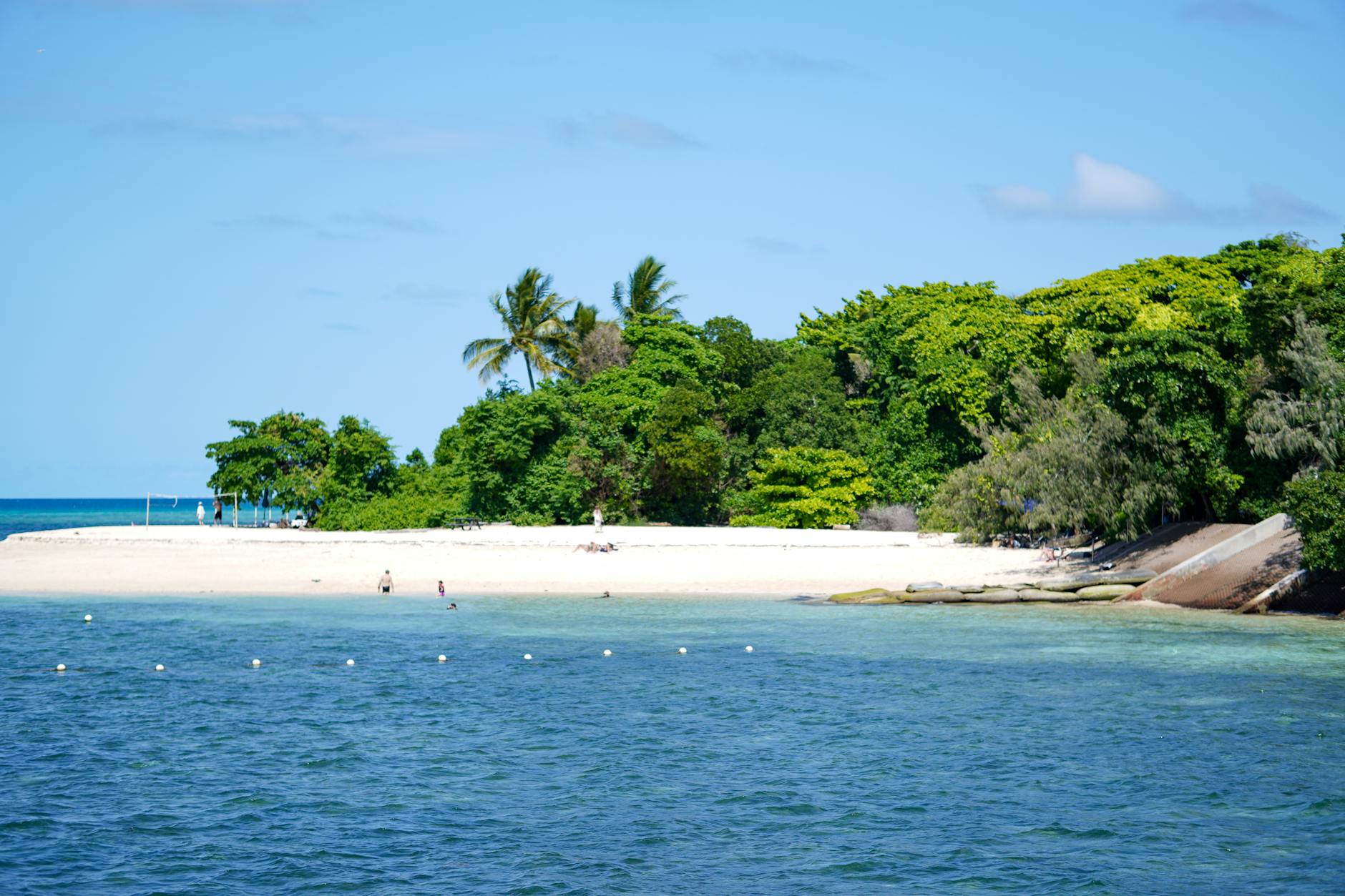
Nosy Ve is a small island 8 kilometres south of Toliara accessible by a 20-minute pirogue crossing. The reef here is part of the protected Atoll de Nosy Ve marine system — one of Madagascar’s most intact coral environments, with dense hard coral coverage down to 20 metres and reliable shark sightings in the deeper channels. Whale sharks pass through between November and January; dolphin pods are present year-round. For full context on Madagascar’s dive sites and what to expect from the Toliara reef specifically, the complete diving guide covers depth, visibility, and seasonal highlights at each site. Snorkeling equipment hire: 15,000–25,000 MGA from the pirogue operator. The island itself is home to a nesting colony of red-tailed tropicbirds — one of Madagascar’s most dramatic seabird colonies, active from October to April. Boat hire return: 40,000–80,000 MGA depending on pirogue size and group.
Read also:
Book activities in Madagascar:
Day 3: Vezo Village Pirogue Trip and the Onilahy River Estuary
The Vezo are Madagascar’s seafaring people — defined not by ethnicity but by their relationship with the ocean. They live, sleep, and navigate by the sea, building pirogues by hand from single tree trunks shaped with an adze. Day 3 focuses on the estuary villages north of Toliara accessible only by water. Hire a pirogue with a Vezo guide (60,000–100,000 MGA for the half-day) from Toliara’s beach, and paddle north into the Onilahy delta where mangrove channels open into fishing camps built on sandbanks. The kayaking along the estuary is also accessible as a paddle trip — the Madagascar kayaking guide covers the Toliara estuary route alongside the country’s other top river and coastal paddling options. Return to Toliara for the afternoon and catch your evening flight back to Antananarivo. The check-in time at Arrachart Airport is 45 minutes before departure; allow 20 minutes from Ifaty.
Where to Stay in Toliara and Full Budget
Toliara accommodation splits between the city centre and the beach strip at Ifaty, 8 kilometres north. Staying in Ifaty makes more sense for the beach and reef focus of this itinerary. Hôtel Paradis de l’Ivoloina at Ifaty offers bungalows at 80,000–140,000 MGA per night. Chez Alain is a reliable budget choice at 35,000–60,000 MGA with breakfast. In Toliara city, Hôtel Le Capricorne provides a central base at $50–80 per night. Compare availability on Agoda for the full range of Toliara and Ifaty options. Three-day budget: flight return ($180–280), accommodation ($45–240 total), Reniala entry ($15–25), Nosy Ve boat hire ($20–40), Vezo pirogue ($15–25), meals ($45–90), local taxis ($15–30). Total: $335–730 for three days. For comparing road vs. flight access to the south, see Madagascar travel times between cities — the RN7 overland to Toliara is 12+ hours from Fianarantsoa and suits only multi-week itineraries.
Ready to book your Madagascar trip?
Frequently Asked Questions
Is the spiny forest near Toliara worth visiting?
Absolutely. The Réserve de Reniala is one of only two places on Earth where you can walk through a mature spiny forest ecosystem — the other being the Andohahela region near Fort Dauphin. The alien landscape, with Didierea octopus trees and seven baobab species, looks unlike anything else in Madagascar. Budget 2 hours here; the guided walk covers the main endemic plant species and ring-tailed lemur family groups.
When is the best time to snorkel at Nosy Ve?
May to October offers the calmest conditions — flat water, good visibility (10–20 metres), and comfortable temperatures in and out of the water. November to April brings stronger swells from the northeast monsoon that can make the pirogue crossing rough. Whale shark season (November–January) overlaps with worse conditions; the trade-off is worth it for experienced snorkelers or divers.
Can I drive to Toliara from Antananarivo?
The drive on RN7 from Antananarivo takes 16–18 hours minimum and is best split over 3 days: Tana → Antsirabe → Fianarantsoa → Toliara. The road is sealed but long. Flying is the practical choice for a 3-day trip. The overland route makes sense only if you are travelling the full RN7 south with stops at Isalo, Fianarantsoa, and Ranomafana.
Toliara rewards travellers willing to look past the unremarkable city to what surrounds it. Three days covers three ecosystems — spiny forest, coral reef, tidal estuary — that together represent the breadth of Madagascar’s southern biodiversity. Before you fly south, secure SafetyWing travel insurance — the nearest well-equipped hospital is in Antananarivo. Find your Toliara or Ifaty accommodation through Agoda Toliara and book reef and forest tours early via GetYourGuide.
Start planning your Madagascar adventure today
Browse Madagascar experiences on GetYourGuide
Affiliate link – commission earned at no extra cost to you.
Plan Your Trip to Madagascar
- Read the full Madagascar Travel Guide
- Explore itineraries by style and duration
- Best Tours and Guided Experiences
Where to Stay