Budget Wildlife Trips Madagascar: Under $100/Day Without Missing Out
This post contains affiliate links. We may earn a small commission at no extra cost to you.
Recommended Gear for Your Madagascar Wildlife Trip
You’re Flying 10,000km to See Lemurs, Chameleons, and Fossa — Don’t Document It With a Phone Camera
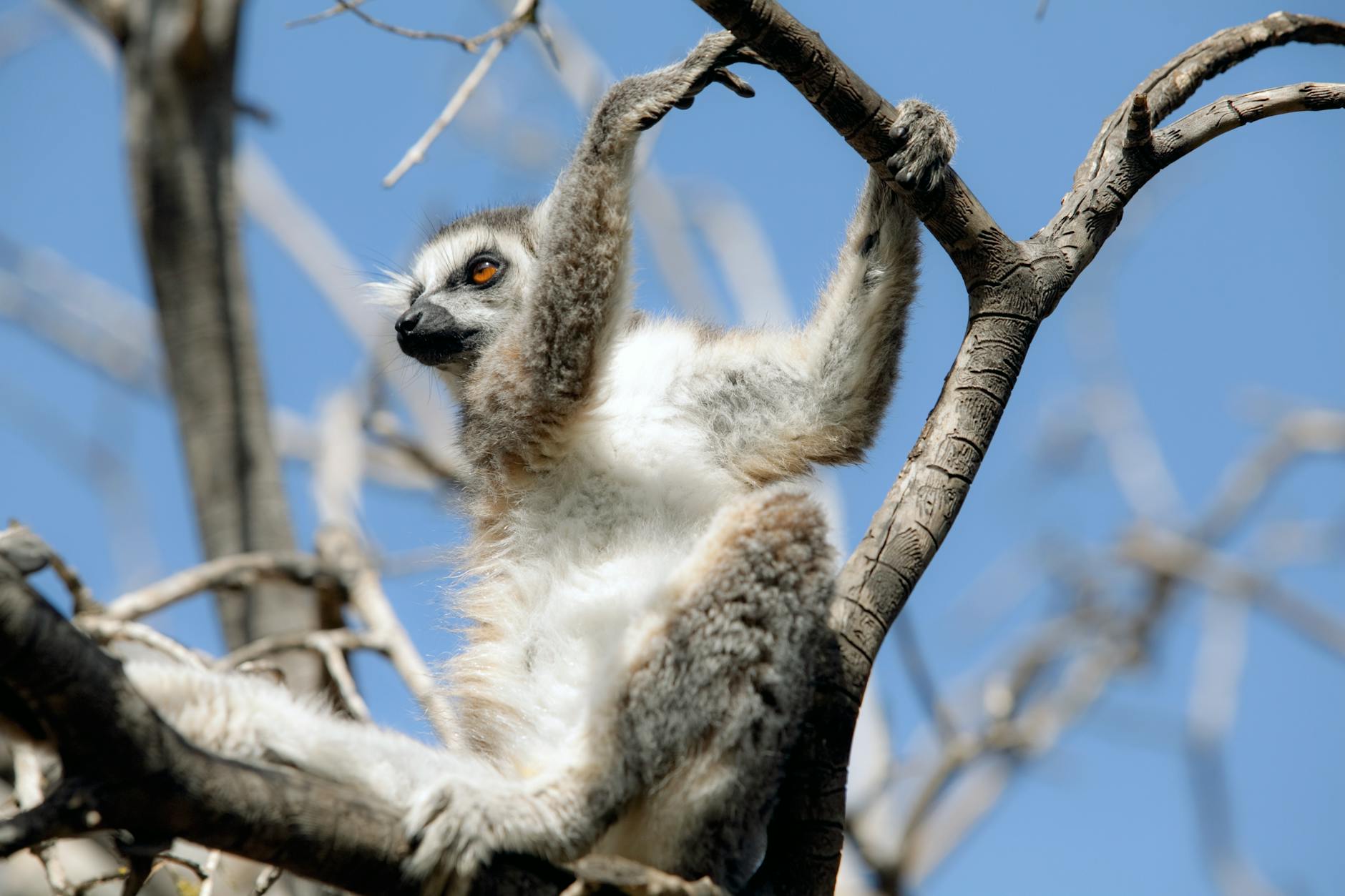
Indri lemurs calling across the canopy of Andasibe. Panther chameleons in electric blue and orange. The fossa spotted on a night walk in Kirindy. A smartphone sensor in low rainforest light produces grainy, blurred images. The Sony a6400 with Real-Time Eye Autofocus locks onto animal eyes instantly — even through undergrowth and low light. APS-C sensor, 4K video, flip-up touchscreen.
Check current price and availability on Amazon →
Madagascar Has Over 100 Species of Lemur and 280 Species of Bird — You’ll Miss Most of Them Without Binoculars
Sifaka lemurs leap between canopy trees 30 metres up. The Madagascar fish eagle perches on a branch 200 metres across a lake. Without binoculars, you’re looking at distant shapes and taking your guide’s word for it. The Vortex Diamondback HD 10×42 delivers HD optical clarity with edge-to-edge sharpness. Waterproof, fog-proof, backed by Vortex’s unconditional lifetime warranty.
Check current price and availability on Amazon →
Madagascar Goes Completely Dark After Sunset — Don’t Navigate It Blind
Outside of Antananarivo’s main streets, Madagascar has virtually no street lighting. Wildlife walks in Ankarana, night lemur spotting in Ranomafana, the path to your bungalow — all navigated in total darkness. The Black Diamond Spot 400-R delivers 400 lumens with a 100-metre beam, USB-C rechargeable, IPX8 waterproof, with red night-vision mode for wildlife observation without disturbing animals.
Check current price and availability on Amazon →
Madagascar Has Some of the Highest Malaria Risk in the World
The rainforests of Andasibe, the wetlands of Morondava, the rice paddies outside every village — mosquitoes are relentless and bite at dusk and dawn. DEET burns skin and destroys gear. Natrapel 20% Picaridin is the CDC-recommended alternative that repels mosquitoes, ticks, and sandflies for up to 12 hours without damaging your equipment.
Check current price and availability on Amazon →
No Grid, No Problem — Charge Your Devices From the Sun in Madagascar’s Remote Parks
Marojejy. Andringitra. Tsingy de Bemaraha. Madagascar’s most spectacular parks are its most isolated — no power outlets, no phone signal. A 3-day wilderness circuit means running on whatever charge you left camp with. The BLAVOR Solar Power Bank pairs 10,000mAh with a fold-out solar panel that recharges itself from sunlight as you trek.
Check current price and availability on Amazon →
Madagascar’s Power Cuts Will Kill Your Phone — Here’s 4 Full Charges of Insurance
Délestage — Madagascar’s rolling blackouts — can last 8 to 14 hours a day. Your navigation app, offline maps, and boarding pass for tomorrow’s Tsaradia flight will all be dead. The Anker PowerCore 20,000mAh gives 4 full phone charges with fast USB-C delivery. Charge it during the hotel’s morning power window and you’re covered all day.
Check current price and availability on Amazon →
Madagascar Uses European Plugs Only — Your North American Charger Won’t Work Without This
Madagascar runs on Type C and E/F European plugs, 220V. North American plugs don’t fit. The TESSAN European adapter accepts North American plugs and adds 2 USB ports, so you can charge your phone and power bank simultaneously from a single outlet. Compact, grounded — one of those items that’s obvious in hindsight and impossible to find when you need it.
Check current price and availability on Amazon →
One Adapter for Every Country on Your Madagascar Journey — Including Stopovers in Paris or Réunion
Many travellers reach Madagascar via Paris CDG or Réunion — and face a different outlet at each stop. The GaN Universal Adapter covers all outlet types worldwide with USB-C PD fast charging — one device, 4 ports, every country. GaN technology runs cooler and charges faster than standard adapters.
Check current price and availability on Amazon →
At a Glance
- Realistic daily budget: $60–100 (accommodation + food + park fees + guide)
- Cheapest park entry: Andasibe (~$9/day), Kirindy (~$6/day)
- Budget accommodation near parks: $10–25/night in village guesthouses
- Save on transport: Compare shared 4WD rentals on Carla
- Travel insurance: SafetyWing — don’t skip it for Madagascar
🎒 Madagascar Trip Essentials — Pack These Before You Go
A few inexpensive items make the biggest difference on the ground. These are the ones experienced travelers order before they leave:
- Picaridin insect repellent — malaria is a real risk here — the mosquito defence most travelers rely on. See options on Amazon →
- Permethrin clothing spray — treat your clothes before you fly; keeps working for weeks. See options on Amazon →
- Water filter bottle — tap water isn’t safe to drink in Madagascar. See options on Amazon →
- Universal travel adapter — Madagascar uses type C/E plugs. See options on Amazon →
- 8×42 binoculars — essential for spotting lemurs and chameleons. See options on Amazon →
As an Amazon Associate we earn from qualifying purchases, at no extra cost to you.
Madagascar has a reputation for expensive travel, partly deserved and partly myth. Flights are the real cost — once you are on the island, daily spending in the $60 to $100 range is realistic for a nature-focused trip without sacrificing the experiences that matter most. The key is separating the fixed costs (park fees, guide fees) from the variable costs (accommodation, food, transport) and attacking each category correctly.
Plan your Madagascar trip:
What $100/Day Buys on a Madagascar Nature Trip
A realistic $100 daily breakdown for an independent traveler in Madagascar’s main wildlife parks looks like this: accommodation $20 to $35 (village guesthouses near Andasibe, Ranomafana or Kirindy), meals $10 to $15 (local restaurants, rice and zebu base, market food supplements), park entry $6 to $15 depending on park, guide fee $12 to $25 for one walk (morning or afternoon), transport $5 to $15 amortised over a multi-day trip. This totals $53 to $105 per day — tight at the lower end if using budget guesthouses and local food, but comfortably achievable without aggressive cutting. The categories that directly affect experience quality are guide fees and park entry — these are where you should spend fully, not cut. The categories where budget choices lose nothing are accommodation (a $15 guesthouse near Ranomafana is clean, functional and positioned 200m from the park entrance) and food (local restaurants serving romazava, ravitoto and rice cost $2 to $5 per meal and are better than tourist menus at three times the price). The single biggest budget item after accommodation is usually guide fees spread over multiple parks — budget $180 to $250 for guides alone over a 10-day nature trip, covering 8 to 12 guided walks.
Park Fees — Where to Spend and Where to Save
Madagascar’s park entry fees are set by ANGAP (Madagascar National Parks) and vary significantly by park, with multi-day tickets providing the best value for stays of two or more nights. Andasibe-Mantadia charges approximately 55,000 MGA (around $12) for a one-day adult permit, or 85,000 MGA for a two-day permit — always buy the two-day if staying overnight. Ranomafana charges 65,000 MGA for a one-day permit. Kirindy Forest, managed as a forestry concession rather than a national park, charges a lower fee of around 30,000 MGA per day and is one of the most cost-effective sites on the circuit. Tsingy de Bemaraha charges 70,000 MGA for a day permit. Reserves and smaller protected areas often charge 20,000 to 40,000 MGA — places like Anja Community Reserve near Ambalavao (ring-tailed lemurs on rock outcrops, entry around $3) offer excellent encounters at minimal cost and represent the best value on the southern circuit. The practical saving strategy: select two or three parks as your main focus and budget two nights at each, rather than rushing through six parks in single-day visits. Two nights at one park costs more in absolute park fees but produces dramatically better encounters and lower guide costs per sighting.
Read also:
Save money on your Madagascar trip:
Transport Between Parks on a Budget
Transport is the cost category where independent travelers on a tight budget face the biggest challenge. Madagascar’s road network is poor — RN7 from Antananarivo to Tuléar is the best-maintained route, but many park access roads deteriorate to 4WD-only tracks. The cheapest option between major towns is taxi-brousse (bush taxi) — shared minibuses or converted 4WDs that cost a fraction of private transfers but involve long, cramped journeys with unpredictable departure times. Antananarivo to Andasibe by taxi-brousse costs around 15,000 MGA (roughly $3.30) and takes 3 to 4 hours versus 2.5 hours by private car. For travelers with a group of three or more, renting a private 4WD with driver often works out cheaper than multiple individual taxi-brousse tickets across longer circuits — especially on routes involving park access roads that scheduled minibuses do not serve. Carla lets you compare 4WD options in Antananarivo; many rental companies offer driver-included packages for circuit routes, which are worth pricing against private taxi-brousse combinations when traveling in a group. Domestic flights between Antananarivo and Morondava, Tuléar or Fort-Dauphin save substantial overland time but add $80 to $180 per segment — factor this against the travel days saved when calculating total trip cost.
Accommodation and Food Near Madagascar’s Main Parks
Budget accommodation near Madagascar’s main wildlife parks is better than its reputation. Andasibe village has a cluster of guesthouses within walking distance of the park entrance ranging from $12 to $20 per night for a clean double room with mosquito net and hot shower — the Vakona Forest Lodge at $120 per night is the premium option, but the park experience itself is identical regardless of where you sleep. Ranomafana has guesthouses at $10 to $18 per night in the village along the river, most with restaurants serving standard Malagasy rice dishes and occasional zebu steak. Kirindy’s on-site Menabe Forest Camp charges around $25 to $35 per bungalow including breakfast, which represents good value given the remote location and included guiding orientation. For food throughout the wildlife circuit, local hotely (small restaurants) serve heaping plates of rice, ravitoto (pork with mashed cassava leaves), romazava (zebu stew) and fried zebu for $1.50 to $4 per meal. Fresh fruit at roadside markets — mangoes, bananas, passion fruit — costs almost nothing and supplements meals well. The tourist restaurant surcharge is real: the same food costs three times more in a restaurant catering to tour groups than in a local hotely 100m away. Budget travelers who eat local save $15 to $30 per day on food alone versus tourist-oriented dining.
Ready to book your Madagascar trip?
Frequently Asked Questions
Is Madagascar actually expensive compared to other African wildlife destinations?
For wildlife quality relative to cost, Madagascar is exceptional value. A comparable wildlife experience in Kenya (Masai Mara) costs $300 to $600 per day in peak season; Botswana wildlife camps run $500 to $1500. Madagascar delivers genuinely world-class wildlife for $60 to $100 per day once you are on the island. The international flights are the expensive part — budget $700 to $1500 for return flights depending on your departure city and season.
Can I do a budget wildlife trip without a guide?
Guides are legally required at all national parks, so this is not an option for park visits. Independent walking without a guide is only permitted in the area between trailheads — the actual park interior requires a licensed guide at all times. Beyond the legal requirement, guides dramatically improve encounter rates: in dense forest, spotting a well-camouflaged chameleon or nocturnal mouse lemur without expert local knowledge is near-impossible. Budget the guide fee as a non-negotiable cost.
What is the minimum number of days for a budget wildlife trip that feels complete?
Ten days is the realistic minimum for a wildlife trip that does not feel rushed. This allows two nights at Andasibe (indri and forest birds), two nights at Ranomafana (bamboo lemurs), two nights at Kirindy (Verreaux’s sifaka and fossa possibility) and two nights at a southern site (Isalo or Berenty), with transfer days between. Below ten days, the transport time between parks consumes too large a proportion of the trip.
Madagascar’s wildlife parks are accessible on a genuine budget — the $100/day ceiling is achievable without shortcutting the experiences that define the trip. Spend fully on guide fees and park entry; save on accommodation and food without apology. The gap between a $15 guesthouse and a $120 lodge is almost entirely in comfort, not in the quality of the forest experience that starts 200 metres from either front door.
Start planning your Madagascar adventure today
Browse Madagascar experiences on GetYourGuide
Affiliate link – commission earned at no extra cost to you.
Flight delayed or cancelled? Flights to Madagascar often connect through Paris or Nairobi. EU regulation EC 261 may entitle you to up to €600 in compensation. Check your claim free on AirAdvisor →
Plan Your Trip to Madagascar
- Read the full Madagascar Travel Guide
- Explore itineraries by style and duration
- Explore the full destination guide
Where to Stay
Hotels, lodges, and tours fill fast for July–September — compare availability now.