Montagne d’Ambre Wildlife 2026: Lemurs, Tiny Chameleons & Waterfall Forest
Affiliate disclosure: This article contains sponsored links to hotels, tour operators, insurance providers, and other travel services. We earn a small commission if you book through our links, at no extra cost to you.
Montagne d’Ambre Wildlife 2026 — At a Glance
- Star species: the diurnal crowned lemur (Eulemur coronatus) and Sanford’s brown lemur (Eulemur sanfordi), plus the tiny leaf-litter Brookesia chameleons among the smallest reptiles on Earth.
- Best time to visit: the drier months (roughly April to November) make the forest trails easier to walk and wildlife easier to spot, though this rainforest can be misty and damp year-round.
- Guided wildlife walks: book day walks and night excursions through guided wildlife walks on GetYourGuide.
- Plan with a local: contact Carla to shape a Montagne d’Ambre itinerary around your wildlife wish list.
- Getting around the north: arrange a reliable car & driver via Carla for the road up from Diego Suarez and Joffreville.
- Flight delays: if a connection to northern Madagascar is delayed or cancelled, you may be owed compensation — check your claim with AirAdvisor.
- Travel insurance: cover yourself for the rainforest and remote north with SafetyWing Nomad Insurance.
- Where to stay: compare Diego Suarez & Joffreville stays on Agoda.
- Guide rule: a Madagascar National Parks (MNP) guide is compulsory inside the park — and it is the single best way to actually see the wildlife.
🐿 Wildlife-Watching Gear for Madagascar
The right kit turns a good wildlife trip into a great one:
- 8×42 binoculars — essential for spotting lemurs and chameleons in the canopy. See on Amazon →
- Rechargeable headlamp — essential for night walks; red mode won’t disturb wildlife. See on Amazon →
- Trekking poles — ultralight support for long park hikes. See on Amazon →
- Hiking daypack — comfortable pack for water, camera and layers. See on Amazon →
- Picaridin insect repellent — DEET-free protection against malaria mosquitoes. See on Amazon →
As an Amazon Associate we earn from qualifying purchases.
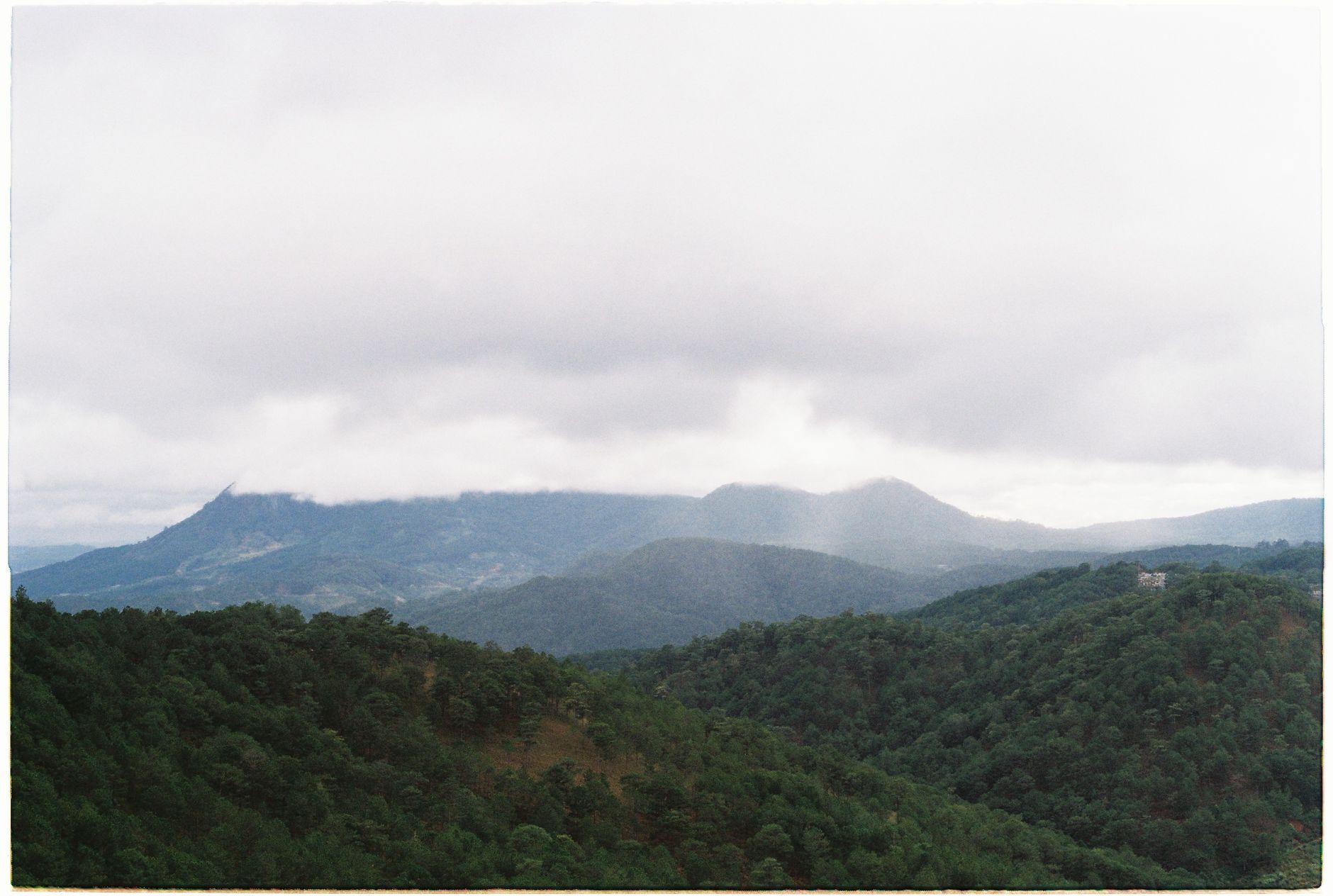
Montagne d’Ambre National Park sits like a green island in the far north of Madagascar, a cool, dripping rainforest perched above the hot lowlands around Diego Suarez. The park rises from a volcanic massif whose higher slopes trap moisture from passing clouds, and that constant humidity has created one of the most concentrated, easy-to-reach wildlife experiences in the whole country. Within an hour or two of the gate at Joffreville you can be standing under towering trees, watching crowned lemurs leap between branches while your guide crouches at the trail edge teasing a chameleon barely longer than your thumbnail out of the leaf litter. For travellers who want a real rainforest packed with life but without the long, punishing drives of the deep south or east, this is one of Madagascar’s most rewarding parks.
What makes Montagne d’Ambre special is not a single headline animal but the sheer density and variety of small wonders crammed into a relatively compact, well-maintained network of trails. Lemurs are the easy stars, but the park is equally famous among naturalists for its dwarf Brookesia chameleons, its frogs and geckos, its northern-rainforest birds, and its waterfalls fringed with ferns and mosses. This guide walks through the animals and habitats you can realistically hope to encounter, when and how to see them, and how to do it responsibly. If you are choosing this park as part of a wider trip, it pairs naturally with the broader Montagne d’Ambre National Park guide and Madagascar’s other great reserves.
The Lemurs of Montagne d’Ambre
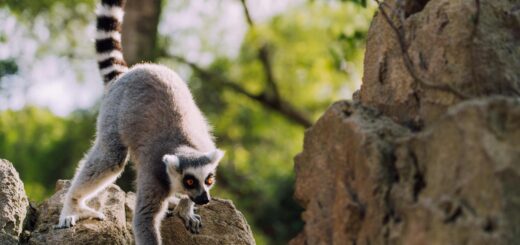
Lemurs are the animals most visitors come to see, and Montagne d’Ambre delivers two reliable diurnal species that are active during the day and relatively used to the presence of quiet, respectful visitors. The crowned lemur (Eulemur coronatus) is the park’s signature primate — a medium-sized lemur named for the distinctive crown-shaped marking on the head, with males and females showing different coats, a feature known as sexual dichromatism. They move through the forest in small social groups, often feeding on fruit and leaves in the mid and upper canopy, and a good guide will know the areas where troops are most often encountered. Watching a family group cross a trail overhead, pausing to peer down at you, is for many travellers the highlight of the visit.
The second diurnal star is Sanford’s brown lemur (Eulemur sanfordi), another northern endemic that shares the forest with the crowned lemurs and is often seen on the same walks. Males are particularly striking, with pale, almost beard-like cheek tufts. Beyond these two daytime species, Montagne d’Ambre is also home to several nocturnal lemurs that come out only after dark and are far harder to find. These include fork-marked lemurs (named for the dark fork-shaped marking on the head), tiny mouse lemurs — among the smallest primates in the world — and sportive lemurs, which rest in tree holes by day. Seeing these nocturnal species is the reward of a properly guided night excursion, where a sharp-eyed guide picks up the orange shine of their eyes in a torch beam. To put these encounters in context, our wider guide to where to see lemurs in Madagascar compares the country’s best lemur-watching parks.
The Tiny Chameleons: Brookesia and Friends
If the lemurs are the crowd-pleasers, the dwarf chameleons are the connoisseur’s prize. Montagne d’Ambre is one of the most reliable places in Madagascar to find Brookesia, the genus of leaf-litter or “stump-tailed” chameleons that includes some of the very smallest reptiles on Earth. These miniature chameleons spend their days creeping through the leaf litter and low vegetation, perfectly camouflaged as a dead leaf or twig, and at night they often climb a short way up onto a low branch or grass stem to sleep — which is precisely why night walks and dawn searches are so productive for finding them. Some species are so small they could comfortably sit on a fingertip, and spotting one without help is nearly impossible; this is where an experienced MNP guide earns their keep, their eyes trained to read the forest floor for the smallest hint of an out-of-place shape.
Brookesia are not the only chameleons here. The park and its edges also host larger, more familiar chameleons that move slowly through the bushes, swivelling their independently rotating eyes, along with brilliantly coloured day geckos that bask on tree trunks and leaves in patches of sunlight. The contrast between the almost invisible thumbnail-sized Brookesia and a vivid emerald day gecko captures the appeal of Montagne d’Ambre perfectly: this is a place to slow down, look closely, and let your guide reveal a hidden world that rushes right past most people. Patience is everything — the best chameleon sightings usually come to those who walk slowly and look low.
Reptiles and Amphibians
Beyond the chameleons, Montagne d’Ambre is rich in other reptiles and amphibians, almost all of them harmless to people. Geckos of several kinds cling to bark and leaves, including leaf-tailed species that are masters of disguise, flattening themselves against a trunk until they all but disappear. The damp forest floor and the margins of streams and pools are alive with frogs, especially in and after the wetter months, when their calls fill the evening air and the night walks become a frog-spotter’s delight. Madagascar’s frogs are extraordinarily varied, and a patient guide can often turn up several species in a single evening.
Snakes are present too, but there is no cause for alarm: Madagascar has no dangerously venomous land snakes of the kind found in mainland Africa or Asia, and any snake you encounter on a Montagne d’Ambre trail is essentially harmless to humans. The sensible approach is the same as anywhere in the forest — admire from a respectful distance, do not handle wildlife, and let your guide identify what you are looking at. For travellers building a multi-park itinerary around reptiles and amphibians, the eastern rainforest of Ranomafana National Park offers a complementary cool-forest experience further south.
Birds of the Northern Rainforest
Montagne d’Ambre is a genuine birding draw, with a long list of species recorded in the park — well over seventy — including a number of northern rainforest specialists that birdwatchers travel a long way to see. The forest layers, from the leaf litter to the high canopy, support a mix of ground-dwelling, mid-storey and canopy birds, and the cool montane conditions mean the birding can be excellent year-round. Early morning is the prime time, when the dawn chorus is at its loudest and birds are most active before the heat of the day, so an early start from your lodge near Joffreville pays off handsomely.
Even if you are not a dedicated birder, the birds add another dimension to a wildlife walk. Flashes of colour, the rattle and whistle of unfamiliar calls, and the chance to add Madagascar’s endemic families to your life list make the forest feel alive at every level. A guide who knows the bird calls is invaluable here: many of the most sought-after species are heard far more often than they are seen, and an experienced ear will lead you to birds you would never have found alone. Bringing a small pair of binoculars transforms the experience.
Insects, Butterflies and the Ring-Tailed Mongoose
The smaller creatures of Montagne d’Ambre are as much a part of the experience as the lemurs. Butterflies drift through clearings and sunlit gaps in the canopy, and the forest hums with a vast diversity of insects, many of them important pollinators and a key food source for the chameleons, frogs and birds that hunt them. Watching a chameleon track an insect with its rotating eyes and then unleash its long, sticky tongue in a fraction of a second is one of the small theatrical moments that make a slow forest walk so absorbing.
Mammals other than lemurs are harder to see, but one to watch for is the ring-tailed mongoose, a russet-coated, banded-tailed carnivore that forages on the forest floor and is occasionally encountered on the trails, especially where visitors are quiet. Sightings are never guaranteed — much of the park’s mammal life is shy or nocturnal — but the possibility adds to the sense that there is always something new to discover. The overall message of Montagne d’Ambre is that the wildlife operates on every scale, from the troop of lemurs overhead to the insect on the leaf at your feet.
The Waterfalls and Crater-Lake Habitats
The wildlife of Montagne d’Ambre cannot be separated from its spectacular setting. This is a wet, mossy, fern-draped rainforest, and its most famous landmarks are its waterfalls and crater lakes. The Cascade Sacrée (Sacred Waterfall) is a short, atmospheric walk from the main entrance and is treated with reverence by local communities, its plunge pool fringed in greenery. The Grande Cascade (Great Waterfall) is a more substantial cascade reached by a longer forest trail, and the walk there is itself a wildlife corridor, passing through prime lemur and chameleon habitat. The Lac de la Coupe Verte (Green Bowl Lake) is a serene crater lake cradled in the forest, a reminder of the park’s volcanic origins.
These habitats are not just scenery — they are the engine of the park’s biodiversity. The constant mist and the streams feeding the waterfalls keep the forest humid, which is exactly the environment that frogs, chameleons and moisture-loving plants thrive in. Walking the trails between these features, you pass through a layered, dripping world of giant trees, hanging mosses, tree ferns and orchids, and it is along these very paths that most of the lemur, chameleon and bird sightings happen. The destinations and the wildlife are, in effect, the same thing.
Night Walks: Nocturnal Wildlife
Some of Montagne d’Ambre’s most memorable wildlife only appears after dark, and where night walks are permitted — typically around the park edges and the Joffreville area rather than deep inside the core at night — they are well worth doing. After sunset the forest changes character entirely: nocturnal lemurs such as mouse lemurs and sportive lemurs emerge to feed, their eyes glowing in a torch beam; chameleons, including the tiny Brookesia, become far easier to find as they sleep on exposed perches; and the frogs call from every direction. A good guide with a careful, low-power torch will pick out creature after creature that you would walk straight past in daylight.
Night excursions need to be arranged through your guide or lodge, and rules vary on exactly where and when they can run, so confirm the options when you book. They are usually shorter than daytime walks and require sensible footwear, a headtorch as backup, and a willingness to move slowly and quietly. For many visitors the night walk is the single best wildlife session of their stay, precisely because it reveals the half of the forest’s inhabitants that the daytime visitor never sees. You can fold a night excursion into your plans easily with guided wildlife walks on GetYourGuide.
When and How to See the Wildlife
Two things matter most for a successful wildlife visit: timing and your guide. On timing, the drier months — broadly April through November — generally make the trails easier and safer to walk and improve your chances of comfortable, productive sightings, though because this is a high, cloud-fed rainforest you should expect mist, damp and the occasional shower at any time of year. Plan around the broader seasons using our guide to the best time to visit Madagascar so your northern leg lines up with the weather you want.
On guiding, there is no substitute: a Madagascar National Parks (MNP) guide is compulsory inside the park, and far from being a formality, the guide is the reason you will actually see the wildlife. The difference between wandering a trail alone and walking it with someone who knows where a lemur troop feeds, where a Brookesia is likely to be sleeping, and which call belongs to which bird is enormous. Tip well, ask questions, and let the pace be slow. Patience and a sharp-eyed guide are the two ingredients that turn a pleasant forest walk into an unforgettable wildlife day. For the bigger picture of how Montagne d’Ambre fits among the country’s protected areas, see our overview of the best Madagascar national parks and reserves.
Photography and Ethics
Wildlife photography in Montagne d’Ambre is hugely rewarding, but it carries responsibilities. The single most important rule is never to use flash on lemurs or other animals — a sudden flash can startle and stress them, and it is especially harmful to nocturnal species whose eyes are adapted to darkness. Rely on natural light, a steady hand, and patience instead. Keep a respectful distance, never try to touch, feed or hold wildlife, and never let a guide or anyone else bait or move an animal to get a better shot; ethical guides will not do this, and you should not ask them to.
Supporting the park and the community is part of doing this well. Paying your park fees, hiring and tipping local MNP guides fairly, and choosing operators who respect the forest all help keep Montagne d’Ambre protected and its wildlife wild. The reward for doing it right is a richer experience: animals that behave naturally, a guide who is invested in showing you the best of the forest, and the knowledge that your visit is helping to sustain one of Madagascar’s most accessible and biodiverse parks for the travellers who come after you.
Getting There & Travelling Well
Montagne d’Ambre is reached from Diego Suarez (Antsiranana) via the gateway village of Joffreville, a short but winding drive that climbs steadily into the cooler forested highlands. Most travellers fly into the north and then transfer by road, so a comfortable, reliable vehicle makes a real difference. If your flight to northern Madagascar is delayed or cancelled, you may be entitled to compensation — it is worth checking your eligibility with AirAdvisor before you write off a disrupted connection.
Because the park is remote, cool and damp, and the nearest serious medical facilities are some distance away, sensible travel insurance is not optional. SafetyWing Nomad Insurance is a flexible, traveller-friendly option that covers medical needs and trip disruptions, and it is straightforward to set up before you go. For a rainforest trip in a part of the country where help can be hours away, having cover through SafetyWing means you can focus on the lemurs and chameleons rather than the what-ifs. Combine that with a trusted local driver and you have the logistics handled.
Plan Your Montagne d’Ambre Wildlife Trip with Carla
Putting together a northern Madagascar wildlife itinerary — flights, the road up from Diego Suarez, a Joffreville base, park permits, MNP guides and the timing of day and night walks — is a lot to coordinate, and that is exactly where local expertise pays off. Carla can build a Montagne d’Ambre trip around the species you most want to see, whether that is the crowned lemurs, the tiny Brookesia chameleons, the birds or the waterfalls. Contact Carla to start planning, and arrange a dependable car & driver via Carla so the journey to the park is as smooth as the wildlife is rewarding. You can also compare Diego Suarez & Joffreville stays on Agoda for your base.
For more on the area, see our companion guides on where to stay near Montagne d’Ambre, the available Montagne d’Ambre tour packages, and a realistic breakdown of the Montagne d’Ambre trip cost.
Frequently Asked Questions
What lemurs will I see at Montagne d’Ambre?
The two reliable daytime species are the crowned lemur (Eulemur coronatus) and Sanford’s brown lemur (Eulemur sanfordi), both northern endemics that are often seen on the same walks. The park is also home to several nocturnal lemurs — fork-marked lemurs, mouse lemurs and sportive lemurs — but these come out only after dark and are far harder to find without a guided night excursion.
Can I really see the tiny Brookesia chameleons?
Yes — Montagne d’Ambre is one of the best places in Madagascar to find the dwarf, leaf-litter Brookesia chameleons, among the smallest reptiles on Earth. They are extremely well camouflaged and very small, so you almost certainly will not spot one alone; an experienced MNP guide who knows where to look is essential, and night walks (when they sleep on exposed low perches) are especially productive.
When is the best time to visit for wildlife?
The drier months, roughly April to November, generally make the trails easier to walk and improve sightings, but bear in mind this is a high, cloud-fed rainforest that can be misty and damp at any time of year. Early mornings are best for birds and active lemurs, while night excursions are best for nocturnal lemurs, frogs and the tiny chameleons.
Do I need a guide?
Yes. A Madagascar National Parks (MNP) guide is compulsory inside the park, and it is also the single best thing you can do for your wildlife experience. Guides know where the lemur troops feed, where chameleons are likely to be found, and which calls belong to which birds, so they dramatically increase what you actually see.
Are night walks possible?
Yes, where permitted — typically around the park edges and the Joffreville area rather than deep inside the core at night. Night excursions are arranged through your guide or lodge, and they are the best way to see nocturnal lemurs, sleeping chameleons and frogs. Confirm the current options and locations when you book, as rules can vary.
Ready to see Montagne d’Ambre’s wildlife?
Let a local expert handle the logistics so you can focus on the lemurs, chameleons and waterfalls. Contact Carla to build your Montagne d’Ambre wildlife itinerary, arrange a car & driver via Carla, book guided wildlife walks on GetYourGuide, and compare Diego Suarez & Joffreville stays on Agoda.
Plan Your Trip to Madagascar
- Read the full Madagascar Travel Guide
- Explore itineraries by style and duration
- Best Tours and Guided Experiences
Where to Stay