Wildlife Etiquette in Madagascar: Rules That Protect Animals and Travelers
This post contains affiliate links. We may earn a small commission at no extra cost to you.
At a Glance
- Applies to: All national parks, reserves and marine protected areas in Madagascar
- Flash photography: Prohibited on all nocturnal species and close-range lemurs
- Minimum distance: 2m for lemurs, 5m for fossa, 10m for nesting sea turtles on beach
- Feeding wildlife: Prohibited in all parks — fines apply
- Book ethical tours: Find responsible wildlife operators on GetYourGuide
Madagascar’s wildlife is extraordinarily familiar with humans at well-visited parks. Indri call 50 metres from lodges, ring-tailed lemurs at Berenty climb onto visitors without invitation, and fossa at Kirindy walk past trekkers on night walks without breaking stride. This familiarity is the product of decades of careful guide training and visitor management — and it can be eroded in a single season of poor tourist behavior. The rules in this guide are not bureaucratic formalities; they are the practical code that keeps wildlife wild and encounters possible for every visitor who follows.
Recommended Gear for Your Madagascar Wildlife Trip
You’re Flying 10,000km to See Lemurs, Chameleons, and Fossa — Don’t Document It With a Phone Camera
Indri lemurs calling across the canopy of Andasibe. Panther chameleons in electric blue and orange. The fossa spotted on a night walk in Kirindy. A smartphone sensor in low rainforest light produces grainy, blurred images. The Sony a6400 with Real-Time Eye Autofocus locks onto animal eyes instantly — even through undergrowth and low light. APS-C sensor, 4K video, flip-up touchscreen.
Check current price and availability on Amazon →
Madagascar Has Over 100 Species of Lemur and 280 Species of Bird — You’ll Miss Most of Them Without Binoculars
Sifaka lemurs leap between canopy trees 30 metres up. The Madagascar fish eagle perches on a branch 200 metres across a lake. Without binoculars, you’re looking at distant shapes and taking your guide’s word for it. The Vortex Diamondback HD 10×42 delivers HD optical clarity with edge-to-edge sharpness. Waterproof, fog-proof, backed by Vortex’s unconditional lifetime warranty.
Check current price and availability on Amazon →
Madagascar Goes Completely Dark After Sunset — Don’t Navigate It Blind
Outside of Antananarivo’s main streets, Madagascar has virtually no street lighting. Wildlife walks in Ankarana, night lemur spotting in Ranomafana, the path to your bungalow — all navigated in total darkness. The Black Diamond Spot 400-R delivers 400 lumens with a 100-metre beam, USB-C rechargeable, IPX8 waterproof, with red night-vision mode for wildlife observation without disturbing animals.
Check current price and availability on Amazon →
Madagascar Has Some of the Highest Malaria Risk in the World
The rainforests of Andasibe, the wetlands of Morondava, the rice paddies outside every village — mosquitoes are relentless and bite at dusk and dawn. DEET burns skin and destroys gear. Natrapel 20% Picaridin is the CDC-recommended alternative that repels mosquitoes, ticks, and sandflies for up to 12 hours without damaging your equipment.
Check current price and availability on Amazon →
No Grid, No Problem — Charge Your Devices From the Sun in Madagascar’s Remote Parks
Marojejy. Andringitra. Tsingy de Bemaraha. Madagascar’s most spectacular parks are its most isolated — no power outlets, no phone signal. A 3-day wilderness circuit means running on whatever charge you left camp with. The BLAVOR Solar Power Bank pairs 10,000mAh with a fold-out solar panel that recharges itself from sunlight as you trek.
Check current price and availability on Amazon →
Plan your Madagascar trip:
Photography Rules — What You Can and Cannot Do
Flash photography is the single most damaging action a tourist can take around Madagascar’s wildlife. Lemurs and chameleons have eyes adapted to low-light conditions — a direct flash can cause temporary blindness, disorientation and, in young animals, enough shock to cause them to fall from branches. All ANGAP parks prohibit flash photography at close range. The practical rule: no flash if the animal is within 3 metres, and no flash on any nocturnal animal regardless of distance. Modern cameras at ISO 3200 to 6400 with a fast prime lens produce excellent images without flash in almost all conditions encountered on Madagascar wildlife walks — flash is not a necessity. For daytime shots of diurnal lemurs, natural forest canopy light is almost always sufficient at ISO 400 to 1600. Drones are prohibited in all national parks and community reserves without specific ANGAP authorization — the sound and shadow of a drone causes persistent stress behavior in all lemur species, disrupts bird nesting and can abort fossa mating aggregations if flown over Kirindy during the September-to-November season. Unauthorized drone use is subject to equipment confiscation and fines.
Distance and Behavior Rules for Lemurs and Large Species
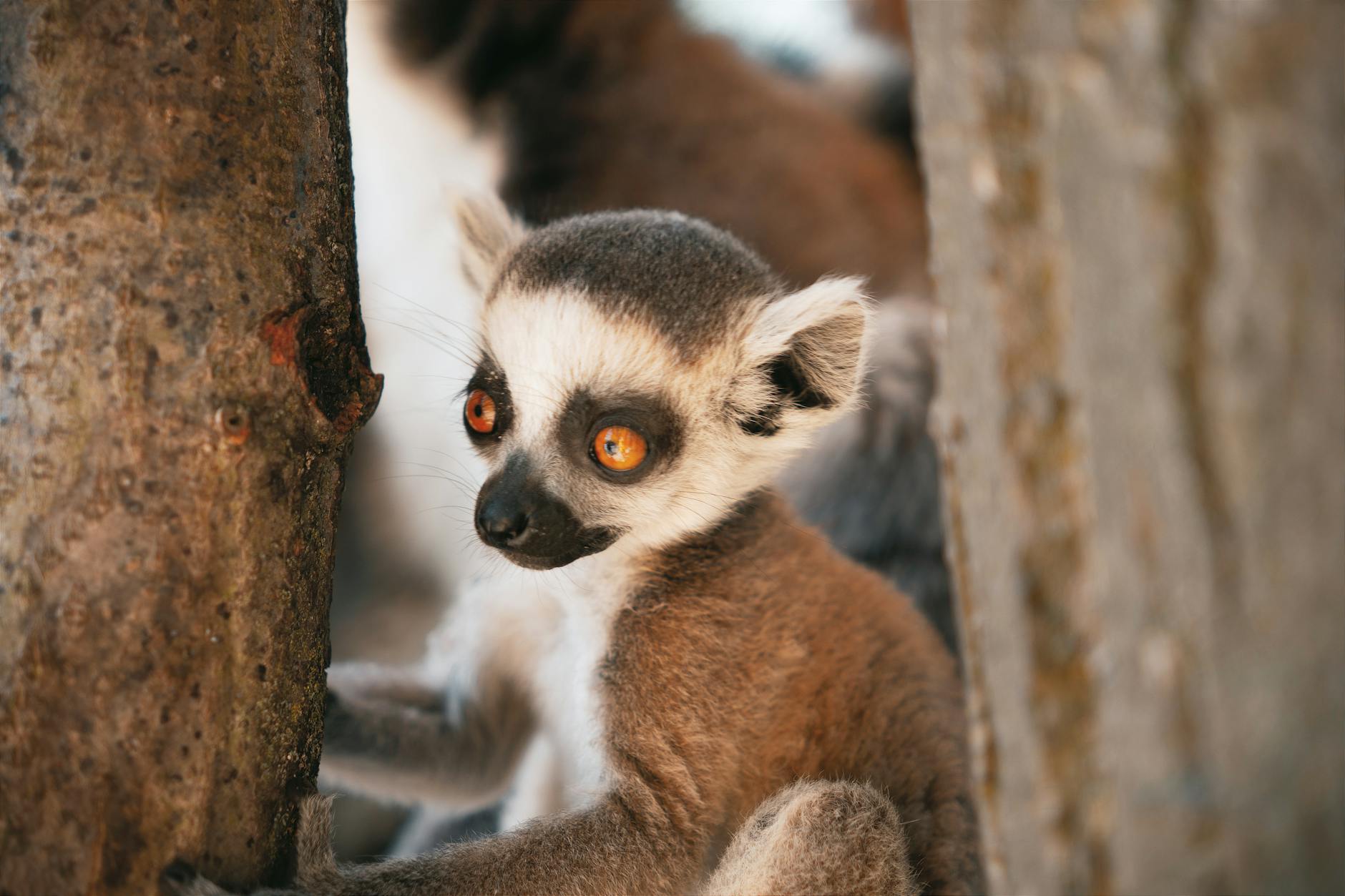
The 2-metre minimum approach distance for lemurs exists to protect both animals and tourists. Habituated lemurs at parks like Andasibe, Berenty and Anja frequently approach closer than 2 metres on their own initiative — this is acceptable. The rule prohibits tourists from initiating the approach. When a lemur moves within arm’s reach, stand still, do not reach out and avoid sudden movements. Never attempt to touch, pet or pick up a lemur — this is prohibited under Malagasy wildlife law and carries a significant fine. At community reserves like Anja, ring-tailed lemurs occasionally sit on visitors’ shoulders — this is tolerated when the animal initiates it, but never restrain or handle them once contact is made. For fossa and other carnivores at Kirindy, maintain 5 metres minimum and never position yourself between a fossa and its direction of travel. For ground-nesting birds, if a bird begins a distress display (wing dragging, erratic movement), retreat immediately — you have entered the nest zone and the display will continue until you leave.
Read also:
Save money on your Madagascar trip:
Rules Specific to Marine and Coastal Wildlife
Sea turtle rules are among the most actively enforced wildlife regulations in Madagascar. On nesting beaches: never approach an emerging female before she has begun digging (she will abort and return to the sea), never use flash or white light during nesting, never touch eggs or hatchlings, maintain a 5-metre minimum while a female nests, and never redirect hatchlings toward the sea. Underwater: never chase, touch, or block a swimming turtle, never remove turtles from the water for photographs, and never flash light at turtles within 3 metres. Operators who allow tourists to ride or hold turtles for photography are operating outside Malagasy law — report them to the nearest ANGAP office. For whale watching at Île Sainte-Marie: boats must cut engines when humpbacks approach within 100 metres, and no vessel may position itself ahead of a whale’s direction of travel. For reef snorkelling at Nosy Tanikely and similar reserves: no standing on coral, no collecting of shells (live or dead), no feeding fish with bread or bait. The reef recovers slowly from physical damage — a single foot placement can destroy a coral colony that took decades to grow.
How to Choose an Ethical Wildlife Tour Operator
Operator quality determines the quality of your encounter and the long-term impact on the animals. The markers of an ethical operator are practical rather than marketing: guides who enforce distance rules even when clients ask to move closer, boats that cut engines when marine mammals approach, night walk groups limited to 6 or fewer people (larger groups disrupt animal behavior), no feeding of wildlife to position them for photography, and pricing that reflects proper guide wages rather than undercutting to compete on price alone. Ask any operator three questions before booking: what is your maximum group size for wildlife walks, do your guides carry ANGAP certification cards, and what do you do if a client attempts to touch an animal. An operator who hesitates on any of these three is worth reconsidering. Verified Tripadvisor reviews for Madagascar wildlife parks are your most reliable external reference — search specifically for mentions of guide names, rule enforcement and small group sizes, not just general praise. Operators who have been operating in the same park for 5 or more years with consistent reviews are almost always the safest choice. To book vetted, well-reviewed tours and operators, browse Madagascar experiences on GetYourGuide.
Ready to book your Madagascar trip?
Frequently Asked Questions
What happens if I accidentally disturb a wildlife encounter in Madagascar?
Move slowly backward, stay silent and give the animal time to settle. Most habituated lemurs and chameleons tolerate brief disturbances. If an animal shows sustained agitation — vocalizations, threat displays or persistent staring — retreat further and wait. Tell your guide immediately so they can manage the situation.
Is wildlife photography permitted in Madagascar national parks?
Yes, photography is permitted with three restrictions: no flash within 3 metres of any animal, no drones without ANGAP authorisation, and no filming of park rangers or ANGAP staff without consent. Commercial photography and film production require a separate ANGAP permit.
Can I feed lemurs at Berenty Private Reserve?
No. Berenty prohibits feeding even though visitors may have heard otherwise in older accounts. Animals that associate humans with food lose foraging independence, become dependent on tourist presence, and are left vulnerable when visitor seasons end.
Madagascar’s wildlife encounters are extraordinary precisely because the habituation is so advanced — the product of decades of careful guide training and respectful visitor behavior. Keep it intact by following distance rules, leaving the flash at the lodge and selecting operators who enforce standards rather than waive them. Every visitor who follows the etiquette makes the next visit richer for everyone who comes after.
Plan Your Trip to Madagascar
- Read the full Madagascar Travel Guide
- Explore itineraries by style and duration
- Explore the full destination guide
Where to Stay
Hotels, lodges, and tours fill fast for July–September — compare availability now.