The FCE Railway 2026: Riding the Fianarantsoa–Côte Est Train to Manakara
Affiliate disclosure: This article contains sponsored links to hotels, tour operators, insurance providers, and other travel services. We earn a small commission if you book through our links, at no extra cost to you.
The FCE Railway 2026 — At a Glance
- What it is: The scenic Fianarantsoa–Côte Est (FCE) train, a slow, single-track railway that winds from the highland town of Fianarantsoa down to Manakara on the Indian Ocean coast — widely rated one of the world’s great rail journeys.
- Route & duration: Roughly 163 km of escarpment, tunnels and bridges; expect a full day on the rails — often 8 to 15+ hours, with frequent delays.
- Tours & rail experiences: Browse guided trips and rail experiences with tours & rail experiences on GetYourGuide.
- Plan it with a local: The schedule is unpredictable — contact Carla to time your trip around the train and avoid wasted days.
- Backup transport: Keep a car & driver via Carla on standby in case the train doesn’t run or you want to skip a day.
- Flight delays: If your flights are disrupted, you may be owed compensation — check eligibility with AirAdvisor.
- Travel insurance: Remote rail travel calls for cover — SafetyWing Nomad Insurance.
- Where to stay: Find stays in Fianarantsoa & the highlands on Agoda before and after the journey.
- Who it suits: Adventurous travellers with time and flexibility — not anyone on a tight schedule.
🎒 Madagascar Trip Essentials
A few inexpensive items make the biggest difference on the ground in Madagascar:
- Picaridin insect repellent — DEET-free protection against malaria mosquitoes. See on Amazon →
- Permethrin clothing spray — treat clothes; kills mosquitoes on contact for weeks. See on Amazon →
- Pop-up mosquito net — budget lodges rarely provide one; packs down tiny. See on Amazon →
- Water filter bottle — tap water isn’t safe to drink in Madagascar. See on Amazon →
- Universal travel adapter (USB-C) — Madagascar uses European-style plugs. See on Amazon →
- 8×42 binoculars — essential for spotting lemurs and chameleons in the canopy. See on Amazon →
As an Amazon Associate we earn from qualifying purchases.
There are train rides, and then there is the Fianarantsoa–Côte Est. Known to almost everyone in Madagascar simply as the FCE, this single-track line drops out of the cool Betsileo highlands around Fianarantsoa and corkscrews its way down a steep, forested escarpment to Manakara on the warm, palm-fringed Indian Ocean coast. It is slow. It is unpredictable. It breaks down, it gets delayed, it sometimes doesn’t run at all for stretches. And yet, for travellers who arrive with patience and an open mind, it is one of the most rewarding things you can do in the whole country — a journey that ranks, in the eyes of many, alongside the world’s greatest railway adventures.
This guide explains what the FCE actually is, what the ride is genuinely like (not the romanticised version), the history behind this remarkable feat of engineering, the scenery you’ll see, the human life that unfolds at every station, and the practical realities — classes, comfort, food, delays and keeping your belongings safe. We’ll also be honest about who the train suits and who should consider a private car and driver instead. Because here’s the truth about the FCE: the experience is unforgettable, but it rewards flexibility far more than it rewards a fixed itinerary.
| Aspect | Detail |
|---|---|
| Route | Fianarantsoa (highlands) to Manakara (Indian Ocean coast) |
| Approx. distance | Around 163 km |
| Direction | Mostly downhill — from highlands down the escarpment to the coast (and back uphill on the return) |
| Typical duration | A full day — often 8 to 15+ hours; frequent delays mean it can run much longer |
| Frequency | Runs only a few days a week — schedules change often; confirm locally before you plan |
| Number of stations | Around 17 stations along the line |
| Scenery | Escarpment rainforest, tunnels, bridges, waterfalls, rice terraces, hill villages |
| Comfort | Basic — first and second class; hard seats, crowded, no luxury carriages |
| What to bring | Water, snacks, cash (small notes), layers, sun protection, and plenty of patience |
| Best direction / season | Many prefer downhill (Fianarantsoa to Manakara); the drier months are generally more reliable — confirm locally |
| Booking | At the station or via a guide — confirm the running day in advance, as schedules vary |
The history of the line: a 1930s feat of engineering
The FCE was built in the 1930s, during the French colonial era, to connect the agricultural and commercial centre of Fianarantsoa — heart of the Betsileo highlands — with a port on the Indian Ocean at Manakara. The aim was practical and economic: move coffee, fruit and other produce from the fertile hill country down to the coast for export, and bring goods back up. But the terrain made the project anything but simple.
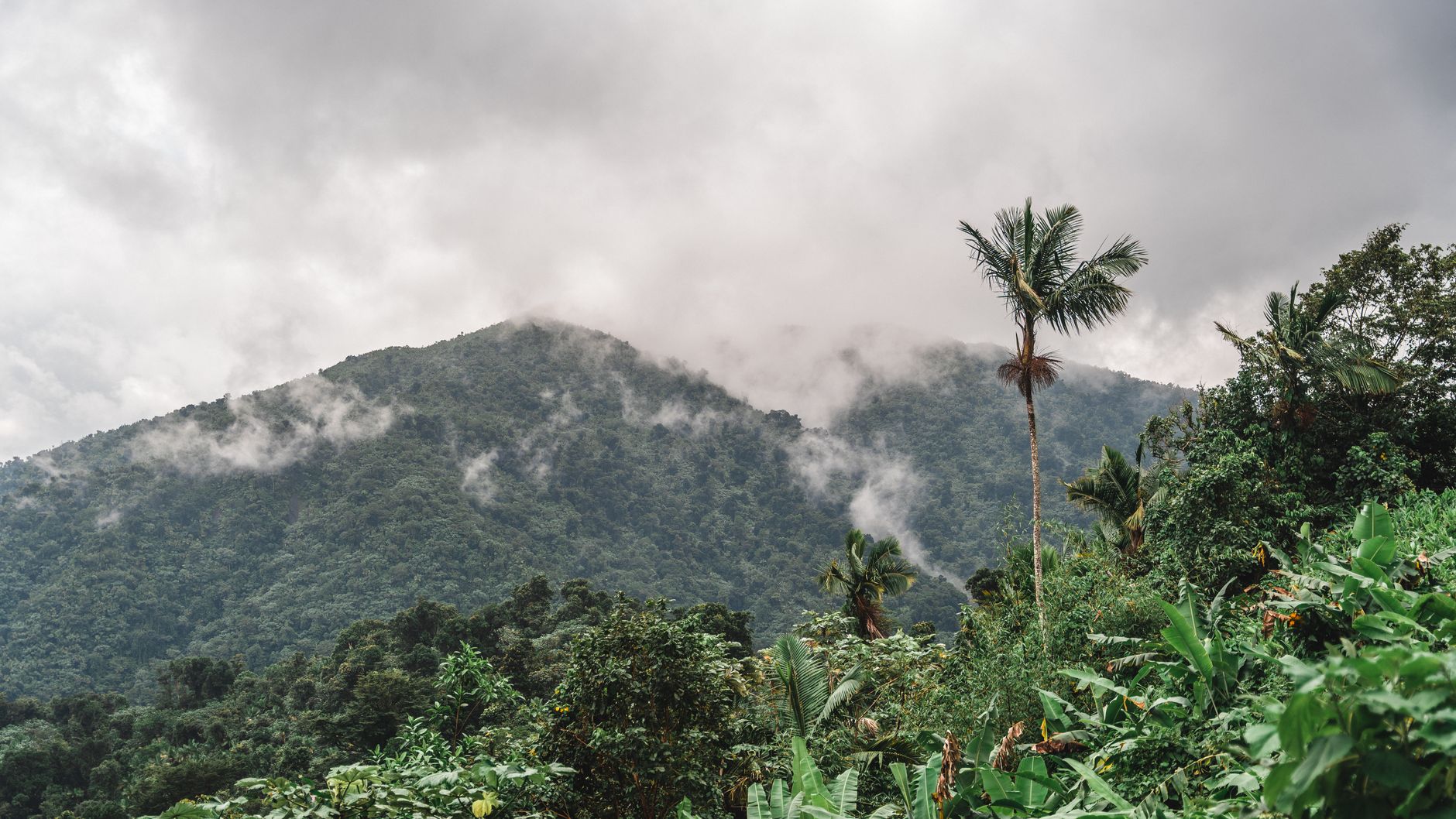
Between the highlands and the sea lies a dramatic escarpment — a steep wall of rainforest-clad mountains where the cool plateau plunges towards the humid lowlands. To get a railway down it, engineers had to carve dozens of tunnels through rock, throw bridges across rivers and ravines, and trace a route that clings to hillsides and loops back on itself to manage the gradient. The result, completed and opened in the 1930s, was a genuine engineering achievement of its time — a line that descends a tropical mountain range one careful curve at a time.
Decades on, the FCE has become far more than a relic of the colonial economy. For the villages strung along its path, many of which have no proper road access, the train is a lifeline — the main way to get crops to market and supplies back home. That role is exactly what makes a ride today so vivid: you are not on a tourist attraction so much as a working railway that happens to be spectacular.
What the journey is really like
Let’s be clear about expectations. The FCE is not a polished heritage railway with a printed timetable you can rely on. It is slow, it is hot in the lowlands and cool up top, it is often crowded, and it is famous for delays and the occasional breakdown. A journey scheduled to take a long day can stretch well beyond that. Departure and arrival times are best treated as hopeful intentions rather than promises.
And that, paradoxically, is much of the charm. As the train grinds downhill, you watch the landscape transform hour by hour — from terraced rice paddies and eucalyptus-dotted highlands, into thick, dripping escarpment rainforest, and finally out towards the steamy coastal plain. At each of the roughly seventeen stations, the train becomes a marketplace: villagers crowd the platform and the trackside, holding up bananas, freshly picked fruit, coffee, crayfish, cooked snacks and drinks for sale through the windows. The train slows the rhythm of your whole day to the pace of the line, and you find yourself watching rural Madagascar pass by in a way no road trip allows.
It is genuinely a journey for the experience, not the efficiency. If you accept that from the start — that the delays are part of the story, that you’ll be sharing a hard seat, that the day may be long — the FCE becomes magical rather than frustrating.
The scenery and highlights
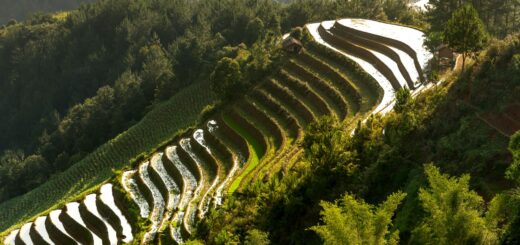
The visual reward is what keeps the FCE on so many “world’s best train journeys” lists. As you leave Fianarantsoa, the highlands roll out in tiers of green rice terraces and red-earth villages. Then the descent begins, and the line plunges into the eastern escarpment — a band of lush, humid rainforest where the air thickens and the temperature climbs.
Along the way you’ll pass through a series of tunnels, rumble over bridges spanning rivers and gorges, and catch sudden views of waterfalls tumbling down the forested slopes. The track threads along hillsides with valleys opening below, and on a clear day the layered ridges of the escarpment stretch into the distance. This eastern flank of the highlands is also close to the kind of biodiverse rainforest the region is known for — the famous Ranomafana National Park lies in the broader area, and the green corridors the train passes hint at the rich ecosystems nearby. As the line nears Manakara, the rainforest gives way to lowland greenery and the first signs of the coast.
The stations and the human side
For many travellers, the people are the real highlight of the FCE — even more than the views. Each station is a small event. Long before the train stops, you’ll see sellers gathering, and as it pulls in the windows fill with hands offering produce: bunches of small sweet bananas, oranges, avocados, coffee, sometimes river crayfish or cooked street food, all sold for a handful of small notes.
This isn’t a performance laid on for tourists. The FCE is a genuine economic artery for communities that, in many cases, can only reach the outside world by rail. The train carries their harvest down to the coast and brings goods back up. Buying a few bananas or a coffee through the window is a small, direct way to support the trackside economy — and it’s also one of the most charming parts of the whole ride. Bring plenty of small-denomination cash for exactly this. Chatting with fellow passengers, watching children wave from the platforms, and sharing the slow rhythm of the day with the people who depend on this line is the part most travellers remember long after the scenery blurs together.
Practical tips: classes, comfort, food and delays
There are generally first and second class options on the FCE. First class costs a little more and is somewhat less crowded with marginally better seating, but do not picture luxury — this is a basic working train. Seats are hard, carriages can be packed, and there is no air conditioning, no dining car, and no guarantee of a window you can fully open or a comfortable backrest. Second class is cheaper and more crowded still. Even in first class, comfort is modest.
For food, the platform sellers at each stop are your buffet — fruit, snacks and drinks appear at the windows throughout the day — but you should still bring your own water and some non-perishable snacks, because timings are unreliable and you don’t want to depend entirely on what’s for sale. Bring cash in small notes for both your ticket and the trackside purchases; card payment is not an option out here.
Pack for variable conditions: it’s cool when you set off in the highlands and hot and humid as you near the coast, so layers help. Bring sun protection, a hat, wet wipes or hand sanitiser, and something to sit on if the seats prove too hard. Charge your devices fully beforehand — power is not reliable. On delays: assume them. The single most useful thing you can carry on the FCE is patience, followed closely by a fully topped-up power bank and a good book or playlist for the long stretches.
On the safety of belongings: the FCE is generally a friendly, social ride, but as on any crowded train, keep your valuables close. Use a daypack on your lap rather than stowing bags out of sight, keep your phone and cash secure, and stay aware at the busy station stops when windows are full of hands and attention is on the sellers. Common sense is enough — there’s no special danger, just the ordinary care any crowded transport calls for. For broader guidance on moving around the country, see our guide on how to get around Madagascar.
Is it worth it? Who the FCE suits
The honest answer: the FCE is absolutely worth it — for the right traveller. If you have time, flexibility and a sense of adventure, and you understand that the journey itself is the point, it can be the single most memorable day of a Madagascar trip. The combination of dramatic descending scenery, the working-railway atmosphere, and the warmth of the people you meet is hard to find anywhere else.
But it is genuinely not for everyone. If you are on a tight schedule, easily frustrated by delays, in poor health, travelling with very young children who won’t tolerate a long unpredictable day, or simply want comfort and reliability, the FCE will probably disappoint you. The train can be delayed for hours, it can be cancelled, and it is physically tiring. There is no shame in deciding it’s not your kind of adventure — many travellers admire the FCE most from the comfort of a car. Knowing which camp you’re in before you commit a full day is the key to enjoying (or avoiding) it well.
How to combine it with a Fianarantsoa, Manakara or RN7 trip
The FCE fits naturally into a southern-highlands itinerary. Most travellers reach Fianarantsoa via the RN7 — the main road south from Antananarivo through Antsirabe and Ambositra — so the train slots in neatly as a side adventure once you’re in the highlands. See our guide to southern Madagascar & the RN7 for how the wider route works, and our overview of the central highlands for the bigger picture.
A common plan is to base yourself in Fianarantsoa for a couple of nights, ride the train down to Manakara, spend a night or two relaxing on the coast (the Pangalanes canal and Indian Ocean beaches are nearby), and then either ride back up or have a car collect you for the return. Spend your highland time well with our guides to Fianarantsoa and the best things to do in Fianarantsoa. To get the running days right, also check the best time to visit Madagascar, since the drier months tend to be more reliable for the line. For where to sleep and roughly what to budget, see our Fianarantsoa hotels guide and the Fianarantsoa trip cost breakdown.
Alternatives: a private car and driver
If the FCE’s unpredictability doesn’t appeal — or if the train simply isn’t running when you’re there — a private car and driver is the most flexible alternative. You won’t get the trackside-market experience, but you’ll keep control of your day, your schedule and your comfort, and you can still take in the highlands and the road to the coast at your own pace. Many travellers do both: ride the train one way for the experience, and use a car for the return so they’re not at the mercy of two unpredictable days. A car & driver via Carla is the easy way to keep a reliable backup in place.
Getting There & Travelling Well
Most international visitors fly into Antananarivo and travel south by road to Fianarantsoa before attempting the FCE. If your flights into or out of Madagascar are delayed, cancelled or overbooked, you may be entitled to compensation — it’s worth checking your eligibility with AirAdvisor before you write off a disrupted flight.
A journey like the FCE — long, remote, far from major hospitals, and through terrain where help can be slow to arrive — is exactly the kind of trip where travel insurance earns its keep. We always recommend SafetyWing Nomad Insurance for Madagascar: it’s built for travellers and nomads, covers medical issues and trip disruptions, and is straightforward to arrange online before you go. Given how unpredictable rail travel here can be, having SafetyWing cover in place lets you relax into the adventure instead of worrying about what happens if something goes wrong.
Let Carla Arrange Your FCE Adventure
The hardest part of the FCE is the logistics — knowing which days it actually runs, securing seats, and not losing days waiting around. Carla, our trusted Madagascar travel contact, can take all of that off your plate: she’ll check the train’s running schedule, help you time your highland trip around it, arrange your tickets and accommodation in Fianarantsoa and Manakara, and keep a car & driver on standby in case the train doesn’t run or you’d rather drive one leg. Want the journey to be a highlight rather than a gamble? Contact Carla and let her build it into your trip.
Frequently Asked Questions
How long does the FCE train take?
Plan for a full day. The journey covers around 163 km but moves slowly down a steep, winding line, so it typically takes anywhere from about 8 to 15+ hours — and delays can stretch it longer. Treat any quoted departure or arrival time as approximate and confirm locally, as schedules vary.
How often does the train run?
Only a few days a week, and the schedule changes frequently. There is no reliable year-round timetable you can plan around from home. Always check the current running days locally — through a guide, your hotel, or at the station — before building your trip around it. This is exactly why many travellers ask Carla to confirm the schedule and time their visit accordingly.
Is the FCE safe and comfortable?
It’s generally a safe, friendly and social ride, but it is not comfortable in any luxury sense — expect hard seats, crowded carriages, heat in the lowlands and a long day. Keep your valuables close, as you would on any busy train, and bring water, snacks, cash and patience. With realistic expectations, most travellers find it more rewarding than uncomfortable.
How do I book the FCE?
Tickets are typically bought at the station, often on or close to the day of travel, in first or second class. Because the running days are limited and can change, it’s wise to confirm everything in advance — many travellers arrange it through a local guide or have Carla handle the timing, tickets and a backup car so they don’t waste days.
Is the FCE worth it?
For adventurous travellers with time and flexibility, absolutely — it’s often a highlight of a whole Madagascar trip thanks to the scenery and the human warmth along the line. For those on a tight schedule or who need comfort and reliability, it may be more frustrating than fun, and a private car can be the better choice. Decide which camp you’re in before committing a full, unpredictable day.
Ride the FCE the Easy Way
The FCE rewards travellers who plan around its quirks — and that’s exactly what Carla does best. She’ll confirm the running days, time your highland itinerary around the train, sort your tickets and stays, and keep a car & driver ready as a backup. Contact Carla to turn one of the world’s great slow train journeys into a smooth, memorable part of your Madagascar trip.
Plan Your Trip to Madagascar
- Read the full Madagascar Travel Guide
- Explore itineraries by style and duration
- Explore the full destination guide
Where to Stay
Go deeper — Insider Madagascar
Our cultural series on the stories behind the island: