The Legend of the Baobab, the Tree Planted Upside Down
This article contains affiliate links. We may earn a small commission at no extra cost to you if you book through them.
By Jordan Lamont · Last updated 7 October 2026
At a Glance
- The legend: a tree the gods planted upside down
- The look: fat trunk, bare branches like roots in the sky
- The surprise: 6 of the world’s 8 baobab species are Malagasy
- Sacred: reniala, “mother of the forest”
- See them: Avenue of the Baobabs guide · tours
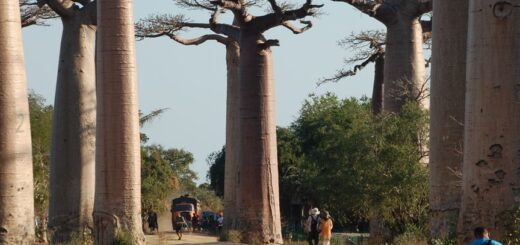
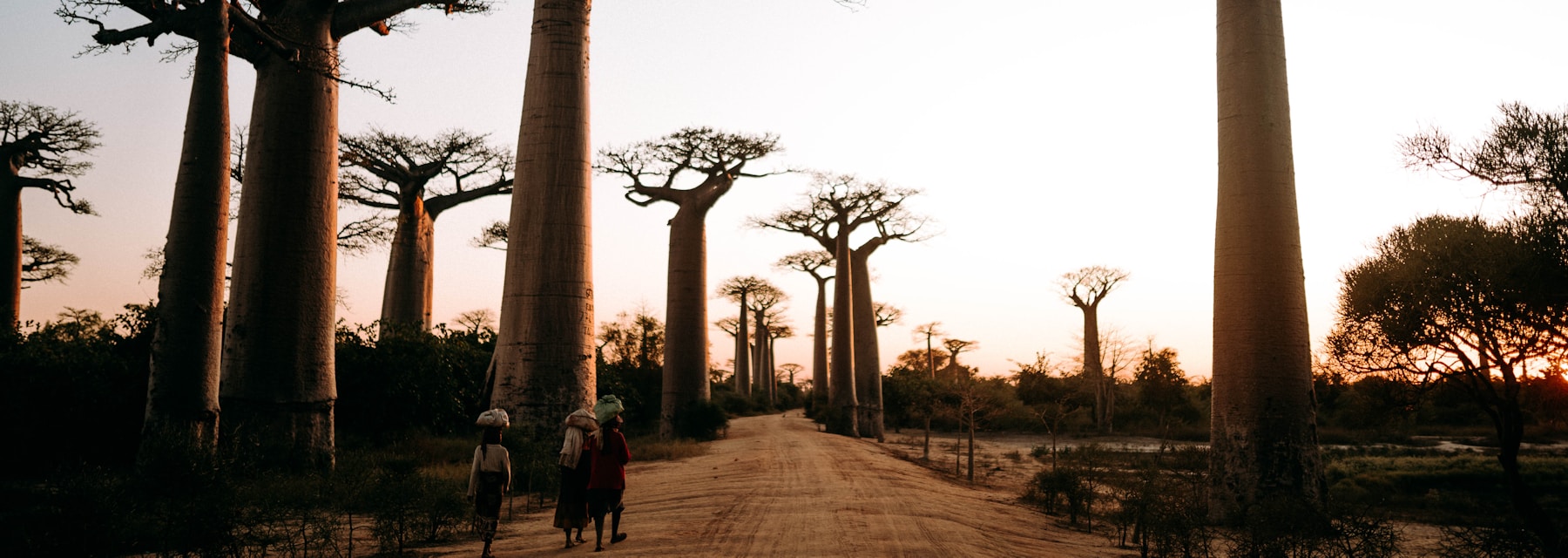
The first time you see a baobab, your eye tells you something is wrong: here is an enormous tree with a swollen, bottle-shaped trunk and, up top, a scatter of short bare branches that look exactly like roots clawing at the sky. It is as if the tree were planted the wrong way up — and across Africa and Madagascar, the legends agree. This is the story behind the “upside-down tree,” and why Madagascar, not Africa, is its true home.
The tree the gods turned over
Almost every culture that lives with baobabs tells a version of the same myth: the baobab was planted upside down. In some tellings, a god simply made a mistake with the first tree. In others, the gods grew offended by the baobab’s pride — too tall, too grand, too pleased with itself — and uprooted it, replanting it head-first so that it would spend eternity showing humility, roots in the air. However the story goes, it is an attempt to explain a shape that genuinely looks impossible.
Why it really looks that way
The truth is an adaptation to drought. The baobab’s famously fat trunk is a water tank, swelling with the rains to carry the tree through long dry seasons, and for much of the year it stands leafless, its bare crown of stubby branches reduced to the bare minimum that loses water. What looks like roots in the sky is simply a tree built to survive where water is scarce — the legend is the poetry, the drought is the reason.
Madagascar: the real home of baobabs
Here is the fact that surprises almost everyone. Of the world’s eight baobab species, six are found only in Madagascar — including the towering Adansonia grandidieri of the famous Avenue. Africa, for all its baobab fame, has just one widespread species. Madagascar is the genuine centre of baobab diversity, the place where these trees branched into their greatest variety of forms. To the Malagasy they are reniala — “mother of the forest” — and many are sacred, protected by local belief and used as landmarks, meeting places and sites of offering.
Why it matters today
The baobab is Madagascar’s living emblem, and its oldest giants have stood for a thousand years or more — yet they now face deforestation and a changing climate. Understanding the legend and the biology deepens every roadside encounter. See where to find them in our Avenue of the Baobabs guide, time your visit with our best-time guide, and plan with our Madagascar travel guide.
FAQ
Why is the baobab called the upside-down tree?
Its stout trunk and bare, root-like branches make it look as though it was planted with its roots in the air — a look explained, in legend, by gods who turned it upside down.
How many baobab species are there?
Eight in the world — and six of them are found only in Madagascar, making the island the true heartland of baobabs.
Are baobabs sacred in Madagascar?
Yes — many are revered; the Malagasy name reniala means “mother of the forest,” and individual trees are often protected by local belief.
Where can you see them?
Most famously on the Avenue of the Baobabs near Morondava — see our full guide.
Travel insurance for Madagascar
Medical evacuation from Madagascar’s interior can cost USD 30,000–80,000, so travel medical cover is worth arranging before you go. SafetyWing is the disclosed partner we mention on this site — a monthly-subscription travel medical plan. Check SafetyWing’s plans.
Plan Your Trip to Madagascar
- Read the full Madagascar Travel Guide
- Explore itineraries by style and duration
- Explore the full destination guide
Where to Stay