Central Highlands of Madagascar 2026: Antananarivo, Antsirabe & the Heart of the Island
Affiliate disclosure: This article contains sponsored links to hotels, tour operators, insurance providers, and other travel services. We earn a small commission if you book through our links, at no extra cost to you.
Central Highlands of Madagascar 2026 — At a Glance
- What it is: the high plateau at the heart of the island — Antananarivo, Antsirabe, Ambositra, Fianarantsoa — where almost every Madagascar trip begins
- Altitude & climate: roughly 1,200–1,500m; cool, temperate, and the wettest in the Nov–Mar rains — pack a fleece year-round
- The hub: Antananarivo (Tana) is the country’s only major international gateway; every road — RN7 south, RN2 east, RN4 west — radiates from here
- Don’t miss: the Rova and royal hills around Tana, the thermal spa town of Antsirabe, the woodcarving town of Ambositra, the terraced rice paddies and Merina/Betsileo culture
- Best time: Apr–Oct (cool, dry) for comfortable highland travel; see our best time to visit guide
- Book tours: Highland day trips & cultural tours on GetYourGuide
- Where to stay: Antananarivo & highland hotels on Agoda
- Getting around: Compare car + driver hire on Carla — the practical way to explore the highlands
- Travel insurance: SafetyWing Nomad Insurance — essential for Madagascar travel
🎒 Madagascar Trip Essentials
A few inexpensive items make the biggest difference on the ground in Madagascar:
- Picaridin insect repellent — DEET-free protection against malaria mosquitoes. See on Amazon →
- Permethrin clothing spray — treat clothes; kills mosquitoes on contact for weeks. See on Amazon →
- Pop-up mosquito net — budget lodges rarely provide one; packs down tiny. See on Amazon →
- Water filter bottle — tap water isn’t safe to drink in Madagascar. See on Amazon →
- Universal travel adapter (USB-C) — Madagascar uses European-style plugs. See on Amazon →
- 8×42 binoculars — essential for spotting lemurs and chameleons in the canopy. See on Amazon →
As an Amazon Associate we earn from qualifying purchases.
The Central Highlands are the heart of Madagascar in every sense — geographically, historically, and practically. This high, cool plateau running down the spine of the island is where the Merina and Betsileo kingdoms rose, where the capital Antananarivo sprawls across a dozen hills, and where almost every visitor’s journey begins, because Tana’s airport is the country’s only major international gateway. Yet the highlands are too often treated as a place to pass through rather than to explore, and that’s a missed opportunity: the terraced rice paddies, the brick villages, the thermal spa town of Antsirabe, the woodcarvers of Ambositra, and the living highland culture reward anyone who lingers. This guide covers the whole region — what it is, where to go, when to visit, how to get around, and how to use it as the hub it naturally is.
Whether you’re spending a day in the capital before flying to the coast or building a full overland highland journey, understanding the Central Highlands transforms your trip. It’s the region that connects everything else: the gateway to the RN7 south, the RN2 east to the rainforests, and the routes west to the baobabs. Get to know it, and Madagascar’s geography — and your itinerary — suddenly makes sense. For a deeper dive into the highlands’ rich culture specifically, see our Antananarivo & highlands cultural guide; this pillar focuses on the region as a whole and how to travel it.
Where Are the Central Highlands?
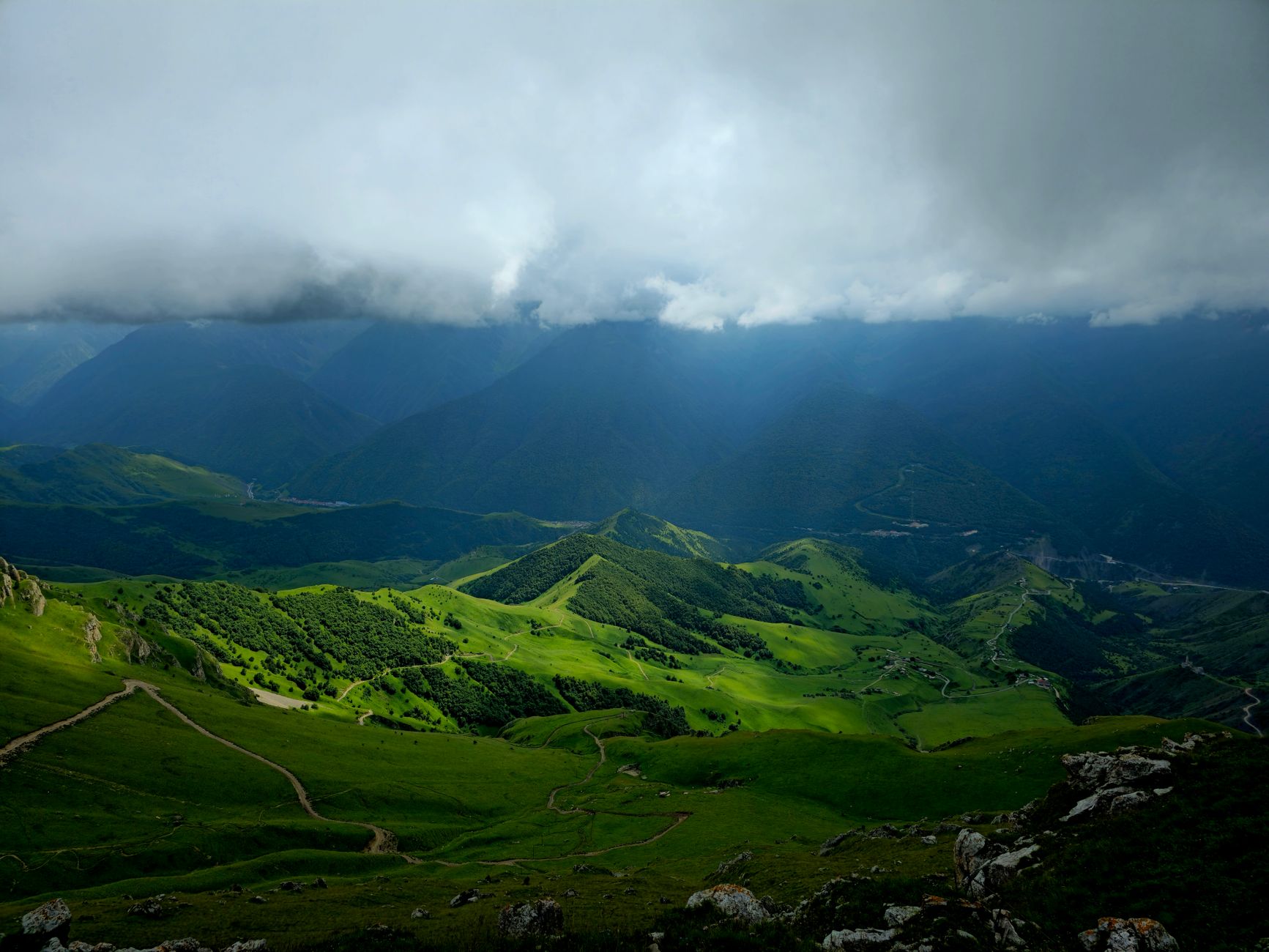
The Central Highlands — the Hauts Plateaux — form the elevated spine of Madagascar, running roughly north–south through the middle of the island at altitudes of about 1,200 to 1,500 metres, with some peaks higher still. This is a landscape utterly unlike the tropical coasts most people picture: rolling hills terraced with rice paddies, eroded red-earth slopes (the lavaka gullies that give Madagascar its “Great Red Island” nickname), brick-built villages with steep tiled roofs, and a cool, temperate climate that can feel positively chilly in the southern winter. It’s the most densely populated part of the country and its agricultural and cultural core.
The region’s main centres string down the central plateau. Antananarivo (Tana), the capital, sits in the north of the highlands and is the entry point for virtually all visitors. South of it, Antsirabe is the highlands’ second city, a thermal spa town founded by Norwegian missionaries. Further south, Ambositra is the centre of Madagascar’s woodcarving tradition, and Fianarantsoa is the highlands’ southern hub and the gateway toward the wine country and the descent to the south. Together they form a natural corridor — and the first leg of the famous RN7 route south.
What makes the highlands so central to any trip is their role as the hub of the road network. Madagascar’s main national roads all radiate from Antananarivo: the RN7 south toward Antsirabe, Fianarantsoa, and ultimately Tuléar; the RN2 east toward Andasibe and the port of Toamasina; the RN4 northwest toward Mahajanga; and the RN6/RN34 routes serving the west and far north. Because of this, almost every overland journey in Madagascar passes through the highlands, and almost every traveller spends at least a night here on arrival or departure.
A Brief History — Birthplace of Modern Madagascar
To understand why the highlands are the country’s heart, it helps to know their history, because the modern Malagasy state was forged here. In the late 18th and early 19th centuries, the Merina king Andrianampoinimerina, ruling from Antananarivo, unified the warring highland chiefdoms, and his son Radama I went on to bring much of the island under Merina control, opening Madagascar to European missionaries and trade. The hilltop Rova in Tana, the royal hill of Ambohimanga, and the tombs scattered across the highlands are the physical legacy of this era — the seat of a kingdom that, uniquely in the region, unified a whole island before the colonial period.
The 19th century brought turbulence — the long, isolationist reign of Queen Ranavalona I, the modernising court that followed, and finally French conquest in 1895–96, which made Antananarivo the colonial capital. That layered history explains the highland townscape you see today: the Merina brick architecture and royal sites, the churches and schools of the missionary era, the wide avenues and faded grandeur of the French colonial period, all overlaid on the dramatic hills. For travellers, this means the highlands offer something the coasts largely don’t — a deep, visible human history alongside the landscape, best appreciated with a guide who can read it. Our highlands cultural guide goes deeper into this heritage.
Antananarivo — The Gateway and Capital
Antananarivo is where your Madagascar adventure begins and very likely ends. Sprawling across a dozen hills around the central Rova (royal palace), the capital is a dense, vibrant, sometimes chaotic city of cobbled streets, steep staircases, colonial-era architecture, and a setting more dramatic than first-time visitors expect. Many travellers, focused on lemurs and beaches, plan only the briefest stop — but Tana rewards a day or two of exploration, and its position as the hub means you’ll likely pass through more than once.
The highlights cluster in the historic upper town (Haute-Ville) and around it: the Rova of Antananarivo (the Queen’s Palace) crowning the highest hill, the Andafiavaratra Palace museum nearby, the bustling Analakely market and the steps that climb between the lower and upper town, Lake Anosy with its war memorial, and the leafy Tsimbazaza zoo and botanical garden, a useful primer on Malagasy wildlife. Just outside the city, the royal hill of Ambohimanga — a UNESCO World Heritage Site — and day-trip wildlife parks make easy excursions. For the full city breakdown, see our dedicated Antananarivo travel guide.
Beyond the sights, Tana is the place to handle the practicalities of a Madagascar trip: arranging your car and driver-guide, changing money, buying a local SIM, and stocking up before heading into regions where supplies thin out. It’s also the best place in the country to eat well, with a surprising range of restaurants reflecting the Franco-Malagasy heritage. Treating the capital as a functional base rather than an obstacle makes the rest of your trip run far more smoothly.
Getting there and around the highlands
Ivato International Airport, just outside Antananarivo, is the arrival point for nearly all international visitors, with connections via Paris, Nairobi, Addis Ababa, and the Indian Ocean islands. From the airport it’s a 30–60 minute drive into the city depending on traffic, which in Tana can be heavy. Because flights to Madagascar are long and often involve connections, delays are common — and worth knowing your rights about.
Flight delayed or cancelled? Flights to Antananarivo usually connect through Paris, Nairobi, or Addis Ababa. If your connection was delayed or cancelled, EU regulation EC 261 may entitle you to up to €600 per passenger. Check your claim free on AirAdvisor.
Within the highlands, the practical way to travel is a car with a driver-guide. The highland roads — especially the paved RN7 south — are among the best in the country, but driving yourself is rarely worthwhile given local conditions, and a driver-guide doubles as interpreter and cultural bridge. Compare car-and-driver hire on Carla — and book ahead in peak season (July–September), when good vehicles and guides get reserved early. For shorter highland hops, domestic flights connect Tana to Fianarantsoa and other centres, though the roads are scenic enough that many prefer to drive.
Day trips from the capital
If you have an extra day in Tana — and especially if you’re short on time for the deep wilderness — several rewarding excursions sit within easy reach. The royal hill of Ambohimanga, a UNESCO World Heritage Site about an hour out, is the spiritual home of the Merina monarchy and one of the most atmospheric sights in the highlands. Lemurs’ Park, a private reserve west of the city, offers a reliable, easy introduction to several lemur species in a botanical setting — perfect for travellers who can’t reach the rainforests. The nearby crocodile farm rounds out a wildlife day close to the city. Browse Antananarivo day trips and tours on GetYourGuide to combine these into a full day. For those with two or three days, the rainforest of Andasibe on the RN2 is reachable as a (long) overnight excursion — the closest place to Tana to see wild lemurs and the indri.
Antsirabe — The Thermal Spa Town
About three hours south of Tana on the paved RN7, Antsirabe is the highlands’ most appealing town and the classic first overnight stop on the southern route. Founded by Norwegian missionaries in the 1870s as a hill-station spa thanks to its thermal springs, it retains a faded colonial elegance — wide avenues, a grand old thermal bath complex, and the brightly painted pousse-pousse (rickshaws) that are the town’s emblem and a genuinely useful way to get around. At around 1,500m it’s one of the coolest places in the country, so pack accordingly.
Antsirabe is also a centre of artisan workshops — miniature-model makers who craft astonishing toy bicycles and cars from recycled tin, gemstone cutters and polishers, embroiderers, and sweet-makers. Touring these small family workshops, often by pousse-pousse, is one of the highlands’ most rewarding cultural experiences. Nearby, the volcanic crater lakes of Andraikiba and Tritriva make pleasant half-day excursions. For most travellers heading south, a night in Antsirabe is the perfect introduction to highland life before the RN7 carries them on toward Ranomafana and beyond. See our Antananarivo vs Antsirabe comparison to decide where to base.
Ambositra, Fianarantsoa and the Southern Highlands
Continuing south, the RN7 climbs through some of the highlands’ most beautiful scenery. Ambositra is the heart of Madagascar’s woodcarving tradition, home to the Zafimaniry people whose intricate marquetry and carved woodwork earned UNESCO recognition as an Intangible Cultural Heritage. The town’s workshops and shops overflow with carved boxes, furniture, and marquetry panels, and it’s the best place in the country to buy authentic Malagasy woodcraft directly from the makers.
Further south, Fianarantsoa — the name means “place of good learning” — is the southern highlands’ main city and a centre of Betsileo culture, intellectual life, and Madagascar’s small wine industry. Its old upper town is a warren of steep cobbled lanes and brick houses, and it serves as the gateway to the lush eastern escarpment, the Ranomafana rainforest, and the scenic (if slow) FCE railway down to the coast. The terraced rice landscapes around Fianarantsoa, worked by the Betsileo who are renowned as Madagascar’s finest rice farmers, are among the most photogenic in the country. Together, Ambositra and Fianarantsoa make the southern highlands a rewarding cultural journey in their own right, not merely a corridor to the south.
Highland Culture — Merina, Betsileo and the Heart of Madagascar
The Central Highlands are the cultural core of Madagascar, home to the Merina (around Antananarivo) and Betsileo (around Fianarantsoa) peoples, whose kingdoms once dominated the island and whose traditions still define much of Malagasy identity. The highland landscape itself — the terraced paddies, the tall brick houses with their distinctive carved wooden balconies, the hilltop tombs — reflects a culture deeply rooted in rice cultivation, ancestor veneration, and a strong sense of place.
The most striking highland tradition is the famadihana, or “turning of the bones,” a joyful ancestral ceremony in which families exhume, rewrap, and celebrate their deceased relatives — a profound expression of the Malagasy bond between the living and the dead. It’s a private family event rather than a tourist spectacle, but a respectful traveller with a good guide may occasionally be invited to witness one, usually in the dry winter months. Beyond ceremonies, highland culture shows in the crafts (woodcarving, silk weaving, gemstones), the food (rice at every meal, hearty stews suited to the cool climate), and the architecture. For a full exploration of these traditions, see our highlands cultural guide.
Highland Food, Crafts and Daily Life
Highland cuisine is hearty and rice-centred, suited to the cool climate. Rice (vary) is the foundation of every meal, accompanied by dishes like romazava (a beef-and-greens broth, considered the national dish), ravitoto (pounded cassava leaves with pork), and grilled zebu, the humped highland cattle that are central to Malagasy life and wealth. The Franco-Malagasy heritage means highland towns — Tana especially — also offer excellent French-influenced cooking, patisseries, and the locally brewed Three Horses Beer (THB). For travellers used to coastal seafood, the highlands are a chance to taste the other, earthier side of Malagasy food.
The highlands are also Madagascar’s craft heartland. Beyond Ambositra’s famous woodcarving and marquetry, the region produces hand-woven wild silk (landibe) used in the burial shrouds central to ancestral tradition, fine embroidery, raffia work, and the cut gemstones for which Antsirabe is known. Antananarivo’s markets and the artisan workshops of the highland towns are the best places in the country to buy authentic Malagasy crafts directly from the makers — and watching a Zafimaniry carver or an Antsirabe tinsmith at work is an experience in itself. Buying directly supports the artisans and gives your purchases real provenance and meaning.
Daily highland life unfolds against the most cultivated landscape in Madagascar. The terraced rice paddies — vivid green in the growing season, golden at harvest — are worked largely by hand, and the rhythm of planting, transplanting, and harvesting shapes the year. Brick-making, with the characteristic red-earth bricks drying in the sun, is a ubiquitous highland industry, and the tall, narrow brick houses with their carved wooden balconies are a signature of the region. Travelling the highland roads, you pass a constant, living tableau of rural Malagasy life — one of the journey’s quiet pleasures.
Highland Scenery and Landscapes
The Central Highlands offer some of Madagascar’s most distinctive and photogenic scenery — utterly different from the beaches and forests, and often a surprise to first-time visitors. The defining sight is the terraced rice paddies stepping down every available slope, especially beautiful in the south around Fianarantsoa where the Betsileo have perfected the art. Sweeping across the plateau are the eroded red-earth hillsides scored with lavaka gullies, granite domes and inselbergs rising from the plains, and crater lakes near Antsirabe — a landscape shaped by altitude, volcanism, and centuries of cultivation.
The light in the highlands, clear and cool in the dry season, is wonderful for photography, and the combination of dramatic topography, terraced agriculture, and traditional villages gives the region a scenic character all its own. The drive south on the RN7 is itself one of Madagascar’s great scenic journeys, the landscape unfolding mile after mile. For travellers who think of Madagascar only in terms of lemurs and beaches, the highland scenery is a revelation — and a reason to slow down and look.
When to Visit the Central Highlands
The highlands’ altitude makes their climate quite different from coastal Madagascar — cooler and more temperate, with a real winter chill. The dry season (roughly April to October) is the best time to visit: days are clear and pleasantly warm, though nights from June to August can be genuinely cold, dropping toward freezing in the higher areas, so warm layers are essential. This is also the peak travel season and the best window for highland road journeys, when the RN7 and side roads are dry and reliable.
The wet season (November to March) brings warm days but heavy afternoon rains, and the highlands are among the wettest parts of the country in these months. Roads can be affected, and the cultural ceremonies like famadihana mostly pause. That said, the rainy season turns the rice terraces an electric green and brings fewer crowds. Whenever you come, pack for cool weather — first-time visitors expecting tropical heat are routinely caught out by highland evenings. For the full month-by-month picture across all regions, see our best time to visit Madagascar guide.
The Highlands as Madagascar’s Hub — How It Connects
The single most important thing to understand about the Central Highlands is their role as the hub from which the rest of Madagascar unfolds. Because Antananarivo is the only major international gateway and the focal point of the road network, your highland time naturally bookends — and connects — everything else:
- South via the RN7: the classic overland route through Antsirabe, Ambositra, Fianarantsoa, Ranomafana, Anja, and Isalo to the coast at Tuléar. See our southern Madagascar & RN7 guide.
- East via the RN2: the short, scenic drive to Andasibe’s rainforest and the indri, then on to the port and the Pangalanes Canal. See our eastern Madagascar guide and the Andasibe-Mantadia guide.
- West toward the baobabs: the long road (or short flight) to Morondava and the Avenue of the Baobabs. See our western Madagascar guide.
- North to Nosy Be and Diego: usually by flight from Tana to the far-north beaches and adventure. See our northern Madagascar guide.
This hub role is why the highlands matter even to travellers whose hearts are set on the coast or the wildlife. A well-planned trip uses the capital efficiently — a day on arrival to recover and explore, then onward; perhaps a highland leg down the RN7; and a final night before flying home. Understanding the geography here is the key to a smooth, well-sequenced Madagascar itinerary. For a tight example, see how the highlands anchor our one-week Madagascar route.
Wildlife Near the Highlands
The highlands themselves, being densely cultivated, aren’t a wildlife destination in the way the rainforests and dry forests are — but they’re the gateway to two of Madagascar’s best wildlife experiences, both within easy reach. East of Tana, the rainforest of Andasibe is home to the indri, the largest living lemur, just three to four hours away on the RN2. South down the RN7, the Ranomafana rainforest, on the eastern edge of the highlands near Fianarantsoa, is one of the country’s richest parks for lemurs, chameleons, and frogs.
Even within the highlands, Tana’s day-trip parks offer a reliable first encounter with lemurs and reptiles for those short on time, and the terraced landscapes host highland birds and the occasional chameleon. For travellers building a wildlife-focused trip, the highlands are the launch pad: see our lemurs of Madagascar guide and chameleons of Madagascar guide for what awaits in the forests the highlands connect to.
Where to Stay in the Highlands
The highlands offer Madagascar’s best and most varied accommodation outside the main beach resorts, concentrated in Antananarivo and Antsirabe. In Tana, options range from international-standard business hotels near the airport and in the city centre to characterful boutique hotels in the historic upper town with views over the hills — the latter are far more atmospheric for a short stay. In Antsirabe, the grand old colonial spa hotel and a range of comfortable guesthouses suit the RN7 overnight. Compare highland hotels on Agoda — and because Tana fills up in peak season and around major flights, book your arrival and departure nights well ahead.
A practical tip: for your very first and very last nights, when you may arrive late or have an early flight, a hotel near Ivato airport saves a stressful cross-city drive in Tana’s traffic. For the days you actually explore the capital, though, stay in the upper town for the atmosphere and proximity to the sights. Many travellers split their Tana time exactly this way.
Planning Your Highland Trip
How much time should you give the highlands? At minimum, build in a full day in Antananarivo on arrival — both to recover from the long flight and to see the capital properly — plus a buffer night before departure. If you’re travelling the RN7 south, you’ll naturally spend a night or two more in Antsirabe and the southern highland towns. And if highland culture, crafts, and scenery appeal in their own right, a dedicated highlands loop of three to five days, taking in Tana, Antsirabe, Ambositra, and Fianarantsoa, is a rewarding and underrated journey.
The highlands also reward combining with other regions, precisely because they’re the hub. A classic two-week Madagascar trip might pair a highland-and-RN7 leg with a rainforest extension to Andasibe or a beach finish on Nosy Be, all sequenced through Tana. The key is to plan the geography deliberately rather than treating the capital as a place to escape from. A common mistake is to allow no buffer in Tana at either end, only to lose a precious day to a delayed flight or a slow city transfer; building in a little slack around the capital protects the rest of your itinerary. For tour options that build the highlands into a wider itinerary, see our highland tour packages guide, and for budgeting, our highland trip cost guide.
Practical Tips for Highland Travel
Pack warm layers. The single most common mistake is underdressing. The altitude makes evenings cool year-round and winter nights (June–August) genuinely cold — a fleece or light down layer is essential even when you’re heading to the tropical coast afterwards.
Handle money in Tana. Antananarivo has the country’s best ATMs and money-changing facilities, so withdraw or change what you’ll need before heading into regions where banking thins out. Carry cash for smaller highland towns and craft purchases, where cards are rarely accepted.
French goes a long way. French is widely spoken across the highlands, more so than English, so a few French phrases (or a French-speaking driver-guide) smooth interactions considerably. Malagasy is the everyday language; a greeting in Malagasy is always warmly received.
Mind the traffic and timing. Tana’s traffic is heavy and unpredictable — allow generous time for airport transfers and city crossings, especially around an international flight. Plan road departures early to make the most of daylight, as highland driving after dark is best avoided.
Stay aware in the capital. Like any large city, Antananarivo has petty theft in crowded areas and markets. Keep valuables discreet, use hotel safes, and take normal city precautions — the highlands are generally safe and welcoming, but sensible caution in the capital is wise.
Respect ancestral customs. Highland culture is bound up with ancestral tradition and local taboos (fady). A good guide will advise on these — particularly around tombs and ceremonies — so you can engage respectfully. This is one of the richest parts of a highland visit.
Travel Insurance for the Highlands
Travel insurance is essential for any Madagascar trip, and the highlands are no exception. While the region is less remote than the far parks, road journeys, the altitude, and the distance of quality medical care from many highland towns all make comprehensive cover important — and a medical evacuation from Madagascar can cost between $30,000 and $80,000. Your policy should cover medical emergencies and evacuation, trip cancellation and interruption (valuable given the long, connection-dependent flights), and your planned activities. SafetyWing Nomad Insurance offers flexible, affordable cover well suited to a Madagascar trip, including the highland and overland legs. Never travel without it — the cost is small against the value of your trip and your safety.
Carla / Voyagiste Madagascar (plan your highland trip)
Madagascar-resident specialist who can build a Central Highlands itinerary around your interests — a capital city break, an Antsirabe-and-crafts loop, a cultural highlands journey, or the highlands as the hub of a wider trip. Contact Carla directly for an itinerary matched to your time and interests, with the right car and driver-guide, the best highland hotels, and the connections to every other region all handled. Because the highlands are the hub from which all of Madagascar unfolds, getting this part of the trip right — efficient, comfortable, well-sequenced — makes everything that follows run smoothly.
Frequently Asked Questions
What are the Central Highlands of Madagascar?
The high plateau running down the middle of the island at about 1,200–1,500m altitude, taking in Antananarivo (the capital), Antsirabe, Ambositra, and Fianarantsoa. It’s the cool, densely populated, agricultural and cultural heart of Madagascar, and the hub from which all the main roads radiate.
Is Antananarivo worth visiting?
Yes — while many travellers rush through, the capital rewards a day or two with its royal palace, hilltop old town, markets, and nearby UNESCO royal hill of Ambohimanga. As the country’s gateway and hub, you’ll pass through anyway, so build in time to explore. See our Antananarivo travel guide.
How cold do the highlands get?
Cooler than most visitors expect. Winter nights (June–August) can drop toward freezing in higher areas like Antsirabe; days are pleasantly warm. Pack warm layers year-round — the altitude makes evenings chilly even outside winter.
When is the best time to visit the highlands?
April to October (the dry season) is best for clear, comfortable weather and reliable roads, though pack for cold nights. The November–March rains turn the rice terraces vivid green but bring heavy showers and affect some roads. See our best time to visit guide.
How do I get around the highlands?
A car with a driver-guide is the practical choice — the paved RN7 south is among the country’s best roads, but a driver doubles as interpreter and cultural guide. Compare car-and-driver hire on Carla. In Antsirabe, the colourful pousse-pousse rickshaws are a fun way to get about town.
How long should I spend in the highlands?
At least a full day in Tana on arrival plus a departure buffer; a night or two more if travelling the RN7 south; or a dedicated three-to-five-day highlands loop (Tana, Antsirabe, Ambositra, Fianarantsoa) if the culture and scenery appeal in their own right.
🧭 Plan Your Central Highlands Trip With Carla
The capital, the spa town of Antsirabe, the woodcarvers of Ambositra, and the hub that connects all of Madagascar. Reach out to Carla, our Madagascar-resident specialist, for a highland itinerary built around your interests, with hotels, car-and-driver, and onward connections all handled.
Plan Your Trip to Madagascar
- Read the full Madagascar Travel Guide
- Explore itineraries by style and duration
- Explore the full destination guide
Where to Stay