Fianarantsoa, Madagascar 2026: The Complete Travel Guide to the Betsileo Capital
Affiliate disclosure: This article contains sponsored links to hotels, tour operators, insurance providers, and other travel services. We earn a small commission if you book through our links, at no extra cost to you.
Fianarantsoa 2026 — At a Glance
- What & where: Fianarantsoa is the Betsileo cultural capital of Madagascar’s central highlands, sitting at roughly 1,200 m in the Haute Matsiatra region — about 410 km (a long day’s drive) south of Antananarivo on the RN7, or 240 km (4–5 hours) from Antsirabe.
- Best known for: its atmospheric hilltop old town (Haute-Ville / Tanàna Ambony), the slow scenic FCE railway to the coast, Madagascar’s small wine country, and being the gateway to Ambalavao and Ranomafana National Park.
- Best time to visit: the cool, dry season from roughly April to October offers the most comfortable touring; the highlands stay cool year-round, so bring layers.
- Tours & day trips: browse highland tours & day trips on GetYourGuide.
- Plan with a local: contact Carla to shape your highlands route.
- Getting around: a car & driver via Carla is the easiest way to cover the RN7 and nearby reserves.
- Flight protection: if your trip involves flights, AirAdvisor can help you claim compensation for delays and cancellations.
- Travel insurance: SafetyWing Nomad Insurance covers medical care and trip disruptions.
- Where to stay: compare central highland stays on Agoda.
Fianarantsoa is the kind of place that rewards travellers who slow down. Spread across a series of green hills in Madagascar’s central highlands, it is the cultural and intellectual heart of the Betsileo people — a real working, studying, praying city rather than a polished tourist showpiece. Where Antsirabe to the north feels orderly and colonial, Fianarantsoa is denser, steeper and more atmospheric: a tangle of churches, seminaries, brick houses and cobbled lanes climbing toward a hilltop old town that looks out over rice terraces and rolling country. It is one of those highland towns that many travellers pass through quickly on the long RN7 drive south — and one that quietly repays anyone who lingers an extra day.
This guide is the complete overview of Fianarantsoa: what it is and where it sits, what makes its character distinct, and everything worth doing in and around town — from the UNESCO-tentative-listed Haute-Ville to the legendary FCE railway, Madagascar’s small wine country, the craft markets of Ambalavao, and the rainforest wildlife of Ranomafana National Park. We’ll also cover how Fianarantsoa fits into a wider Madagascar itinerary, how long to stay, and how to travel the region comfortably. If you’re comparing highland bases, our guide to the best of Madagascar’s central highlands puts Fianarantsoa in context alongside its neighbours.
What & Where Is Fianarantsoa?
Fianarantsoa is the principal city of the Haute Matsiatra region and the historic capital of the Betsileo, the highland ethnic group famed across Madagascar as master rice-terrace farmers. It lies in the southern part of the central highlands, roughly 410 km south of the capital, Antananarivo, along the country’s main paved artery, the RN7. In practice that drive is a long day on the road — the RN7 winds through highland towns, market villages and endless terraced valleys, and most travellers break the journey rather than attempt it in one push. From Antsirabe, the nearest major highland town, Fianarantsoa is about 240 km, or four to five hours depending on road conditions and traffic.
At around 1,200 metres of altitude, Fianarantsoa sits high and cool. The air is fresh, mornings can be genuinely chilly in the dry season, and the surrounding landscape is classic highland Madagascar: emerald rice paddies stitched across the valleys, red-earth tracks, eucalyptus stands and conical hills. The city itself is built across uneven terrain, which gives it a layered, vertical feel — neighbourhoods stacked above one another, with the oldest quarter crowning the highest ground. For a fuller picture of how the highlands work as a region, see our overview of the central highlands of Madagascar.
The Name & Character: “Place of Good Learning”
The name Fianarantsoa translates roughly as “place of good learning,” and the city has lived up to it for well over a century. Founded in the 19th century as a southern administrative centre, it grew into the education, religious and intellectual hub of the highlands. Today it is dense with schools, universities, seminaries and churches — both Catholic and Protestant traditions are deeply rooted here, and the skyline is punctuated by church towers and the long roofs of religious institutions. You’ll see students everywhere: in uniform, on the steep streets, around the markets, filling the cafés.
That gives Fianarantsoa a very different feel from a resort or safari town. It is a genuine city going about its business — busy, a little gritty in places, and full of everyday life. It is also noticeably less touristy than Antsirabe, which sits on the more heavily travelled northern stretch of the RN7 and has long catered to passing visitors with its colonial hotels and pousse-pousse rickshaws. Fianarantsoa, by contrast, feels more lived-in and more authentically highland. Travellers who enjoy wandering, observing and photographing real urban life tend to love it; those looking for polished tourist infrastructure may find it rougher around the edges. If you’re weighing the two, our detailed Antsirabe vs Fianarantsoa comparison breaks down which suits which kind of traveller.
The Historic Haute-Ville (Tanàna Ambony)
The single most rewarding thing to do in Fianarantsoa is to climb up to the Haute-Ville — the old upper town, known in Malagasy as Tanàna Ambony. Crowning the highest hill in the city, this is the original heart of Fianarantsoa, a cluster of narrow cobbled lanes, old Betsileo houses and brick colonial-era buildings packed tightly together on the steep slopes. The architecture is distinctive: tall, narrow brick homes with carved wooden balconies and steeply pitched roofs, many of them weathered and atmospheric, interspersed with old churches.
What to expect up top
Several historic churches crown the hill, and from their forecourts and the upper terraces you get sweeping panoramic views over the lower city, the surrounding rice valleys and the highland horizon — especially beautiful in the soft light of late afternoon. The lanes are too steep and narrow for most vehicles, so the Haute-Ville is best explored slowly on foot, ideally with a local guide who can point out the older houses, explain the religious buildings and share the area’s layered history. The quarter’s architectural and cultural value has earned it a place on Madagascar’s UNESCO World Heritage tentative list, recognising it as one of the country’s best-preserved highland urban landscapes.
Give yourself at least a couple of hours to wander, get a little lost, and let the views open up as you climb. It is the kind of place where the journey up — through quiet residential lanes, past doorways and tiny shops — is as memorable as the panoramas at the top.
The FCE Railway: Fianarantsoa to the East Coast
One of the great railway journeys of the Indian Ocean world starts right here. The FCE — Fianarantsoa–Côte Est — is a narrow-gauge line that runs roughly 163 km from Fianarantsoa down through the eastern escarpment to the coastal town of Manakara. It is slow, scenic and genuinely adventurous: the train descends through dense escarpment rainforest, crossing dozens of bridges and passing through numerous tunnels as it drops from the cool highlands to the steamy tropical lowlands.
The FCE is far more than a sightseeing ride. It remains a working lifeline for the villages along the route, which have no road access and depend on the train to bring goods up and carry produce — especially bananas and coffee — to market. At each station, the train fills with vendors, baskets of fruit and lively crowds, making the journey as much a window into rural Betsileo life as a scenic experience. It is a full-day adventure (and sometimes longer, as the train famously runs to its own schedule), so plan flexibility and bring water and snacks.
Schedules and operating days change from season to season and can be disrupted, so always check locally and confirm before building your trip around it. Because it deserves its own deep dive, we’ve written a dedicated guide to the FCE railway covering how it works, what to expect and how to plan the ride.
Wine Country: Madagascar’s Highland Vineyards
Few travellers expect to find wine in Madagascar, but Fianarantsoa is the heart of the country’s small wine industry. The cool, hilly terrain of the surrounding Haute Matsiatra countryside — stretching toward Isandra and down toward Ambalavao — supports a scattering of vineyards that have been producing wine since the colonial era. The output is modest and the styles are distinctive rather than world-beating, but that’s exactly what makes a visit fun: this is genuinely local, small-scale viticulture you won’t find anywhere else in the region.
Several estates around Fianarantsoa welcome visitors for tours and tastings, where you can walk the vines, see how wine is made on a small highland scale, and sample reds, whites, rosés and the local grey wine. It’s an easy, relaxed half-day outing and a great way to see the rural countryside around the city. A local guide or your driver can arrange visits, since opening hours and access vary; combining a vineyard stop with a drive toward Ambalavao makes for a rewarding day.
Ambalavao Day-Trip: Paper, Zebu & Lemurs
About 56 km south of Fianarantsoa, the small town of Ambalavao is one of the best day-trips in the region and a highlight of the southern highlands. It packs several distinct attractions into a short drive.
Antemoro paper
Ambalavao is famous for Antemoro (Antaimoro) paper, a handmade paper produced using a centuries-old technique. The paper is made from the bark of a local shrub, pressed by hand, and finished with real flowers and leaves embedded into each delicate sheet. You can watch the whole process at a workshop in town — from pulping the bark to laying the flowers — and buy beautiful, unique sheets, lampshades and cards to take home. It’s one of Madagascar’s most distinctive crafts.
The zebu market
Ambalavao is also home to one of the largest zebu markets in Madagascar. On market days, herders bring cattle from across the south, and the dusty grounds fill with hundreds of zebu, traders, and the noise and bustle of one of the country’s great livestock fairs. It’s an intense, authentic slice of rural Malagasy commerce — fascinating to witness, though best approached respectfully and ideally with a guide.
Gateway to wildlife
Ambalavao is also the gateway to two superb natural sites. The nearby Anja Community Reserve is one of the easiest and most reliable places in Madagascar to see ring-tailed lemurs up close, set among dramatic granite cliffs and managed by the local community — a genuine conservation success story. Further on lies Andringitra National Park, a rugged massif of granite peaks and high plateaus offering some of the best hiking in the country. Both make Ambalavao a natural extension of any Fianarantsoa stay.
Ranomafana National Park
Roughly 60 km east of Fianarantsoa lies one of Madagascar’s crown-jewel rainforest reserves: Ranomafana National Park, a UNESCO World Heritage Site protecting a swathe of misty montane rainforest on the eastern escarpment. Fianarantsoa is the natural gateway, and many travellers base themselves in or around the park for a night or two before or after exploring the city.
Ranomafana is best known for its lemurs — most famously the golden bamboo lemur, a species discovered here in the 1980s whose protection led to the park’s creation. The forest also shelters other lemur species, chameleons, frogs and a rich birdlife. Guided day walks reveal the wildlife and dense, dripping vegetation, while night walks are a highlight for spotting nocturnal lemurs, chameleons and insects along the forest edge. The area is also known for natural hot springs, a relaxing way to end a day of trekking. The terrain is steep and humid, so sturdy footwear and a willingness to climb are useful. If wildlife is high on your list, factor Ranomafana into your route alongside the highland towns.
Betsileo Culture
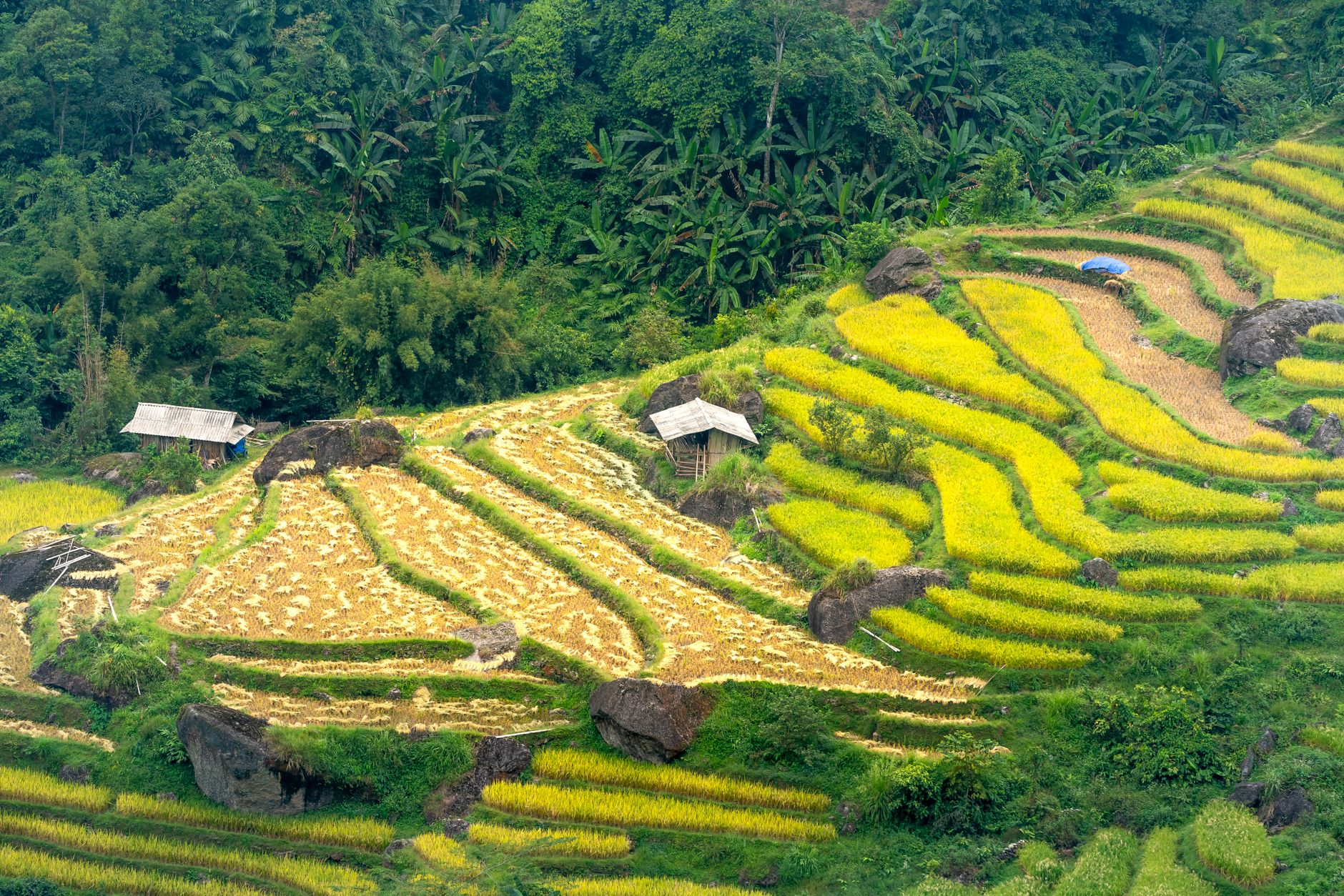
To understand Fianarantsoa is to understand the Betsileo, the highland people whose homeland this is. The Betsileo are renowned across Madagascar as master rice farmers, and their hand-built terraces — sculpted into the steep hillsides over generations — are among the most beautiful agricultural landscapes in the country. The terracing represents centuries of accumulated skill, and the rice harvest cycle still shapes the rhythm of rural life.
Betsileo culture is also rich in craft — particularly fine woodcarving — and in deep ancestral traditions. Like other highland Malagasy peoples, the Betsileo practise famadihana, the “turning of the bones” ceremony in which families honour their ancestors. These are private, sacred family occasions, not tourist events; if you’re ever invited or able to observe one, do so only respectfully and with local guidance. More broadly, taking time to learn about Betsileo customs, food and faith deepens any visit to the region immeasurably.
Food & Markets
Fianarantsoa’s markets are a sensory pleasure and the best place to feel the pulse of the city. Stalls overflow with highland produce — vegetables, fruit, rice, dried beans, spices — alongside everyday goods and street food. The cool highland climate produces excellent vegetables and, of course, rice features in nearly every meal, often served with zebu, chicken or freshwater fish and flavourful local sauces.
The city’s status as a student and church town means there’s a steady supply of simple, friendly eateries and cafés, and the local wine makes a natural accompaniment to dinner. Don’t miss trying highland specialities and seasonal fruit, and consider buying coffee, which grows in the surrounding region and comes up on the FCE railway from the lowlands. Eating where locals eat is both inexpensive and the surest route to the best food.
Getting There & Around
Most travellers reach Fianarantsoa by road, almost always as part of an RN7 journey south from Antananarivo (with stops in Antsirabe and other highland towns along the way) or coming up from the south. The drive is scenic but long, and road conditions vary, so allow generous time and don’t underestimate the distances. Public taxi-brousse minibuses connect Fianarantsoa with the rest of the highlands cheaply but slowly and in crowded conditions; for comfort, flexibility and the ability to stop at viewpoints, markets and vineyards, a private car and driver is far preferable.
Within the city, the steep, narrow streets of the old town are best explored on foot, while a driver makes day-trips to Ambalavao, Ranomafana and the vineyards effortless. For a full breakdown of transport options across the country, see our guide on how to get around Madagascar. The most stress-free option for the highlands is to arrange a car & driver via Carla, who knows the RN7 and the region’s back roads.
Fianarantsoa as an RN7 Hub
Fianarantsoa sits at a strategic point on the RN7, Madagascar’s classic overland route. It marks the southern edge of the dense highland section and serves as the springboard for the journey further south toward the dramatic landscapes of Isalo National Park and ultimately the coast at Toliara. Heading north, the road links back through Antsirabe to the capital. This makes Fianarantsoa a natural overnight or two-night stop on almost any RN7 itinerary — a place to break the long drive, see the highlands at their richest, and stage day-trips to nearby reserves.
Because of its position, it pairs beautifully with the wider route. Travellers continuing south will want to read our guide to southern Madagascar along the RN7, while anyone planning a full trip should start with our Madagascar itinerary guide. To compare it directly with the other big highland base, see Antsirabe.
How Long to Stay
The right amount of time in Fianarantsoa depends on your appetite for its surroundings. A minimum of one full day lets you explore the Haute-Ville, wander the markets and get a feel for the city. Two days is more comfortable and lets you add a vineyard visit or a day-trip to Ambalavao. If you want to ride the FCE railway, fold in a wildlife stay at Ranomafana, or do both Ambalavao and the train, plan for three to four days using Fianarantsoa as your highland base. For ideas on packing all of this into a longer route, see our things to do in Fianarantsoa guide for the full activity list.
Getting There & Travelling Well
Because reaching Fianarantsoa usually involves at least one flight into Antananarivo — and many highland trips connect with domestic or onward flights — it’s worth protecting that part of your journey. If a flight is delayed, cancelled or overbooked, AirAdvisor can help you check your eligibility and claim the compensation you may be owed, which takes the sting out of disruptions on a long-haul trip.
Travel insurance is non-negotiable for Madagascar, where medical facilities outside the capital are limited and a road-heavy highlands trip carries its own everyday risks. SafetyWing Nomad Insurance is a flexible, traveller-friendly policy that covers medical treatment, emergencies and trip disruptions, and it’s easy to set up before you go. For anyone spending weeks on the RN7, hiking at Ranomafana or Andringitra, or simply wanting peace of mind, having a SafetyWing policy in place means you can focus on the journey rather than the what-ifs. Timing your visit well also helps — our guide to the best time to visit Madagascar explains the seasons.
Suggested 1–2 Day Fianarantsoa Plan
Day 1 — The city. Start with a morning climb up to the Haute-Ville (Tanàna Ambony), exploring the cobbled lanes, old brick houses and churches, and timing your way to the upper terraces for panoramic views. Come back down for lunch at a local eatery, then spend the afternoon at the markets and, if time allows, a short vineyard visit on the edge of town for a tasting of highland wine. Round off the day with dinner and a glass of local red.
Day 2 — Ambalavao day-trip. Set off early south to Ambalavao (about 56 km). Visit the Antemoro paper workshop, browse the town, and — if it’s a market day — take in the great zebu market. Continue to the nearby Anja Community Reserve to walk among ring-tailed lemurs beneath the granite cliffs before returning to Fianarantsoa in the late afternoon.
Add a day or two for the FCE railway to Manakara, or a one- to two-night stay at Ranomafana National Park for rainforest walks, night spotting and the hot springs. For a deeper menu of options, see our things to do in Fianarantsoa guide.
Is Fianarantsoa Worth Visiting?
Yes — with the right expectations. Fianarantsoa is not a polished resort town, and travellers expecting tidy tourist infrastructure may find it busy and rough around the edges. But for anyone drawn to authentic highland Madagascar, it is one of the most rewarding stops on the RN7. The atmospheric Haute-Ville is genuinely special, the surrounding region is exceptionally rich — wine country, Ambalavao’s crafts and lemurs, the rainforests of Ranomafana, and the legendary FCE railway all within easy reach — and the city itself offers a window into real Betsileo life that more touristy towns can’t match.
If your priority is wildlife and overland adventure rather than beach resorts, Fianarantsoa earns its place on the itinerary. Pair it with a couple of nearby day-trips and it becomes one of the highlights of the central highlands. Where it can fall short is for travellers on a very tight schedule who only want a quick photo stop — in that case, even a half-day in the Haute-Ville still leaves a strong impression. For a head-to-head with its northern rival, our Antsirabe vs Fianarantsoa guide will help you decide where to spend your nights.
Plan Your Fianarantsoa Trip with Carla
The smoothest way to experience Fianarantsoa and the southern highlands is with a trusted local who can handle the logistics. Carla can build a tailored highlands itinerary, arrange a comfortable car & driver for the RN7 and day-trips to Ambalavao and Ranomafana, and time your visit around the FCE railway and local markets. Contact Carla to start planning your route — having someone local on your side turns a complicated overland trip into an easy, memorable one. You can also browse highland tours & day trips on GetYourGuide and compare places to stay on Agoda.
Frequently Asked Questions
How do I get to Fianarantsoa from Antananarivo?
Almost everyone travels by road on the RN7, heading south from the capital. It’s roughly 410 km — a long day’s drive — and most travellers break the journey with a stop in Antsirabe along the way. A private car and driver is the most comfortable option; taxi-brousse minibuses are cheaper but slower and crowded.
What is Fianarantsoa best known for?
Its atmospheric hilltop old town (the Haute-Ville / Tanàna Ambony), the slow scenic FCE railway down to the east coast, Madagascar’s small wine industry, and being the gateway to Ambalavao (paper, zebu market, ring-tailed lemurs) and Ranomafana National Park.
How many days should I spend in Fianarantsoa?
One day covers the city and Haute-Ville; two days lets you add a vineyard or an Ambalavao day-trip. If you want to ride the FCE railway or stay at Ranomafana, plan for three to four days using the city as a base.
Is Fianarantsoa better than Antsirabe?
They’re different. Antsirabe is more orderly, colonial and tourist-friendly, while Fianarantsoa is denser, more atmospheric and less touristy, with richer surroundings (wine, railway, reserves). Many travellers visit both on the RN7. Our dedicated comparison guide breaks down which suits you.
When is the best time to visit Fianarantsoa?
The cool, dry season from roughly April to October is the most comfortable for touring and day-trips. The highlands stay cool year-round, so pack warm layers whatever the month, and check FCE railway schedules locally as they vary by season.
Ready to explore Fianarantsoa and the highlands?
Let Carla plan your route, arrange a car & driver, and time your trip around the FCE railway, Ambalavao and Ranomafana. Contact Carla to get started, browse tours on GetYourGuide, compare stays on Agoda, and protect your trip with SafetyWing.
Plan Your Trip to Madagascar
- Read the full Madagascar Travel Guide
- Explore itineraries by style and duration
- Explore the full destination guide
Where to Stay