Madagascar Adventure Tour Packages 2026: Trekking Trips, Expeditions & Tailor-Made
Affiliate disclosure: This article contains sponsored links to hotels, tour operators, insurance providers, and other travel services. We earn a small commission if you book through our links, at no extra cost to you.
Madagascar Adventure Tour Packages 2026 — At a Glance
- Why a package: adventure travel here needs guides, porters, permits, and transport to remote trailheads — a package assembles it all into a working trip
- Most popular: the southern trekking package — Isalo and Andringitra (Pic Boby) with rainforest wildlife, over 10–14 days
- Wildest: remote expeditions into the Makay massif or the rainforest of Marojejy, run by specialist operators
- How they work: set-departure group adventures, or tailor-made private trips matched to your fitness
- Find adventures: adventure and trekking tours on GetYourGuide
- Plan a custom trip: a resident specialist can build a bespoke adventure — contact Carla
- Flight protection: EU261 €600 per passenger on disrupted European inbound flights
- Travel insurance: SafetyWing Nomad Insurance — must cover trekking
- Where to stay: base-town stays in Madagascar on Agoda
🎒 Madagascar Trip Essentials
A few inexpensive items make the biggest difference on the ground in Madagascar:
- Picaridin insect repellent — DEET-free protection against malaria mosquitoes. See on Amazon →
- Permethrin clothing spray — treat clothes; kills mosquitoes on contact for weeks. See on Amazon →
- Pop-up mosquito net — budget lodges rarely provide one; packs down tiny. See on Amazon →
- Water filter bottle — tap water isn’t safe to drink in Madagascar. See on Amazon →
- Universal travel adapter (USB-C) — Madagascar uses European-style plugs. See on Amazon →
- 8×42 binoculars — essential for spotting lemurs and chameleons in the canopy. See on Amazon →
As an Amazon Associate we earn from qualifying purchases.
Adventure travel in Madagascar is, more than almost anywhere, a job for an organised package. The trekking, the wildlife, and the wild places are extraordinary — but reaching them means guides and porters, park permits, long drives to remote trailheads, and camp logistics that are difficult and risky to assemble alone. An adventure tour package brings all of it together into a working, safe, well-run trip, which is why most adventure travellers here book one. This guide explains the adventure package options in Madagascar — trekking expeditions, multi-activity trips, the Tsingy-and-west route, wildlife-adventure combos, and tailor-made private trips — what each includes, what they cost, and how to choose the right one for your fitness and ambitions. For the full picture, see our Madagascar adventure travel guide.
The key thing to understand is that a good adventure package is not a luxury but a practical necessity for serious adventure here. Local guides are mandatory in the parks, remote trailheads need vehicles and drivers, the bigger treks need porters and camp teams, and the logistics of an expedition to somewhere like the Makay are beyond what an independent traveller can sensibly arrange. A package — whether a set-departure group trip or a tailor-made private one — turns Madagascar’s raw adventure potential into a trip you can actually do. Below, the package types, what they include, and how to pick. For the trekking detail, see our trekking guide.
Why Book an Adventure Package
The case for a package in Madagascar is overwhelmingly practical. Guides are mandatory in the national parks, and on the bigger treks you need porters and a camp team; remote trailheads require vehicles and drivers over long, rough drives; permits must be arranged; and expeditions to places like the Makay need serious organisation that only specialist operators can provide. Trying to do all this independently is difficult, often impossible, and rarely cheaper once you add up the parts. Even experienced independent travellers who happily backpack the rest of the island tend to book a package for the serious treks, simply because there is no practical way to arrange porters, camp teams, and remote transport on the ground without a lot of time, language, and local contacts. The package is what makes the hardest adventures accessible at all.
A package also brings safety, efficiency, and local knowledge: a good operator keeps you safe in remote terrain, gets the logistics right, and knows the routes, the wildlife, and the conditions. And because guides, vehicles, and camp teams are largely fixed costs, a package — especially a shared group departure — can be better value than piecing a trip together yourself. For adventure travel here, the question is rarely whether to book a package, but which one. There is also a real comfort in handing the hardest logistics — the permits, the rough drives, the camp setup, the catering deep in the bush — to people who do it for a living, freeing you to focus on the trekking and the wildlife rather than on whether the supplies will arrive. On a demanding trip far from help, that peace of mind is worth a great deal, and it lets you push your limits knowing the support is there. Browse adventure tours on GetYourGuide to compare.
Types of Adventure Package
Adventure packages in Madagascar span gentle multi-activity trips to hardcore remote expeditions. Here are the main types.
The southern trekking package
The classic and most popular: a 10–14 day trip down the RN7 combining the canyons of Isalo and the granite high country of Andringitra (with a Pic Boby summit), plus rainforest wildlife at Ranomafana. It packs the country’s two flagship treks, a great wildlife reserve, and the scenic southern route into one well-organised adventure, and it is the package most first-time adventure travellers choose. Good fitness required, no technical skills, and the paved RN7 keeps logistics manageable. Most southern packages run as set-departure groups in the peak season and as private trips year-round, and the best add a rest or wildlife day between the two big treks so you arrive at Andringitra fresh. It is the package that gives the broadest taste of Madagascar’s adventure in a single, well-paced trip, which is why operators offer so many variations of it.
The multi-activity adventure
For variety, a multi-activity package combines trekking with other adventures — river descents, caving, mountain biking, or a beach-and-reef finish — across one or more regions. It suits travellers who want a varied, active trip rather than a single hard trek, and it shows off Madagascar’s range: mountains, canyons, rainforest, rivers, and coast in one journey. These are usually tailor-made to balance the harder and gentler days. A typical multi-activity trip might trek the canyons one day, descend a river the next, and finish snorkelling a reef, so no two days feel alike and there is something for every energy level in a group. They are especially popular with travellers who want one big, varied trip rather than a focused trekking expedition, and they make the most of Madagascar’s remarkable diversity of landscapes.
The remote expedition
For the seriously committed: a full expedition into the remote Makay massif, or the demanding rainforest climb of Marojejy, run by specialist operators with a full camp and porter team. These are organised only a handful of times a year, last a week or more in the field, and offer pristine wilderness and a sense of genuine exploration. They require careful planning, real fitness, and a specialist operator — not a trip to book casually. Because departures are so limited, you often need to fit your dates around the operator’s schedule rather than the reverse, and to commit well in advance. The reward is access to wilderness almost no other travellers reach, with a team that knows how to keep you safe and fed deep in the bush. For the right adventurer, it is the trip of a lifetime.
The Tsingy and west adventure
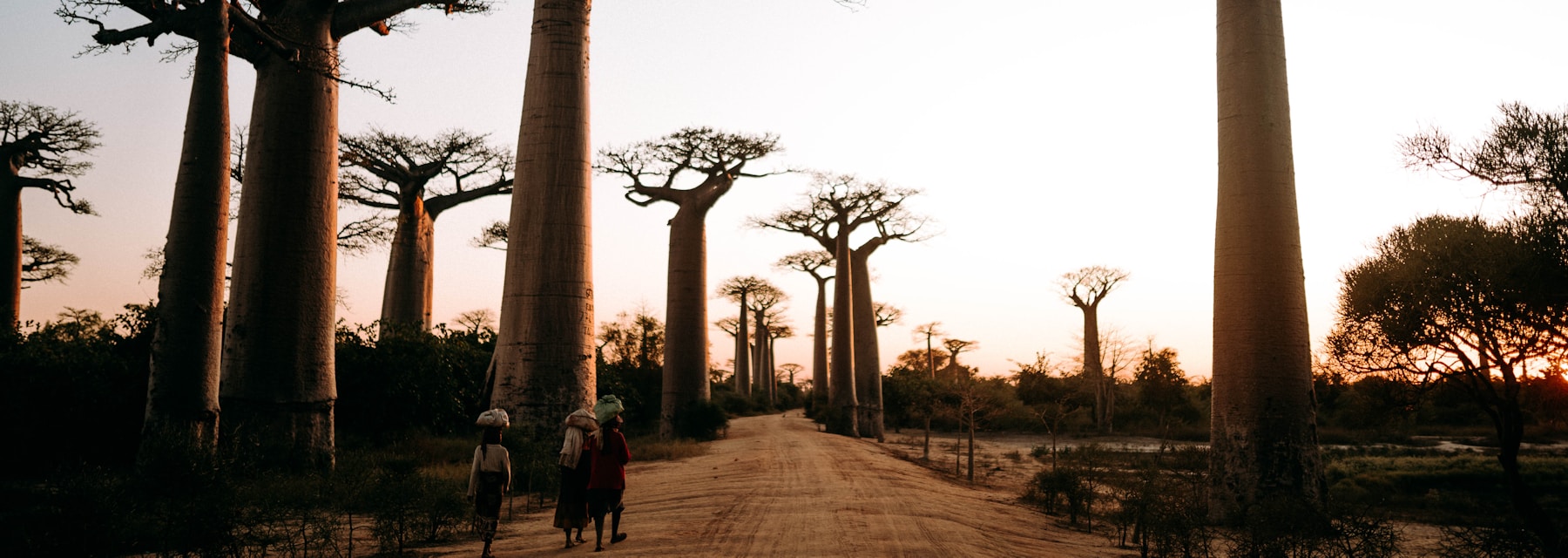
A west-focused package built around the via-ferrata adventure of the Tsingy de Bemaraha, the baobabs of Morondava, and often a multi-day descent of the Tsiribihina river. It is a rugged, remote trip with long drives on poor roads, rewarded by some of the island’s most extraordinary landscapes. The Tsingy de Bemaraha is a UNESCO World Heritage site and one of the most surreal places on the planet, and reaching it overland through the baobab country of the west is half the adventure. This package suits travellers who relish the journey as much as the destination and don’t mind earning their rewards over a few hard days on the road. See our western Madagascar guide.
The wildlife-adventure combo
For those who want active days without the hardest treks, a wildlife-adventure package pairs day hikes and gentle treks in the great reserves — Ranomafana, Andasibe, Isalo — with serious wildlife-watching, giving an active, nature-rich trip accessible to moderately fit travellers. It is the gateway adventure for those easing in, and it slots beautifully into a wider Madagascar trip. These packages prove that you don’t need to summit Pic Boby to have a real adventure here — a guided forest walk to find indri or a half-day canyon hike delivers wild country and extraordinary wildlife at a gentler intensity. They are also the easiest adventure packages to combine with a beach finish, making them a favourite for couples and mixed groups.
The tailor-made private adventure
The most flexible option: a bespoke private trip built around your fitness, interests, dates, and ambitions, mixing the treks and activities you want at the pace you want. A resident specialist assembles the guides, porters, permits, transport, and camp logistics into a trip designed just for you — ideal for groups, families with active teenagers, or anyone wanting an adventure tuned to their level. A tailor-made trip can also blend adventure with other interests — wildlife photography, birding, culture, or a beach finish — and adjust the daily effort to suit the least fit member of the party, so no one is left struggling or bored. For many travellers, the freedom to design exactly the trip they want, with an expert handling the logistics, is well worth the higher per-person cost.
What Adventure Packages Include
A typical adventure package includes the guides and (on treks) porters and camp teams, the route and itinerary, transport to and between trailheads, accommodation (lodges, guesthouses, or camping depending on the trip), and often some or all meals, plus the park transfers. The guiding, logistics, and organisation — the hard part of adventure travel here — are exactly what the package delivers, turning a difficult independent undertaking into a smooth, safe trip. On the bigger treks, the camp team typically sets up tents, cooks meals, and carries the heavy loads, so you walk with just a daypack and arrive each evening to a pitched camp and a hot meal — a level of support that makes demanding multi-day treks far more achievable than they would be self-supported.
What is often extra: international flights, travel insurance, park entry fees (sometimes included, sometimes not — always check), some meals and drinks, tips for guides and porters, personal gear, and any optional activities. Packages vary widely in what they include, so always confirm the details before comparing two prices — the headline figure means little until you know what’s bundled. As a rule, the more remote and demanding the trip, the more is bundled in, because there is simply no way to buy meals or beds in the bush — on a Makay expedition everything is carried in, while on a southern trekking package you may pay separately for some town meals and park fees. Read the inclusions line by line, and compare packages on the all-in cost rather than the advertised price, so you are comparing like with like. For the cost breakdown, see our adventure trip cost guide.
Sample Adventure Itineraries
To picture how a package comes together, here are three typical shapes, each adaptable to your fitness and time.
The 12-day southern trekking adventure. Antananarivo to Antsirabe, the rainforest of Ranomafana, the canyons of Isalo, and the granite massif of Andringitra with a Pic Boby summit, returning via the RN7. The classic, best-value adventure introduction, packing two flagship treks and great wildlife into one well-paced trip. Days alternate between trekking, wildlife, and scenic drives, so the effort is well spread, and the trip can be lengthened with extra days at Isalo or shortened by skipping the Pic Boby summit for those who prefer the canyons alone.
The 10-day west wilderness trip. A rugged western adventure: the Tsingy de Bemaraha via-ferrata, the baobabs of Morondava, and a multi-day Tsiribihina river descent, with long drives between. Remote, raw, and spectacular, for travellers who want wilderness over convenience. The long drives are part of the experience here, crossing changing landscapes from highland to dry west, and the river descent provides a restful, scenic counterpoint to the strenuous tsingy traverses. This trip rewards patience and a tolerance for rough roads with some of Madagascar’s most singular scenery.
The 9-day wildlife-and-activity trip. A gentler, varied package pairing day hikes and wildlife in Ranomafana and Andasibe with a stretch of coast, suitable for moderately fit travellers who want active days and great wildlife without a hard summit trek. It is an ideal choice for first-timers, mixed-ability groups, or anyone wanting to test the waters of adventure travel before committing to a harder trek on a future trip.
These are illustrative; set-departure group trips follow fixed itineraries, while a tailor-made private trip can be designed around exactly what you want. Either way, a good operator handles the logistics that make Madagascar adventure work. For a custom plan, contact Carla.
Group Departures vs Tailor-Made Private Trips
Adventure packages come in two broad shapes, and choosing between them is one of the first decisions to make. Set-departure group trips run on fixed dates and itineraries, with you joining other travellers — they are often better value, since the guide, vehicle, and camp team costs are split across the group, and they bring ready-made company on the trail. The trade-off is fixed dates and routes, and travelling with strangers whose pace and fitness may differ from yours.
Tailor-made private trips are built around your own dates, fitness, interests, and group, with the route and pace designed for you. They cost more per person (you bear the fixed costs yourself or share only within your own party) but offer total flexibility and a trip tuned exactly to your level — ideal for couples, families, friends travelling together, or anyone wanting a specific combination of treks and activities. For solo travellers and those on a budget, a group departure is usually the better choice; for those wanting control and willing to pay for it, a private trip wins. A specialist can advise which suits your situation.
Tips for Choosing a Good Operator
For adventure travel, the operator matters more than for any other kind of trip, because your safety in remote terrain depends on it. Look for genuine experience with your specific adventure — a remote Makay expedition or a Pic Boby trek demands an operator who runs them regularly, not one dabbling. Check that they use qualified local guides, provide proper safety equipment and emergency procedures, and have a real plan for evacuation from remote areas. Ask about group sizes, the guide-to-traveller ratio, and exactly what’s included.
Beware the bargain operator who cuts corners on safety, guiding, or gear — in remote terrain, those corners can matter enormously, and the cheapest quote is a false economy if it compromises your safety or strands you in the wilderness. A reputable operator that pays and equips its guides and porters fairly is also travelling responsibly, supporting the local communities that make adventure here possible. When in doubt, a resident specialist can point you to operators they trust and would use themselves. Contact Carla for honest recommendations.
Choosing the Right Adventure Package
The right package depends on your fitness, ambitions, and appetite for remoteness. For the best all-round introduction, the southern trekking package is the standout. For variety, a multi-activity or tailor-made trip works well. For the ultimate wilderness, a remote expedition delivers — if you’re fit and committed. For active days without the hardest treks, a wildlife-adventure combo fits. And for total flexibility, a tailor-made private adventure can be built around exactly your level and interests.
When comparing packages, look beyond the headline price: check exactly what’s included (park fees, meals, guides, porters), the group size, the standard of accommodation and transport, the difficulty and pace, and the operator’s experience with the specific trek — remote expeditions especially demand a specialist. The cheapest package isn’t the best value if it skimps on safety, guiding, or the experiences that matter. A resident specialist can match the package to your level and ambitions, or build a bespoke one. It helps to be honest with yourself and the operator about your fitness and experience before booking — overstating either is the commonest cause of a miserable trip, while a well-matched package, even an easier one, almost always delivers a better experience than a too-hard trek endured rather than enjoyed. The best operators will steer you toward the right trip rather than simply selling you the hardest one. Browse adventure tours on GetYourGuide.
When to Book
Adventure packages run mainly in the dry season (April–November), when trails and remote tracks are passable. The popular trekking departures fill up for the peak months (June–August), and remote expeditions like the Makay run only a few times a year and book out far ahead, so reserve early for the best dates and to secure your place. The shoulder months (April–May, October–November) offer good conditions, more availability, and often slightly better value, with lush green landscapes after the rains or warm, wildlife-rich conditions before them.
Booking ahead also gives you the pick of the best operators and guides before they fill, which matters most for the harder and more remote trips, where the quality and experience of your operator directly affects your safety and enjoyment. For a complex or remote adventure, start planning well in advance. A good rule of thumb is to book a standard southern trekking package a few months ahead for peak season, and a remote expedition six months to a year out, since the limited annual departures fill fast. Tailor-made private trips can usually be arranged on shorter notice, but the best guides still need to be reserved early. For the seasonal picture, see our central highlands guide.
Getting There and Travelling Well
Madagascar is reached by connecting flights via Europe, the Gulf, or Africa, landing at Antananarivo, where most adventure packages begin. Book international flights early and protect European-routed ones: under EU regulation EC261, a long delay, cancellation, or denied boarding on an inbound European flight can entitle you to up to €600 per passenger. Register your flight for EU261 coverage with AirAdvisor — free, and a useful safety net before a big adventure. Your package usually handles in-country transport, but for any independent legs, Carla can arrange a vehicle and driver.
Travel insurance is essential for any adventure package and must explicitly cover trekking, your altitude, and remote-area evacuation, which from Madagascar’s wilderness could cost tens of thousands of euros. SafetyWing Nomad Insurance is popular with active travellers; confirm your specific activities are covered before you go, and never join an adventure trip uninsured.
Carla / Voyagiste Madagascar (build a custom adventure)
Madagascar-resident specialist who can build a bespoke adventure package — matching the trek and activities to your fitness and ambitions, and assembling the guides, porters, permits, transport, and camp logistics that adventure here demands. Contact Carla directly for honest advice on which adventure suits you, how to combine the treks and activities, and how to do it safely and responsibly. Local knowledge is the difference between a well-run adventure and a logistical struggle in remote terrain.
Frequently Asked Questions
Do I need an adventure package, or can I go independently?
For serious adventure here, a package is a practical necessity — guides are mandatory in the parks, remote trailheads need transport, and expeditions need camp teams and organisation only operators can provide. See our adventure travel guide.
What’s the most popular adventure package?
The southern trekking package — Isalo and Andringitra (Pic Boby) with rainforest wildlife, over 10–14 days. It packs the two flagship treks and great wildlife into one well-organised trip. See our trekking guide.
Can I get a tailor-made adventure?
Yes — a tailor-made private trip built around your fitness, interests, and dates is the most flexible option, and a resident specialist can assemble it. Ideal for groups, families, or anyone wanting a trip tuned to their level.
What’s included in an adventure package?
Typically guides (and porters/camp teams on treks), route, transport, accommodation, and some meals; park fees, flights, insurance, and tips are often extra. Always check before booking. See our cost guide.
When should I book?
Ahead of the dry-season peak (June–August) for popular treks; remote expeditions run only a few times a year and book out far ahead. The shoulder months offer good value and availability.
Do I need travel insurance?
Yes — it must cover trekking, altitude, and remote-area evacuation. Comprehensive coverage is non-negotiable for any adventure package.
🧭 Build Your Madagascar Adventure — With Carla
A southern trekking trip, a remote expedition, or a tailor-made multi-activity adventure, matched to your fitness and fully organised. Reach out to Carla, our Madagascar-resident specialist, for honest advice and a well-run trip.
Plan Your Trip to Madagascar
- Read the full Madagascar Travel Guide
- Explore itineraries by style and duration
- Explore the full destination guide
Where to Stay